

Functional Matcha
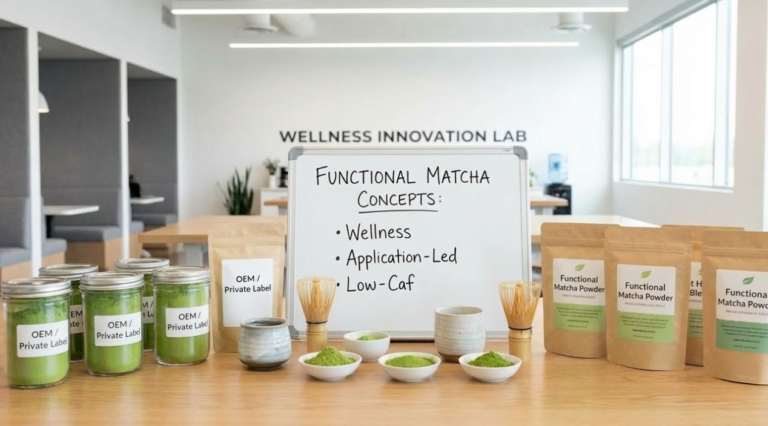
Functional matcha concepts for OEM and private label—designed for low-caffeine directions, wellness-oriented positioning, and application-led product development.
From drink powders and café concepts to retail-ready blends, we help brands develop matcha-based products with the right positioning, format, packaging direction, and market-ready documentation support.
-
OEM / private label concept development
-
Low-caffeine and lifestyle-oriented product directions
-
Application-based format and packaging guidance
-
Compliance-aware wording and labeling support

What Is Functional Matcha?
Functional matcha refers to matcha-based product concepts positioned around specific consumer needs, lifestyle preferences, or usage occasions.
For B2B buyers, this may include low-caffeine matcha directions, lighter daily-use beverage concepts, wellness-oriented drink mixes, active-lifestyle positioning, or other application-led product ideas.
In practical terms, “functional” is usually a product-development brief, not a scientific conclusion. It helps guide concept selection, formulation discussions, naming, and go-to-market positioning.

Why Brands Explore Functional Matcha Concepts
Brands often use functional matcha concepts to create a more specific product story than standard matcha powder alone.
Clearer Consumer Positioning
A functional angle can help products speak to routines, usage moments, or preference-based needs.
Better Product Differentiation
It creates more room for segmentation than a generic “premium matcha” message.
Stronger New Product Storytelling
It can support new launches in powder blends, café menu items, or retail-ready formats.
More Flexible Private Label Development
It helps buyers structure sampling and packaging around a concept, not just a raw ingredient.
A strong concept does not replace product quality. It gives quality a clearer place in the market.
Popular Functional Matcha Directions
These are not fixed stock claims. They are development directions brands commonly explore when building functional matcha products.
Low-Caffeine Direction
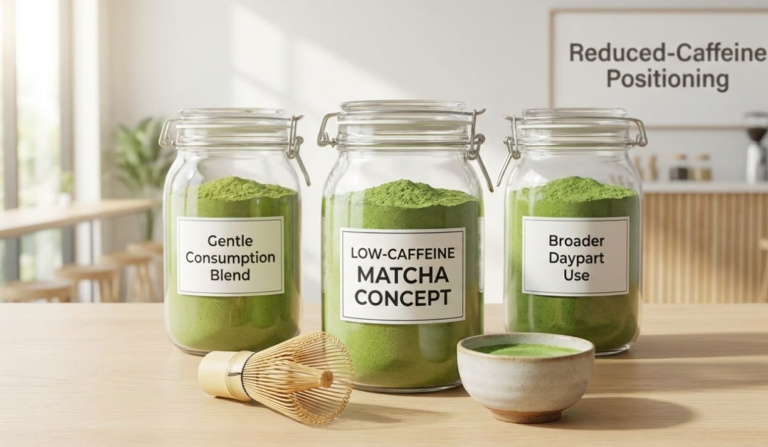
For buyers exploring gentler consumption occasions, broader daypart use, or reduced-caffeine positioning.
Wellness Drink Mixes
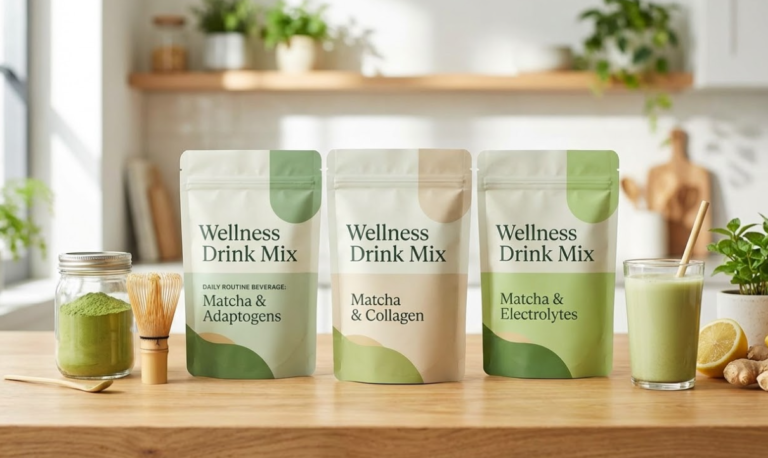
For brands building daily-routine beverage products with a cleaner, lighter, or more balanced product story.
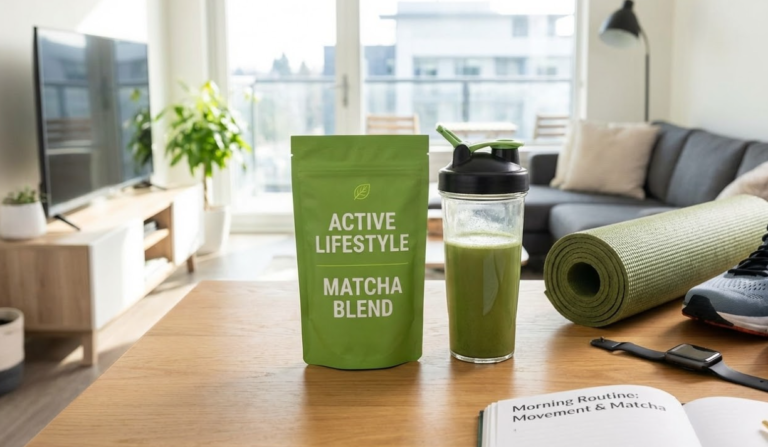
Active Lifestyle Concepts
For products positioned around movement, routine, and modern lifestyle use cases.
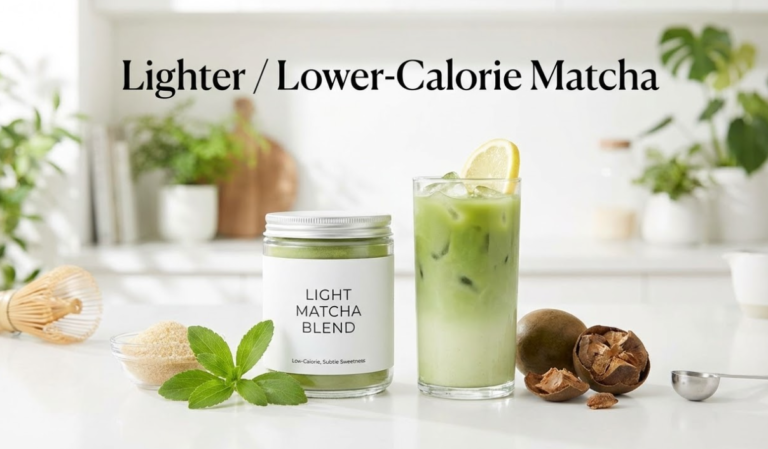
Lighter / Lower-Calorie
For concepts where sweetness strategy, format, and perception of lightness matter.
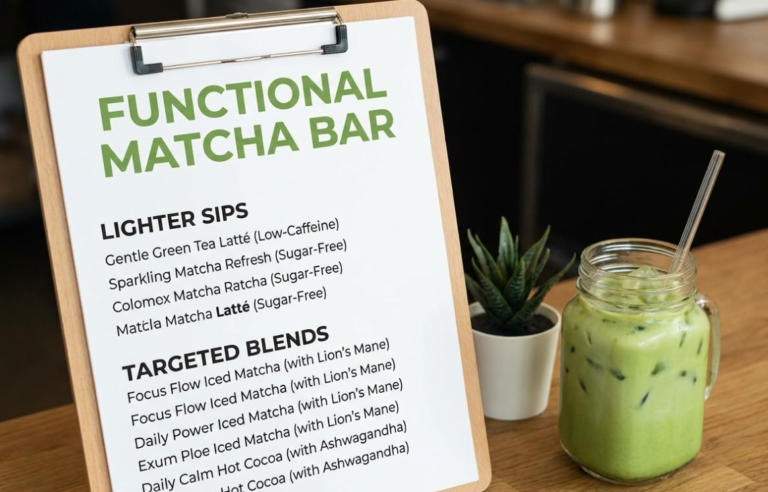
Functional Café Menus
For cafés and chains developing differentiated matcha drinks with a lighter or more targeted menu message.
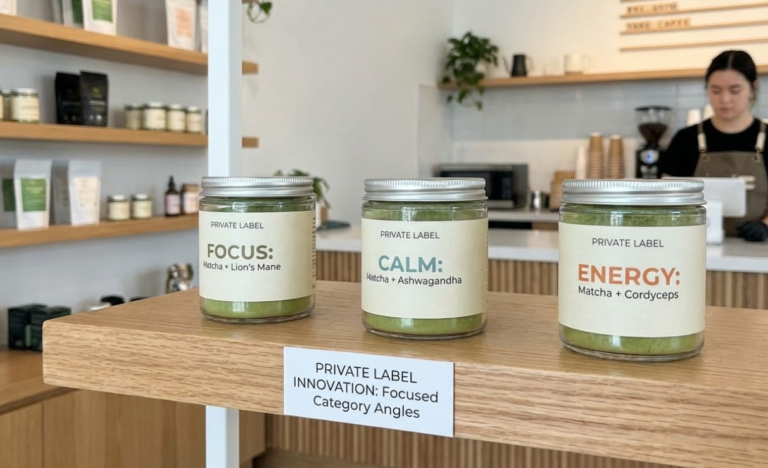
Private Label Innovation
For brands testing a more focused category angle without building everything in-house.
Functional Matcha by Application
Functional matcha concepts need to be developed around the final format, not just the ingredient itself.
"Tell us your format → we’ll suggest the best development direction."
Discuss ApplicationApplication 1 — Drink Powders
For convenience-oriented products where positioning, sweetness strategy, and mixing behavior matter.
Application 2 — Café Beverages
For iced matcha, lighter latte formats, menu specials, and differentiated concept drinks.
Application 3 — Retail Pouches & Tins
For consumer-facing launches where packaging language and flavor/caffeine direction matter.
Application 4 — Ready-to-Mix Blends
For daily-use products that need stable concept alignment across formulation and presentation.
Application 5 — Private Label Innovation
For brands testing niche product positioning with faster sample review and packaging alignment.
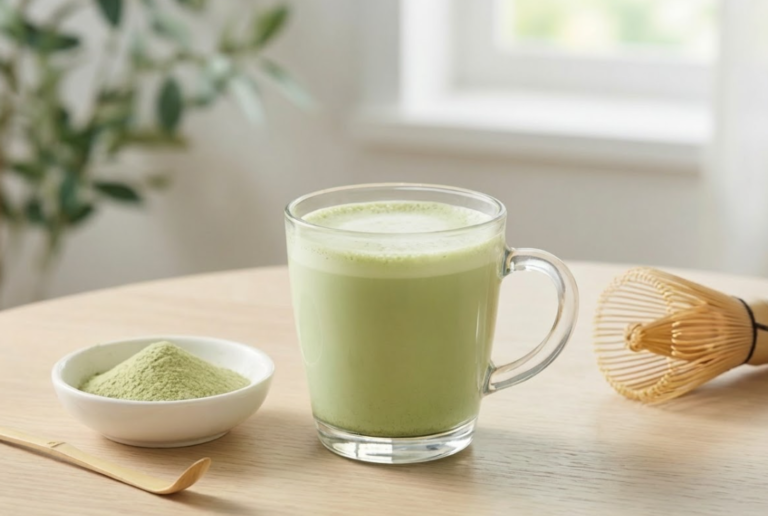
Low-Caffeine / Decaf Matcha Directions
Some buyers explore low-caffeine or decaf-oriented matcha concepts for consumers who want a gentler usage occasion, a more flexible drinking time, or an alternative product story within the matcha category.
This page should position that as a development direction rather than an automatic stock claim. Feasibility depends on the final product concept, ingredient strategy, sensory targets, and market requirements.
If low-caffeine or decaf is part of your concept, we can review positioning options, format suitability, and label-planning considerations with you.
Formulation Note: Low-caffeine and decaf should be treated as formulation and labeling decisions, not just marketing language.
Wellness Positioning vs Compliance
This is where strong product ideas need careful execution.
1 Consumer Interest
Consumers often search for benefits, lighter beverage choices, more flexible caffeine use, and lifestyle-oriented daily routines.
2 Product Positioning
Brands can build compelling concepts through format, sweetness strategy, usage occasion, caffeine direction, packaging, and visual identity.
3 Compliance Boundaries
Final naming, ingredient statements, and health-related wording need to match the legal framework of the destination market.
Compliance Note
For food products in the U.S., FDA distinguishes among health claims, nutrient content claims, and structure/function claims; disease claims are treated differently and are not interchangeable with ordinary product marketing. In the EU, nutrition and health claims in food communications are regulated and only certain claims are permitted or authorised through the EU framework and register.
We can support product direction, packaging planning, and documentation preparation. Final wording for benefits, caffeine positioning, and wellness messaging should always be reviewed according to the destination market before launch.
What Buyers Commonly Ask About Matcha Benefits
Why do consumers search for “matcha benefits”?
Because matcha is often associated with routines, lifestyle choices, and more intentional beverage habits. For brands, that creates an opportunity to build clearer product positioning—without overpromising.
Do brands position matcha around weight-management themes?
Some do, especially through lighter beverage concepts, lower-sugar strategies, portion control formats, or active-lifestyle positioning. But final wording should be reviewed carefully against market rules before use.
Is low-caffeine or decaf a useful direction?
It can be, especially for brands trying to create more flexible usage occasions or a broader consumer entry point.
Should “benefits” be the headline or the support message?
For most B2B product launches, it is safer to build the core story around product concept, usage occasion, and format—then refine market-facing wording with compliance in mind.
OEM / Private Label Functional Matcha Development
Functional matcha projects work best when concept, format, labeling direction, and packaging are aligned from the start.
Fast-Start Checklist
- Target market
- Product format
- Caffeine direction
- Positioning idea
- Packaging type
- Estimated volume
- Launch timeline
Concept Discussion
We review your target market, consumer angle, and intended product story.
Application & Positioning Review
We align the concept with drink format, powder format, caffeine direction, sweetness strategy, and packaging logic.
Sample Direction Development
We prepare sample concepts for sensory review and market evaluation.
Packaging & Label Planning
We support discussion around consumer-ready or bulk packaging and the information needed for label planning.
Production & Delivery
Once the concept direction is confirmed, the project moves into coordinated production and delivery planning.
Packaging Options for Functional Matcha
Functional matcha concepts are often more packaging-sensitive than standard ingredient pages because positioning depends heavily on product format and presentation.
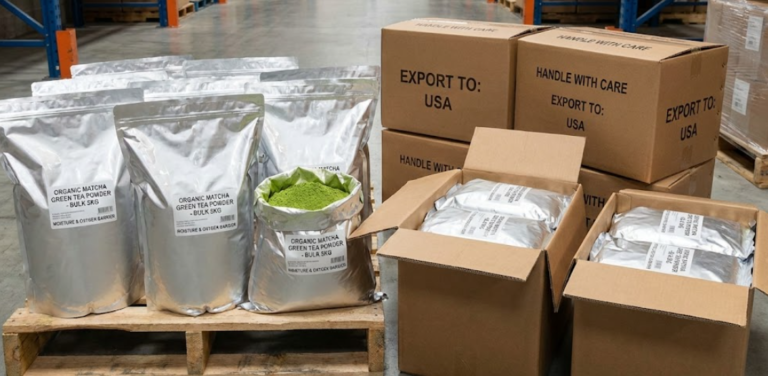
Bulk Packaging
For distributors, manufacturers, beverage developers, and foodservice programs.
Retail / Private Label
For pouches, tins, sachets, single-serve formats, and shelf-ready consumer products.
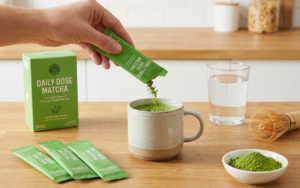
Single-Serve Formats
For projects where convenience, dosage control, and user routine are part of the value proposition.
Packaging note: The right pack format can strengthen a concept just as much as the formula itself.
Discuss Packaging OptionsFAQ: Functional Matcha OEM & Product Development
1. What is functional matcha?
2. Can you develop functional matcha for OEM?
3. Do you offer low-caffeine or decaf matcha concepts?
4. Can matcha be used in wellness-oriented drink powders?
5. Can matcha be positioned for active-lifestyle products?
6. What should brands know about matcha benefits claims?
7. Can matcha be used in lower-calorie or lighter drink concepts?
8. Can I request samples before bulk production?
9. Do you support private label packaging?
10. What product formats can functional matcha be developed in?
11. Can functional matcha be developed for café beverages?
12. How do I start a functional matcha OEM project?

Start Your Functional
Matcha Project
Tell us your concept, target market, and product format. Our B2B specialists will recommend a suitable development path and arrange samples.
-
Concept Samples
Reviewed for your specific application
-
Development Support
Packaging & positioning alignment
Fast Support
We respond within 12 hours
