
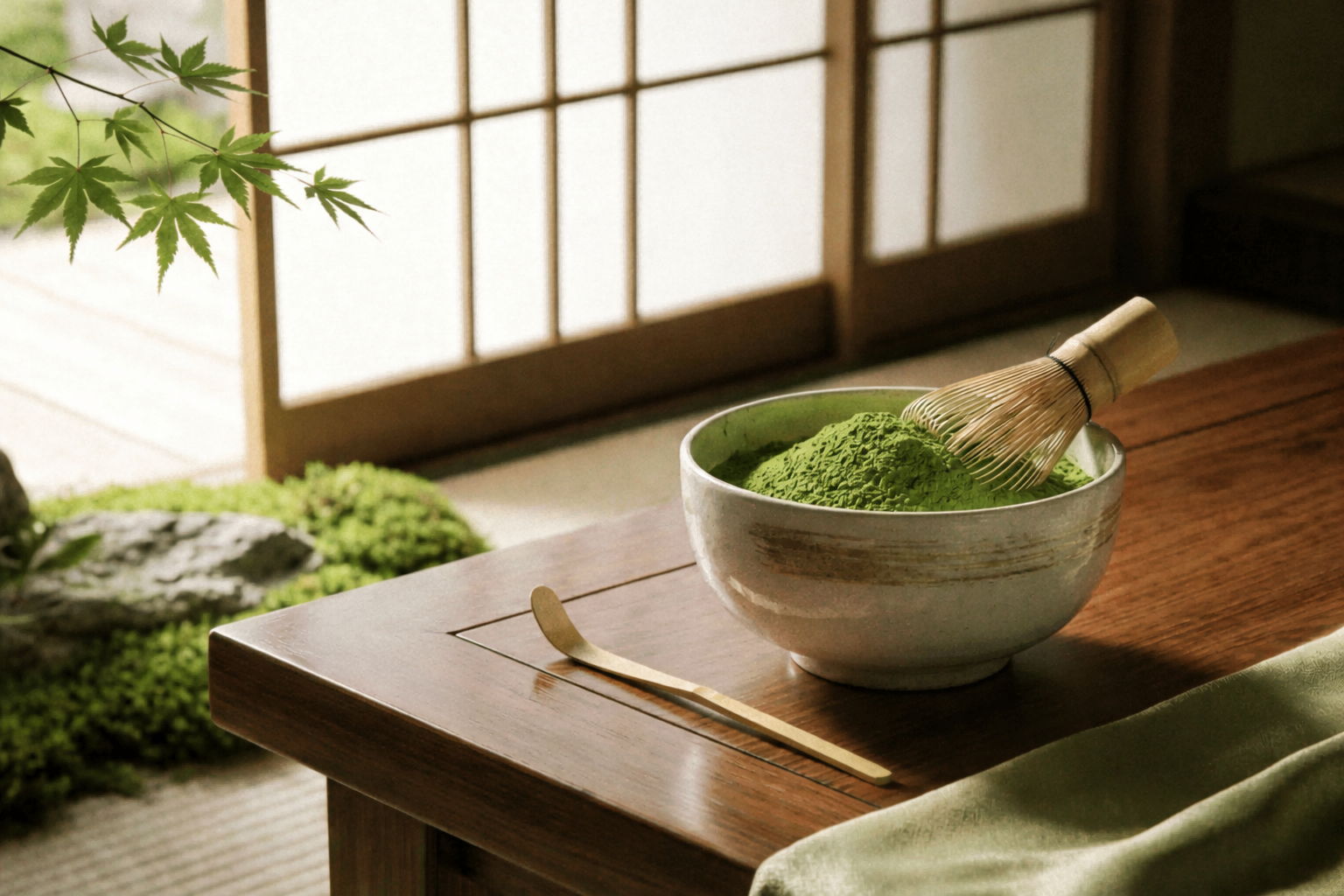
Matcha Powder for Baking
& Commercial Bakery Production
Matcha powder for baking, premix, dessert, and commercial food production—designed for flavor visibility, workable color, process compatibility, and consistent batch performance.
Whether you make cakes, cookies, sponge, fillings, bakery creams, premixes, or dessert powders, the best matcha for baking depends on heat exposure, formula composition, color goals, and cost fit.
- Matcha for bakery, dessert, and premix applications
- Color, mesh, bitterness and heat performance aligned to finished product
- Suitable for commercial bakery and OEM development
- Bulk packaging, MOQ guidance, COA support and export-ready documentation
Tell us what you are making—cake, cookie, premix, filling, or dessert base—and we’ll recommend the right matcha direction for your formula.
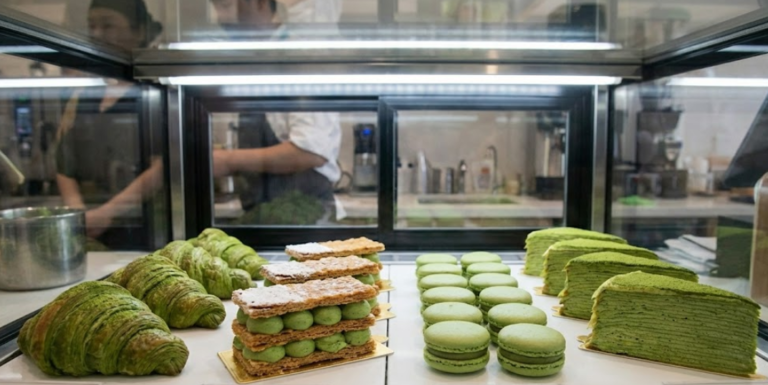
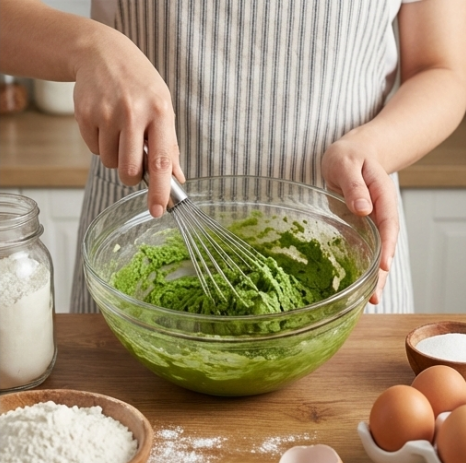
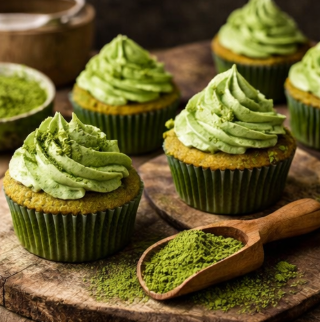
Why Some Matcha Works Better for Baking
Not all matcha performs well under baking conditions. A powder that looks bright in the bag may not deliver the best result in a finished cake, cookie, premix, or dessert application.
Heat, sugar, flour, fats, dairy, and holding time all influence final color, flavor, and overall product performance. That is why matcha for baking should be chosen by application, not just by grade label.
Heat Changes Color
High temperatures can reduce green appearance, so post-baking color matters more than raw powder color alone.
Fat and Sugar Affect Flavor Perception
Butter, oils, dairy, and sweeteners can soften tea notes, which means baking applications often need clearer flavor presence.
Formula Structure Matters
Dry mixes, batters, fillings, creams, and premix systems all interact with matcha differently.
Cost Must Fit Production Reality
The best matcha powder for baking balances flavor, color, batch consistency, and commercial viability.
The best matcha powder for baking is the one that works in your finished product, not just in a sample spoon test.
What Bakers Need from Matcha Powder
For commercial baking, matcha selection is a formulation and production decision, not only a taste decision.
Flavor Presence
The matcha should remain noticeable after flour, sugar, fat, and baking processes are applied.
Color in the Finished Product
Bakers often care more about post-baking appearance than raw powder brightness.
Fine Texture
Fineness can affect batter uniformity, visual distribution, and finished mouthfeel.
Process Compatibility
The right matcha should fit mixing behavior, batch scale, and dry or wet processing systems.
Batch Consistency
Repeatable quality matters for branded bakery items, premix production, and industrial output.
Need help choosing for your exact recipe?
How to Choose Matcha Powder for Baking
For commercial baking, the right matcha is not always the brightest or most expensive powder. Buyers should choose based on finished-product performance: post-baking color, flavor visibility, formula compatibility, cost control and repeatability.
| Selection Factor | What Baking Buyers Should Check | Recommended Direction |
|---|---|---|
| Color After Baking | Raw powder color is not enough. Check the color after heat, mixing and storage. | Choose a baking-focused matcha with workable post-baking green color. |
| Mesh / Fineness | Fine powder helps with batter distribution, premix uniformity and smoother fillings. | Use fine culinary or application-specific matcha for cakes, creams and premixes. |
| Bitterness Level | Sugar, fat, flour and dairy can reduce tea notes, but excessive bitterness can hurt the final product. | Choose a grade with clear tea flavor but controlled bitterness. |
| Heat Stability | Baking temperature and hold time can reduce green appearance and aroma. | Test in the actual product, not only in water or milk. |
| Flavor Strength | Matcha must remain noticeable after flour, butter, sugar, milk powder or fillings are added. | For cookies and baked desserts, stronger flavor presence may matter more than raw brightness. |
| Recommended Grade | Ceremonial-style matcha is usually not necessary for most commercial baking. | Culinary-grade matcha or baking-focused OEM matcha is often more practical. |
| Packaging / MOQ | Bakeries, premix factories and distributors need different packing formats. | 1kg bags, 5kg–10kg cartons or bulk matcha packaging depending on production scale. |
| COA & Batch Consistency | Commercial buyers need stable color, taste and testing records across batches. | Ask for COA and testing, batch records and sample approval before bulk production. |
Need a baking sample direction?
Tell us your product type, target color, sweetness level, fat system and expected monthly usage. We can recommend a practical matcha direction for testing.
Recommended Matcha Grades for Baking
The best matcha for baking depends on whether you prioritize stronger flavor, greener appearance, smoother dispersion, or tighter cost control. For B2B baking buyers, grade selection should start from the product you are making, not only from the words “ceremonial” or “culinary.”
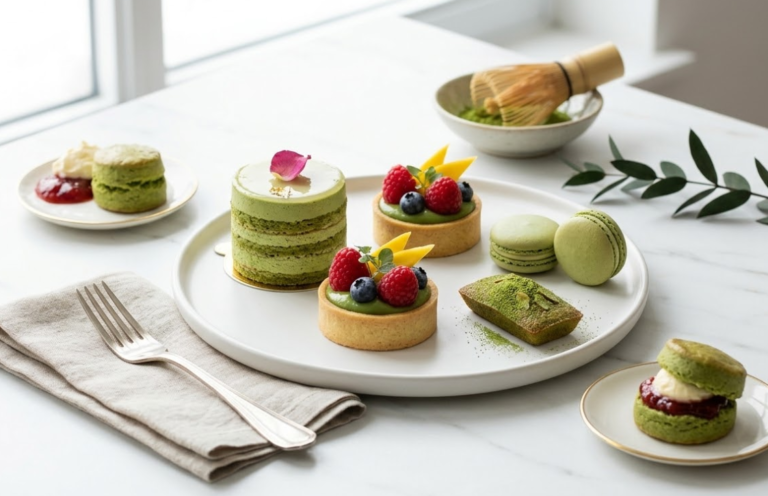
Option 1 — Culinary-Grade Matcha
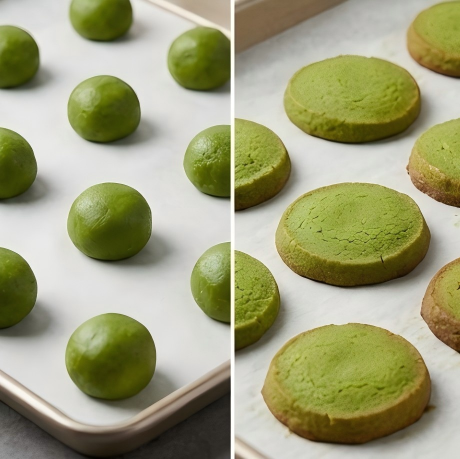
Best for: cakes, cookies, sponge, muffins, bread, fillings, dessert mixes
Why it works: stronger tea identity, baking application fit, better commercial practicality
Best for buyers who want: a scalable baking solution
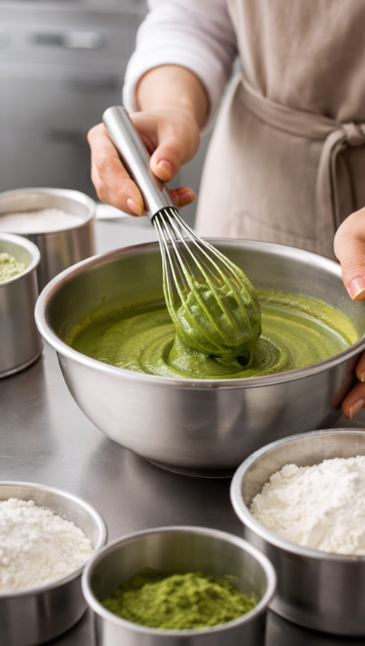
Option 2 — Premium Baking Direction
Best for: premium bakery items, cleaner-label positioning, visually differentiated finished products
Why it works: more refined taste profile and stronger premium presentation
Best for buyers who want: higher-end baked product positioning
Option 3 — Baking-Focused OEM
Best for: brands, premix manufacturers, and bakeries building a custom formula direction
Why it works: flavor, color, fineness, and process-fit can be tuned to your application
Best for buyers who want: custom baking performance and private label development
Note box: The highest-positioned matcha is not always the best choice for baking. Formula fit matters more than name alone.
Baking Formula & Dosage Guidance
There is no single dosage that fits every bakery product. Matcha loading depends on recipe type, target flavor strength, color goal, sweetness level, and processing temperature.
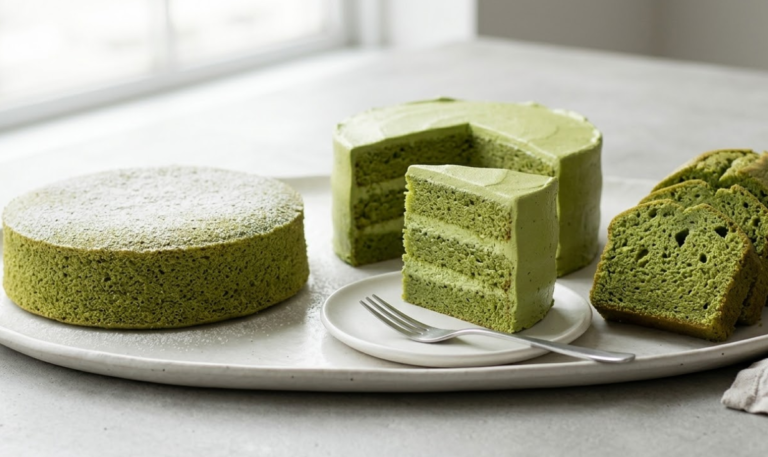
Cakes & Sponge
- Typical use: lighter crumb systems, layer cakes, premium pastry
- Guidance: dosage should balance visible color with a clean tea note that survives baking
- Best for: visual-forward bakery products
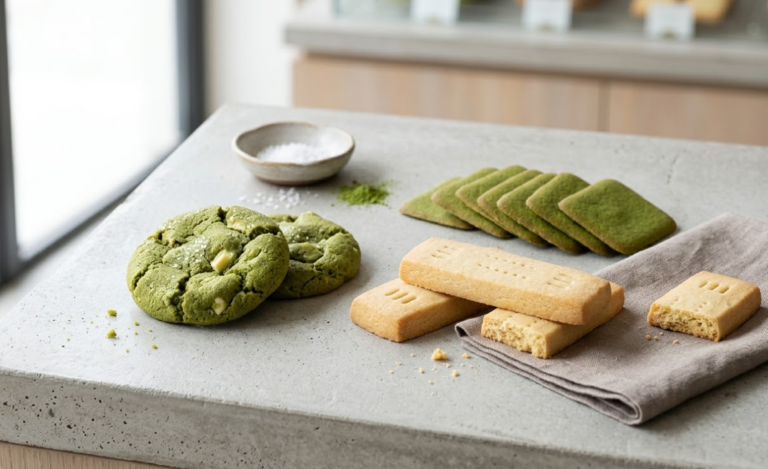
Cookies & Biscuits
- Typical use: stronger baked systems with butter, sugar, and shorter dough structures
- Guidance: flavor presence often matters more than raw powder brightness
- Best for: products needing stronger tea visibility
Fillings, Creams & Premix
- Typical use: powdered dessert bases, creams, bakery mixes, fillings
- Guidance: fineness and distribution can matter as much as flavor
- Best for: consistent industrial production
Recommended note: Dosage depends on formula type, bake temperature, fat content, sweetness system, and target appearance. We can recommend a suitable loading range based on your finished product goal.
Heat, Color & Flavor Performance After Baking
For baking applications, raw powder quality should be evaluated through finished-product performance.
Heat Performance
Baking temperature and hold time affect both appearance and flavor expression.
Color Strategy
The right target is not always the brightest raw green. It is the best finished look for your product category.
Flavor Retention
The final tea note should still be noticeable after sugar, fat, and baking reduce aroma and taste intensity.
Process Repeatability
A baking matcha direction should behave consistently across batches and production runs.
Callout box: Ask us about testing in:
- sponge cakes
- cookies
- brownies
- bakery creams
- fillings
- dry premix systems
- industrial dessert bases
Matcha for Bakery Brands, Premix & Manufacturers
Different business models need different baking solutions.
For Bakeries & Pastry Brands
Flexible matcha selection for product launches, seasonal items, and premium bakery concepts.
For Premix Manufacturers
More emphasis on powder distribution, formulation repeatability, and cost structure.
For Industrial Food Manufacturers
A stronger focus on batch consistency, process fit, supply continuity, and quality documentation.
For Importers & Distributors
Bulk-friendly options for bakery customers, foodservice channels, and regional ingredient supply.
Use-case ideas:
- matcha sponge cake
- matcha cookie
- matcha muffin
- matcha swiss roll
- matcha cream filling
- matcha dessert mix
Packaging & MOQ for Baking Matcha Buyers
Packaging should match how the matcha will be used in production. A bakery brand testing a new product may prefer smaller bags, while a premix factory or industrial food manufacturer may need larger cartons or scheduled supply.
MOQ depends on packaging format, grade, testing needs, destination market and whether the project is bulk ingredient supply or private label matcha.
| Buyer Type | Suitable Packaging | MOQ Direction |
|---|---|---|
| Bakery / Pastry Brand | 1kg foil bags or smaller trial packs | Suitable for testing, seasonal launches and controlled usage. |
| Commercial Kitchen / Foodservice | 1kg bags or 5kg cartons | Easier for daily handling and multiple-store distribution. |
| Premix Manufacturer | 5kg–10kg cartons | Better for powder blending, batch production and warehouse control. |
| Industrial Food Factory | 10kg–25kg bulk formats | Better for large-volume production and repeat orders. See our bulk matcha supply page. |
| Private Label Baking Product | Retail pouches, tins, sachets or boxed sets | MOQ depends on packaging format, printing method and customization scope. |
Packaging Options for Bakery, Premix & OEM Use
Baking-focused matcha may be supplied for industrial food production, bakery use, premix operations, or retail-ready OEM concepts.
Bulk / Industrial Packaging
For manufacturers, bakeries, foodservice, and ingredient distributors.
Built for stable repeat supply and easier production handling.
Retail / Private Label Packaging
For branded baking mixes, dessert powders, pouches, tins, and consumer-ready concepts.
Suitable for brands developing matcha baking lines or private label products.
Supply Planning Support
For repeat production and growing demand, supply continuity matters as much as initial taste approval.
Storage note: Store sealed, away from light, moisture, and heat.
Why Buyers Build a Baking-Focused Matcha Program
Better Finished-Product Performance
A baking-oriented direction supports more suitable color and flavor results after heat processing.
Stronger Flavor in Complex Formulas
Flour, fats, dairy, and sugar reduce tea perception, so a bakery-oriented matcha often performs better than a generic powder.
Easier Product Positioning
A dedicated baking matcha direction can support clearer product development and more consistent quality.
More Efficient Product Development
For bakeries and premix manufacturers, application-led sourcing saves time compared with adapting a generic powder later.
Closing line: A strong baking program starts with the right matcha direction, not just a familiar grade name.
FAQ: Matcha Powder for Baking & Premix Applications
These answers focus on B2B baking buyers comparing color, mesh, bitterness, heat performance, packaging, MOQ and documentation before bulk purchase.
1. What is the best matcha powder for baking?
2. Can I use ceremonial-style matcha for baking?
3. What matters most for baking: color or flavor?
4. Does matcha powder lose color during baking?
5. What mesh size is suitable for matcha powder for baking?
6. How bitter should baking matcha be?
7. How much matcha should be used in baked products?
8. Can matcha be used in premix products?
9. Do you offer bulk matcha for bakeries and manufacturers?
10. Can you support OEM or private label baking products?
11. What packaging is best for commercial baking matcha?
12. Can you provide COA and batch documents for baking matcha?
13. Can I request samples before bulk purchase?
Build a Better Matcha Baking Program
Tell us what you are producing, your target color and flavor, and your monthly volume. We’ll recommend the right matcha direction and arrange samples or specifications.