

COA & Testing Support for Wholesale, Bulk & Private Label Matcha
Review our quality document support for B2B matcha sourcing. This page provides an overview only. Detailed COA samples and testing files are shared on request based on project and market needs.
- COA support for batch-based B2B sourcing
- Testing support for quality and compliance review
- Documents available for wholesale, bulk, and private label projects
- Relevant files shared on request based on project needs
For industrial buyers who need batch-level COA with repeat bulk supply, see our bulk matcha with COA support page.
For private label buyers who need COA, testing files and export-ready packaging support, visit our private label matcha page.
For import document planning, read our FDA import documents and certifications for bulk matcha buyers.

Why COA & Testing Matter
Quality documents are an essential part of the procurement decision, ensuring safety, consistency, and compliance for your premium matcha products.

Supplier Qualification
Vital for internal QA review and establishing a reliable, long-term supply chain partnership.
Import & Compliance Review
Essential screening documents for customs clearance and meeting local market regulations.
Batch Verification
Ensures product consistency, verifying that the delivered lot matches agreed specifications.
Brand & Project Approval
Provides the necessary data and assurance to support private label matcha and brand approval workflows.
FDA Prior Notice, COA & Testing Documents for Matcha Imports
FDA Prior Notice is a shipment notification process for food imported into the United States. A COA is not the same as Prior Notice, but batch-level COA and testing files can help importers, brokers, and QA teams confirm product identity and review risk before shipment.
This section helps buyers understand which matcha quality documents can support the import review process.
| Import Review Item | What Buyers / Brokers May Need | How COA & Testing Support Helps |
|---|---|---|
| Product Identity | Common product name, grade, ingredient description, and intended use. | Spec sheet and COA help keep the product description consistent across documents. |
| Batch / Lot Traceability | A clear connection between the shipment, batch number, and document package. | Batch-linked COA reduces confusion during buyer, customs, or QA review. |
| Pesticide Residue Review | Market-relevant pesticide residue testing, especially for strict buyers and organic-positioned products. | Testing reports can support importer screening and brand approval workflows. |
| Heavy Metals Review | Lead, cadmium, arsenic, mercury, or other market-relevant elements. | Heavy metal testing helps buyers assess raw material safety risk before shipment. |
| Microbiology Review | Total plate count, yeast and mold, E. coli, Salmonella, or project-relevant indicators. | Microbiology reports support food factories, beverage brands, and private label QA review. |
| Shipment Document Match | Invoice, packing list, product name, quantity, and packaging format should match the actual shipment. | COA, spec sheet, and batch records help keep shipment documents consistent. |
Important Note for U.S. Buyers
Prior Notice is usually filed by the importer, customs broker, or another party with the required shipment information. As a matcha supplier, we support the document side by preparing product specifications, batch/lot information, COA, testing files, organic certificates when applicable, invoice, packing list, and export-related information.
What a Matcha COA Typically Covers
A Certificate of Analysis (COA) is a foundational document for batch-level verification. While specific parameters vary by product grade, a typical matcha COA includes several standard fields to ensure quality and consistency. Actual COA fields may vary by product type, batch, and project requirements.
-
Product Identification
Official product name, grade, and botanical origin.
-
Batch / Lot Reference
Specific lot numbers, production dates, and shelf life.
-
Basic Quality Indicators
Sensory evaluation results such as aroma and taste profiles.
-
Appearance-Related Checks
Color grading, powder fineness (mesh size), and visual consistency.
-
Moisture & Physical Data
Moisture content percentages and other relevant physical metrics.
-
Batch-Linked Quality Fields
Other applicable metrics verified by our internal QA team.
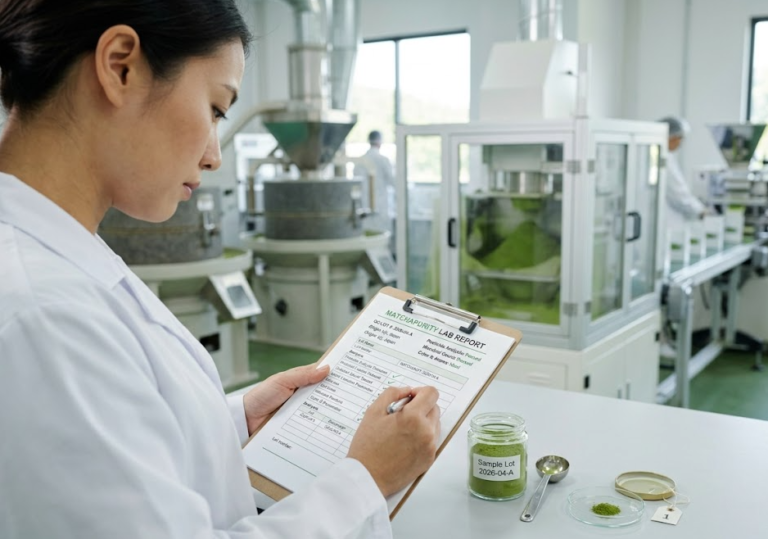
What Should a Matcha COA Include for Bulk Buyers?
For bulk matcha purchasing, a COA should not be treated as a simple PDF attachment. It is a batch-level quality record that helps buyers check food safety, product consistency, and shipment approval before placing or receiving an order.
| COA Item | What It Shows | Why Bulk Buyers Should Check It |
|---|---|---|
| Batch / Lot Number | Connects the report to the actual shipment. | Prevents suppliers from using an old or unrelated report. |
| Pesticide Residue | Shows whether tested pesticide residues are within relevant limits. | Important for import review, food safety, organic positioning, and buyer approval. |
| Heavy Metals | Usually includes lead, cadmium, arsenic, mercury, or other market-relevant items. | Important because tea leaves can naturally interact with soil and growing conditions. |
| Microbiology | May include total plate count, yeast and mold, E. coli, Salmonella, or other indicators. | Helps food brands, factories, and importers assess safety risk. |
| Moisture Content | Shows water content in the powder. | High moisture can affect shelf life, clumping, storage stability, and microbial risk. |
| Particle Size / Mesh | Shows powder fineness or distribution. | Important for latte, RTD, baking, premix, supplement, and instant drink applications. |
| L*a*b* Color Values | Provides objective color data. | Helps buyers compare sample, bulk shipment, and repeat batches more consistently. |
| Test Date | Shows when the analysis was performed. | Avoids relying on outdated reports. |
| Testing Lab / Method | Shows where and how the test was conducted. | Helps buyers judge whether the report is suitable for internal review. |
A generic COA is not enough for serious B2B buyers. If the COA has no batch number, no test date, or no connection to the actual shipment, buyers should ask for clarification before confirming the order.
Red Flags When Reviewing a Matcha COA
A COA should help buyers reduce risk. If the report is vague, outdated, or not connected to the shipment, it may not be useful for real procurement review.
| Red Flag | Why It Matters |
|---|---|
| No batch number | The report may not belong to the shipment being purchased. |
| Only one old report for all products | It may not reflect current production or the specific grade. |
| No pesticide residue data | Importers and food brands may not have enough safety evidence. |
| No heavy metal data | Buyers cannot assess lead, cadmium, arsenic, mercury, or other relevant risk items. |
| No microbiology data | Food factories and distributors may reject the document package. |
| No test date or lab information | The report may not be useful for quality review. |
| Report name does not match product name | Customs, QA teams, or buyers may question traceability. |
| Supplier avoids explaining the COA | This may indicate weak documentation control. |
For bulk orders, COA review should happen before shipment, not after the product arrives.
Testing Support Overview
Beyond standard COAs, we support advanced testing requirements. Reports are available on request, depending on project scope, target market, and customer requirements.
Discuss Testing Needs →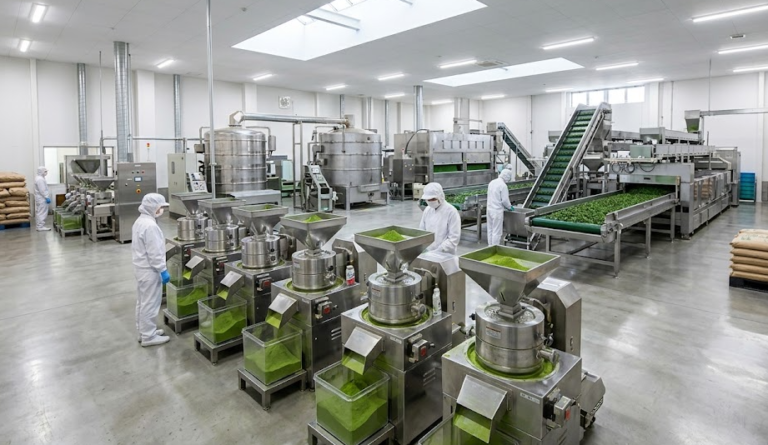
Pesticide Residue
Crucial for market entry (e.g., EU, US, Japan), brand compliance audits, and strict import evaluations. We maintain records aligned with international MRL standards.
Heavy Metals
Essential for risk management, regulatory compliance, and brand customer audits. Testing covers key elements to ensure the safety of the raw material.
Microbiology
Required for food safety audits and thorough project evaluations. We can share relevant microbiological profiles based on your production needs.
Project-Specific Testing
For distinct customer, market, or premium brand requirements, we can support or facilitate specific third-party lab tests tailored to your project scope.
Which Buyers Commonly Request These Documents
Different procurement channels require specific documentation to meet their unique workflow and regulatory demands.
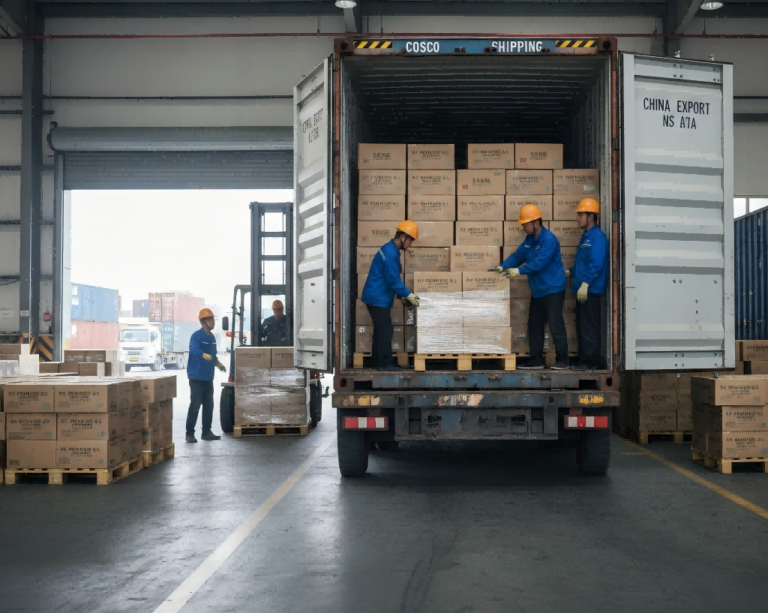
Importers & Distributors
Crucial for supplier qualification and customs preparation to satisfy stringent regulations and clear borders smoothly.
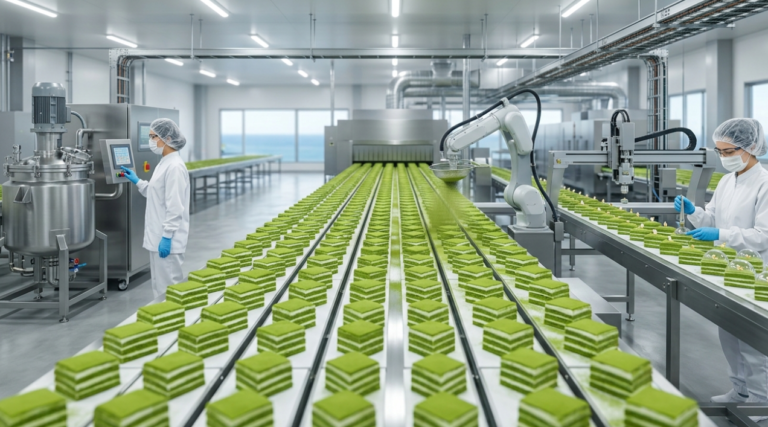
Food Manufacturers
Required for internal QA processes and formulation review to ensure safe integration into existing production lines.

Café & Beverage Brands
Used during supplier approval, menu expansion, and brand review to verify flavor consistency and food safety standards.
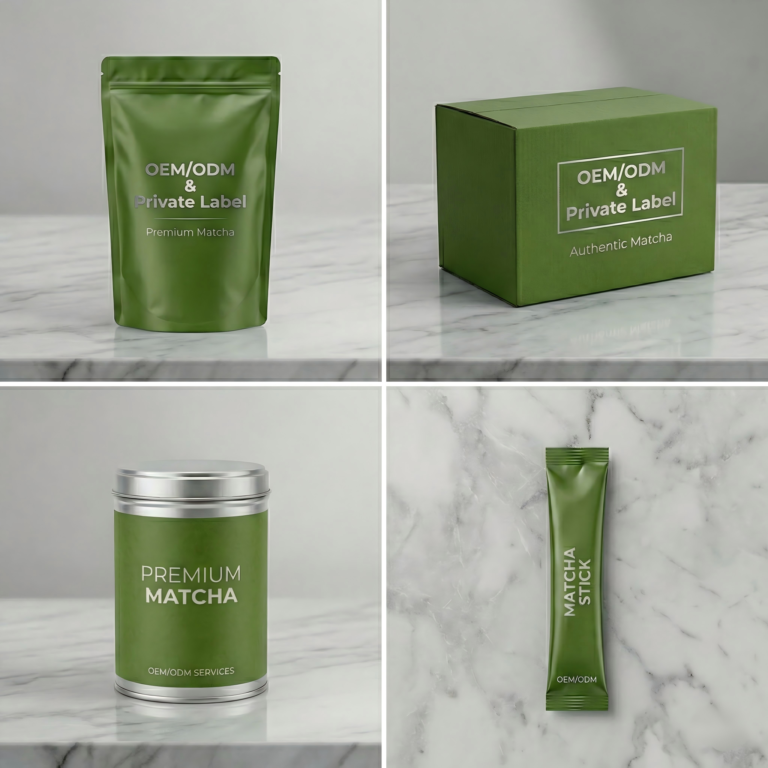
Private Label Buyers
Essential for vendor onboarding, packaging claim substantiation, and comprehensive brand compliance review. For OEM packaging and brand-ready production, see our private label matcha page.
Documents Available on Request
We prepare customized document packages tailored to your specific product scope and sourcing context.
-
COA Samples
Grade-specific examples for initial evaluation.
-
Third-Party Testing Samples
Previous reports demonstrating our safety standards.
-
Batch-Linked Quality Files
Specific data attached to confirmed orders.
-
Project-Specific Document Packs
Compiled reports for custom or private label matcha projects.
Why not public downloads?
Full copies and detailed reports are shared on request to ensure document control and correct matching to your specific project needs.
- Maintains strict document control
- Ensures correct project relevance
- Guarantees market-specific sharing
How to Request COA or Testing Documents
A straightforward process to get the exact files needed for your procurement compliance.
Tell Us Your Product
Specify the grade, product type, or project scope you are sourcing for.
Share Target Market
Let us know the destination country to align with local import compliances.
List Needed Docs
Specify whether you need a sample COA, heavy metal report, or pesticide data.
Receive Files
We confirm your details and send the relevant files directly to your inbox.
Frequently Asked Questions
Find quick answers to common questions about our quality documentation, testing procedures, and document request workflows.
Can I download COA files directly from the website?
What does a matcha COA usually include?
Can you provide third-party testing reports?
Do testing requirements vary by market?
Can you support COA and testing for private label projects?
Which reports are commonly requested for bulk and wholesale orders?
How quickly can you send COA samples or testing documents?
Request COA & Testing Documents
Tell us your project type and required reports. We’ll review your request and share the most relevant COA samples or testing documents for your sourcing project.
Why we ask for this info:
Because regulations and specifications vary, knowing your project scope allows us to send the exact reports that will be most useful for your procurement process.
Related sourcing guides:
For industrial buyers who need batch-level COA with repeat bulk supply, see our bulk matcha with COA support page.
For private label buyers who need COA, testing files and export-ready packaging support, visit our private label matcha page.
For import document planning, read our FDA import documents and certifications for bulk matcha buyers.
Need More Quality & Compliance Information?
Factory Capability →
Learn about our production facilities, grinding processes, and QA environment.
Certifications →
Review our organic (JAS, USDA, EU) and food safety (FSSC22000) credentials.
FDA Import Documents →
Review FDA Prior Notice, import documents, organic certificates, COA and customs-related documentation for bulk matcha buyers.