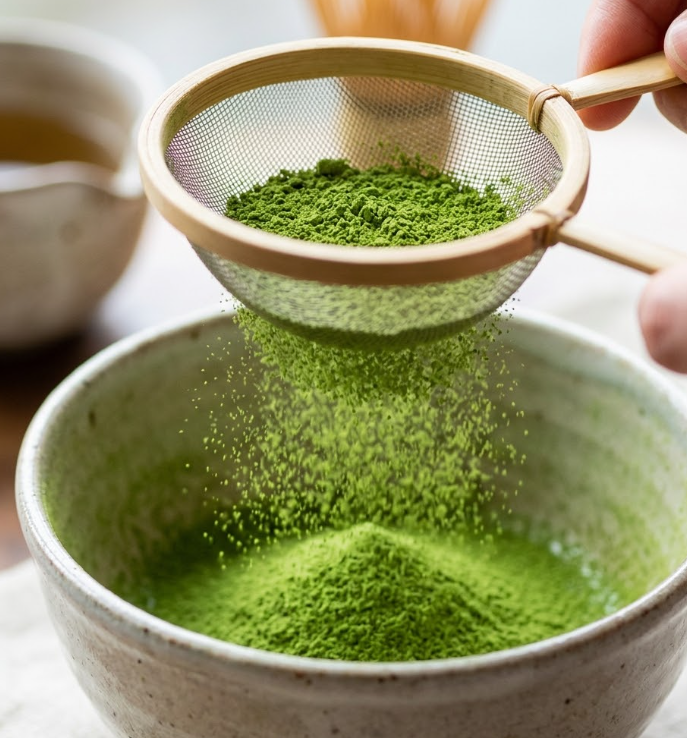

Struggling with matcha sourcing? Focusing only on color and taste can lead to seized shipments, unexpected costs, and a damaged brand. This is a common and expensive mistake.
To import matcha safely, you must verify your supplier's certifications and import documents. Key documents include a batch-specific Certificate of Analysis (COA)1, a Phytosanitary Certificate2, and market-specific credentials like FDA registration information, FDA Prior Notice support, USDA/EU/JAS Organic, and factory audits such as HACCP and ISO 9001. These help buyers reduce legal, quality, and customs clearance risks.
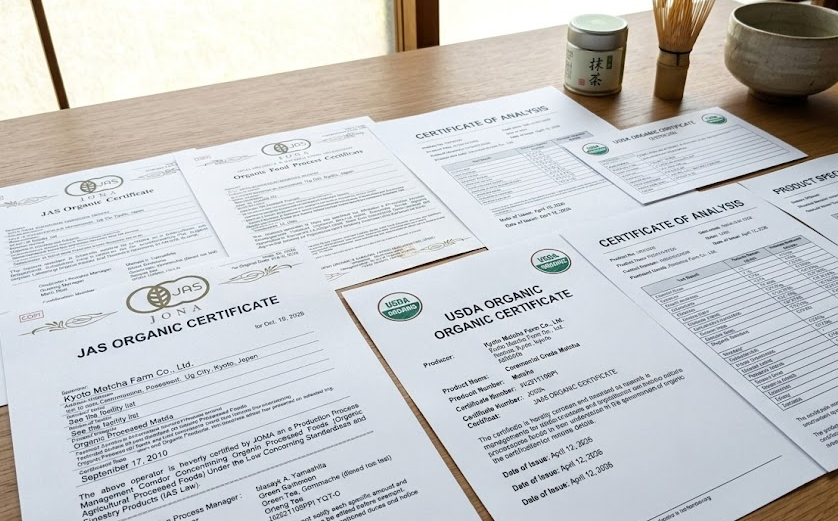
In my years in the global matcha trade, I've seen too many buyers get excited about a sample's vibrant green color. They spend weeks comparing tasting notes but overlook what truly matters: whether the supplier has complete, auditable compliance documents.
Customs and agricultural agencies will not be swayed by a brighter green or a smoother taste. They care whether the shipment meets the importing country’s legal and documentation requirements. Lacking a key certificate or import document can lead to cargo detention, unexpected storage costs, delivery delays, and damage to buyer trust.
For U.S. buyers, this often includes understanding FDA Prior Notice and food facility registration-related requirements. The supplier may not be the party that files every import document, but a professional supplier should know what information importers, brokers, and logistics partners usually need before shipment.
That's why smart importers act like auditors before they even talk about price. Let’s break down the documents and certification points you should check.
If you are still preparing your supplier evaluation list, you can also read our bulk matcha import checklist.
What Basic Entry Documents Guarantee Your Matcha's "Right to Arrive"?
Worried your matcha shipment will get stuck at customs? Missing one basic document can halt your entire delivery, making discussions about quality and price completely meaningless. This is your first checkpoint.
Your matcha needs foundational documents for entry. A batch-specific Certificate of Analysis (COA)1 confirms safety and quality. A Phytosanitary Certificate2 proves the shipment can meet plant-health documentation requirements when required by the destination market. For the U.S. market, FDA facility registration information and a completed Prior Notice process are essential import considerations.
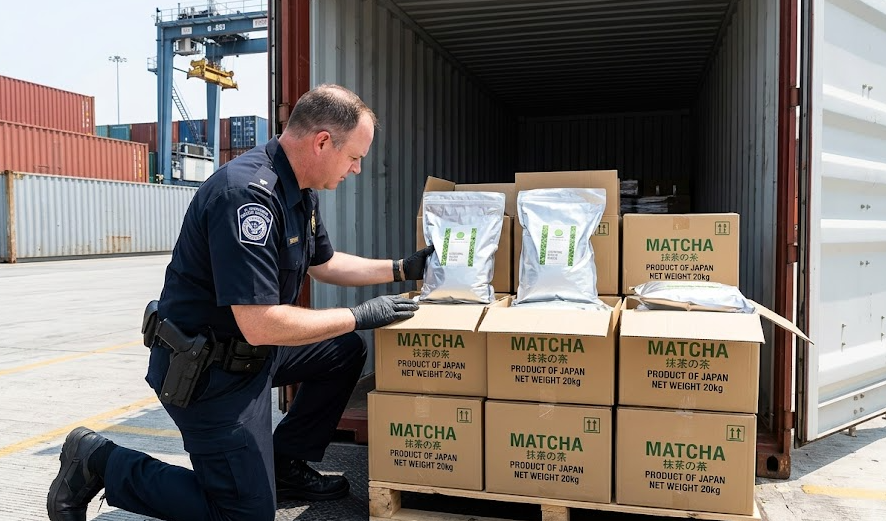
This is the ground floor of compliance. If these documents are not in order, nothing else matters.
I once worked with a client whose shipment was held at port for weeks simply because of a documentation issue. The storage fees alone completely wiped out their profit margin. This is a real risk. To avoid it, you need to verify that your supplier can provide these essential documents without hesitation.
They are not optional extras. They are the price of admission for international trade.
Key Entry Documents Explained
A professional buyer knows that a generic spec sheet is not enough. You need specific, verifiable proof for every shipment.
| Document | Purpose | Why It's Critical for Importers |
|---|---|---|
| Certificate of Analysis (COA)1 | Confirms the specific batch meets safety and quality specifications, including pesticide residue, heavy metals, microbiology, and other key indicators. | Ensures the bulk product you receive is safe and consistent with the sample you approved. It is your primary tool to fight quality drift between batches. |
| Phytosanitary Certificate2 | Certifies that the product meets plant-health documentation requirements when required by the importing country. | This may be required for customs clearance in some countries. Without it, your shipment can be delayed or rejected if the destination market requires this document. |
| FDA Registration & Prior Notice3 | For the U.S. market, food facility registration information and advance notice of the incoming food shipment help support U.S. food import compliance. | Non-compliance can lead to detention or delay at the U.S. port. It is a key consideration for U.S. market access and a sign of an experienced supplier. |
For batch-level pesticide, heavy metal and microbiology details, see our COA and testing guide.
What Should U.S. Buyers Know About FDA Prior Notice for Matcha?
Many buyers search for FDA Prior Notice because they are worried about whether matcha can enter the United States smoothly. This is a valid concern.
Matcha is a food product. For food imported or offered for import into the United States, FDA Prior Notice is generally required. However, this does not mean FDA “approves” every matcha shipment before import. It means FDA must receive advance notification before the food arrives or is offered for import.
For bulk matcha buyers, the practical question is not only:
Does this supplier have FDA?
That question is too vague.
A better question is:
Can you provide the food facility information, product details, batch records, commercial invoice, packing list, COA, and shipment information needed for U.S. food import filing and FDA Prior Notice?
A serious supplier should understand the difference between:
| Item | What It Means for Buyers |
|---|---|
| FDA Food Facility Registration | The facility that manufactures, processes, packs, or holds food for U.S. consumption may need to be registered with FDA. |
| FDA Prior Notice | Advance notice must be provided before food is imported or offered for import into the U.S. |
| Customs Entry | The importer of record or customs broker usually handles customs declaration and related import procedures. |
| Supplier Documents | The supplier should provide accurate product information, COA, invoice, packing list, batch details, origin information, and shipping records. |
This is why experienced buyers do not only ask for a beautiful sample. They ask whether the supplier can support the documentation chain behind that sample.
FDA Prior Notice: What Information Should Matcha Buyers Prepare?
For U.S. buyers, the supplier may not be the party that files FDA Prior Notice. In many cases, the importer, customs broker, logistics partner, or another authorized party handles the actual filing. However, a professional matcha supplier should be able to provide accurate product, batch, facility, and shipment information needed before import.
| Information Needed | Why It Matters for U.S. Import |
|---|---|
| Product Name | Helps identify the imported food product clearly. |
| Product Description | Should explain whether the product is matcha powder, green tea powder, organic matcha, or another format. |
| Manufacturer / Processor Information | Supports facility and supply-chain identification during import review. |
| Country of Origin | Used for customs, import filing, and buyer documentation. |
| Batch / Lot Number | Helps connect the shipment with COA and production records. |
| Commercial Invoice | Provides transaction details, quantity, value, and seller/buyer information. |
| Packing List | Shows carton count, net weight, gross weight, and packaging format. |
| COA | Supports buyer review for pesticide residue, heavy metals, microbiology, and quality consistency. |
| Importer / Broker Filing Role | Buyers should confirm who files Prior Notice before shipment. |
A professional supplier does not need to pretend that they “approve” the import. Instead, they should clearly support the importer and broker with accurate documentation.
For industrial-volume purchasing, MOQ and export packaging, visit our bulk matcha supplier page.
Do You Need Organic Certifications to Enter Premium Markets?
Trying to sell to high-end cafés or major retailers in the U.S. or EU? Without the right organic documentation, your premium matcha might not even get considered.
Yes, for premium markets like the U.S., EU, and Japan, organic certification is often a strict requirement if you want to sell the product as organic. Key certifications to check may include USDA Organic, EU Organic, and JAS Organic. They help prove your supply chain is compliant and traceable for organic positioning.
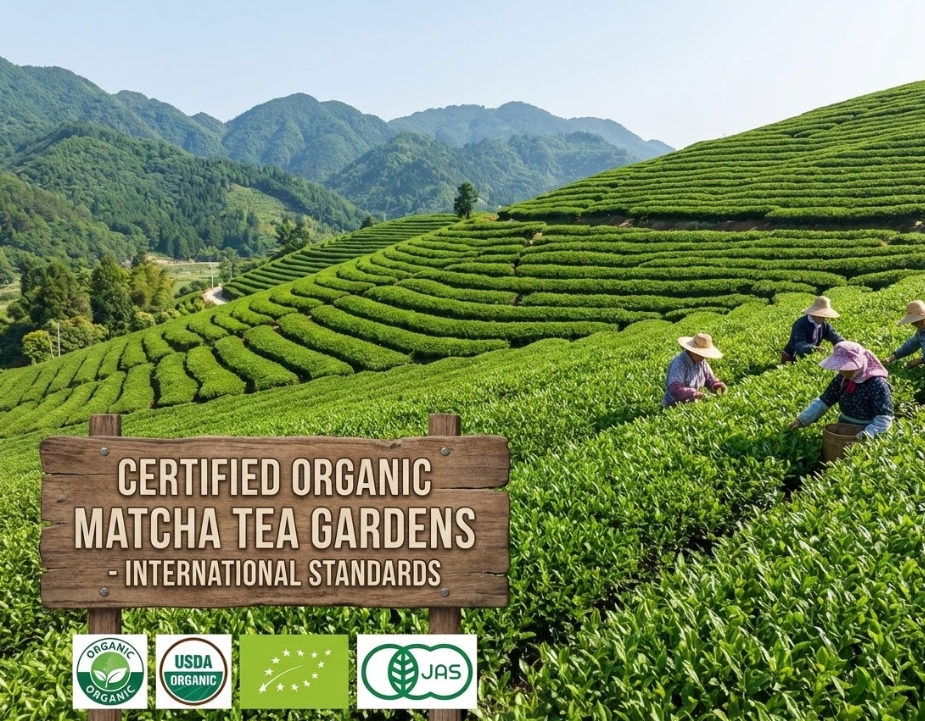
If your target customers are in North America, Europe, or Japan, “organic” can be your ticket to entry. For many specialty food channels, organic documentation is not just a marketing asset. It is a buyer requirement.
The value is not only a logo on the package. The real value is the audited and traceable system behind it.
I’ve seen many suppliers claim they can “do organic,” but they fall silent when asked for the actual certification trail. This often happens with asset-light traders who source from various small, uncertified farms to get a low price. This model makes a consistent, certified organic supply chain4 difficult to maintain.
For a serious buyer, traceability is everything. You need to know that your tenth shipment comes from the same certified source as your first. This is how you build a reliable supply chain that your own customers can trust.
Why Traceability Is Non-Negotiable
A simple promise of “organic” is not enough. Mature buyers know to dig deeper.
- Authenticity of Certification: Is the certificate valid? Does it cover the specific product you are buying?
- Traceable Batches: Can the supplier trace a specific batch of finished matcha all the way back to the certified tea garden it came from?
- Supply Stability: Is the certified raw material source stable and under the supplier's control, or are they patching together supply from the open market?
- Import Documentation: If the product is imported as organic, does the shipment require additional organic import documentation in your destination market?
- Label Claim Support: Can the organic claim be used legally on your final retail packaging?
In addition, sustainability certifications like the Rainforest Alliance are becoming more important. They add value for brands focused on ESG storytelling5 and can open doors to retail channels that prioritize ethical sourcing.
How Do Factory Certifications Ensure Your Supplier Can Handle Large Orders?
Have you ever received a bulk order that did not match the quality of the approved sample? This often happens when a supplier lacks proper factory systems, leading to costly inconsistency.
Factory system certifications like HACCP and ISO 9001 are crucial. HACCP supports food safety management, while ISO 9001 supports standardized quality control processes. These systems reduce batch-to-batch variation and help prove the supplier can reliably produce large, consistent orders.
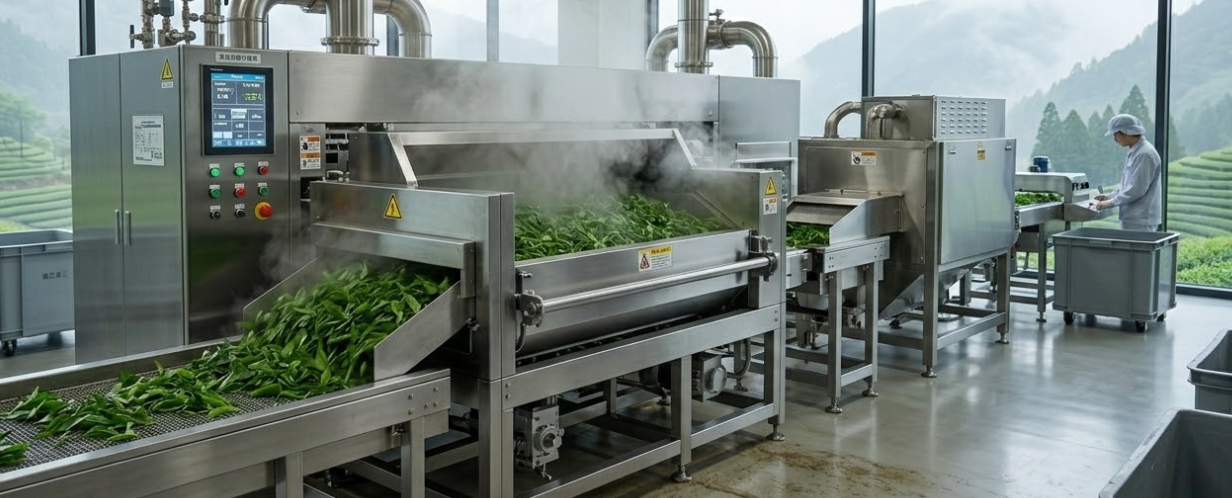
This layer of certification is what separates a simple trading company from a true manufacturing partner. I’ve seen buyers get burned by suppliers who sent a perfect sample but delivered a poor bulk order. This usually happens because the supplier lacks robust, documented production systems.
They might get it right once, but they cannot repeat it at scale.
A certified factory, on the other hand, operates on process, not luck. This is your assurance of consistency and safety. For large-volume buyers, these factory certifications are a direct reflection of the supplier’s ability to protect your investment and brand reputation over the long term.
For buyers comparing large-volume supply options, choosing a reliable wholesale matcha supplier is as important as checking certificates.
The Value of a Systematized Factory
These certifications are not just pieces of paper to hang on the wall. They represent a commitment to quality and safety.
| Certification | What It Represents | Why It Matters for Bulk Orders |
|---|---|---|
| HACCP | A systematic, preventive approach to food safety risk management. | Helps control production risks and reduce contamination concerns. |
| ISO 9001 | A standardized process for quality management. | Helps improve consistency and repeatability across batches. |
| HALAL / KOSHER | Compliance with specific dietary requirements and management standards. | Opens access to specific global markets and adds another layer of buyer confidence. |
If you are ready to compare MOQ, packaging and bulk supply options, visit our bulk matcha supplier page.
Buyer Checklist: What to Confirm Before Importing Bulk Matcha
Before confirming a bulk matcha order, ask your supplier these questions:
- Can you provide a batch-specific COA for this shipment?
- Does the COA include pesticide residue, heavy metals, and microbiology?
- Can you provide a product specification sheet?
- Can you provide commercial invoice and packing list before shipment?
- Can you provide certificate of origin if required?
- Can you provide a phytosanitary certificate if my market requires it?
- For the U.S. market, can you provide information needed for FDA Prior Notice?
- Can you explain whether the facility has relevant FDA registration information?
- If the matcha is organic, can you provide valid organic certificates and traceability records?
- Is the certificate scope connected to this exact product and batch?
- Can you support repeat orders with consistent documentation?
If you want a broader purchasing question list beyond certifications, read this related guide: What to Ask Before Importing Matcha in Bulk.
For batch-level pesticide, heavy metal and microbiology details, see our COA and testing guide.
When Should Buyers Confirm These Documents?
Do not wait until the matcha is ready to ship before asking for import documents. For bulk orders, buyers should confirm the document package before paying the deposit or before production starts.
A safer workflow is:
- Confirm the target market and import requirements.
- Review supplier certificates and factory documents.
- Approve product specification and sample.
- Confirm COA items needed for the destination market.
- Confirm invoice, packing list, origin document, and FDA-related information if shipping to the U.S.
- Confirm who is responsible for customs filing, FDA Prior Notice, broker communication, and import shipping and Incoterms.
- Keep the final document package connected to the batch or lot number of the actual shipment.
This process may feel slower at the beginning, but it prevents bigger problems later. A low price is not useful if the shipment is delayed, rejected, or questioned by your customer’s QA team.
Conclusion
In bulk matcha importing, certifications and import documents are your safety net. They protect your funds, delivery schedule, and brand reputation from costly compliance failures.
So, the next time you evaluate a supplier, do not start only by asking for the price. Ask the right questions first:
- Can you provide batch-specific COAs?
- Are you certified for my target market, such as USDA Organic or EU Organic?
- Is your factory HACCP and ISO 9001 certified?
- Can you demonstrate full traceability from farm to final product?
- Can you support the documents needed for FDA Prior Notice and customs clearance if I import to the U.S.?
- Can you explain who prepares each document before shipment?
Their answers will tell you a lot about their ability to be a reliable, long-term partner.
If you are preparing a bulk matcha import project, send us your destination country, application, target grade, packaging format, and estimated order volume. We can help you review suitable matcha grades, COA needs, and import document preparation before production.
If you are ready to compare MOQ, packaging and bulk supply options, visit our bulk matcha supplier page.
If you're looking for a supplier who already has these answers—one with a complete certification base, experience with U.S. and EU import documentation, and the capacity for stable, large-scale orders—then we're ready to help.
Fill out the form on our page to connect with our team. We can help you assess the right matcha grades, certification needs, and import plan to build a secure and profitable supply chain.
Understanding the COA is crucial for ensuring the safety and quality of your matcha shipments, protecting your brand and customers. ↩
This certificate helps confirm plant-health documentation status when required by the importing country, reducing customs delay risk. ↩
FDA Prior Notice and food facility registration-related information are essential for U.S. food import planning. FDA states that food imports generally do not require FDA pre-approval, but relevant facilities must be registered and Prior Notice must be provided when required. ↩
A verified organic supply chain helps your matcha meet premium market expectations and maintain customer trust. ↩
Focusing on ESG storytelling can enhance your brand's appeal to ethically conscious consumers and open additional market opportunities. ↩