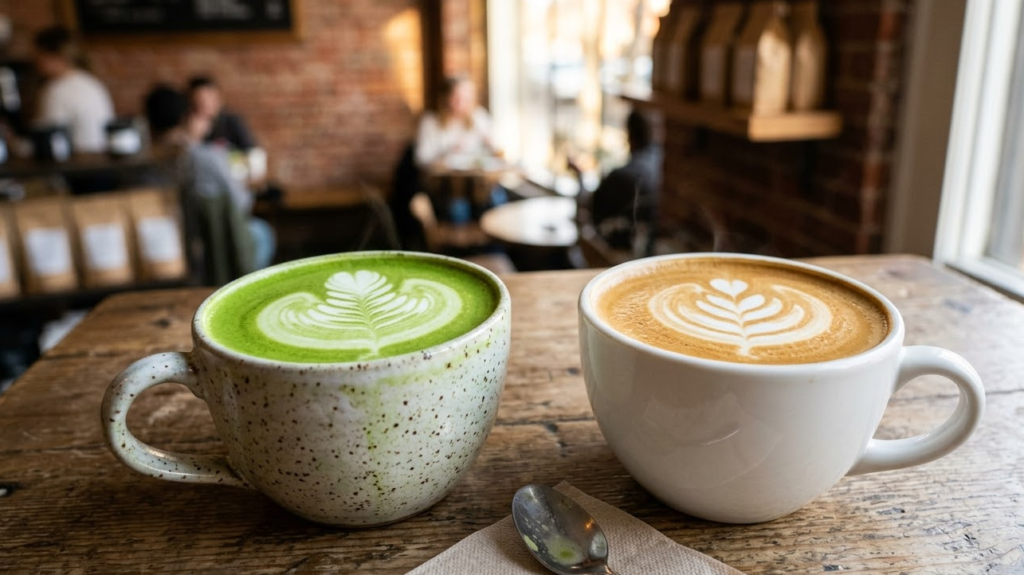
Struggling to find consistent matcha for your growing brand? You need a powder that performs every time, but suppliers keep failing you with unstable batches and poor quality.
The best organic matcha for business isn't about a single "ceremonial" grade. It's about matching specific criteria—like color stability1, flavor penetration2, and powder fineness3—to your application. This ensures batch consistency4 and protects your brand's reputation and bottom line.
I've talked to hundreds of brand owners, and the story is often the same. They start with a great product, but as they scale, quality control becomes a nightmare. The truth is, the criteria that matter for a global brand are very different from what a small tea shop looks for. Let's break down what you really need to focus on to build a scalable, successful matcha business.
How Do You Choose the Right Matcha Grade for Your Business?
Your matcha lattes look dull and taste weak. You're using a high-grade powder, but it gets lost in the milk and sugar, hurting your sales and reputation.
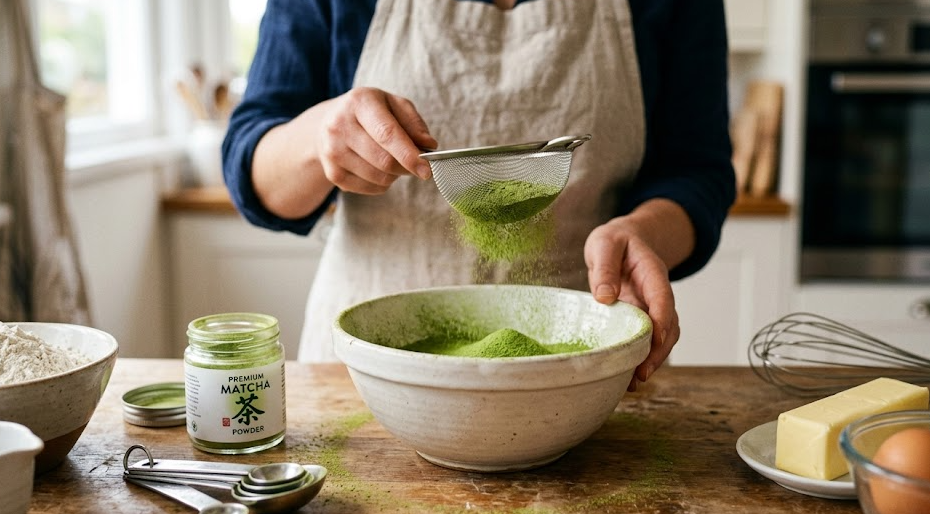
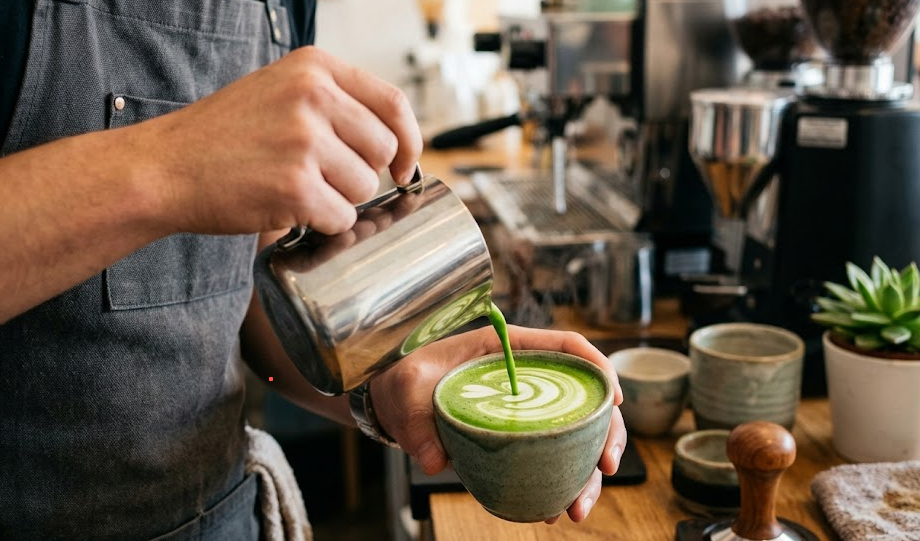
Forget marketing terms like "ceremonial" for commercial use. The right grade is a "weapon" designed for a specific battle. For lattes or baking, you need a specialized Café or Culinary Grade5 with strong color and flavor that can withstand heat and cut through other ingredients.
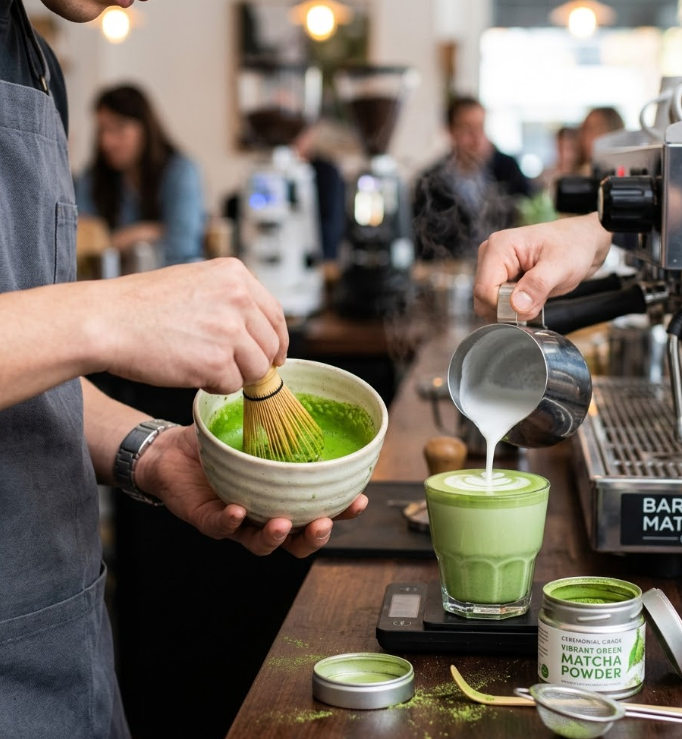
In the world of bulk commercial use, there is no single "best" grade. There is only the grade with the highest "survival rate" in your specific application. Your matcha has to face a 180°C oven or fight against the thick, fatty texture of oat milk. This is why we moved past simple marketing names. Inside our Class 100,000 cleanroom, we engineer custom-tuned Café and Culinary grades. We design them to have extreme flavor and color penetration. This allows the matcha to act like a sharp knife, cutting through plant-based fats and high sugar content. This protects the final quality of your product and, most importantly, your price point. When you scale from 50 cups a day to 5,000, you have to think like a manufacturer.
There are two main paths to prioritize:
| Priority Route | Main Goal | Key Matcha Metrics |
|---|---|---|
| Product-Focused | Protect customer experience & repeat sales | Batch Consistency, Flavor & Color Penetration |
| Supply Chain-Focused | Protect compliance, cash flow & brand safety6 | Full Traceability, Certifications, Landed Cost |
Why Does a Single-Estate Origin Matter More Than Cultural Prestige?
You love the story of Japanese matcha. But your last 10-ton order had huge variations, causing production chaos and customer complaints. The cultural story isn't helping your bottom line.
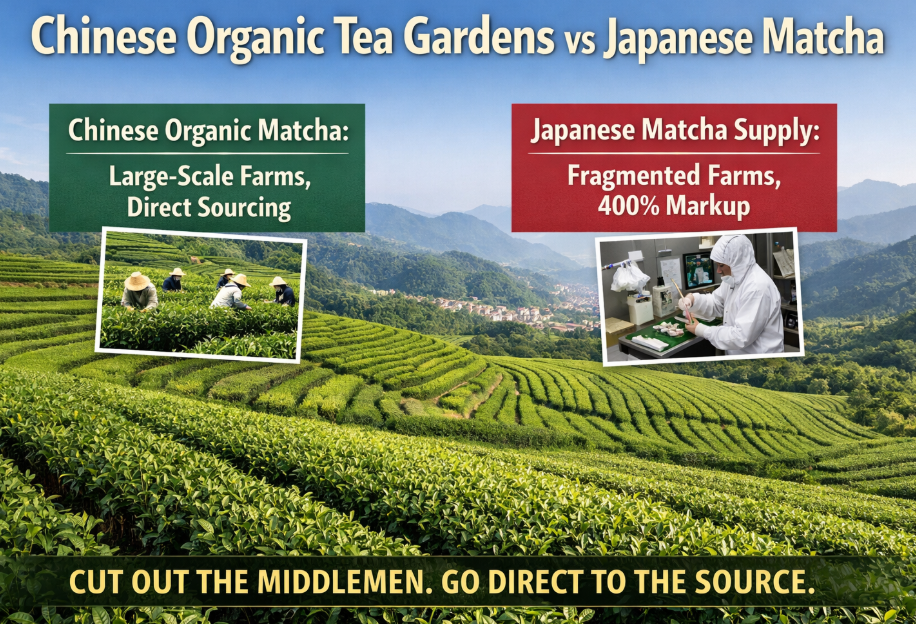
For large-scale supply, a single-estate origin7 provides absolute control. While Japan is a cultural icon, its fragmented supply chain creates a "blind box" risk with massive batch inconsistency. A single, controlled estate ensures every batch is predictable and stable, which is crucial for global brands.
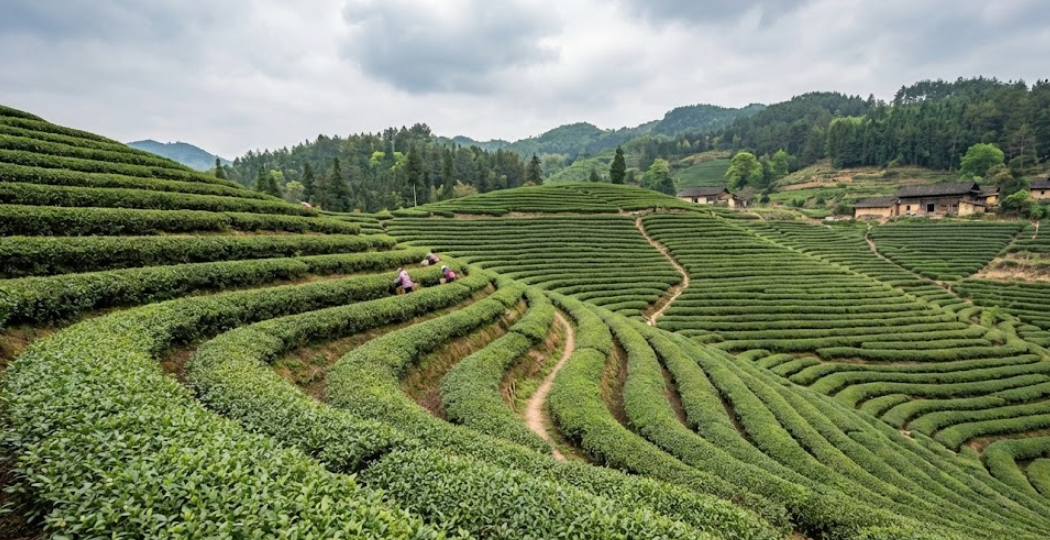
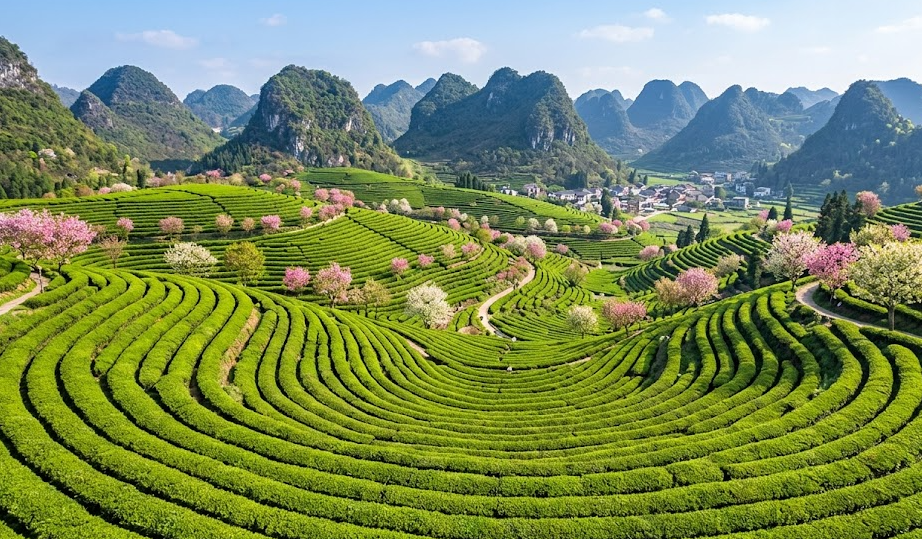
Japanese matcha is without a doubt the cultural benchmark. However, when a multinational chain needs 50 tons of purely organic matcha, the unstable supply structure creates a fatal "blind box risk." Sourcing from many small, independent farms means that batch-to-batch variation can be enormous. This is a nightmare for any brand that relies on consistency. That is exactly why we had to make a massive investment in our own 2,300+ acre high-altitude organic tea garden in Anshun, Guizhou. This "Single-Estate" is physically isolated and completely under our control. It's the ultimate foundation that supports global buyers who need thousands of tons of matcha per year. This level of control over the source is what allows us to eliminate the sourcing risks that plague so many other supply chains. It’s the bedrock of a predictable, scalable, and safe supply chain.
Is Judging Matcha Color by Eye Good Enough for Your Brand?
Your matcha products look vibrant one month and yellowish the next. Relying on your eyes to check color consistency is failing, and your brand image is suffering because of it.
*No. For commercial-scale operations, the naked eye is unreliable. True batch consistency4 comes from data. We use a spectrophotometer8 to measure and lock in a specific Lab color value, ensuring the green you get today is identical to the green you'll get next year.**
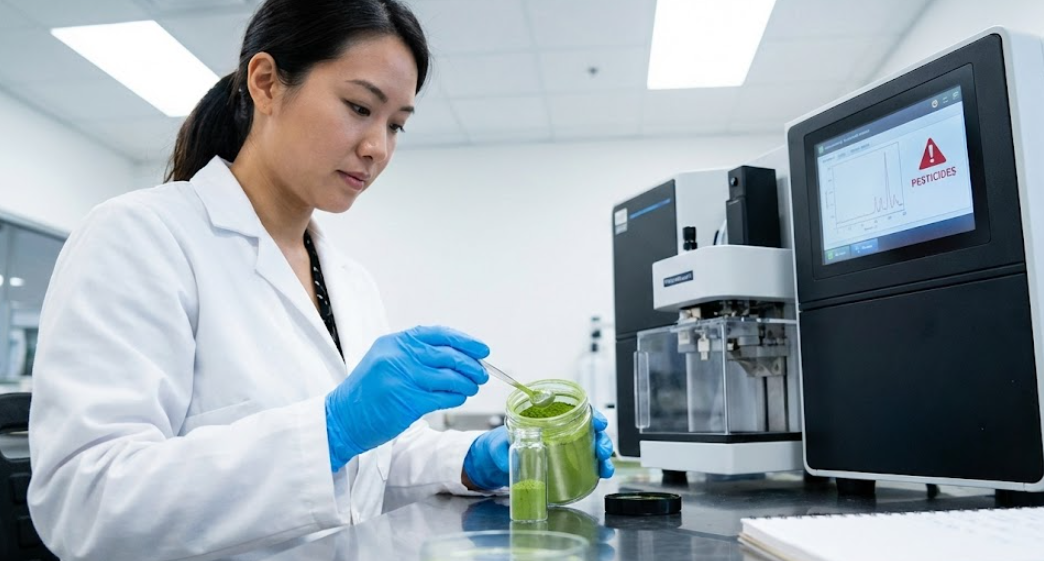
A brilliant, emerald green color is the hallmark of premium matcha. A dull or yellowish green means the raw material was old or has oxidized. The secret behind that vibrant color is a demanding agricultural process: physical shading with black nets for 20-30 days before harvest. In the world of bulk purchasing, Quality Assurance (QA) teams never trust their eyes. Across our 11 continuous production lines, we use a spectrophotometer8 to measure the color. We relentlessly target a strict Lab* color value. This means the 10 tons of matcha you buy this year will have the exact same shade of green as the 10 tons you buy next year. The color is replicated with mathematical precision. We call this batch consistency4. It ensures that your customer's favorite matcha latte looks and tastes the same in every one of your stores, every single day.
What Makes a Matcha Flavor Powerful Enough for Complex Recipes?
You're developing a new functional beverage9, but the earthy notes of other ingredients are overpowering your matcha. The flavor is lost, and the whole product concept is at risk.
A powerful matcha flavor comes from high levels of L-theanine, which creates a distinct umami (savory-sweetness). We use a precise steam-fixing process10 to lock in this umami, turning the matcha into a "flavor blade" that cuts through other complex tastes and balances the final product.
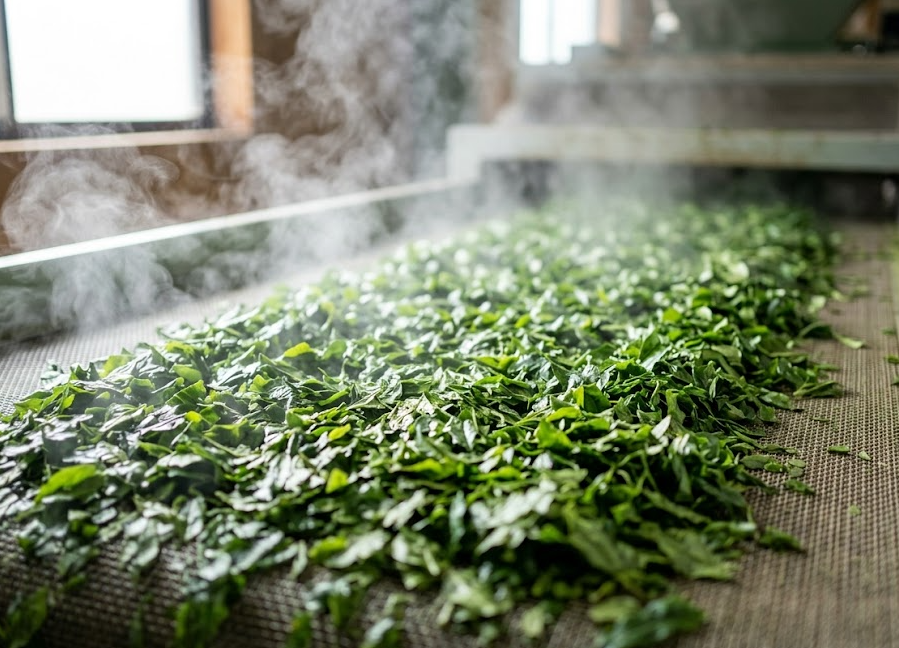
The ideal matcha flavor is smooth, naturally sweet, and has a noticeable umami quality with low bitterness. This delicious savory-sweetness comes from a high concentration of an amino acid called L-theanine. The shading process forces the tea plant to produce more of it. In today's healthy beverages, bulk matcha must do more than just taste good on its own. It has to act as a "foundational flavor architect" in the final product. We use a precise, Japanese-style steam-fixing process to instantly halt oxidation and lock in that umami. This process creates what I like to call the "L-theanine blade." It gives the matcha the power to cut through strange, off-putting flavors from other functional ingredients, like plant proteins or herbal extracts. This allows you to achieve a perfect, harmonious flavor balance in your finished product.
Why is Matcha Powder Fineness a Make-or-Break Factor in Production?
Your new ready-to-drink (RTD) matcha beverage has sediment at the bottom of the bottle. This sludge is a sign of poor powder quality and will lead to customer rejection.
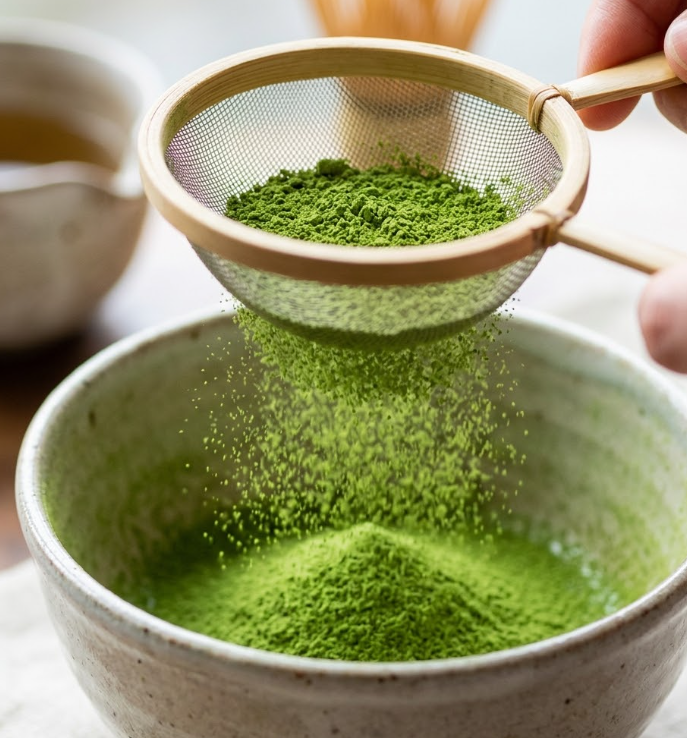
Powder fineness, or mesh size11, determines how well matcha dissolves and stays suspended. For RTD drinks or café use, a coarse powder will settle, creating sludge and an unpleasant texture. An ultra-fine powder ensures instant solubility and a smooth, consistent mouthfeel from the first sip to the last.
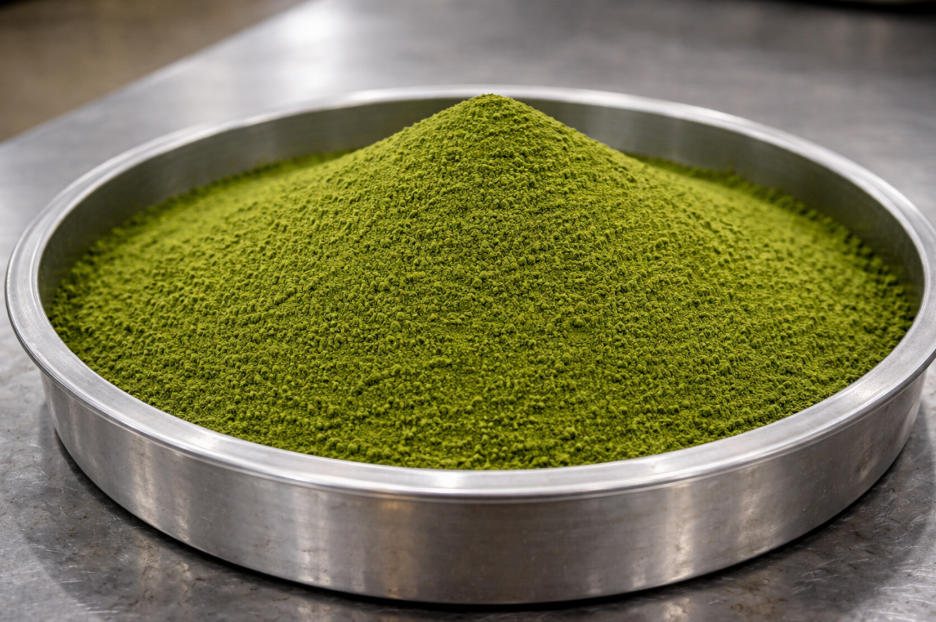
The fineness of your matcha powder can mean life or death for your production line. If you are making a bottled RTD beverage, a powder that is not fine enough will clump and settle at the bottom of the bottle as ugly sludge. This is an instant quality failure. To prevent this, we use imported superfine milling machines. These machines allow us to precisely customize the powder's mesh size11 for your specific needs. We ensure that our matcha powder dissolves almost instantly in giant industrial mixing vats. More importantly, it achieves perfect physical suspension within the liquid. This means no settling, no clumping, and a perfectly smooth texture in your final product. For any brand in the fast-growing RTD space, getting the mesh size11 right isn't just a detail; it's a non-negotiable technical requirement for success.
Are Organic Certifications Alone Enough to Protect Your Global Brand?
You found a supplier with an organic certificate12, but your shipment was just rejected by customs for pesticide residue. Now you're facing huge losses and a potential brand crisis.
No. An organic certificate12 is just the start. To be safe, you need comprehensive third-party testing for pesticides, heavy metals, and radiation for every single batch. Full certification and transparent reporting are a non-negotiable "passport" for international trade, protecting you from compliance disasters.
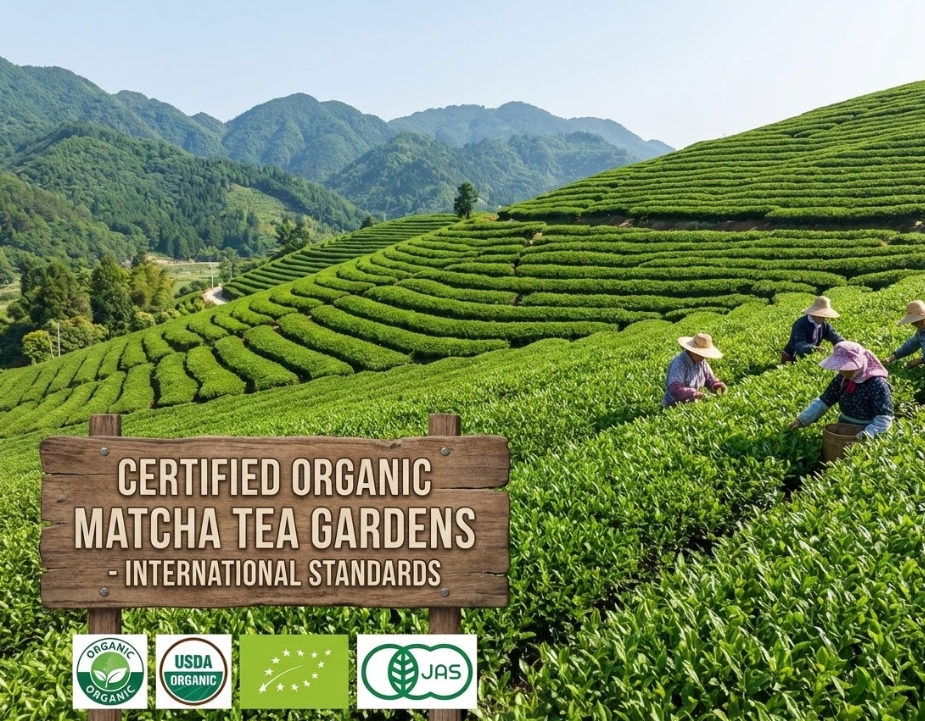
These two points—certification and testing—must be viewed together. An organic certification shows a commitment to controlling pesticides, but it doesn't automatically mean the matcha is delicious or even completely free of contaminants. In front of customs agents or the FDA, matcha without a full deck of certifications and reports is a ticking time bomb. One shipment rejection or a scare over pesticide residue can bankrupt an emerging brand. The matcha we deliver is not only powerful in flavor but also carries the hard-core backing of USDA, EU Organic, JAS (Japan Organic), and Rainforest Alliance certifications. We provide extremely strict batch-level records and a Certificate of Analysis (COA)13 for every order. This isn't a marketing tool. It's the protective moat that lets your multinational legal and compliance teams sleep soundly at night.
How Do You Keep Bulk Matcha Fresh From Factory to Final Product?
You bought a large batch of beautiful, fresh matcha. But by the time you use the last of it, the color is dull and the flavor is flat from oxidation14.
Keeping matcha fresh is a war against oxidation14. We fight it on two fronts: first, by using Japanese steaming to instantly kill oxidative enzymes. Second, by using high-barrier, nitrogen-flushed bulk foil packaging to create an "anti-oxidation armor" during shipping and storage.
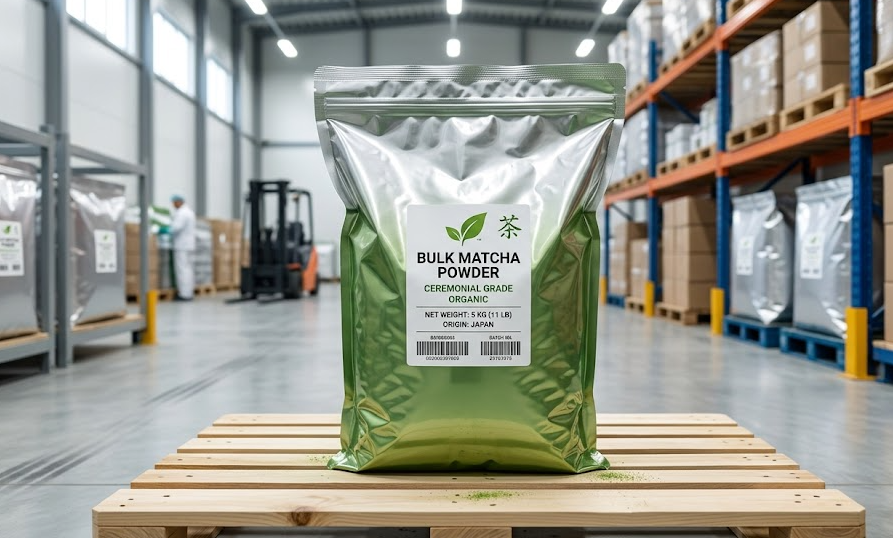
Fighting oxidation14 is a constant war. Matcha's greatest enemies are light, heat, and oxygen. We attack this problem from two angles. First, we tackle the internal cause of oxidation14. Immediately after harvesting, we use a Japanese steaming technique15 to instantly kill the active enzymes in the tea leaves that would otherwise cause them to oxidize. Second, we protect it from external factors. For delivery and storage, we use high-barrier aluminum foil16 bulk bags. These bags are often nitrogen-flushed to remove all oxygen. We can even help our clients by handling OEM or private label co-packing17 directly in our sterile facility. This means the matcha is portioned and sealed for the final consumer under perfect conditions. This entire process ensures that every batch you receive at your warehouse is in a state of "suspended freshness," ready to perform.
Conclusion
Choosing the right matcha means looking beyond marketing terms. Focus on batch consistency4, traceability18, and technical performance to truly scale your brand and ensure long-term success.
Understanding color stability helps ensure your matcha products maintain a consistent appearance, crucial for brand reputation and customer satisfaction. ↩
Exploring flavor penetration will reveal how matcha can maintain its taste in various recipes, enhancing product appeal and customer experience. ↩
Learn how powder fineness impacts matcha solubility and texture, ensuring a smooth and appealing product for consumers. ↩
Discover methods to ensure batch consistency, vital for maintaining product quality and customer trust in your matcha brand. ↩
Explore why Café or Culinary Grade matcha is ideal for lattes and baking, offering strong color and flavor that withstands heat. ↩
Understand the measures matcha suppliers take to protect brand safety, including certifications and quality control processes. ↩
Understand how single-estate origin ensures stable and predictable matcha batches, crucial for large-scale production and brand reliability. ↩
Learn how spectrophotometers provide precise color measurements, ensuring consistent matcha appearance across batches. ↩
Learn how matcha's flavor and nutritional profile make it a valuable ingredient in developing appealing functional beverages. ↩
Explore how steam-fixing locks in matcha's flavor and color, preventing oxidation and ensuring product quality. ↩
Learn how mesh size affects matcha solubility and texture, crucial for creating smooth RTD beverages and café products. ↩
Understand the limitations of organic certificates and the importance of comprehensive testing for matcha safety and compliance. ↩
Discover how a COA provides detailed batch-level records, ensuring matcha quality and compliance with international standards. ↩
Explore the impact of oxidation on matcha, and how to prevent it to maintain product freshness and appeal. ↩
Discover how Japanese steaming prevents oxidation, preserving matcha's vibrant color and fresh flavor. ↩
Understand how high-barrier aluminum foil protects matcha from light and oxygen, preserving its quality during transport. ↩
Explore how OEM or private label co-packing ensures matcha is packaged under optimal conditions, enhancing product quality. ↩
Learn how traceability ensures matcha quality and compliance, protecting your brand from supply chain risks. ↩