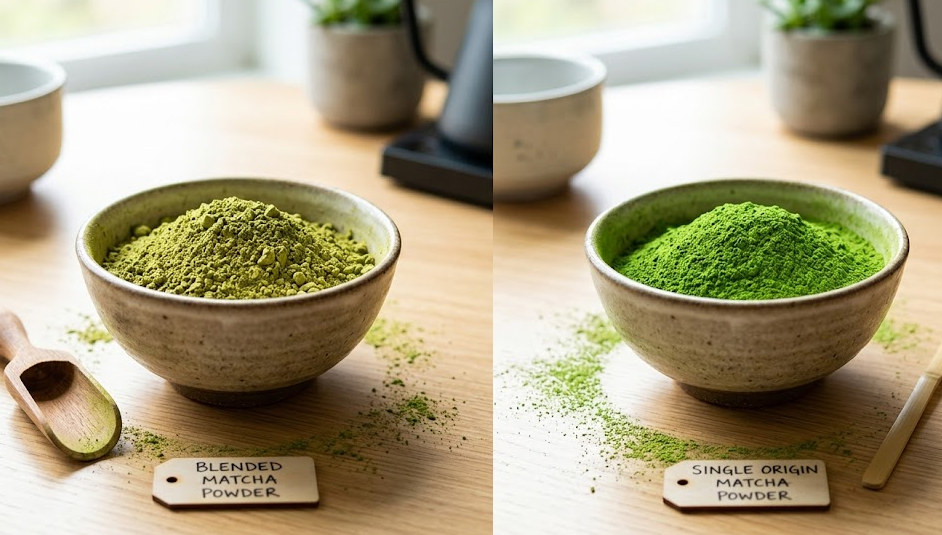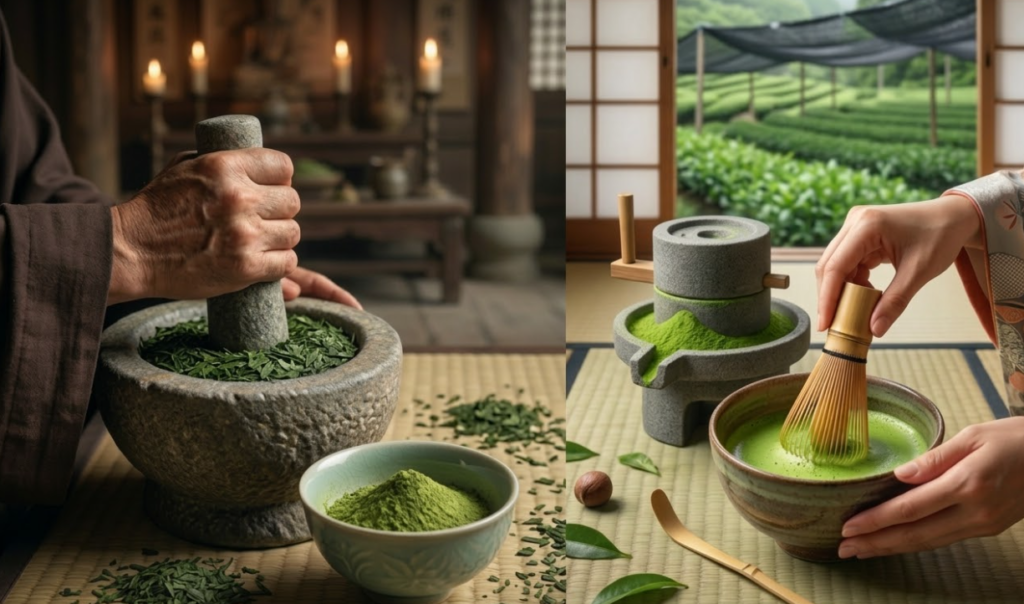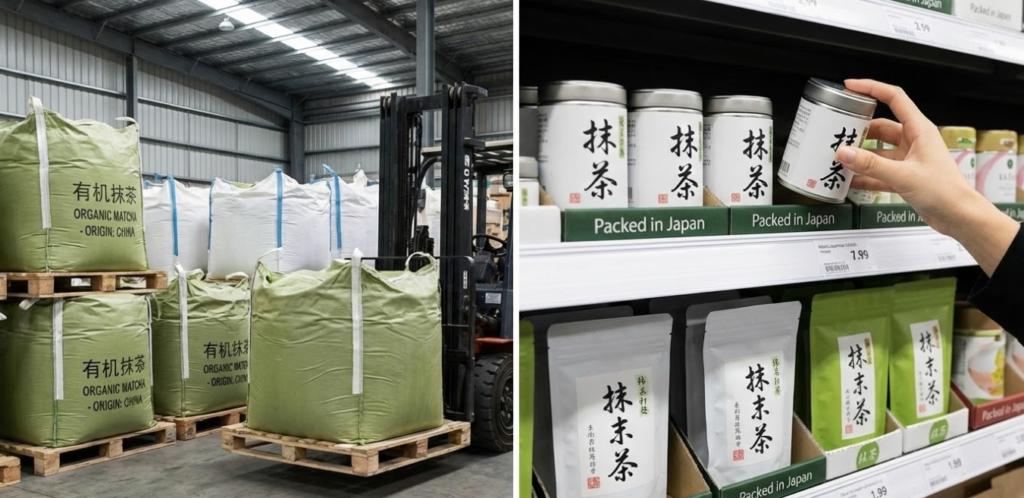
Struggling to get that perfect, creamy matcha foam? You follow all the rules, but your drink is still clumpy and bitter. The secret isn't just your wrist.
The 30/20/10 rule1 is a physical technique for whisking matcha. You first whisk vigorously in an "M" shape for 30 seconds to dissolve the powder, then slow down for 20 seconds to build a microfoam, and finally use 10 seconds to gently break large bubbles.
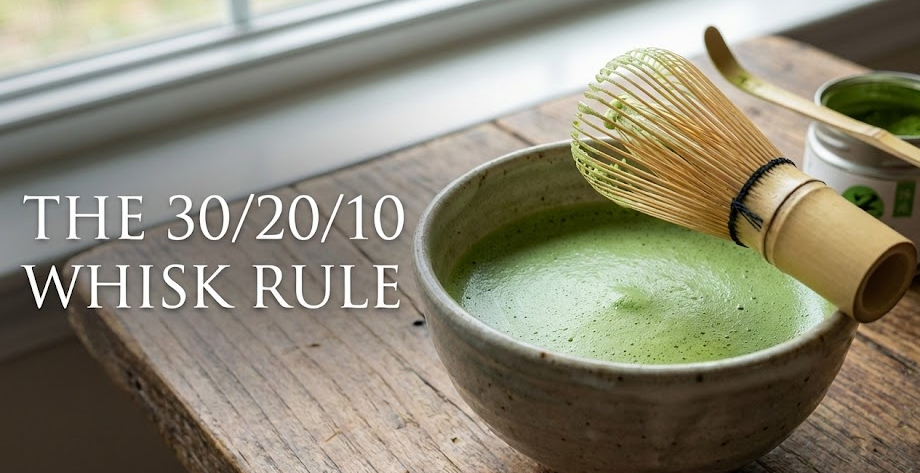
Many people focus on this rule, hoping it's the key to a perfect bowl of matcha. I've seen countless videos and tutorials dedicated to perfecting this whisking motion. But as the CEO of a company that manages 2,300 acres of organic tea gardens2, I have to tell you a truth that goes against the grain. The best foam doesn't come from a whisking technique; it comes from heavy investment at the source. This article will show you what really matters.
Is whisking technique the most important factor for perfect matcha foam?
You believe a better whisking technique is the key to a better drink. But what if all that effort is for nothing? The real problem might be your matcha powder.
No, technique isn't the most important factor. The matcha's quality, specifically its amino acid and protein content3, is the true foundation for rich, stable foam. High-quality matcha froths easily, while poor-quality powder will always struggle, no matter how skilled you are.
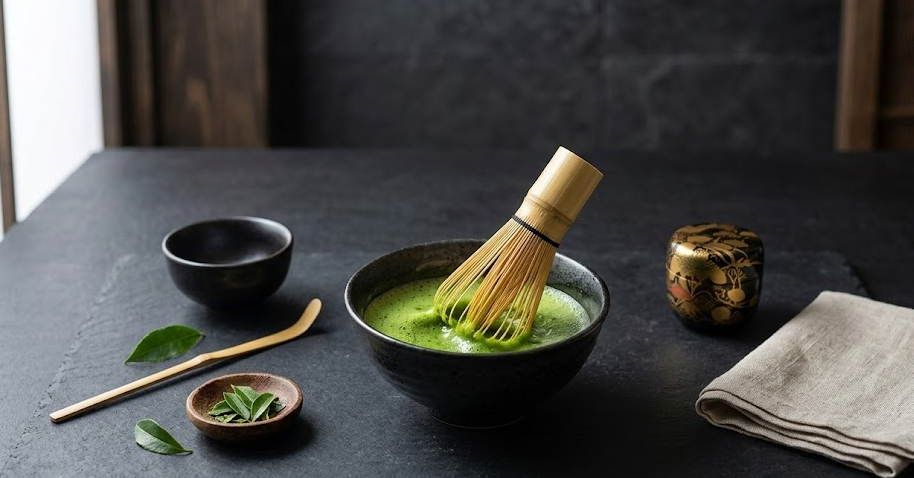
I've spent years overseeing our tea gardens in the high mountains of Anshun, Guizhou. I can tell you that the soul of the foam is in the soil, not the teacup. The ability of matcha to create a velvety, lasting microfoam depends directly on the nutrients inside the tea leaves themselves, especially amino acids and proteins. These components act as natural emulsifiers4, helping to create and stabilize tiny air bubbles.
How Farming Creates Foam
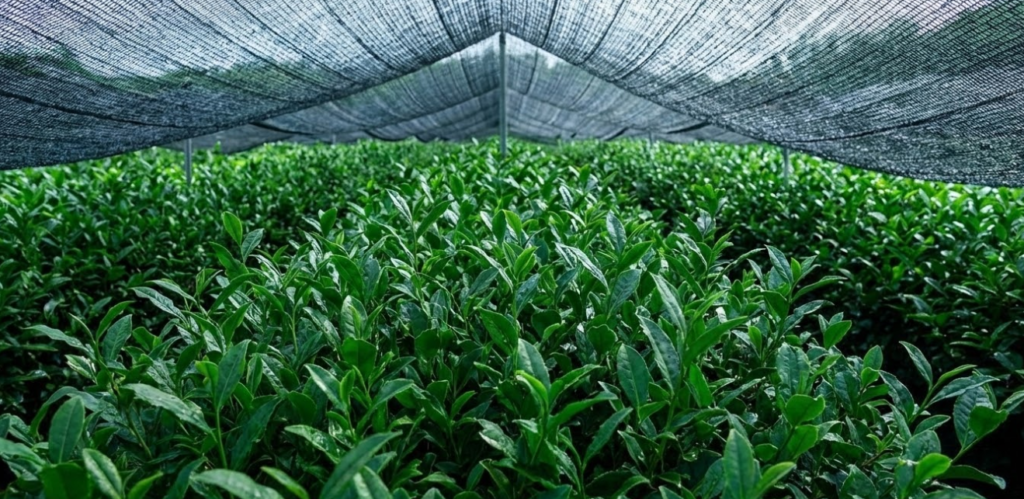
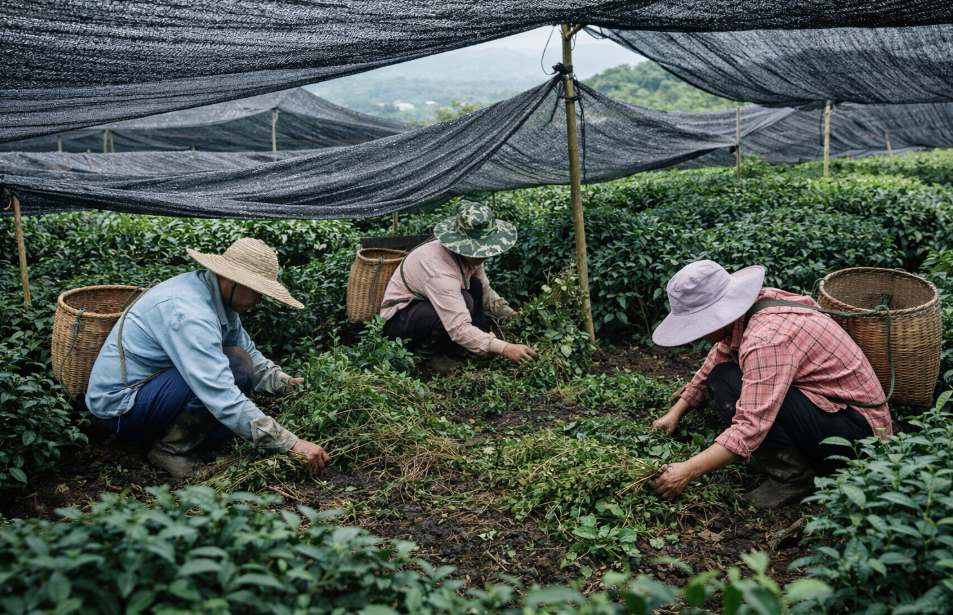
We go to great lengths to maximize these natural compounds. We insist on strict organic practices5, which means we deal with high costs for physical pest control and manual weeding. We also enforce a full shading period6 for our tea plants before harvest. This process stresses the plant in a good way, forcing it to produce more chlorophyll and, crucially, more amino acids like L-theanine7. This is what gives high-grade matcha its deep umami flavor and its amazing foaming potential. If you start with a low-quality powder made from nutrient-poor leaves, you could whisk until your arm falls off and you'd never achieve that luxurious texture.
| Factor | High-Quality Source (Our Method) | Low-Quality Source |
|---|---|---|
| Farming | Organic, high-altitude | Conventional, low-altitude |
| Nutrients | Rich in amino acids & proteins | Lacking key compounds |
| Shading | Strictly enforced, full period | Minimal or no shading |
| Foam Potential | High, stable, creamy | Low, bubbly, disappears quickly |
Why does my matcha stay clumpy and sink no matter how I whisk it?
Are you frustrated with matcha that clumps and sinks to the bottom of your cup? You sift and whisk perfectly, but the sediment remains. It is not your fault.
Your matcha stays clumpy because its particle size8 is too large. Proper matcha must be milled to an extremely fine, uniform powder to create a stable suspension in water. Coarse powders will always settle quickly, regardless of your whisking method.
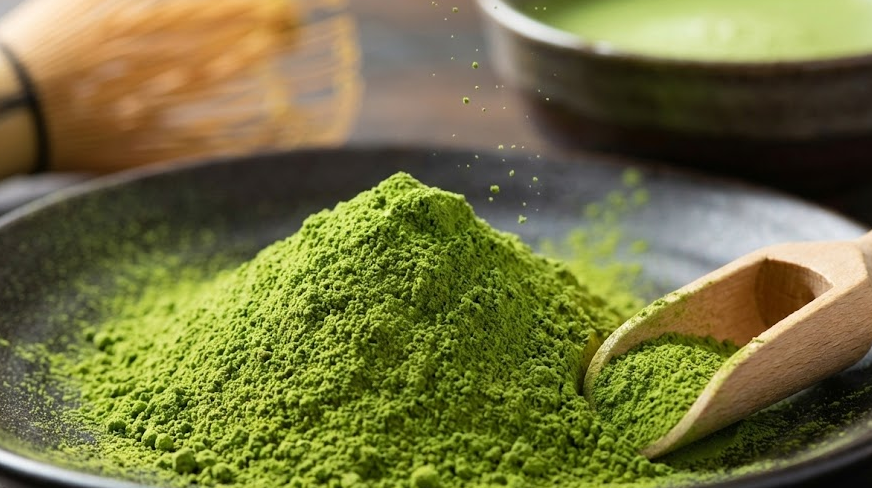
Many of our customers come to us after trying the 30/20/10 rule and ending up with a gritty, bitter drink. The reason is simple: the powder they were using wasn't milled finely enough. In my company's 100,000-class clean workshop, we obsess over the micro-pulverization process9. This is the underlying science that allows matcha powder to suspend perfectly in water instead of sinking. Whisking techniques are just a temporary fix for a fundamental supply chain flaw.
The Science of Suspension
The fineness of the grind is the lifeline for a good suspension. When matcha particles are ground to the correct micron level, they have a huge surface area relative to their weight. This allows them to float in the water for a much longer time, creating a smooth, integrated beverage. If the powder is too coarse, the particles are too heavy and gravity quickly pulls them to the bottom. No amount of whisking can defy physics. Any technique is just a fig leaf trying to cover up a poor-quality grind.
| Particle Size | Suspension Quality | Texture in Mouth |
|---|---|---|
| Ultra-Fine (5-10 microns) | Stays suspended for a long time | Silky, smooth, no grit |
| Coarse (>15 microns) | Sinks to the bottom quickly | Gritty, chalky, unpleasant |
| Uneven Grind | Forms clumps, settles unevenly | Inconsistent, muddy |
Why do top B2B buyers care more about the source than the prep method?
Do you wonder why big brands get perfect matcha every time? They are not just hiring better baristas. They know a secret about sourcing that guarantees quality and consistency.
Top B2B buyers prioritize the source because it guarantees consistency and reliability. They need a matcha powder that performs perfectly every time, without relying on complex techniques. This "plug-and-play" quality comes from a supplier who controls the entire process.
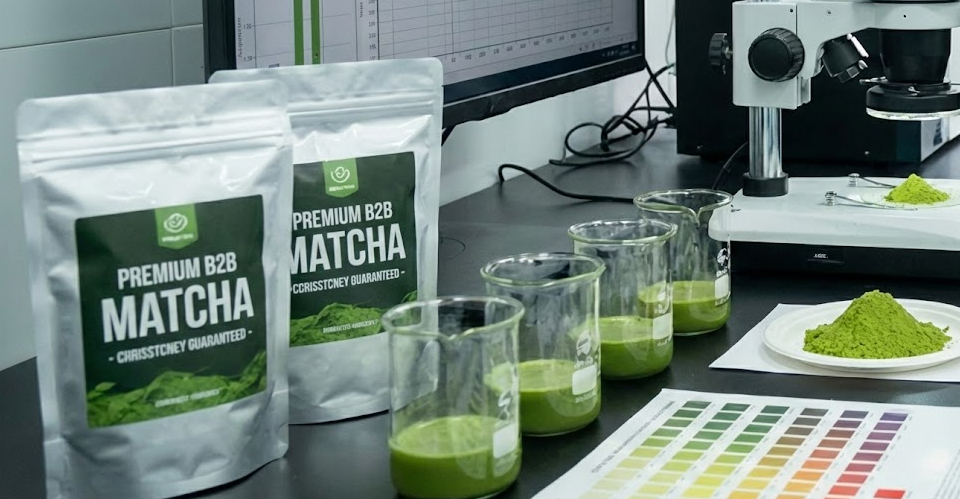
In my business, focusing on preparation techniques without considering the source is putting the cart before the horse. The biggest B2B companies—major beverage chains and food manufacturers—bypass middlemen and come directly to us for one reason: certainty. They are not buying a fancy story or a complicated whisking method. They are buying the absolute certainty that every single batch of matcha will perform flawlessly, even with the simplest preparation. They need a product so reliable you can get perfect results with your eyes closed.
The Business of Certainty
For a global coffee chain, inconsistency is a disaster. They cannot afford for their matcha lattes to taste different from one store to another, or from one week to the next. Our heavy, upstream investments in organic farming, proper shading, and precision milling10 are what deliver that certainty. These clients don't care about the 30/20/10 rule because the product we supply makes it irrelevant. They need a raw material that removes risk from their operations, and that kind of quality is built from the ground up, long before a whisk ever touches a bowl.
| Priority | Home User | B2B Buyer |
|---|---|---|
| Main Goal | Enjoy a single, nice bowl of tea | Product consistency across thousands of units |
| Focus | Preparation technique (e.g., 30/20/10 rule) | Raw material quality and supply chain control |
| Risk Factor | A single bad cup of matcha | Brand reputation, operational efficiency |
| Solution | Practice whisking | Partner with a vertically integrated supplier11 |
Conclusion
The secret to perfect matcha foam isn't your whisking technique. It is the deep investment in the supply chain that creates a high-quality powder from the very beginning.
Understanding the 30/20/10 rule can help you improve your matcha whisking technique, leading to a better tasting and visually appealing drink. ↩
Exploring organic tea gardens can reveal how sustainable farming practices enhance the quality and flavor of matcha. ↩
Learning about the role of amino acids and proteins can help you choose matcha that froths well and tastes better. ↩
Natural emulsifiers help stabilize matcha foam, leading to a creamier and more appealing drink. ↩
Strict organic practices ensure the purity and quality of matcha, making it healthier and more flavorful. ↩
A full shading period enhances the nutritional content of matcha, leading to a richer taste and better foam. ↩
L-theanine contributes to matcha's umami flavor and calming effects, enhancing the overall experience. ↩
Understanding particle size can help you select matcha that mixes well and provides a smooth texture. ↩
The micro-pulverization process ensures matcha is finely milled, improving its suspension and taste. ↩
Precision milling creates a fine powder that enhances matcha's texture and flavor, making it more enjoyable. ↩
A vertically integrated supplier controls the entire production process, ensuring high-quality matcha. ↩