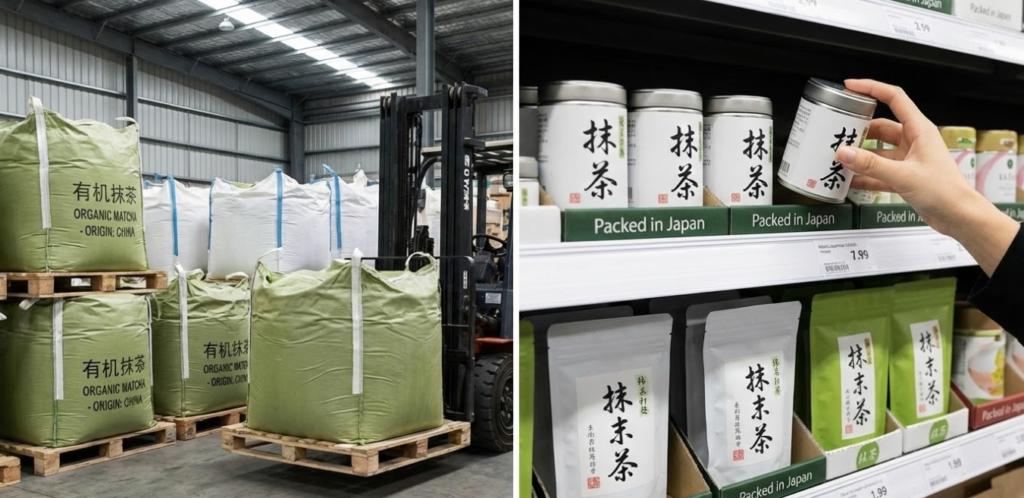
Are you struggling to find a reliable matcha supplier1? You worry about quality, consistency, and traceability2. You need a partner who truly controls their product from the ground up.
Yes, China has high-standard matcha farms. We operate a 2,300-mu organic tea garden3 in Guizhou, managing the entire process from soil to final powder. This integrated model ensures complete traceability2, consistent quality, and international compliance for our global partners, backed by EU and USDA organic certifications4.
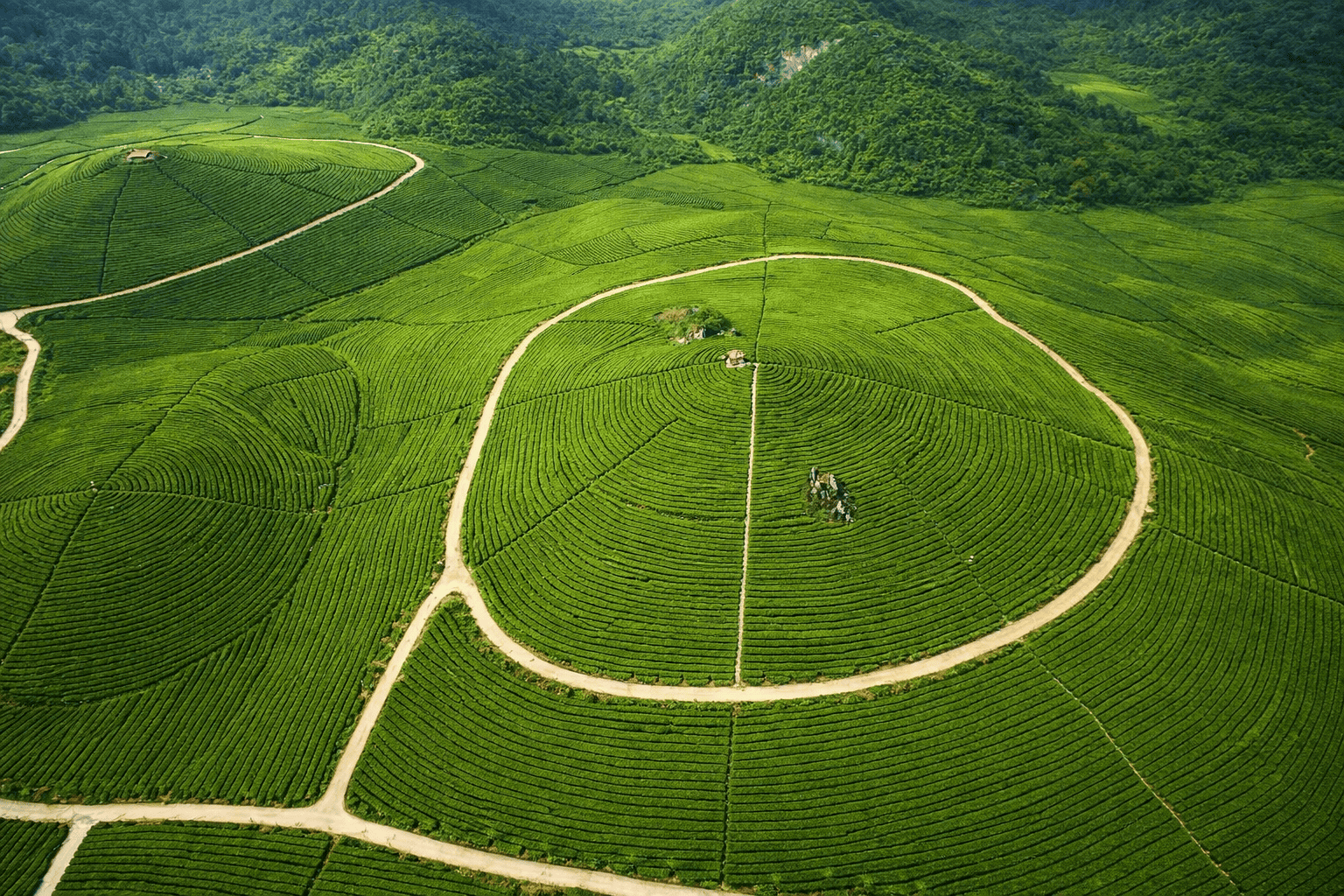
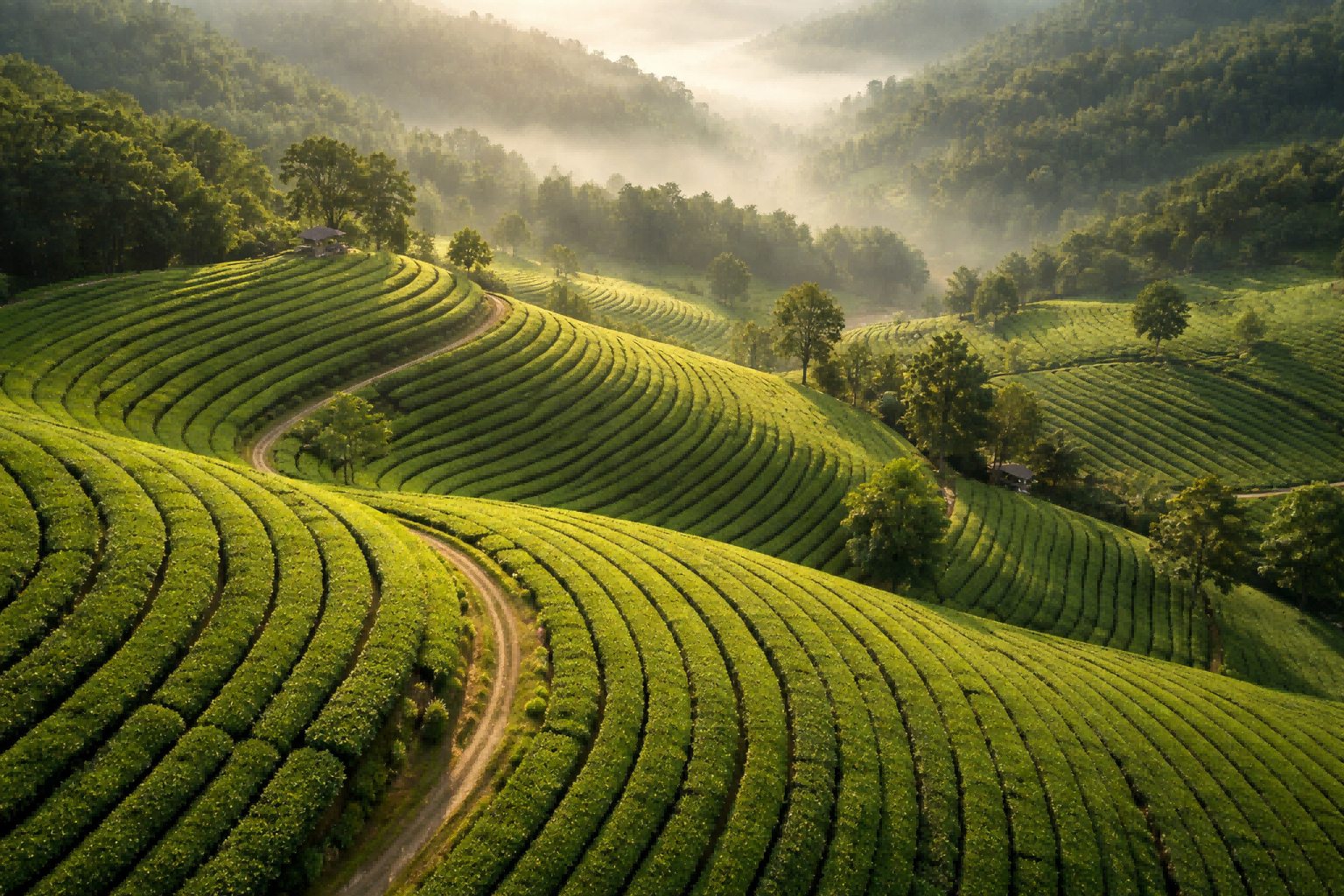
I get asked this question a lot. "Does China really have matcha farms?" Honestly, every time I hear that hint of doubt, my mind doesn't go to a fancy presentation. I think of standing in my 2,300-mu high-mountain tea garden in Anshun, Guizhou. I remember the feeling of the damp soil under my boots. I've invested more than just money into this land; I've invested countless sleepless nights. So I can tell you with full confidence: China not only has matcha farms, but we are reshaping the foundation of the global matcha supply with our heavy-asset agricultural model. This is my base, my battleground.
How do we build an ecological fortress for our matcha?
Worried about pesticides and contamination in your ingredients? The risk of a supplier's neighbor using chemicals can ruin your entire batch, causing huge losses and damaging your brand's reputation.
We built a natural "isolation belt" by acquiring over 1,000 acres of connected barren hillsides around our tea gardens. This creates a massive buffer zone, protecting our organic tea plants from any potential cross-contamination and guaranteeing a pure, clean harvest every single time.
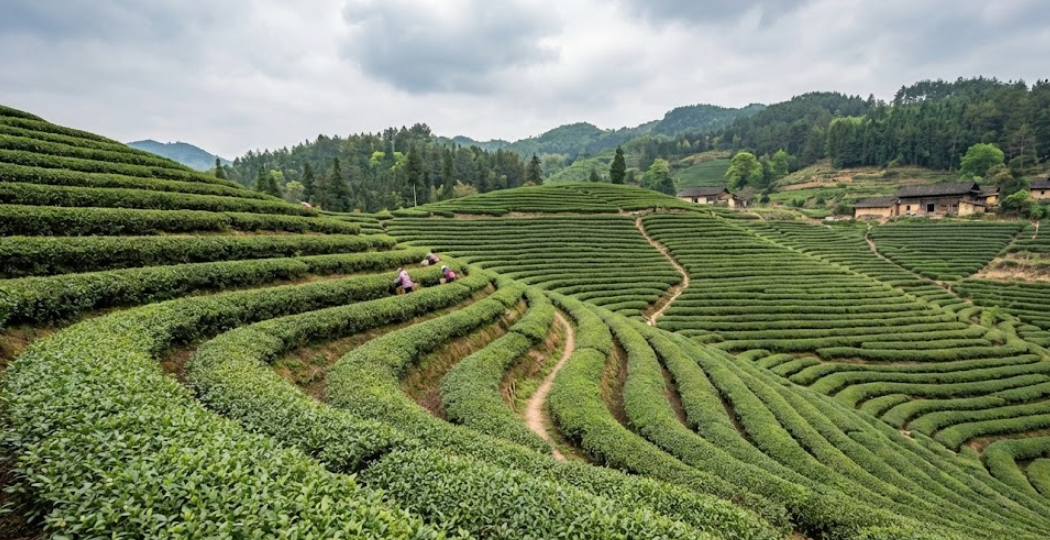
Many international buyers believe that only Japanese matcha is pure. When I bring them to my base in Anshun, the first thing I show them isn't the tea plants. It's my isolation belt5. To get those EU and USDA organic certifications, I did something incredibly "heavy" and expensive. I bought the surrounding 1,000 acres of connected land. Why? Because in B2B bulk trade, the biggest fear is "neighbor pollution." If a farmer next door sprays a little pesticide and the wind blows it over, your entire year's harvest is ruined.
The True Cost of Purity
Managing this kind of large, connected base is a bottomless pit of money. We don't use herbicides; all weeding is done by hand. We don't use chemical pesticides; we rely on physical traps and biological controls6. But I know in my heart that these 1,000 acres are my "get out of jail free card" for my clients. When you see that lab report showing "zero pesticide residue7, zero heavy metals," you understand. This stubborn commitment to the soil is the strongest form of business integrity. It's a promise backed by land, not just words.
| Feature | Our Integrated Farm Model | Common Sourcing Model |
|---|---|---|
| Land Ownership | Fully owned and controlled | Sourced from various small farmers |
| Contamination Risk | Extremely low due to isolation belt | High risk of neighbor pollution8 |
| Organic Control | Strict, centralized management | Inconsistent, hard to monitor |
| Traceability | 100% from a single origin | Difficult, mixes multiple sources |
What's the secret to our matcha's vibrant color and umami taste?
Is your matcha dull in color? Does it lack that rich, savory "umami" flavor? This often happens when tea leaves are not properly cultivated for matcha production.
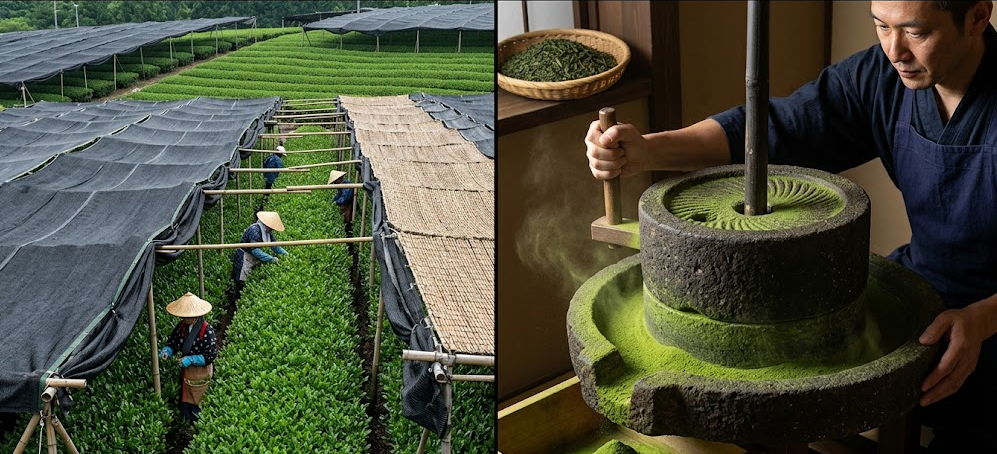
We use the traditional Japanese method of "shade-growing9" for three to four weeks before harvest. This process drastically increases the chlorophyll and L-theanine10 content in the leaves, resulting in a brilliant green color and a deep, sweet, and savory umami flavor profile.
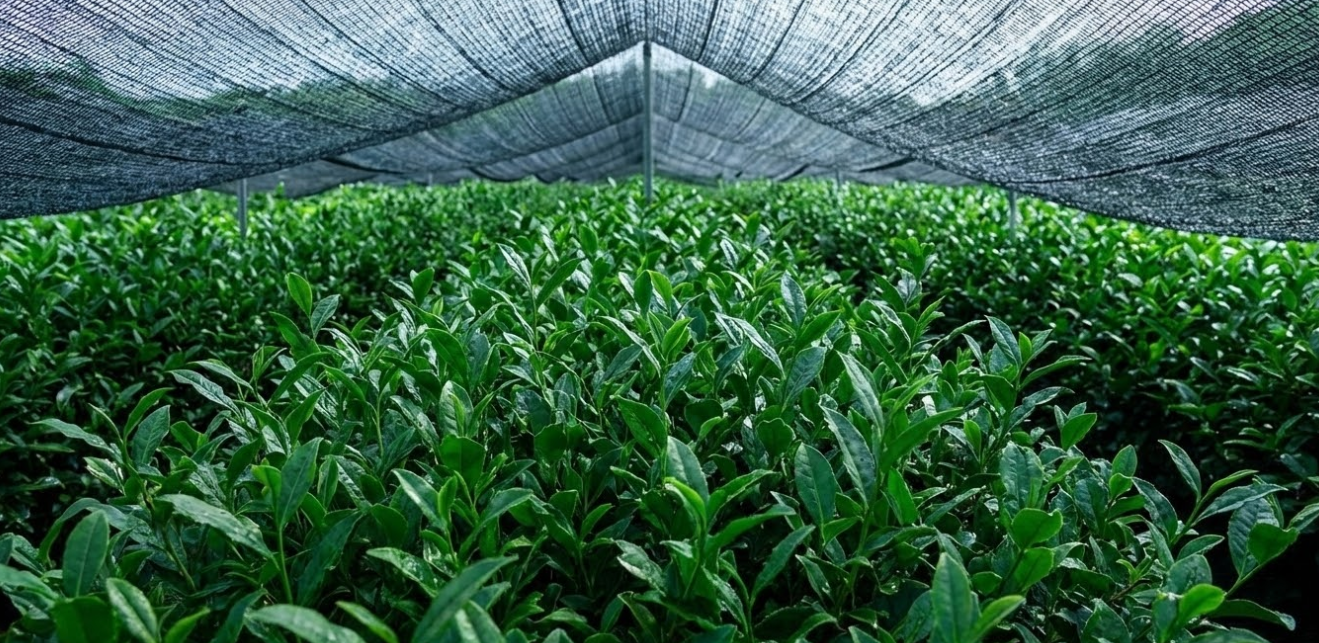
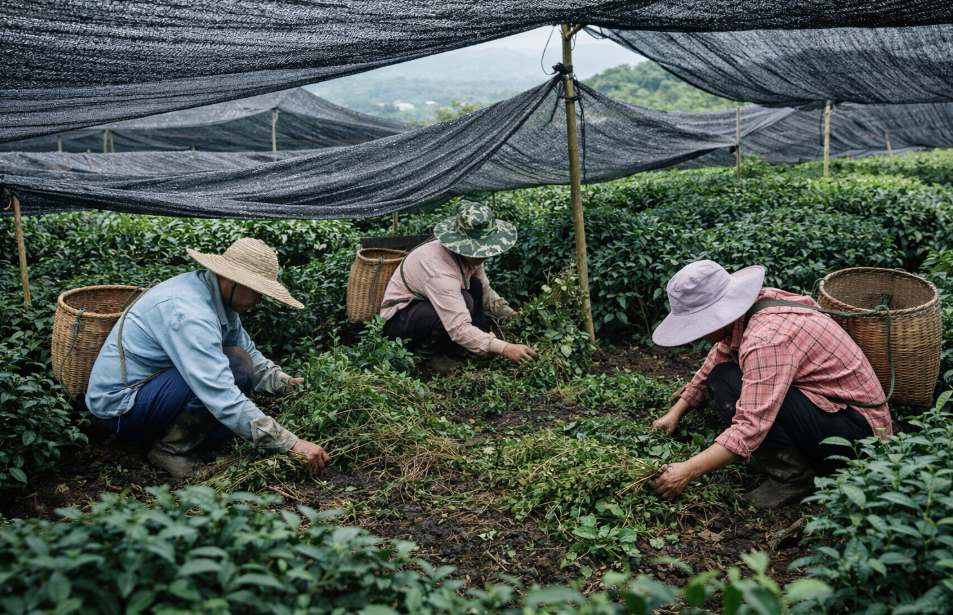
The biggest difference between matcha and regular green tea is the "shade-covering" process. I remember the first year we tried large-scale shading11. It looked like we were covering the entire mountain with a giant quilt. Many people didn't understand. They thought it was too much work and too time-consuming. But the visual impact is stunning when you lift that black net. You see these tender leaves that have turned an almost ink-like green because they were starved for sunlight.
The Science of Sweetness
This isn't some mystical art; it's hardcore plant physiology. Cutting off sunlight forces the tea plant to go into overdrive, producing massive amounts of chlorophyll and L-theanine10. This is why our matcha has that captivating "seaweed" or umami flavor and a vibrant green color that can stand up to oat milk in a latte. China has no shortage of tea gardens. But it lacks standardized estates willing to invest the enormous time and cost required to achieve this specific kind of sweetness and color.
| Process | Effect on Tea Leaf | Result in Final Matcha |
|---|---|---|
| Shade-Growing | Increases Chlorophyll | Vibrant, deep green color |
| Shade-Growing | Increases L-Theanine | Rich umami flavor, natural sweetness |
| Shade-Growing | Decreases Catechins | Reduced bitterness and astringency |
| No Shading | Lower Chlorophyll & L-Theanine | Yellowish color, bitter taste |
How do we lock in the freshness of our matcha leaves?
Ever tasted matcha that is bitter, dull, and yellowish? This is a sign of oxidation. Freshly picked tea leaves are extremely fragile and lose their quality within hours if not processed immediately.
Our factory is built right on the edge of our tea garden. This "field-to-factory" integration means freshly harvested leaves enter our Japanese-style steam-fixing12g lines](https://matchasourcing.com/where-is-the-highest-quality-matcha-made/)%%%FOOTNOTE_REF_13%%% within hours, locking in their vibrant color, fresh aroma, and delicate flavor before any oxidation can occur.
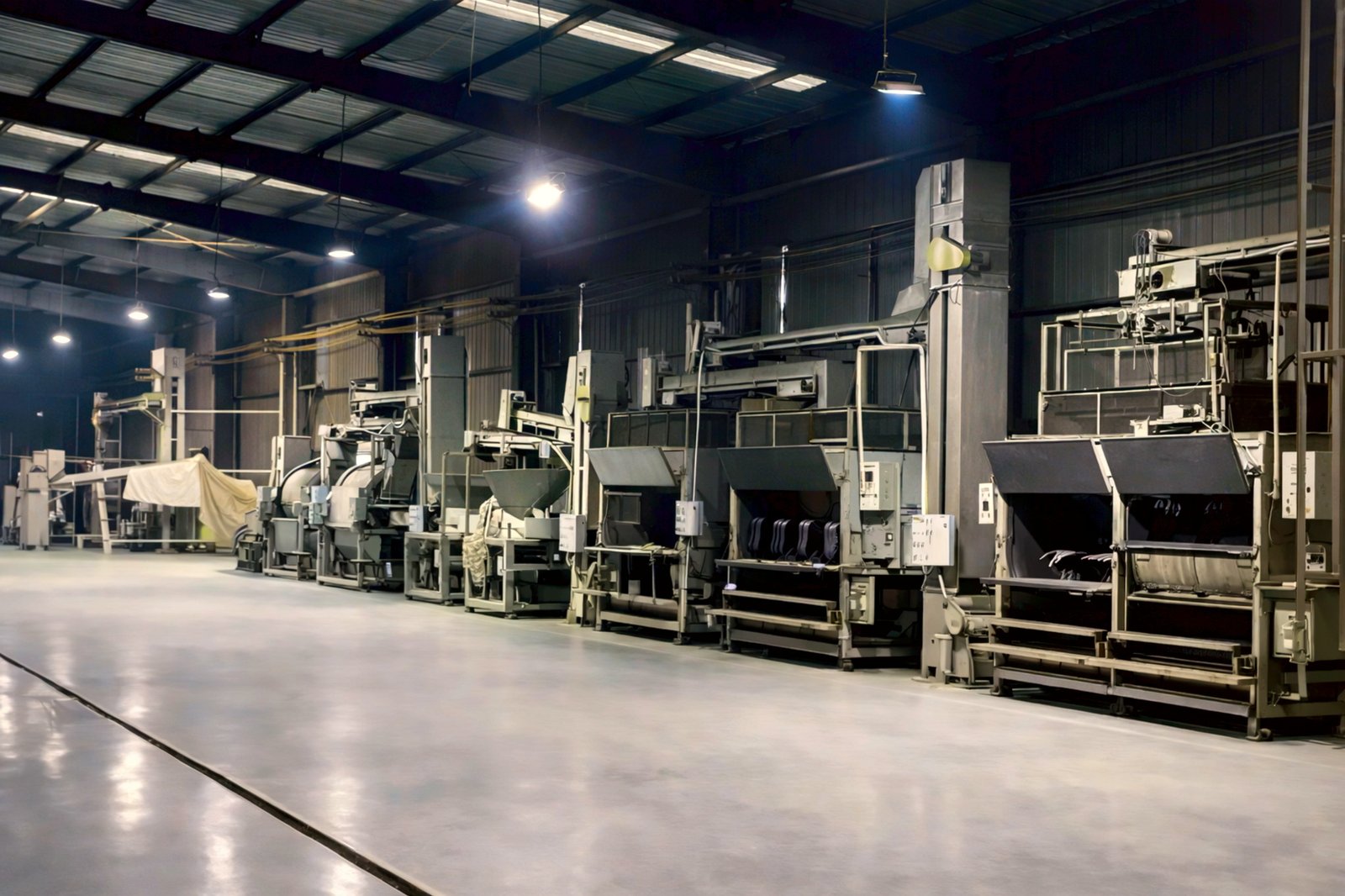
The fresh, crisp flavor of matcha is very delicate. If the fresh leaves are not steam-fixed within a few hours of being picked, they will oxidize. They turn yellow and become bitter. My processing facility is built right next to my tea garden. This "field-to-factory" integration is the asset I am most proud of.
The Race Against Time
I've seen it myself. Some traders buy fresh leaves from scattered small farmers and transport them hundreds of kilometers to a factory. The powder that comes out is grayish and bitter. But here, my fresh leaves arrive at the factory still covered in the morning dew from the high mountains. They go directly onto a full-scale Japanese steam-fixing production line. Inside our Class 100,000 cleanroom14, I watch as the ultra-fine grinders mill the tencha into a powder as fine as smoke at low temperatures. This absolute control over the production line is something a trader sitting in an office can never experience. It is the only way to guarantee the freshest, most vibrant matcha for every single batch.
| Our Process (Integrated) | Common Process (Outsourced) |
|---|---|
| Harvest and process within 2-4 hours | Leaves transported for 8+ hours |
| Oxidation is halted immediately | Significant oxidation occurs |
| Locks in fresh, green notes | Develops bitter, stale flavors |
| Consistent quality control | Variable quality due to transport delays |
Is China becoming the new powerhouse in the global matcha supply chain15?
Are you facing supply chain issues with Japanese matcha? Limited quantities, inconsistent batches, and high costs make it difficult to scale your business, especially for large-scale industrial use.
Yes, China is uniquely positioned to solve these issues. Our large-scale, modern, and fully integrated farms offer stable, year-round supply of high-quality matcha. We provide the consistency, volume, and data-backed quality that global brands need to grow, acting as the "invisible estate16" behind them.
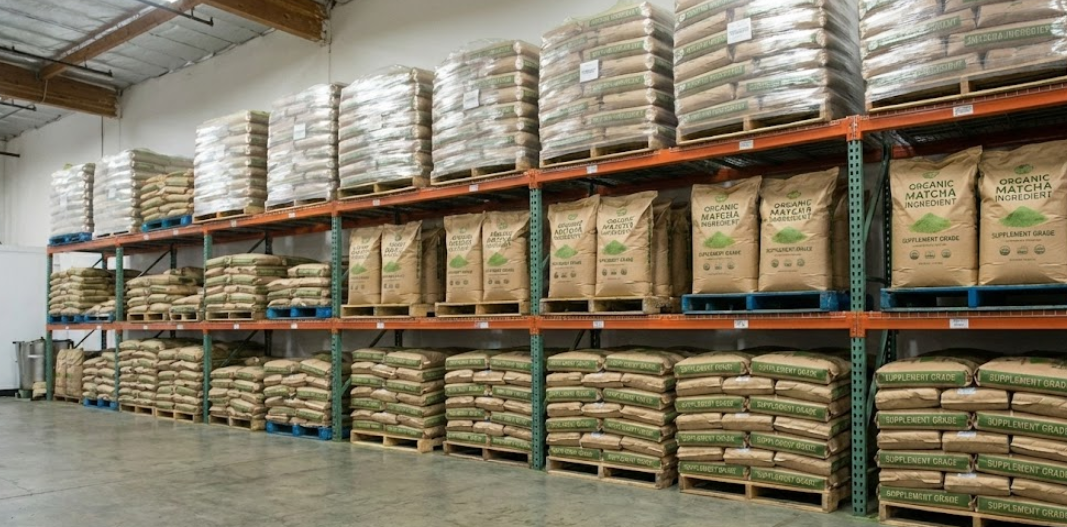
After all these years in the field, my deepest feeling is this: the global matcha supply chain15 is undergoing a fundamental shift. Japan's land is too old and too fragmented. It simply cannot support the stable, continuous delivery of tens or hundreds of tons that the global market demands. In contrast, Chinese source manufacturers like us, with our deep history and modern advantages, are becoming the "invisible estates" behind the world's biggest brands.
Power Backed by Data, Not Just Stories
I don't need to tell a story about a hundred years of tradition. I just need to put a thick stack of lab reports and three years of soil conversion records on the table. This confidence comes from standing in my own soil and knowing the exact parameters of my core machinery. This is my truest pride as a Chinese matcha producer. We are moving beyond labels to deliver real, measurable power. We provide the scale, consistency, and traceability that the modern global supply chain requires.
| Modern Chinese Estate Model | Traditional Japanese Model | |
|---|---|---|
| Scale | Large, integrated farms for high volume | Small, fragmented, family-owned plots |
| Consistency | High batch-to-batch consistency | Can vary between small producers |
| Supply | Stable, year-round production | Often limited by seasonal capacity |
| Proof | Backed by data, lab reports, certs | Often relies on tradition and brand story |
Conclusion
China has large-scale, certified organic matcha farms. Our integrated model guarantees purity, vibrant flavor, and a stable supply, providing a reliable foundation for our global partners' success.
Discovering a reliable matcha supplier ensures consistent quality and traceability, crucial for maintaining your brand's reputation. ↩
Traceability ensures product quality and safety, building trust with consumers and partners. ↩
Learn about the scale and benefits of a 2,300-mu organic tea garden, which ensures complete traceability and quality control. ↩
Understanding these certifications helps ensure your matcha meets international organic standards, enhancing product credibility. ↩
An isolation belt protects tea plants from contamination, ensuring a pure harvest and safeguarding your investment. ↩
Biological controls offer a natural way to manage pests, ensuring organic integrity in matcha production. ↩
Achieving zero pesticide residue is vital for organic certification and consumer safety. ↩
Learn how neighbor pollution can ruin tea harvests and how isolation strategies can prevent this risk. ↩
Shade-growing enhances matcha's color and flavor, making it a key process for producing high-quality matcha. ↩
These compounds are crucial for matcha's vibrant color and umami flavor, essential for premium matcha. ↩
Large-scale shading enhances matcha's quality by increasing chlorophyll and L-theanine, essential for premium flavor. ↩
This method preserves matcha's quality by preventing oxidation, crucial for premium matcha. ↩
Steam-fixing lines lock in matcha's color and flavor, crucial for maintaining its quality and freshness. ↩
A cleanroom ensures a contaminant-free environment, vital for producing high-quality matcha. ↩
China's large-scale farms are reshaping the matcha supply chain, offering stability and consistency. ↩
Invisible estates provide the scale and consistency needed for global brands, crucial for large-scale matcha supply. ↩