Are you sure all the best matcha comes from Japan? This common belief might be limiting your business and costing you money. Let me give you the real story from my factory.
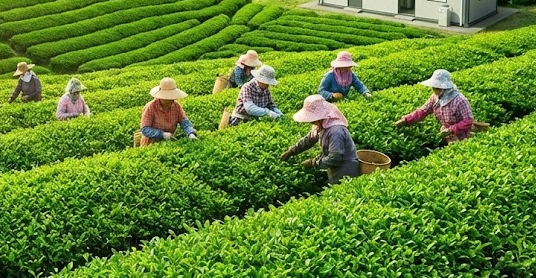
Yes, China produces high-quality matcha1. In fact, China is quietly becoming the backbone of the global matcha supply chain2. Top-tier Chinese producers use authentic Japanese methods to create premium matcha that is often sold to international brands, sometimes even under a "Japanese" label.
For consumers, matcha is often associated with Japan, Kyoto, Uji and tea ceremony culture. But for B2B buyers, the reality is more practical. Many global brands, café chains, beverage companies, private label sellers and ingredient buyers now look to China because China can offer scale, organic farming capacity, flexible private label support, competitive pricing and export-ready documentation.
The key is not whether matcha can be produced in China. It can. The real question is: which Chinese matcha supplier can produce authentic, shade-grown, steamed, finely milled matcha with stable quality, COA support and application-specific performance?
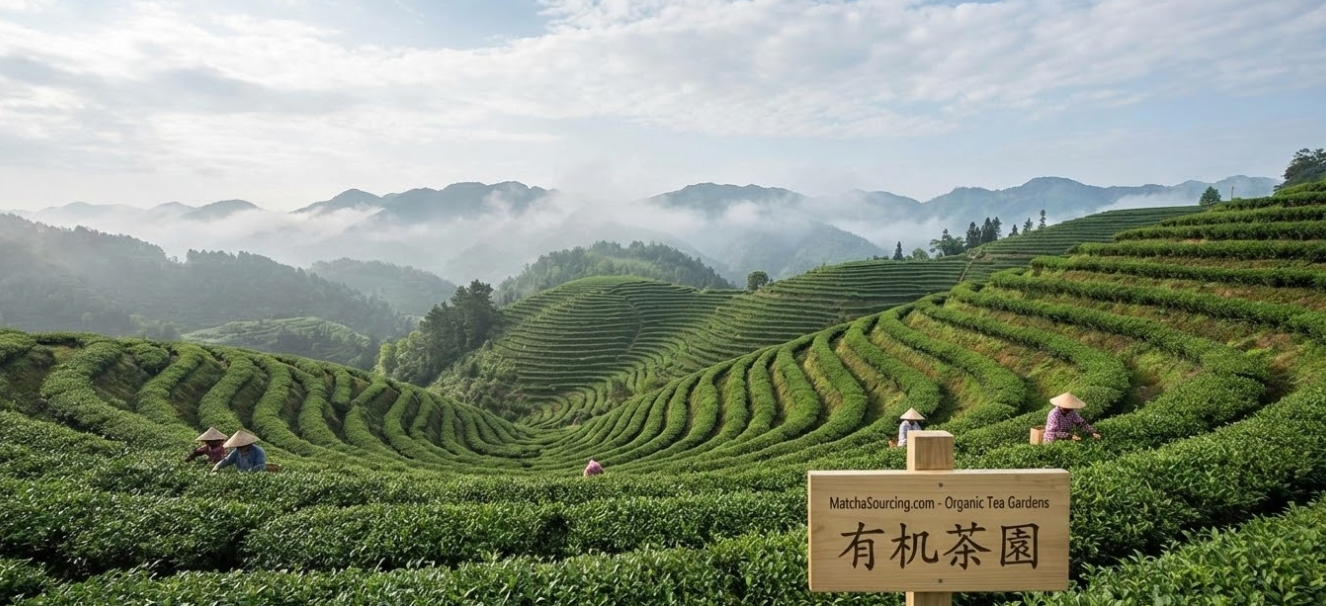
Quick Answer: Is Matcha Produced in China?
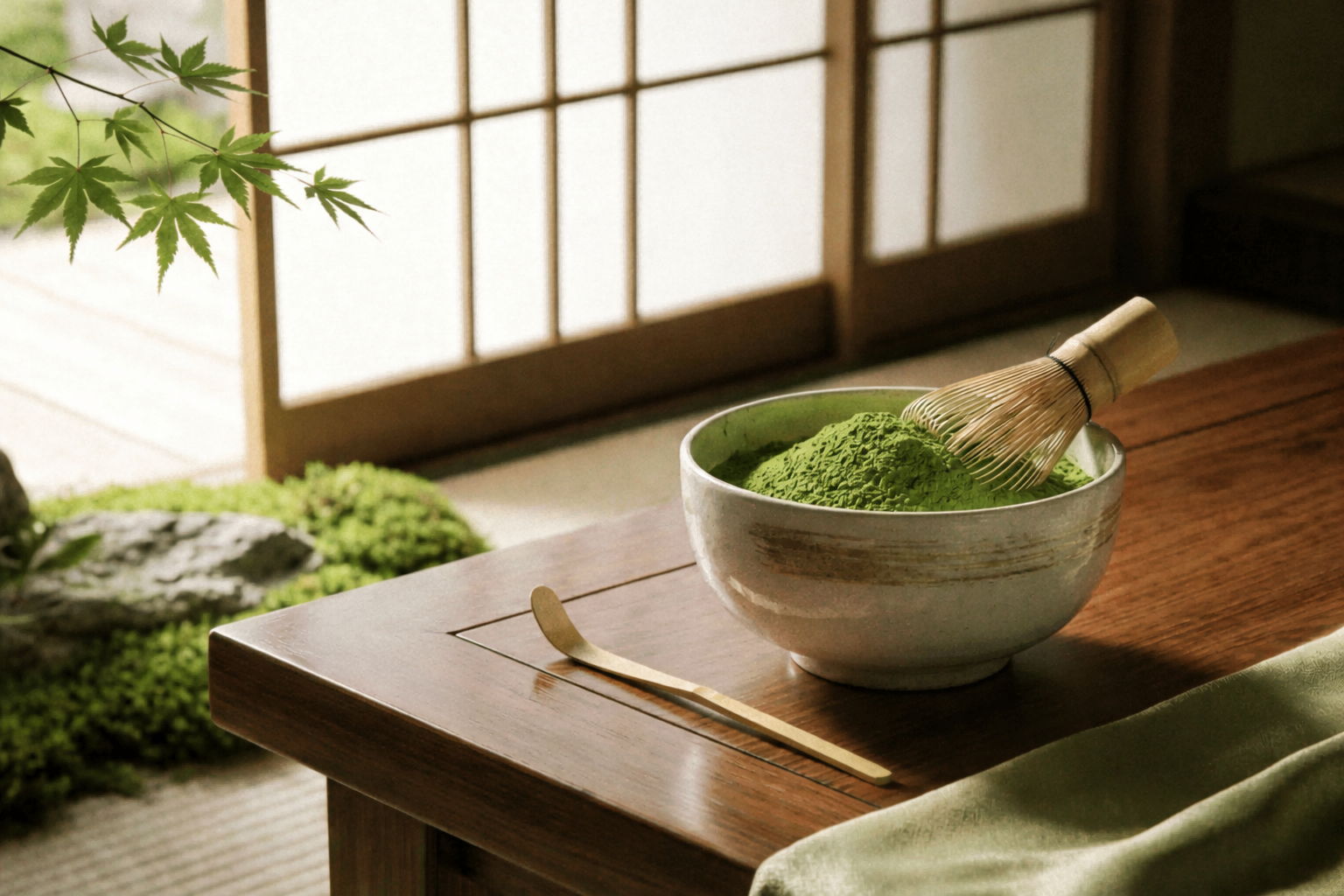
Yes. China produces matcha, including both low-cost green tea powder and high-quality matcha made with Japanese-style cultivation and processing. The best Chinese matcha is shade-grown, steam-fixed, dried into tencha, and ground into fine powder for drinking, lattes, bakery, RTD beverages and private label products.
| Question | Short Answer |
|---|---|
| Is matcha produced in China? | Yes. China is a major matcha-producing country. |
| Is Chinese matcha real matcha? | It can be, if it is shade-grown, steamed, dried as tencha and finely milled. |
| Is all Chinese matcha high quality? | No. Quality varies greatly by supplier, region and processing method. |
| Can Chinese matcha compare with Japanese matcha? | High-end Chinese matcha can compete in many B2B applications. |
| Is China good for bulk matcha? | Yes, especially for scalable, export-ready supply. |
| Is China good for private label matcha? | Yes, because Chinese suppliers can often offer more flexible MOQ, packaging and custom grades. |
| What should buyers check? | Origin, shading, steaming method, particle size, COA, certifications and batch consistency. |
This might come as a surprise, especially if you associate matcha only with Kyoto or Uji. But the world of B2B ingredients is very different from the story told to consumers. I'm on the factory floor in Anshun, Guizhou, and I see the reality of the global matcha trade every single day. The business truths are not always what you see on the pretty packaging. Let me walk you through what is really happening behind the scenes.
For buyers comparing origins, our guide on which country has the best matcha explains how Japan and China differ by culture, terroir, supply chain and commercial use. If you are comparing suppliers directly, see our page on China’s biggest matcha supplier.
China Matcha vs Japanese Matcha vs Green Tea Powder
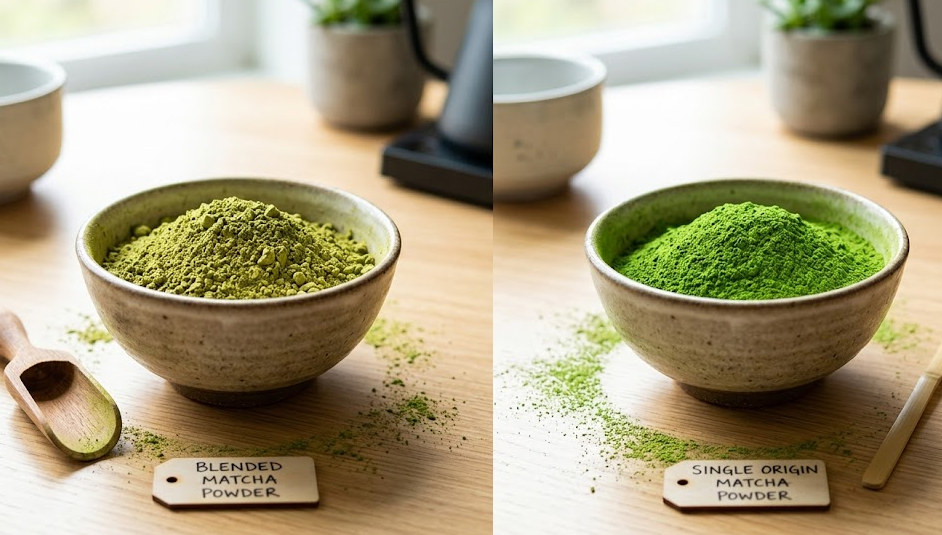
Not every green powder from China is matcha. But it is also wrong to assume that all Chinese matcha is cheap green tea powder. The difference comes from cultivation and processing.
| Product Type | Cultivation | Processing | Flavor | Best Use |
|---|---|---|---|---|
| Japanese ceremonial matcha | Shade-grown tea leaves | Steam-fixed, dried as tencha, stone-milled | Smooth, umami, premium | Tea ceremony, premium drinking |
| High-end Chinese matcha | Shade-grown tea leaves | Japanese-style steaming, tencha processing, fine milling | Smooth, green, umami-rich | Bulk, private label, lattes, premium applications |
| Low-end green tea powder | Usually sun-grown | Often pan-fired or roasted, then ground | Bitter, grassy, astringent | Low-cost food coloring or basic ingredient use |
| Culinary Chinese matcha | Varies by supplier | Can be processed for heat and color stability | Stronger tea flavor | Bakery, desserts, food manufacturing |
| RTD-grade matcha | Application-specific | Fine particle control and oxidation management | Controlled bitterness, stable color | Bottled drinks and beverage manufacturing |
For B2B buyers, the goal is not to choose by country name alone. The goal is to verify the production method, quality documents and final product performance.
Why is matcha production shifting away from Japan?
Are you struggling to find a stable, large-volume matcha supply? Japan's beautiful, historic tea farms are facing a modern crisis of capacity. The solution for global brands has been a massive production shift3.
Japan's matcha industry is constrained4 by fragmented farmland and a severe labor shortage. Its small, aging farms cannot meet the explosive demand from global brands. As a result, production has moved to China, which now holds the majority of the world's matcha capacity and resources.
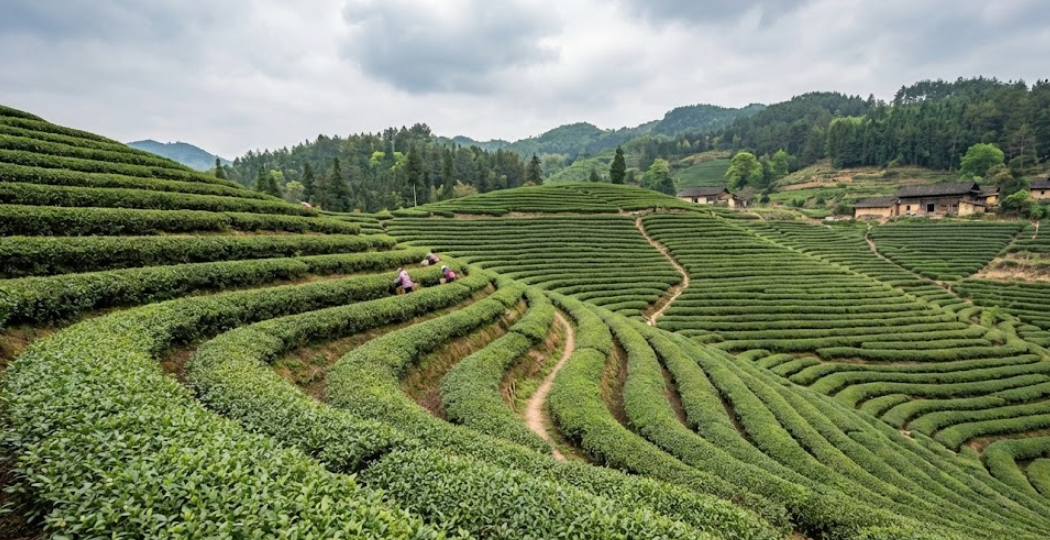
I've seen the numbers and the fields with my own eyes. Japan's tea industry is built on small, family-owned farms, many of which are generations old. While the tradition is rich, the physical and economic reality is tough. They face an aging workforce and have very little available land for expansion. This model simply cannot support the massive, year-round orders from a North American coffee giant or a European food manufacturer. The demand for matcha has exploded, and Japan's infrastructure wasn't built for this scale.
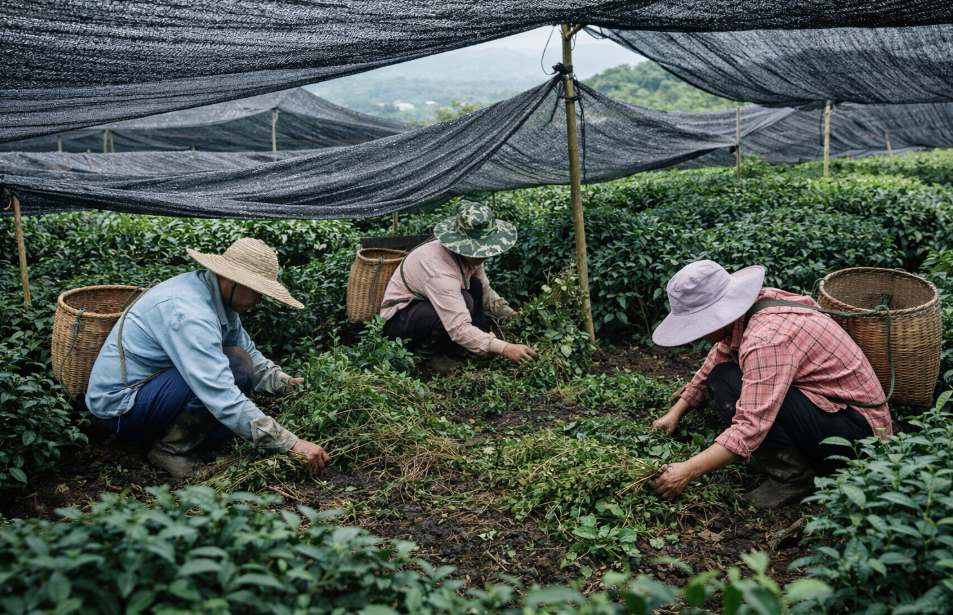
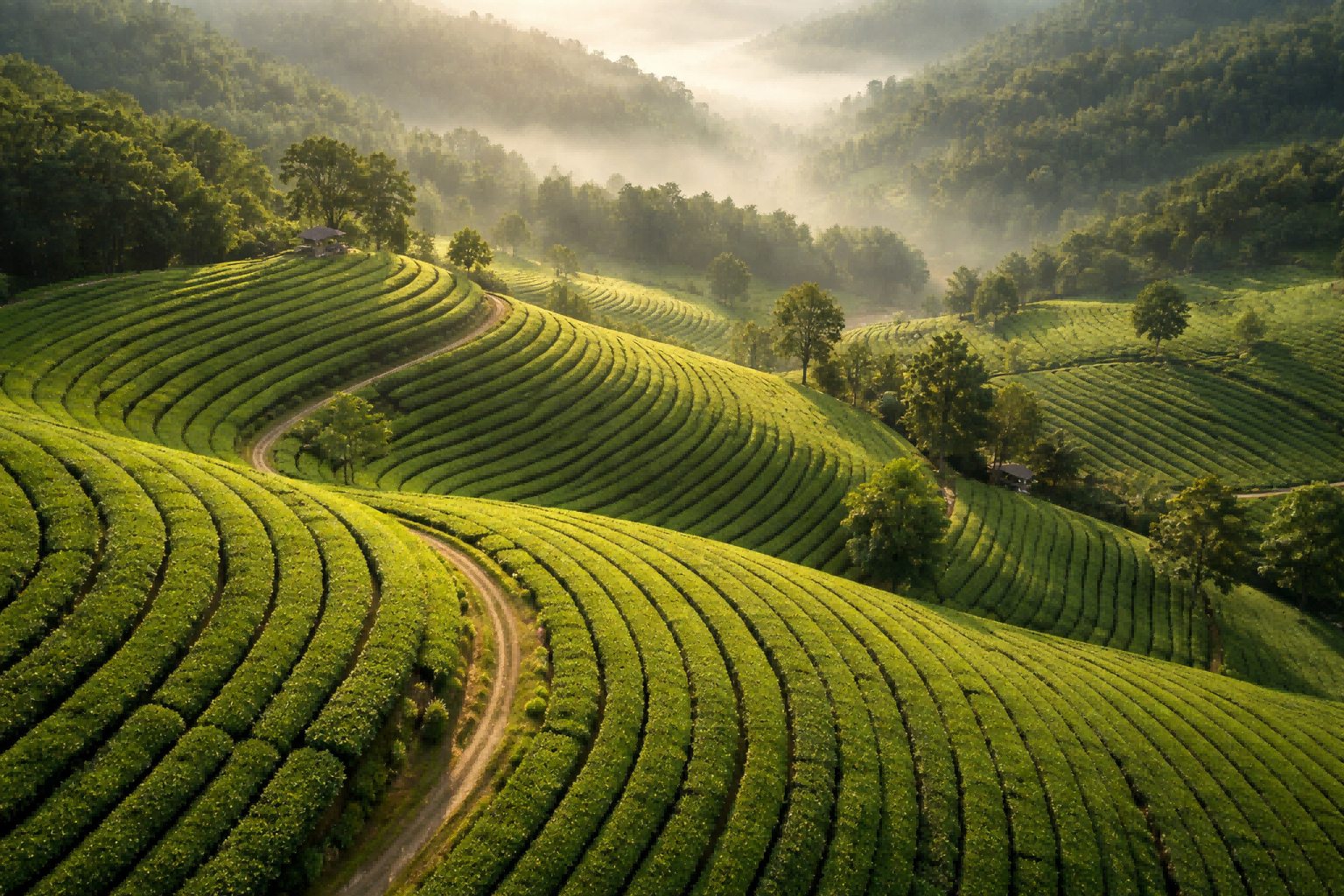
This is where the epic capacity shift happened. It's a simple business reality. Heavy-asset industries always move toward their resources. For matcha, that meant moving to China. Here, we have vast areas of land suitable for tea cultivation. At MatchaSourcing, our base in Guizhou covers over 2,300 mu (more than 380 acres) of connected, high-altitude organic tea gardens. This scale allows for efficiency, consistency, and a stable supply chain that is impossible to achieve with small, scattered plots. Today, it's estimated that over 60% of the world's raw matcha material originates from Chinese production areas like ours. It's not about replacing Japan, but about meeting a global demand that has outgrown its traditional home.
For buyers affected by tight supply, our article on why matcha is in shortage explains why clean, certified, export-ready matcha is harder to secure than ordinary green tea powder.
Why China matters for global matcha supply
China matters because the matcha market has changed. Matcha is no longer used only for traditional tea ceremony. It is now used in café drinks, oat milk lattes, smoothies, bakery, chocolate, ice cream, bottled drinks, supplements and private label retail products.
These commercial applications require different sourcing priorities:
| B2B Need | Why China Can Help |
|---|---|
| Bulk supply | Larger agricultural bases and scalable production capacity |
| Private label | More flexible packaging, grade selection and MOQ options |
| Café matcha | Strong value for latte-grade and beverage-grade matcha |
| Bakery matcha | Better cost-performance for culinary and food manufacturing use |
| RTD drinks | Application-specific development for solubility and suspension |
| Organic programs | High-altitude isolated farms can support clean supply when properly managed |
| Export documentation | Strong suppliers can provide COA, pesticide, heavy metal and microbiology reports |
| Cost control | More flexible pricing for commercial applications |
For large-volume purchasing, see bulk matcha supply. For brand owners, see private label matcha. For coffee shops and drink chains, see matcha for latte cafés.
Is Chinese matcha just cheap green tea powder?
Are you worried that matcha from China is just bitter, low-quality green tea powder? This is a common fear, but it makes you miss out on top-tier ingredients that are identical to Japan's best.
No, high-end Chinese matcha5 is not the same as simple green tea powder. Top producers like us use the exact same uncompromising Japanese methods: weeks of shade-growing, authentic steam-fixing, and slow stone-milling. Our lab reports show our quality metrics are indistinguishable from premium Japanese exports.
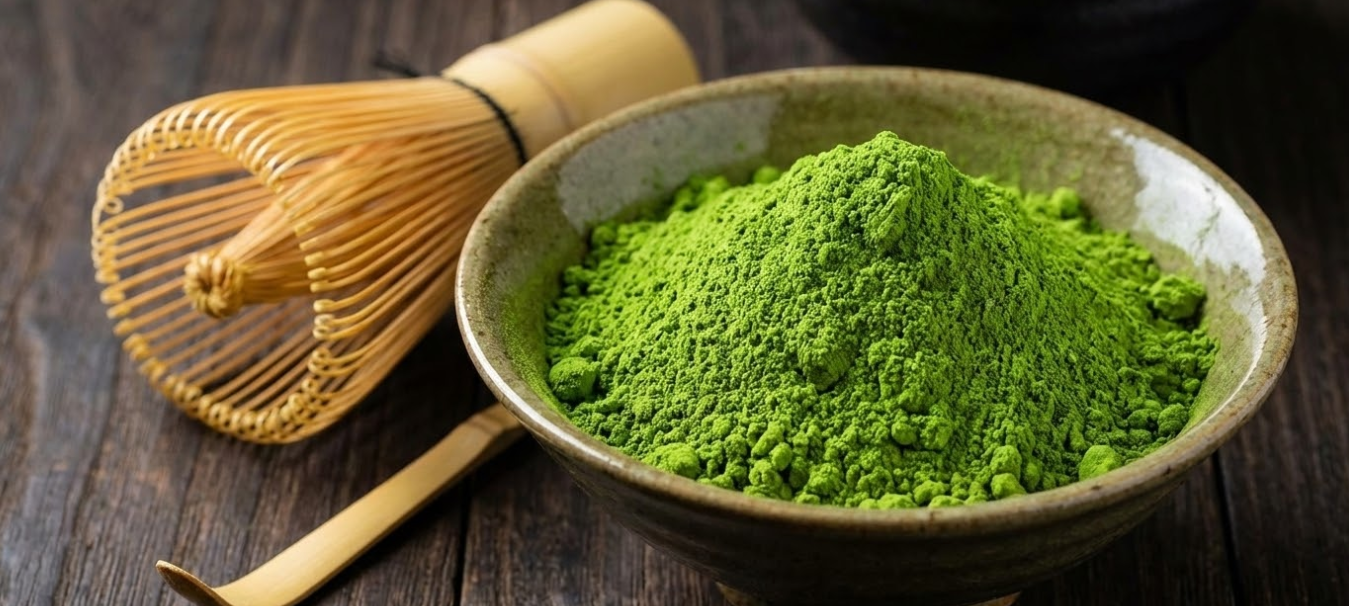
I hear this concern from new clients all the time. They’ve been told that anything from China is just conventional green tea ground into a powder. And to be fair, at the low end of the market, that product exists. But in the top tier of B2B, we are playing a completely different game. It's a game of heavy investment and zero compromise on quality.
Let me tell you how we do it.
Our Strict Cultivation Method
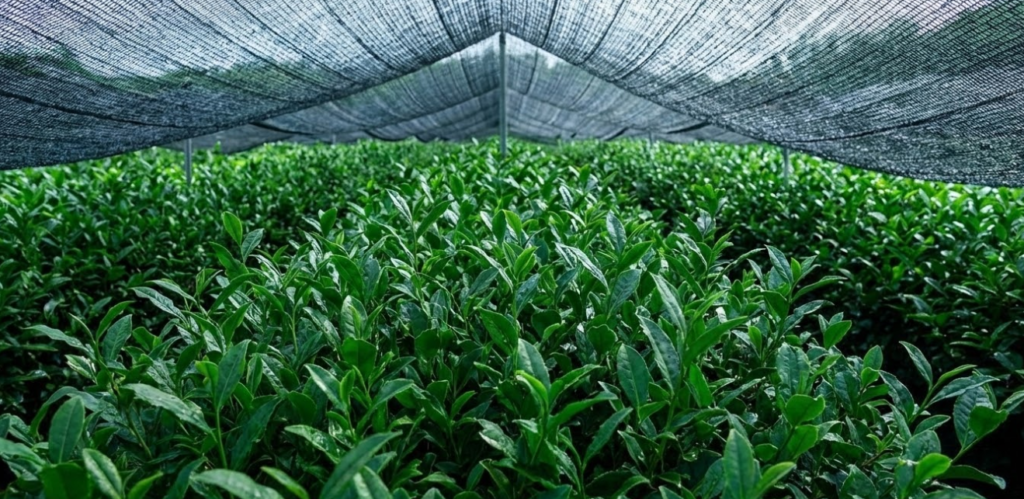
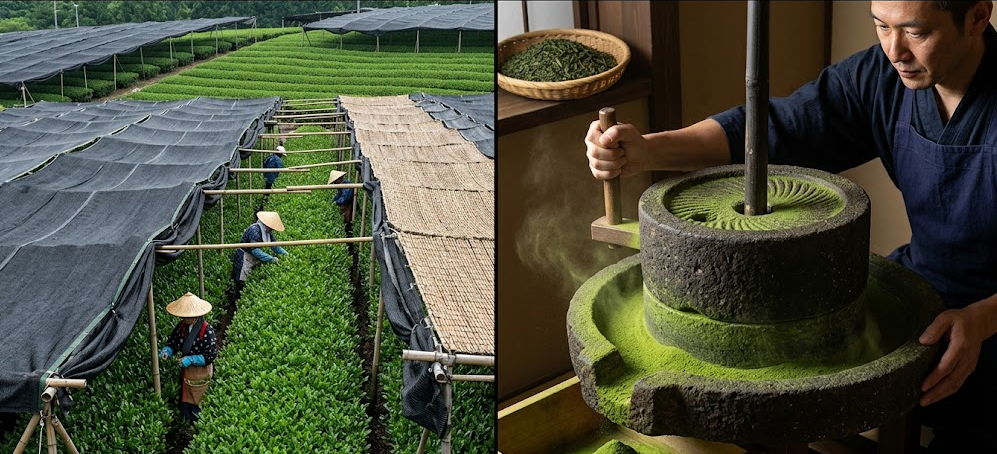
It all starts in our 2,300-mu high-altitude organic base. For several weeks before harvest, we cover the tea plants with netting. This shading process reduces sunlight, forcing the plants to produce more chlorophyll and L-theanine. This is what creates matcha's vibrant green color and its signature umami, or savory-sweet, flavor. It's the opposite of sun-grown tea, which develops more bitter catechins.
Japanese-Style Processing6
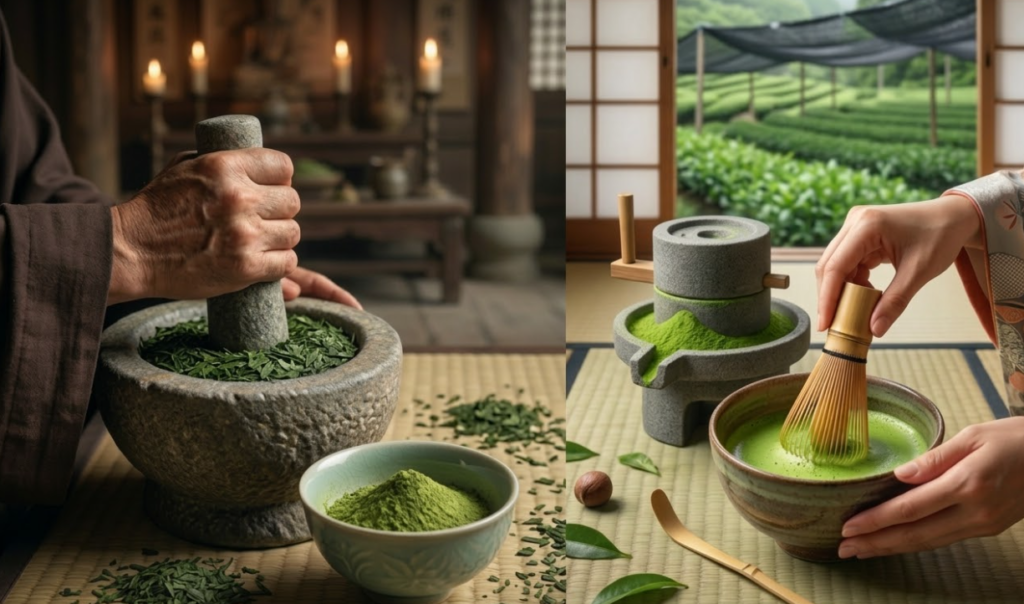
After harvesting, we immediately process the leaves using a full production line imported from Japan. The most critical step is steaming the leaves within hours of being picked. This "steam-fixing" process stops oxidation and locks in the bright green color and nutrients. This is completely different from the pan-firing method used for most Chinese green teas, which produces a yellower color and a toastier flavor. After steaming and drying, the leaves (now called tencha) are prepared for milling in our Class 100,000 cleanroom7. Here, we use traditional granite stone mills8 to slowly grind the tencha into a micro-fine powder. This slow, low-temperature process is essential to preserve the matcha's delicate flavor, color, and aroma. Our lab values for color and particle size are identical to top-grade Japanese products.
| Feature | Low-End "Green Tea Powder" | High-End Chinese Matcha (MatchaSourcing) |
|---|---|---|
| Cultivation | Sun-grown | Shade-grown for 3-4 weeks |
| Processing | Pan-fired or roasted | Steamed (Japanese tencha method) |
| Color | Dull, yellowish-green | Vibrant, electric green |
| Taste | Bitter and astringent | Smooth, rich umami, slightly sweet |
| Texture | Gritty, larger particles | Ultra-fine powder (under 10 microns) |
How to identify real Chinese matcha
If you are sourcing from China, do not only ask for a price list. Ask whether the supplier can prove that the product is real matcha, not ordinary green tea powder.
Use this checklist:
| Checkpoint | What to Ask |
|---|---|
| Shade-growing | Was the tea shaded before harvest? For how many days? |
| Processing method | Is it steamed like tencha, or pan-fired like regular green tea? |
| Milling | Is it stone-milled or ultra-fine milled under controlled temperature? |
| Particle size | Can the supplier provide particle size or mesh information? |
| Color | Does the powder stay bright green in the final application? |
| Taste | Is the flavor smooth and umami-rich, or bitter and roasted? |
| COA | Can the supplier provide batch-level COA? |
| Testing | Are pesticide, heavy metal and microbiology reports available? |
| Certification | Is organic, JAS, USDA, EU or other certification available if needed? |
| Traceability | Does the supplier control farms, processing and packaging? |
For documentation, review our matcha COA and testing guide before placing a bulk order.
Is your 'Japanese' matcha actually from China?
Do you pay a premium for matcha with "Product of Japan" on the label? You might be surprised to learn that the journey of that powder likely started in the soil of a Chinese tea garden.
It's highly possible. Many large Japanese trading companies buy tons of fully certified organic matcha from major Chinese producers like us. They then ship it to Japan for packaging, legally label it as "Packaged in Japan," and export it to Western markets at a huge markup.
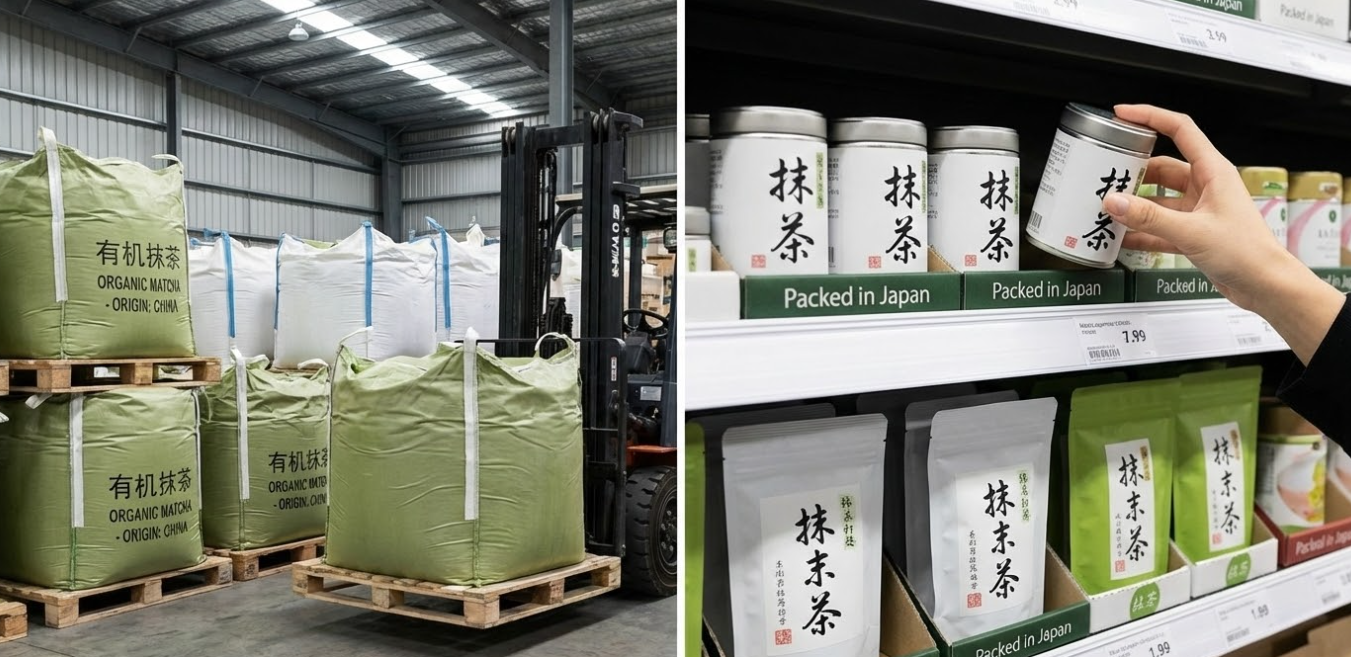
This is often the most disillusioning truth for our international clients. They see a beautiful tin on a shelf in the US or Europe, it's sold at a high price, and it says "Made in Japan." They assume the entire process, from seed to tin, happened in Uji. The reality of the global supply chain is far more complex. This practice is what some in the industry call "origin washing9."
Here’s the business logic behind it. For a small farmer in Japan, getting dual organic certifications10 for both the EU and the USDA is incredibly expensive and bureaucratically difficult. The inspections, paperwork, and compliance costs are a huge burden. In contrast, a large-scale, vertically integrated producer like us can manage this process efficiently. We built our entire system—from soil management and green pest control to processing and packaging—to meet these high international standards from day one. We hold EU Organic, JAS (Japan Organic), USDA NOP, and Rainforest Alliance certifications.
The Real Global Supply Chain Route
So, here is what happens. A major Japanese trading house will buy thousands of tons of fully certified organic tencha or finished matcha powder from us. It meets every quality and safety standard. This matcha is then shipped in bulk to Japan. There, it is put into final consumer packaging. Because the final step of packaging happened in Japan, they can legally label it "Packaged in Japan." It is then exported and sold to you, the global consumer, at a premium price based on the "Japanese origin" story. In the high-stakes B2B world, a brand's survival depends on a stable, compliant, and high-quality supply. A romantic "origin halo" means nothing if you can't get the product. What truly matters is who controls the clean soil, who holds the critical organic certifications, and who operates the Class 100,000 cleanroom.
Why Chinese matcha is suitable for bulk buyers
For bulk buyers, the most important questions are not emotional. They are operational:
- Can the supplier deliver the same grade again next season?
- Can the supplier provide enough volume?
- Can the supplier provide COA and test reports?
- Can the powder meet the target market’s compliance requirements?
- Can the quality remain stable across batches?
- Can the price support your finished product margin?
China can be a strong sourcing option because it offers a combination of tea-growing scale, modern processing and export-oriented supply systems. This is especially important for importers, distributors, beverage manufacturers, café chains and food factories.
| Bulk Buyer Requirement | Why Chinese Matcha Can Fit |
|---|---|
| Large volume | Bigger tea bases and scalable production lines |
| Grade flexibility | Options for ceremonial, premium, latte, culinary and RTD grades |
| Cost-performance | Better fit for commercial products than high-cost Japan-only sourcing |
| Export documentation | Strong suppliers can support COA and compliance files |
| Application matching | Grades can be developed for latte, bakery, RTD and private label |
| Repeat supply | Farm-level control helps reduce batch inconsistency |
| Packaging options | Bulk bags, cartons and custom formats can be arranged |
For importers and distributors, start with bulk matcha supply. For buyers affected by supply constraints, see why matcha is in shortage.
Why Chinese matcha is suitable for private label
Private label buyers need more than good powder. They need a supplier who can help build a product line. This includes grade selection, packaging format, label support, sample development, MOQ planning and export documentation.
Chinese matcha can be especially useful for private label because suppliers often have more flexibility than large Japanese brands. Instead of buying a fixed branded product, you can develop a matcha that fits your target customer and price point.
| Private Label Need | Chinese Matcha Advantage |
|---|---|
| Custom grade | Choose by taste, color, bitterness, application and price |
| Packaging flexibility | Retail tins, pouches, sachets or bulk-to-pack options |
| MOQ flexibility | More room for staged development compared with large legacy suppliers |
| Application support | Drinking, latte, smoothie, bakery or wellness positioning |
| Cost control | Better margin planning for new brands |
| Certification support | Organic and export documents when available |
| Faster testing | Easier to test multiple grades before launch |
Private label buyers should begin with product positioning. A premium ceremonial tin, a daily wellness matcha, a café latte powder and a smoothie ingredient do not need the same grade.
For brand development, visit private label matcha. For grade selection, review our best matcha selection guide.
Best applications for China-produced matcha
China-produced matcha can be used across many commercial applications, but the grade must match the use case.
| Application | Recommended Chinese Matcha Direction | Key Requirement |
|---|---|---|
| Plain drinking matcha | First-harvest organic or premium grade | Smooth umami, bright color, low bitterness |
| Matcha latte | Barista or latte-grade matcha | Strong flavor in milk and ice |
| Bakery | Culinary / bakery-grade matcha | Heat stability and color retention |
| RTD bottled drinks | RTD-grade matcha | Suspension, solubility and oxidation control |
| Smoothies | Beverage-grade matcha | Strong color and clean flavor |
| Supplements | COA-tested organic matcha | Purity, documentation and traceability |
| Private label retail | Custom grade | Balance of taste, story, price and margin |
| Bulk ingredient | Commercial culinary grade | Consistency and cost-performance |
For application-specific sourcing, see best matcha grade for latte, bakery and ready-to-drink products.
B2B sourcing checklist for Chinese matcha
Before choosing a Chinese matcha supplier, ask these questions:
- Is the tea shade-grown before harvest?
- Is the tea steamed using a tencha-style process?
- Is the powder stone-milled or finely milled under controlled temperature?
- Does the supplier own or control the tea gardens?
- Can the supplier provide batch-level COA?
- Are pesticide, heavy metal and microbiology tests available?
- Can the matcha meet your target market’s import requirements?
- Can the supplier support your required MOQ and annual volume?
- Can the matcha be tested in your real application?
- Can the supplier support private label or custom packaging?
- Is the grade suitable for drinking, latte, bakery, RTD or another use?
- Can the supplier repeat the same quality in future batches?
A reliable Chinese matcha supplier should be able to discuss more than price. They should understand application performance, documentation, harvest season, processing method and commercial risk.
MatchaSourcing for China-origin matcha supply
MatchaSourcing.com focuses on China-origin matcha for B2B buyers who need quality, flexibility and documentation. We are not trying to sell Chinese matcha as a cheap substitute. We position it as a practical, scalable and customizable solution for modern matcha products.
We support:
- Bulk matcha supply for importers, distributors and manufacturers
- Private label matcha for brands building their own product line
- Matcha for latte cafés for coffee shops and beverage chains
- Matcha for RTD drinks for bottled beverage development
- COA and testing for buyers who need batch verification
- Matcha grade selection for buyers comparing ceremonial, premium, latte and culinary grades
If you are sourcing from China, do not buy blindly from a price list. Start with your application, target market and quality documents. Then choose the grade that fits.
CTA: Need China-produced matcha for bulk or private label?
If you are comparing Chinese matcha suppliers for bulk import, private label, café drinks, bakery, RTD beverages or wellness products, MatchaSourcing.com can help you choose the right grade and test it in your real application.
Start here:
- For large-volume purchasing: Bulk Matcha Supply
- For branded products: Private Label Matcha
- For coffee shops and chains: Matcha for Latte Cafés
- For bottled drinks: Matcha for Drinking / RTD
- For compliance checks: COA and Testing
- For choosing the right grade: Best Matcha Selection Guide
Before placing a bulk order, request samples, check documentation and test the powder in your final formula.
Conclusion
China is a major producer of high-quality matcha11, rivaling Japan's quality with authentic methods. This hidden supply chain is the engine behind many global and even "Japanese" matcha brands.
Japan remains the strongest name in matcha tradition and cultural branding. But China is now one of the most important production bases for modern matcha supply. For B2B buyers, China can offer real advantages in scale, cost-performance, organic farming potential, private label flexibility and application-specific development.
The safest answer is this: yes, matcha is produced in China, and the best Chinese matcha should be judged by method, documentation and application performance—not by old assumptions about origin.
FAQ: Is Matcha Produced in China?
Is matcha produced in China?
Yes. China produces matcha, including both low-cost green tea powder and high-quality matcha made with shade-growing, steaming and fine milling methods.
Is Chinese matcha real matcha?
Chinese matcha can be real matcha if it is made from shade-grown tea leaves, steamed to prevent oxidation, dried into tencha and finely milled into powder. Ordinary ground green tea powder is not the same as real matcha.
Is Chinese matcha the same as Japanese matcha?
Not always. Japanese matcha has stronger cultural heritage and premium consumer perception. High-end Chinese matcha can use Japanese-style processing and perform very well in commercial applications, but quality depends on the supplier.
Is Chinese matcha good quality?
Chinese matcha can be high quality when produced by serious suppliers with controlled tea gardens, shading, steaming, fine milling, clean processing, COA support and export documentation.
Why is matcha produced in China?
Matcha is produced in China because global demand has outgrown traditional supply. China has large tea-growing regions, modern processing capacity and stronger scalability for bulk and commercial matcha applications.
Is Chinese matcha just green tea powder?
Low-end Chinese green tea powder exists, but high-end Chinese matcha is different. Real matcha should be shade-grown, steamed and finely milled, while ordinary green tea powder is often sun-grown and pan-fired.
Can Chinese matcha be used for private label?
Yes. Chinese matcha is often suitable for private label because suppliers can support custom grades, packaging, MOQ flexibility, product development and export documents.
Can Chinese matcha be used for bulk supply?
Yes. China is a strong option for bulk matcha because it can offer larger scale, application-specific grades and better cost-performance for importers, distributors and manufacturers.
What should I check before buying Chinese matcha?
Check whether the matcha is shade-grown, steamed, finely milled, traceable and tested. Ask for COA, pesticide residue testing, heavy metal testing, microbiology reports and certification documents if required.
Should I choose Chinese matcha or Japanese matcha?
Choose Japanese matcha if your brand depends on Japan-origin storytelling and traditional ceremonial positioning. Choose Chinese matcha if your priority is bulk supply, private label flexibility, cost-performance, application development and scalable sourcing.
Discover how China is becoming a key player in the matcha industry, offering premium quality that rivals traditional Japanese matcha. ↩
Explore the intricate global supply chain of matcha and understand how China fits into this complex network. ↩
Find out why matcha production is moving from Japan to China and the implications for global brands. ↩
Understand the challenges faced by Japan's matcha industry, including labor shortages and limited farmland. ↩
Discover the qualities that distinguish high-end Chinese matcha from regular green tea powder. ↩
Explore the meticulous Japanese-style processing methods used in Chinese matcha production to ensure quality. ↩
Learn about the role of Class 100,000 cleanrooms in maintaining matcha purity and quality. ↩
Discover the role of traditional granite stone mills in achieving the fine texture of premium matcha. ↩
Uncover the practice of origin washing and its impact on matcha labeling and consumer perception. ↩
Explore the significance of dual organic certifications in ensuring matcha quality and compliance. ↩
Explore how China has become a leading producer of matcha, rivaling Japan in quality and production methods. ↩