Struggling to choose between Japanese and Korean matcha1? The price difference is huge, but so is the risk to your product's quality. Let's break down the real business differences.
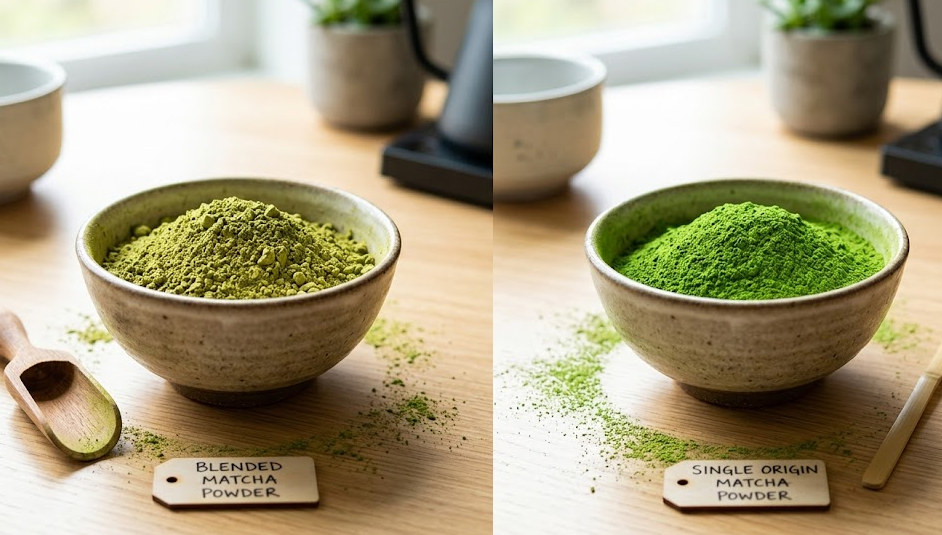
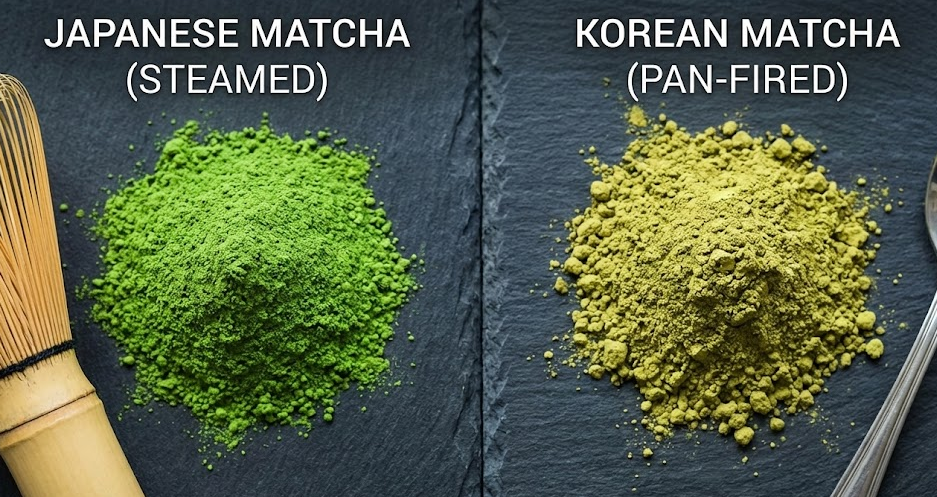
The main difference lies in processing and flavor. Japanese matcha2 is steamed, resulting in a vibrant green color and savory umami taste. Korean matcha is often pan-fired3, giving it a yellowish-green hue and a nutty, roasted flavor. This impacts its use in premium food and beverage applications.
When I first started in this industry, I also believed in the "artisan myth" of Uji, Japan. It wasn't until I invested my own money to build my modern factory in Anshun and managed the entire supply chain myself that I saw the harsh reality of Japanese and Korean matcha1 from a B2B perspective. The differences go far beyond taste. They affect your bottom line, your product's visual appeal, and even your ability to export to strict markets. Let's dive into the details that truly matter for your business.
Why does processing create such a huge quality gap?
Is your matcha product not as green as you'd like? This dull color can make your brand look cheap. The key isn't the grade, but the processing method.
Japanese matcha is steamed (steaming process). This locks in a vibrant green color and a fresh, umami flavor4. Korean matcha1 is often pan-fired or roasted, which creates a nutty taste but results in a more yellowish-green powder. For high-end applications, the steamed green5 is non-negotiable.
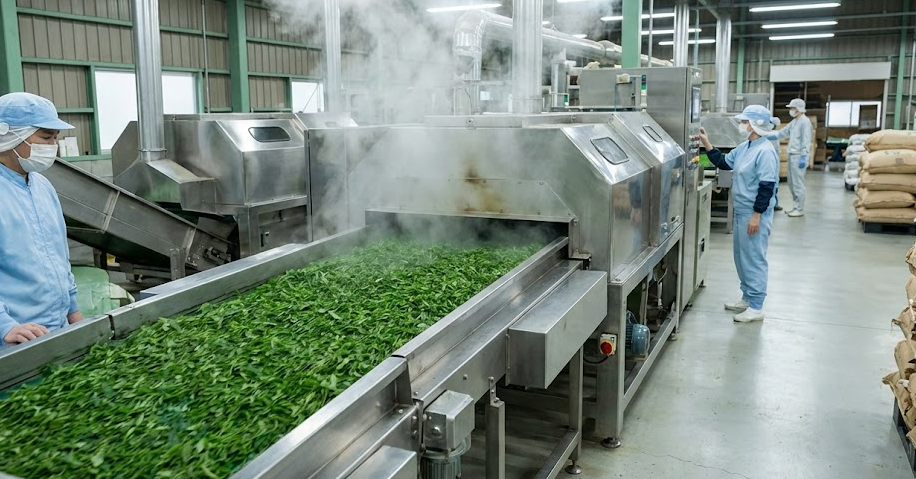
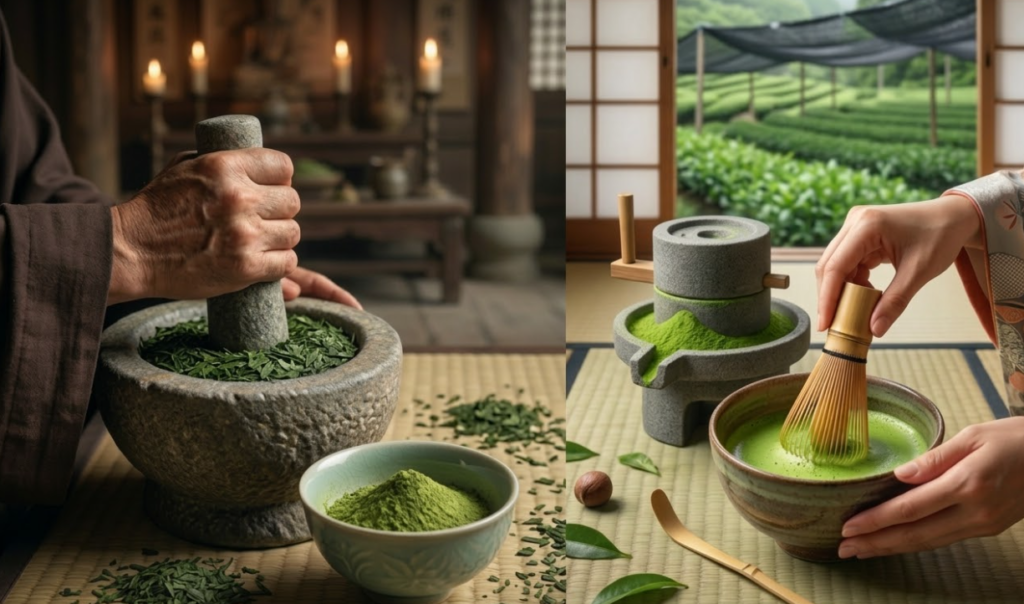
To get that top-tier, vibrant green color and rich umami flavor4, I had to make a big decision. I invested heavily in a full line of expensive Japanese-style steaming equipment6. This "kill-green" step is critical. Steaming quickly deactivates enzymes in the fresh tea leaves, preserving the chlorophyll and that fresh, almost seaweed-like savory note. This is the signature of high-quality matcha.
For buyers who want to understand how steaming, drying and milling affect color and flavor, our Japanese matcha processing guide explains the production steps behind premium matcha powder.
In contrast, many Korean matcha producers use methods closer to traditional green tea production, like pan-firing or roasting. While this is a cost-effective method, it changes the final product completely. The heat gives the powder a yellowish-green tint and a noticeable "toasted" or "roasted nut" flavor. For my B2B clients in the premium beverage or baking industries, that specific, bright green color is a non-negotiable mark of quality. A yellowish matcha latte simply doesn't sell as well.
| Feature | Japanese-Style (Steamed) | Korean-Style (Pan-Fired) |
|---|---|---|
| Kill-Green Method | Quick, high-temperature steaming | Slower pan-firing or roasting |
| Final Color | Vibrant, emerald green | Yellowish-green, sometimes dull |
| Flavor Profile | Fresh, savory (umami), slightly sweet | Nutty, toasted, sometimes grassy |
| Best For | Premium lattes, high-end desserts | Budget-friendly applications, flavored blends |
If you are comparing different grades for drinks, desserts or retail products, review our matcha powder options before choosing an origin or processing style.
Can you really trust the 'organic' label on your matcha?
Worried your certified organic matcha might still fail pesticide tests? A recall could be disastrous for your brand. The real safety lies not in the certificate, but the farm's location.
Not always. Japanese farms are often small and mixed with conventional farms, creating a high risk of pesticide drift7. This makes large-scale, truly clean exports a nightmare. A large, isolated farm provides a physical barrier, ensuring genuine organic integrity8 and stability for every batch.
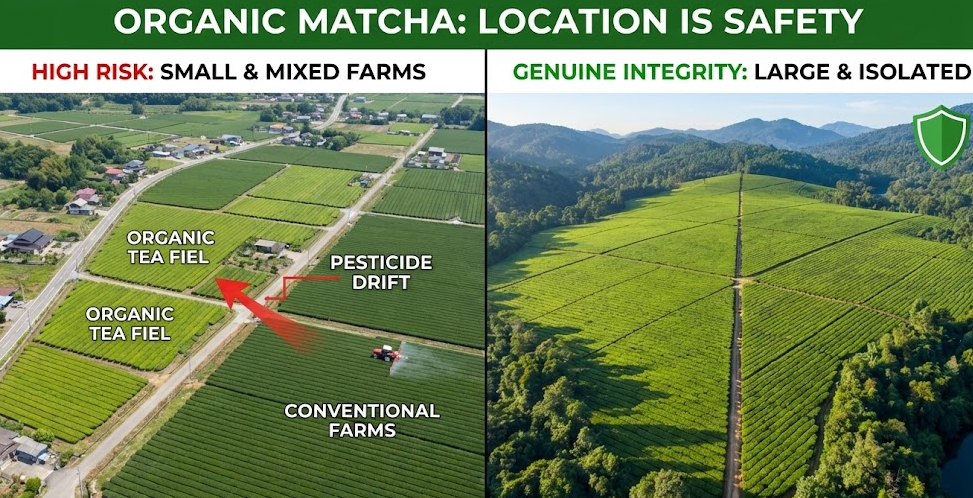
I learned this the hard way during my research trips to Japan. I saw beautiful organic tea plots, but right next door, a different farmer was spraying their conventional crops. On a windy day, you can't stop that chemical spray from drifting over. This is a huge problem called "pesticide drift7." It's a nightmare for anyone trying to supply large, consistent, and verifiably clean batches for strict markets like the European Union. A single failed test can jeopardize an entire shipment.
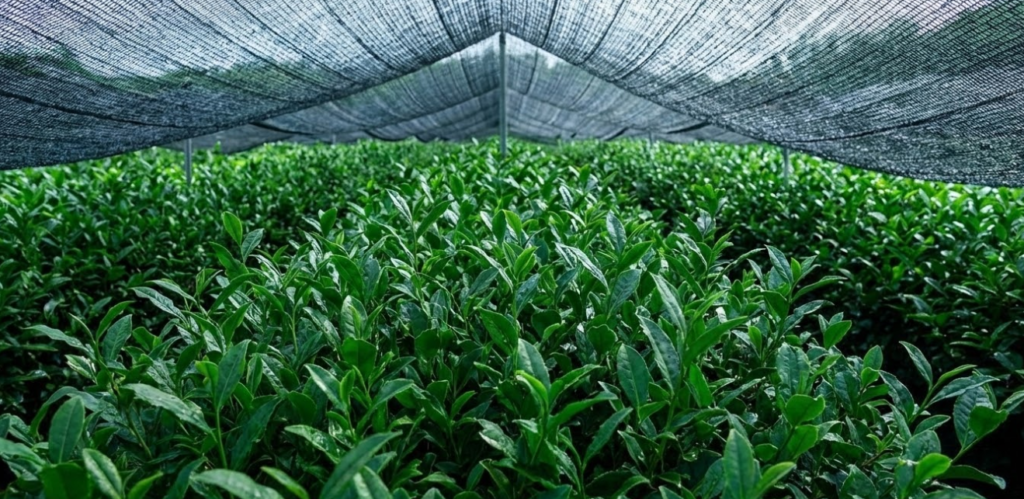
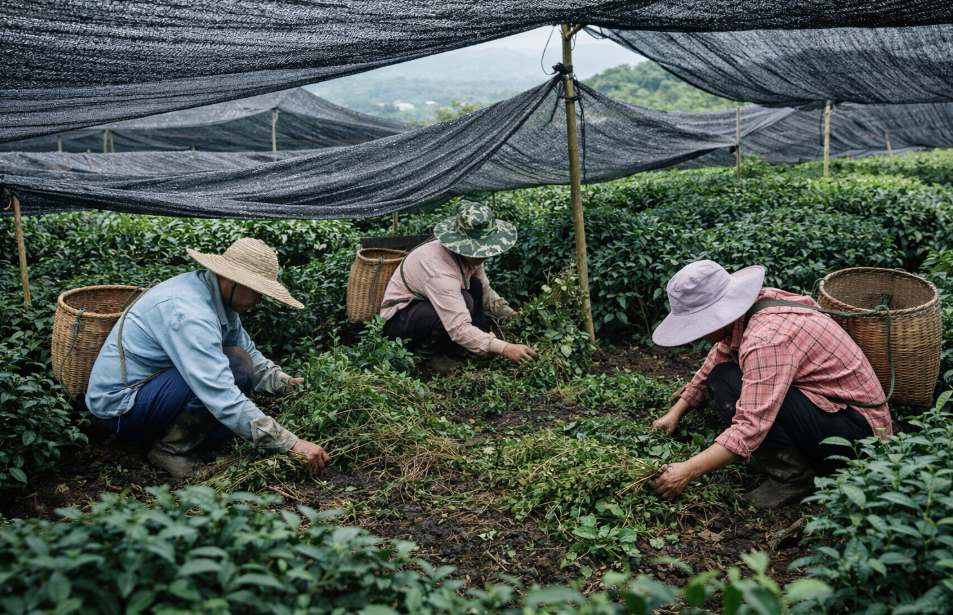
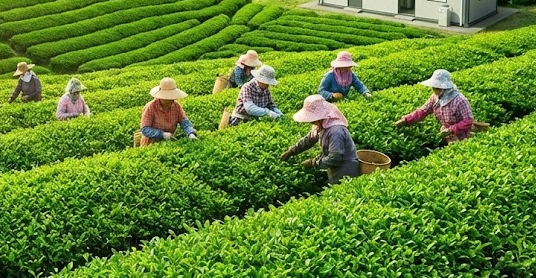
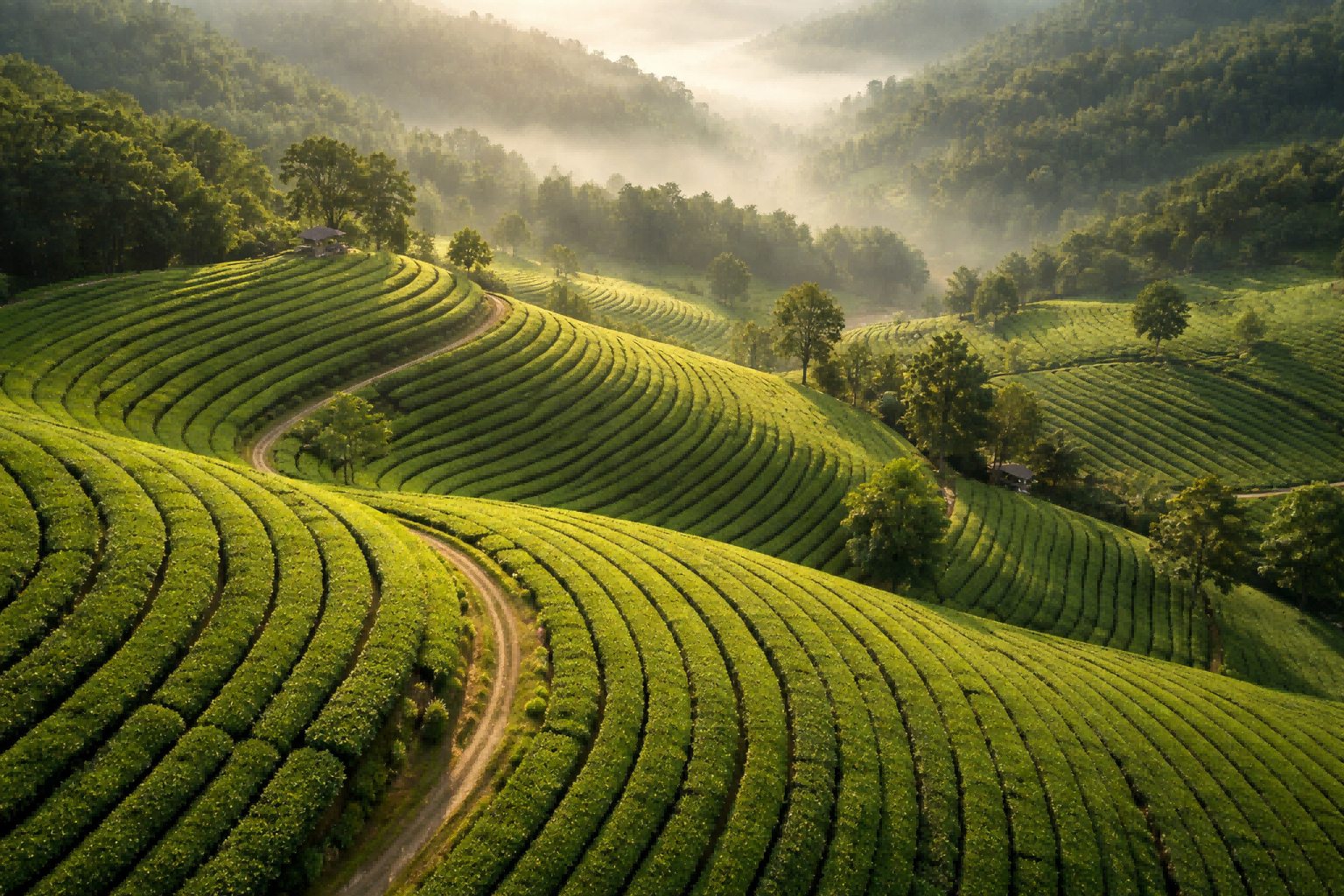
This is exactly why I poured so much capital into my 2,300-mu base in the high mountains of Guizhou. The most important feature is its geographical isolation9. It's our own "private estate" for tea, far away from any other farms. This heavy, upfront investment buys something priceless for my B2B partners: a stable, reliable, and scalable supply of zero-residue matcha. It's not just about a certificate; it's about a physical guarantee that reduces supply chain risk.
Want premium Japanese-quality matcha but can't afford the high price? Settling for less hurts your brand, but high costs kill your profit. There is a way to get both.
By sourcing from a supplier who combines Japanese technology with strategic geographical advantages. I use Japanese steaming equipment and strict organic management on my own land in China. This achieves Japanese-level quality10 without the high land and labor costs, offering a better value proposition for B2B buyers.
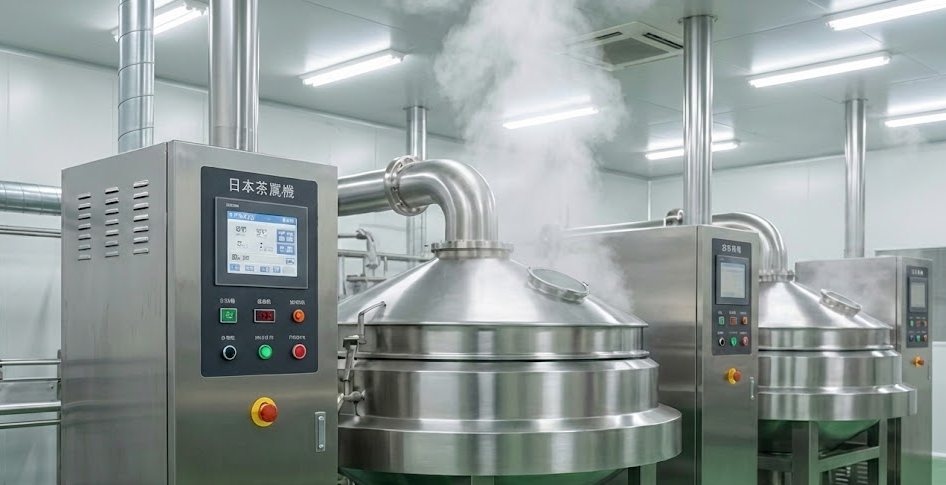
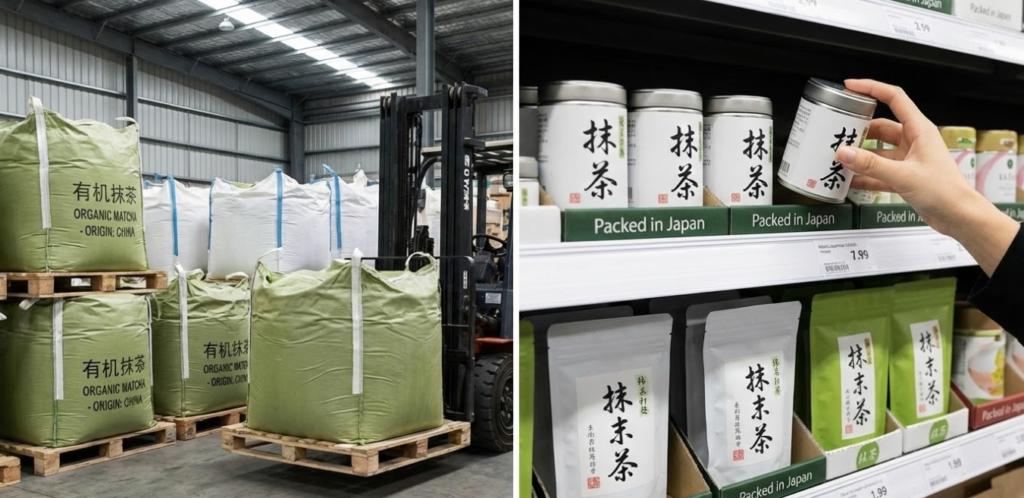
Let's be direct. B2B buyers are realistic. Korean matcha is often positioned as a budget-friendly alternative to Japanese matcha. My approach is completely different. I am not offering an "alternative"; I am offering a "dimension reduction strike." I took the best part of the Japanese system—the steaming technology and processing know-how—and implemented it here in China. Here, I have the advantage of a large, controlled organic land base and a more efficient cost structure.
So, my matcha isn't just "Chinese matcha." It's matcha engineered to Japanese specifications, but produced on my own Chinese soil. When a purchasing manager looks at the lab reports, the color analysis, and the taste profile, they see that my product can perfectly replace a high-end Japanese matcha. Then they look at the price. My price doesn't include the huge premium that comes from Japan's scarce land and high costs. For a pragmatic business, the choice is clear.
If you are not sure which grade fits your application, our how to choose matcha guide can help you compare ceremonial, premium, latte and culinary grades.
For brands, cafés and manufacturers comparing commercial supply options, our bulk matcha sourcing page covers MOQ, packaging, COA support and export-ready supply.
Conclusion
Choosing matcha isn't about country, but about processing, organic integrity8, and value. Steamed, clean-sourced matcha offers the best quality and business security, regardless of its origin.
Understand the distinct nutty and roasted flavor of Korean matcha, and its suitability for budget-friendly applications. ↩
Explore why Japanese matcha is renowned for its vibrant color and umami flavor, making it a premium choice for high-end applications. ↩
Discover how the pan-fired method affects the color and flavor of matcha, making it different from the steamed variety. ↩
Explore the elements that give matcha's savory umami taste, a key characteristic of high-quality Japanese matcha. ↩
Learn how the steaming process preserves the vibrant green color and fresh flavor, crucial for premium matcha products. ↩
Understand how this equipment is crucial for achieving the vibrant color and flavor associated with premium matcha. ↩
Find out the challenges of maintaining organic integrity in matcha farms due to pesticide drift from nearby conventional farms. ↩
Explore the practices that ensure matcha remains free from pesticides and chemicals, maintaining its organic status. ↩
Learn how isolated farms ensure genuine organic matcha by preventing contamination from nearby conventional farms. ↩
Find out how combining Japanese technology with strategic locations can produce matcha that rivals Japanese quality at a lower cost. ↩