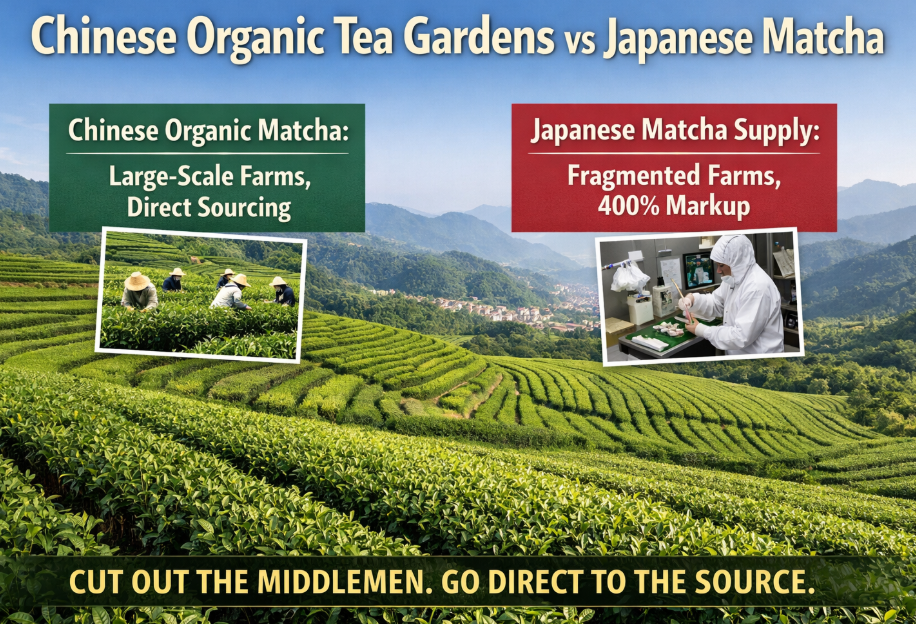
You think you know where the best matcha comes from, and you probably think it's Japan. But what if that belief is holding your business back from a truly superior product?
The best matcha today combines Japanese processing technology with the unique, pristine terroir of China's high-altitude regions. This fusion delivers superior color, umami, and verifiable organic purity that is hard to match.
For consumers, Japan is still the most famous answer because of its long tea ceremony tradition and strong global matcha branding. But for B2B buyers, the better question is not simply “which country is famous for matcha?” The better question is: which country can provide the right balance of quality, purity, certification, price, scalability, and customization for your product?
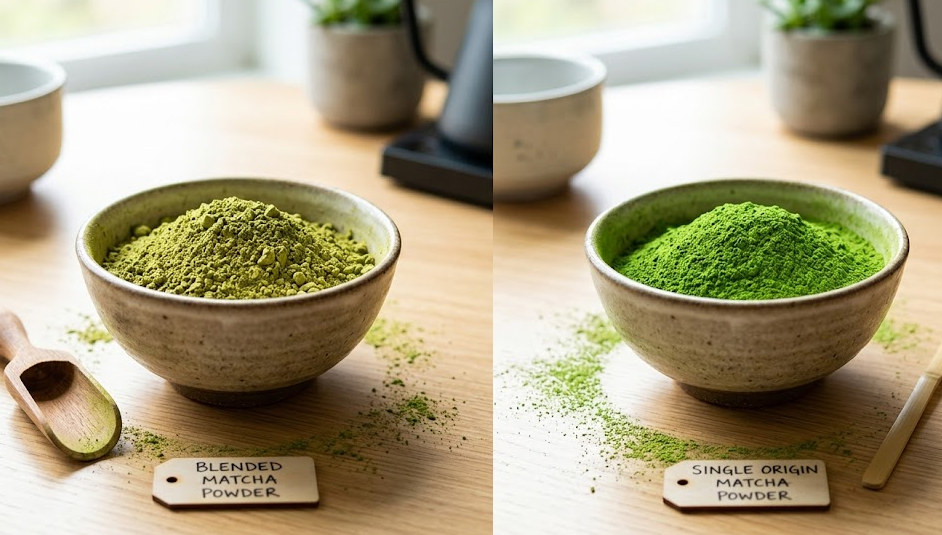
Japan remains the benchmark for matcha culture and processing heritage. China, especially high-altitude regions such as Guizhou, is becoming a powerful option for organic bulk matcha, private label matcha, café latte matcha, and export-ready commercial supply.
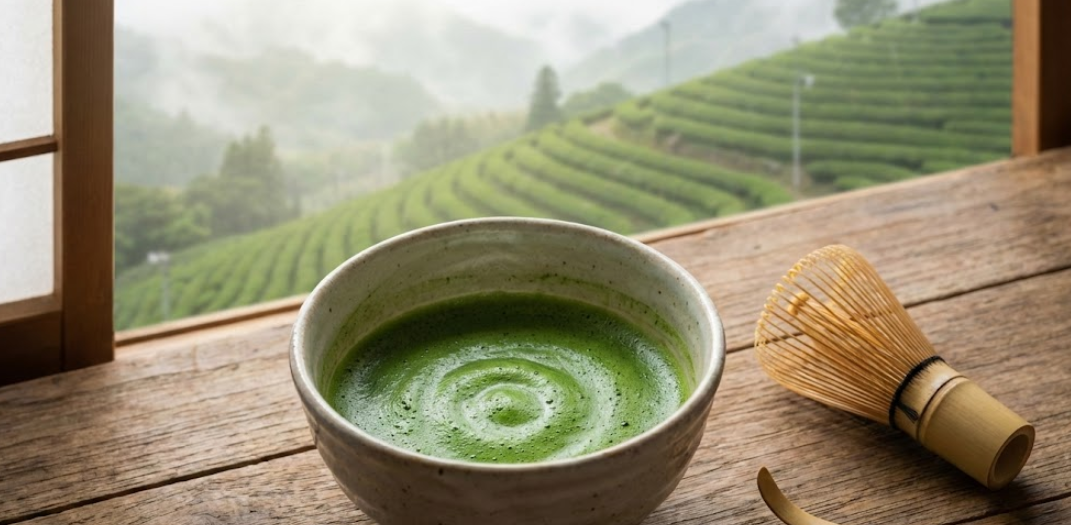
Quick Answer: Which Country Has the Best Matcha?
Japan has the strongest matcha reputation and the deepest cultural history. China has the strongest opportunity for scalable, certified, high-value B2B matcha supply when the right terroir and processing technology are combined.
| Country / Region | Best Known For | Strength | Limitation |
|---|---|---|---|
| Japan | Traditional ceremonial matcha | Strong heritage, premium branding, mature processing | High cost, limited land, tight supply, less flexibility |
| China | Bulk, organic, private label and application-specific matcha | Scale, customization, clean high-altitude terroir, competitive pricing | Quality varies by supplier and region |
| Korea | Powdered green tea and specialty tea culture | Niche origin story and unique flavor | Smaller matcha supply chain |
| Other origins | Ingredient-grade tea powders | Cost-focused options | Often weaker matcha identity and quality control |
So if you are asking as a consumer, Japan is the classic answer. If you are asking as a brand, importer, café chain, supplement company, or private label buyer, the answer is more complex. The best country depends on the product you want to build.
For buyers comparing grades, origin and application, our best matcha selection guide can help you choose between ceremonial, premium, latte and culinary matcha.
I know the common answer to this question is "Japan." For consumers, it's a simple, emotional connection to history and tradition. But in the deep, competitive world of B2B supply chains, emotion doesn't win negotiations. Hard facts do. I want to share two facts that I use to help my partners build better, more competitive products. The answer might surprise you, but the results speak for themselves. Let's look at the evidence.
Japan vs China Matcha: What Really Matters?
When comparing matcha countries, most people focus only on origin. B2B buyers should compare the full supply chain.
| Factor | Japanese Matcha | Chinese Matcha from Strong Suppliers |
|---|---|---|
| Brand perception | Very strong | Growing quickly |
| Processing tradition | Excellent | Can use Japanese-style equipment and methods |
| Organic scalability | Limited by land and neighboring farms | Strong in isolated high-altitude regions |
| Price competitiveness | Higher | More flexible |
| Bulk supply | Limited and expensive | Stronger volume potential |
| Private label flexibility | Often limited | Stronger customization potential |
| Café and latte applications | Premium but costly | Strong value for beverage-grade matcha |
| COA and export support | Strong from top suppliers | Strong when working with export-ready suppliers |
This is why country alone does not decide matcha quality. The best matcha comes from the right combination of terroir, cultivar, shading, harvest timing, steaming, drying, grinding, testing, and supply-chain control.
If you want to compare available grades and commercial formats, review our matcha powder options before choosing a country or supplier.
Why is Geographically Pure Matcha a Game Changer?
You need certified organic matcha for your brand, and you trust the label on the packaging. But what if that certification doesn't protect you from a neighbor's pesticides drifting over on the wind?
Geographically pure matcha, grown in isolated high-altitude gardens, offers unparalleled organic integrity. Unlike interconnected fields where pesticide drift is a constant risk, physical isolation guarantees what's on the label is in the bag, protecting your brand and ensuring genuine quality.
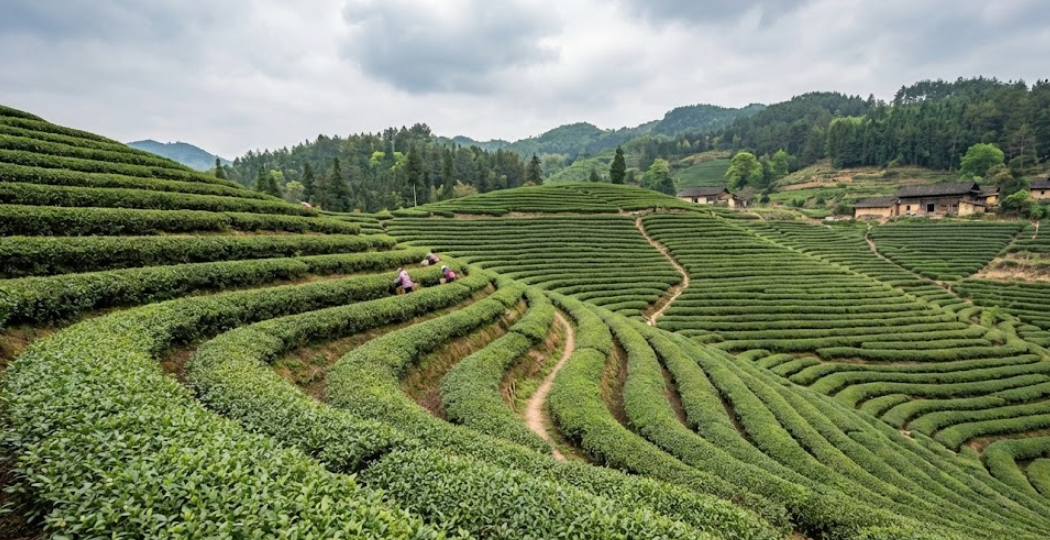
I will never forget my first business trip to Shizuoka, Japan. I saw endless, beautifully manicured rows of tea plants. It was impressive. But as I walked between the small, family-owned plots, a practical problem became obvious. The fields were all connected. There were no real boundaries. I asked one farmer how he could guarantee his organic crop if his neighbor, just a few feet away, decided to spray pesticides. He just shrugged. It was a known risk they all lived with.
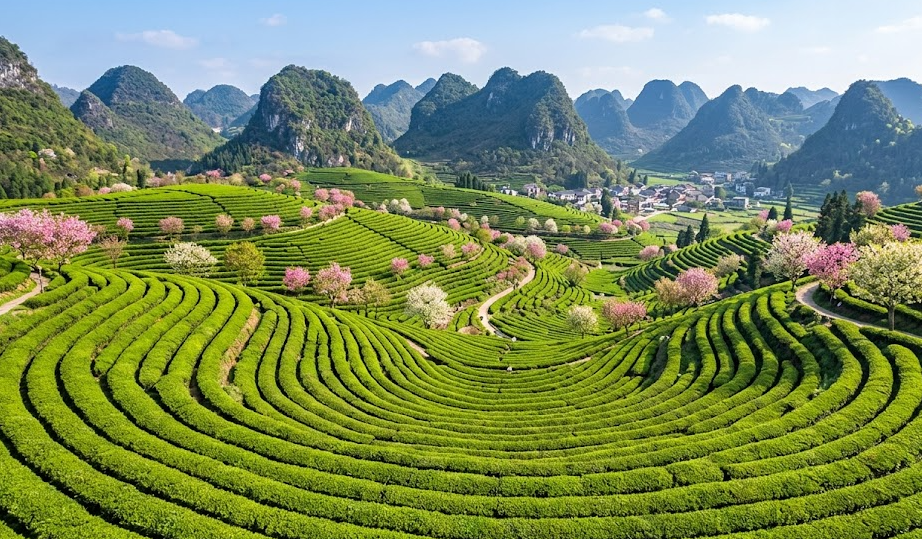
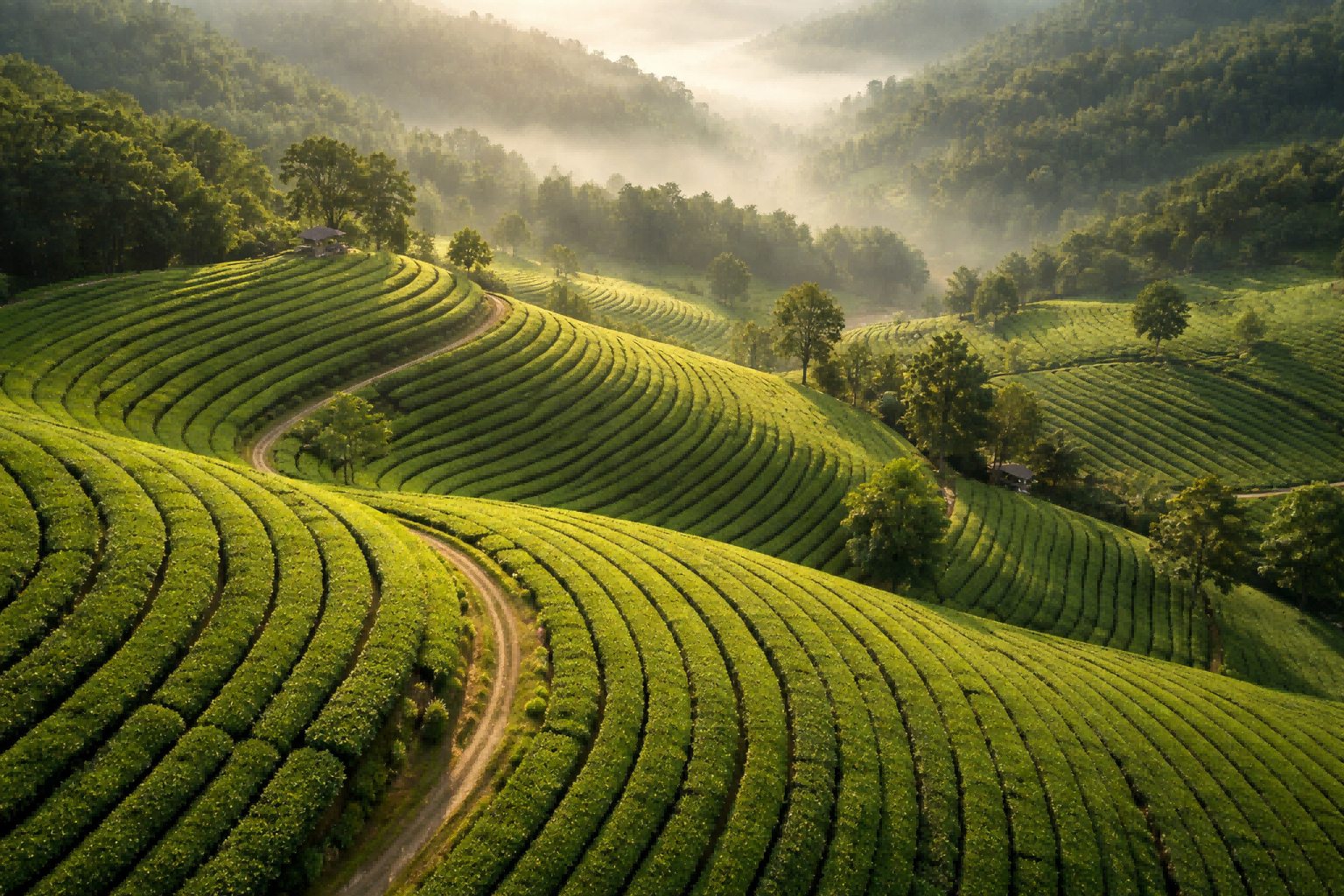
This is a huge issue for any business that needs to guarantee product purity. A single failed lab test can result in a rejected shipment, a product recall, or a damaged brand reputation. That's why I took a different approach. When I established my base in Anshun, Guizhou, my number one priority was isolation. I found a massive, 2,300-mu plot of land high in the mountains, completely surrounded by a natural forest. It was a lonely piece of land, far from any other agriculture. It was perfect.
We spent three full years just preparing the land. We didn't just plant tea. We cultivated a wide ecological buffer zone around our entire property. This wasn't just a fence; it was a living barrier. This physical "private estate" for our tea means the trees breathe truly pure, high-mountain air. It means when we say our tea is organic, we're not just relying on a piece of paper. We are relying on geography. The EU-standard lab reports confirm this. Zero pesticide residue. It's a level of "congenital cleanliness" that is simply hard to achieve in more crowded agricultural regions.
For my partners, this isn't just a nice story. It's a core business advantage. It is risk management, plain and simple.
For brands that need clean-label positioning, certified supply and stronger pesticide-residue control, our organic matcha powder page explains organic sourcing options for commercial buyers.
| Feature | Typical Interconnected Tea Fields | My Isolated Guizhou Gardens |
|---|---|---|
| Layout | Contiguous, multi-owner plots | Single-owner, isolated estate |
| Key Risk | High risk of pesticide drift from neighbors | Minimal risk due to a wide, natural buffer zone |
| Organic Proof | Certification relies heavily on process control | Certification backed by physical isolation & data |
| Business Impact | Potential for batch failures, compliance issues | Consistent, verifiable purity batch after batch |
For commercial buyers, purity is not just a marketing claim. It affects import compliance, COA results, retailer approval, customer trust, and long-term brand safety. Before choosing a supplier, review our matcha COA and testing guide to understand what documents should support organic and export-ready matcha.
Can Technology and Terroir Create a Superior Matcha?
Many people believe the secret to Japanese matcha is the special "steam fixation" process. This leads them to source only from Japan, often paying a premium for a product that might not even be the best available.
Absolutely. When you combine Japan's advanced steam-fixation technology with the high-amino-acid tea leaves from China's high-altitude terroir, the result is exceptional. This fusion produces a matcha with more vibrant color and a stronger umami profile than many Japanese competitors.
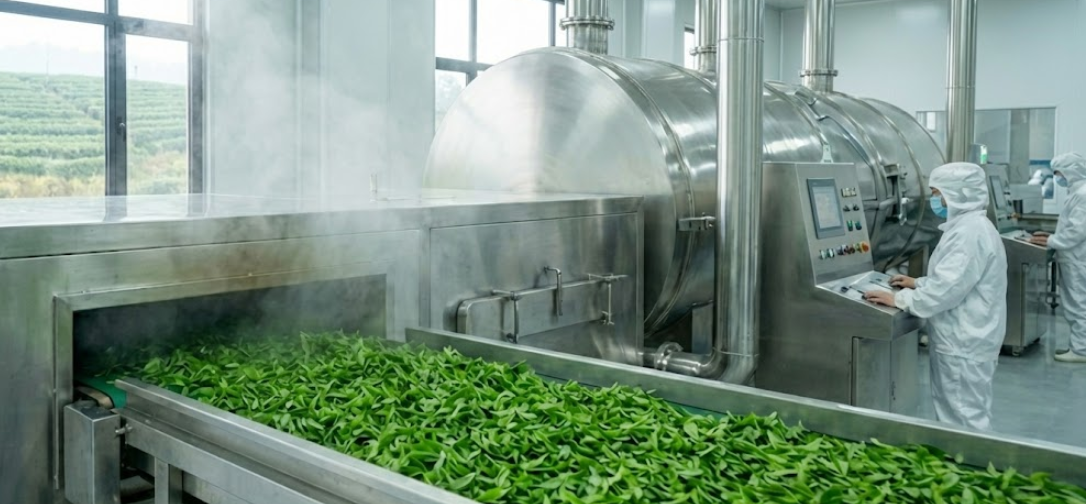
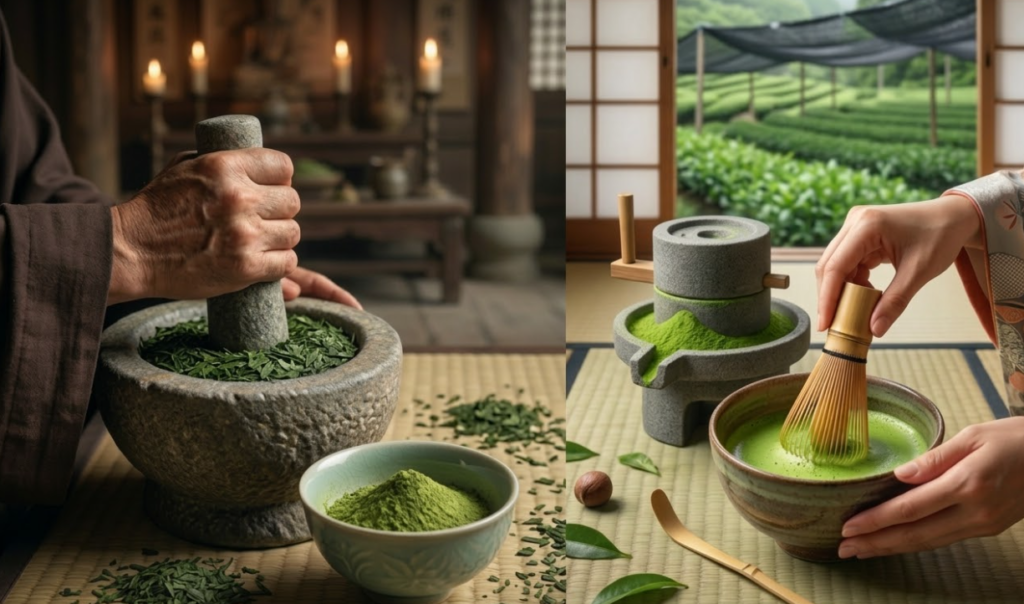
People are right to respect Japanese technology. The steam-fixation process, which quickly steams the fresh leaves to halt oxidation, is essential for creating matcha's brilliant green color and unique flavor. For decades, this technology gave Japanese producers a clear edge. But technology doesn't stand still, and it isn't magic. It's engineering. And engineering can be replicated, purchased, and even improved upon. So, that's exactly what I did. I invested heavily and brought a complete, state-of-the-art Japanese steam-fixation production line directly to my factory in Guizhou.
But technology is only half of the equation. The best machine in the world can't make great matcha from average tea leaves. This is where our terroir becomes the ultimate unfair advantage. Our tea gardens are at a high altitude. The cooler temperatures, misty weather, and greater UV exposure put the tea plants under a healthy amount of stress. To protect themselves, the plants produce higher concentrations of beneficial compounds, especially L-theanine and other amino acids. These are the very compounds that create the rich, savory "umami" flavor that is the hallmark of a top-quality matcha.
The result is stunning. I cannot count the number of times I have put our premium matcha into a blind tasting against top-tier Japanese products. In one session with a major European beverage developer, we lined up five unmarked samples. He tasted each one carefully. He kept returning to one, praising its vibrant green color and the deep, smooth umami flavor with no bitterness. That sample was ours. The combination of our high-amino-acid leaves and the precise Japanese steaming technology had created something that beat the original. The best matcha isn't from a country. It's from the formula: Best Ecology + Strictest Industrialization.
Last year, the president of a very old and famous Japanese tea company came to visit my gardens in Anshun. He stood on a hill, looking out at the sea of green tea plants, completely encircled by forest, with no signs of pollution or outside interference. He was quiet for a long time. Then he turned to me and said, "In Japan, we can no longer find such pure land." That was the answer.
Is Japanese Matcha Still the Best?
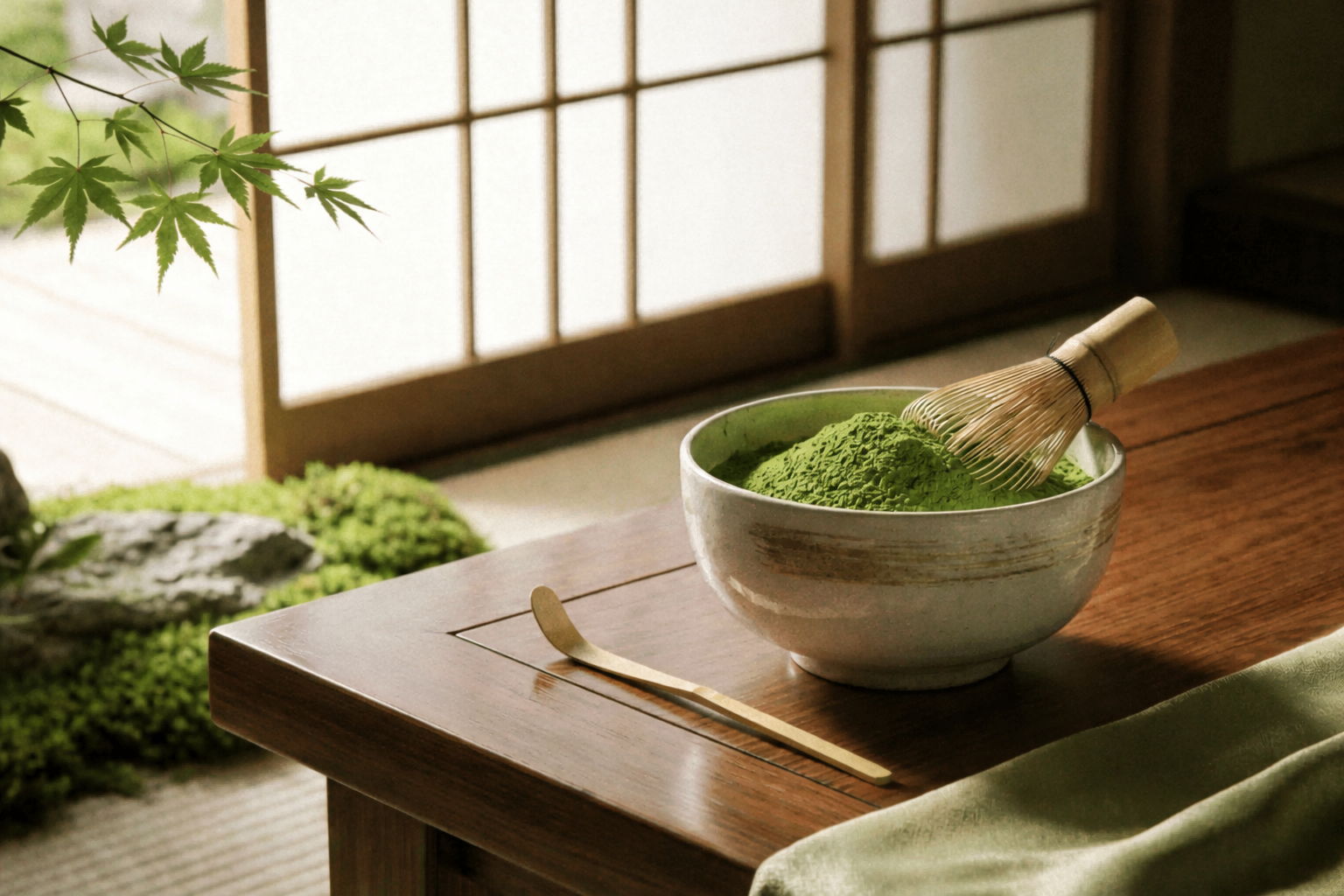
Japanese matcha is still the global benchmark for tradition, tea ceremony culture, and premium consumer perception. If your product depends heavily on Japanese origin as a selling point, Japan may still be the right choice.
Japanese matcha is especially strong for:
- Traditional ceremonial matcha
- Premium tea ceremony products
- High-end retail storytelling
- Consumers who specifically want Japan-origin tea
- Brands built around Japanese culture
But Japanese origin can also bring challenges for B2B buyers:
- Higher raw material cost
- Limited supply during shortage periods
- Less flexibility for private label customization
- Higher cost for bulk matcha applications
- Difficult price positioning for café chains, bakery, and ingredient use
This does not mean Japanese matcha is bad. It means Japanese matcha is not always the best commercial answer for every product. A premium ceremonial tin and a high-volume matcha latte program do not need the same sourcing strategy.
Why China Is Becoming a Serious Matcha Origin
China has a long tea history, large-scale agricultural capacity, and rapidly improving matcha processing technology. The strongest Chinese matcha suppliers are no longer only producing cheap green tea powder. They are building modern matcha systems for export markets, food brands, beverage chains, and private label companies.
China can be a strong matcha origin when the supplier has:
- Clean high-altitude tea gardens
- Organic farming control
- Japanese-style steaming or advanced processing
- Fine grinding capability
- COA and export documentation
- Batch consistency
- Custom grade development
- Private label packaging support
For B2B buyers, this is where China becomes highly competitive. The value is not just “lower price.” The value is scalable quality with customization.
Which Country Is Best for Each Matcha Use Case?
Different products need different matcha origins and grades. Instead of asking which country is best overall, buyers should ask which country is best for their specific application.
| Use Case | Best Country / Supplier Direction | Reason |
|---|---|---|
| Traditional tea ceremony matcha | Japan | Strong heritage and premium consumer perception |
| Premium organic daily drinking matcha | Japan or high-end China | Depends on purity, harvest, and testing |
| Bulk matcha import | China | Stronger scale and price flexibility |
| Private label matcha | China | Better customization and packaging flexibility |
| Matcha latte cafés | China or Japan depending on positioning | China often works well for cost-performance and drink stability |
| Bakery and dessert matcha | China | Better cost control for ingredient use |
| Functional health products | High-quality organic China or Japan | Depends on COA, L-theanine, catechins, and purity |
| Luxury ceremonial retail tins | Japan | Strong origin story and consumer trust |
If your brand is built on ceremony, tradition, and Japan-origin storytelling, Japanese matcha may be the best choice. If your business needs scalable supply, organic documentation, private label flexibility, and better cost-performance, Chinese matcha can be the stronger commercial option.
Why Chinese Matcha Works Well for Bulk and Private Label
For many B2B buyers, Chinese matcha is not simply an alternative to Japanese matcha. It is a better fit for the business model.
Bulk buyers and private label brands usually care about more than origin. They need consistent supply, reliable documentation, competitive pricing, custom packaging, grade flexibility, and repeatable product performance. This is where China’s matcha supply chain can be especially useful.
Chinese matcha is a strong fit for bulk and private label when:
- You need larger order volumes without extreme cost pressure.
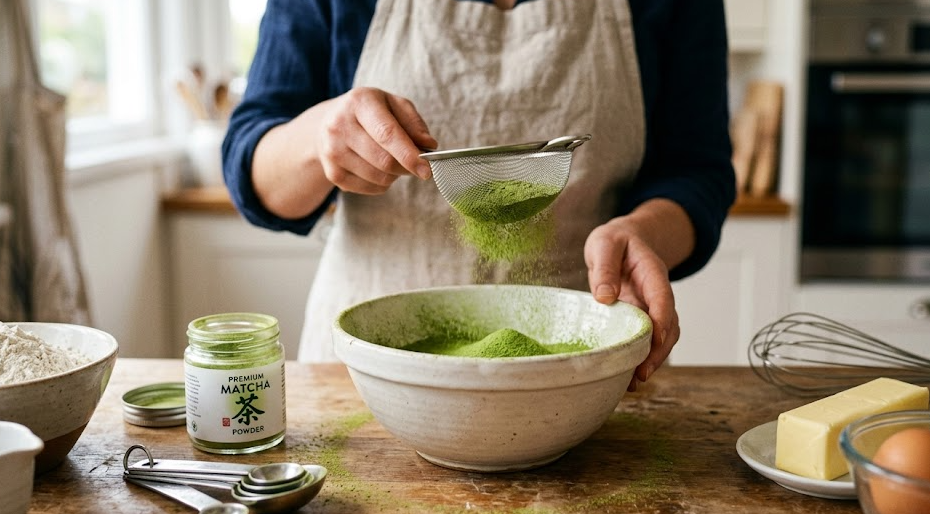
- You want custom grades for latte, bakery, smoothie, supplement, or retail use.
- You need flexible packaging options for your own brand.
- You require COA, pesticide testing, heavy metal testing, and microbiology reports.
- You want organic matcha with clear farm-level control.
- You need a supplier who can adjust taste, color, grind, and application performance.
- You are building a product line rather than buying a single ceremonial tin.
For a large Japanese supplier, your order may be small. For a flexible Chinese producer, your project can be important enough to customize. This is one of the biggest differences for private label buyers.
MatchaSourcing for B2B Buyers
MatchaSourcing.com is built for buyers who need more than generic matcha powder. We focus on China-origin matcha from controlled gardens, application-specific grades, and commercial support for brands that need reliable supply.
We can support:
- Bulk matcha supply for importers, distributors, and manufacturers
- Private label matcha for brands building their own product line
- Matcha for latte cafés for coffee shops, beverage chains, and café menus
- COA and matcha testing for buyers who need documentation and batch-level verification
- Matcha grade selection for buyers comparing ceremonial, premium, latte, and culinary grades
If you are comparing Japan and China only by reputation, Japan will usually win. If you compare by sourcing flexibility, organic scalability, private label support, and commercial cost-performance, China deserves a serious look.
How to Choose the Best Matcha Country for Your Business
Use this checklist before deciding between Japanese matcha and Chinese matcha:
- Is your customer buying the origin story or the final product experience?
- Do you need ceremonial matcha, latte matcha, culinary matcha, or functional matcha?
- Is your priority tradition, price, organic purity, or scalability?
- Do you need private label packaging?
- Do you need COA and export documents for every batch?
- Do you need custom color, taste, grind, or application performance?
- Are you buying kilograms, hundreds of kilograms, or tons?
- Will the matcha be consumed plain, mixed with milk, baked, bottled, or blended?
- Does the supplier control the farms or only trade finished powder?
- Can the supplier provide repeatable quality across future orders?
The best matcha country is not always the most famous one. It is the country and supplier combination that fits your product, market, compliance needs, and pricing model.
CTA: Need China Matcha for Bulk or Private Label?
If you are building a matcha brand, café drink program, wellness product, or food ingredient line, do not choose only by country reputation. Test the product in your real application.
MatchaSourcing.com can help you compare matcha for:
- Bulk import
- Private label retail packs
- Matcha latte cafés
- Bakery and dessert production
- Smoothies and functional drinks
- Organic export-ready supply
- Custom grades and packaging
Start with our bulk matcha supply page if you need large-volume purchasing support. Visit our private label matcha page if you are developing your own brand. If your product is a beverage, review our matcha for latte cafés guide before selecting samples.
Conclusion
The best matcha isn't from Japan or China. It's born from pure Chinese terroir and world-class Japanese processing, creating a product that redefines quality for the global market.
Japan remains the strongest answer for heritage, ceremony, and premium origin perception. But for bulk buyers, café chains, private label brands, and commercial food or beverage companies, China can offer a powerful combination of clean terroir, modern processing, flexible customization, strong documentation, and scalable supply.
So the best answer is this: Japan made matcha famous, but China is becoming one of the most practical and competitive origins for modern B2B matcha sourcing.
FAQ: Which Country Has the Best Matcha?
Which country has the best matcha?
Japan has the strongest reputation for traditional matcha, but the best matcha today depends on farming, processing, freshness, purity, and testing. High-quality Chinese matcha can also be excellent when it combines clean terroir with advanced processing.
Is Japanese matcha better than Chinese matcha?
Japanese matcha is often better for traditional ceremonial use and premium origin branding. Chinese matcha can be better for bulk supply, private label, café drinks, bakery, and cost-effective commercial applications.
Why is Japanese matcha so famous?
Japanese matcha is famous because of Japan’s tea ceremony culture, long processing tradition, strong branding, and global reputation for premium tea products.
Can Chinese matcha be high quality?
Yes. Chinese matcha can be high quality when it comes from clean tea gardens, uses proper shading, advanced steaming, fine grinding, and strong testing standards. Quality depends more on the supplier than the country name alone.
Which country is best for organic matcha?
Both Japan and China can produce organic matcha, but isolated high-altitude Chinese tea gardens can offer strong advantages for reducing pesticide drift and supporting large-scale organic supply.
Which country is best for bulk matcha?
China is often the better choice for bulk matcha because it can offer stronger volume, more flexible pricing, and better customization for commercial buyers.
Which country is best for private label matcha?
China is often a strong choice for private label matcha because suppliers can support custom grades, packaging, MOQ flexibility, and product development for different markets.
Is Chinese matcha good for cafés?
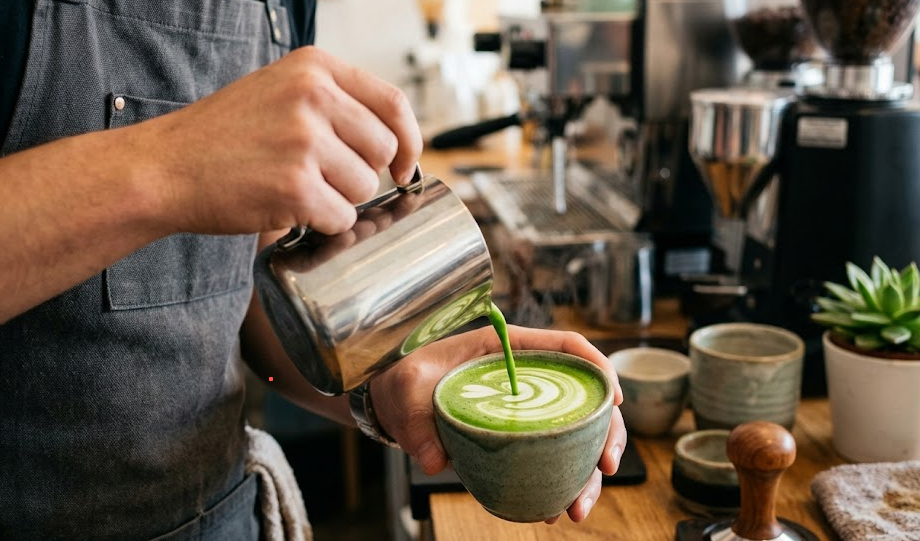
Yes. Chinese matcha can work very well for cafés, especially for matcha lattes, iced drinks, smoothies, and high-volume beverage menus. Buyers should test color, taste, bitterness, solubility, and milk performance.
Should I choose Japan or China for my matcha brand?
Choose Japan if your brand depends on traditional Japanese origin and ceremonial positioning. Choose China if your brand needs flexible sourcing, private label support, better cost-performance, and scalable supply.
What should B2B buyers check before choosing a matcha origin?
B2B buyers should check origin, farm control, harvest season, organic certification, COA, pesticide residue testing, heavy metal testing, microbiology, processing method, grind quality, MOQ, lead time, and application performance.