Struggling to find a reliable, large-scale matcha supplier in China? The biggest names are not always the right fit. I will help you understand the real landscape.
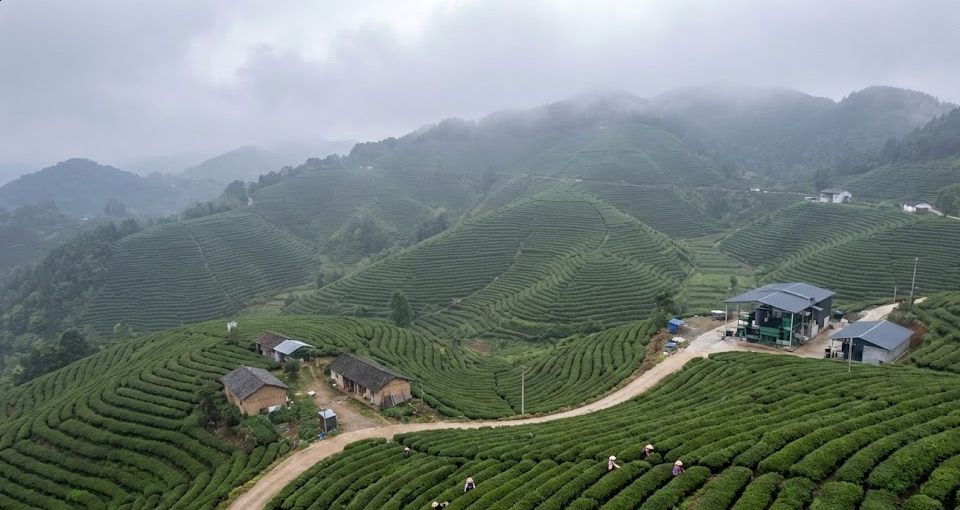
China's largest matcha supplier by production capacity and export volume is Gui Tea Group. They operate a massive factory in Guizhou and are projected to produce over 4,000 tons. They dominate large-scale, standardized orders for international markets like the European Union and Japan.
For B2B buyers, however, the real question is not only “who is the biggest?” The better question is: which Chinese matcha supplier is the right fit for your order size, market, certification requirements, product format and customization needs?
If you need standardized bulk matcha at very large volume, Gui Tea Group is the strongest large-scale option. If you need domestic food-service matcha, Zhejiang suppliers like Yuchacun and Camel Jiuyu have deep experience. If you want Japanese-style quality control from a China-based production system, Aiya is another important player. If you need flexible private label, custom grades and lower MOQ support for premium brands, MatchaSourcing.com is positioned differently from the giants.
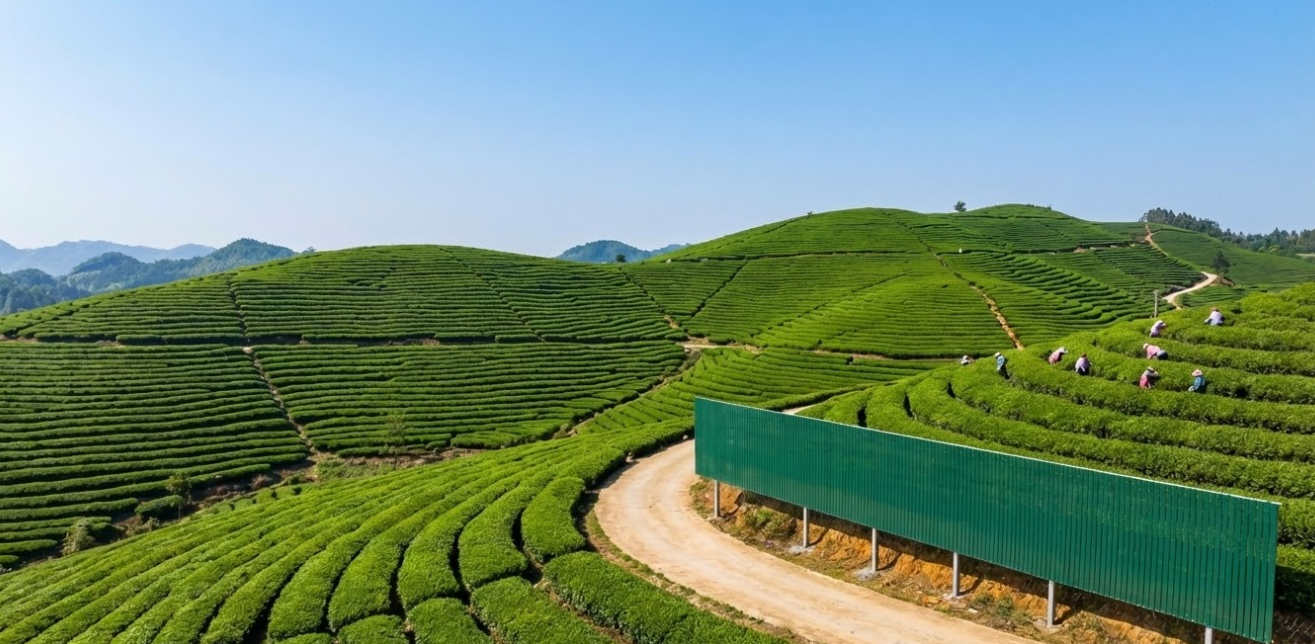
Quick Answer: Who Is China’s Biggest Matcha Supplier?
Gui Tea Group is widely recognized as China’s biggest matcha supplier by large-scale production capacity and export-oriented industrial output. It is best suited for multinational buyers, bulk ingredient buyers and companies that need large-volume, standardized matcha supply.
But “biggest” does not always mean “best for every buyer.” Different Chinese matcha suppliers serve different business needs:
| Supplier Type | Best For | Main Strength | Main Limitation |
|---|---|---|---|
| Gui Tea Group | Large multinational buyers | Massive production capacity and standardized export supply | Less flexible for small custom batches |
| Shaoxing Yuchacun | Domestic China food-service and bakery markets | Mature processing and fast product cycles | More focused on domestic and ingredient channels |
| Zhejiang Camel Jiuyu | Beverage, bakery and industrial matcha use | Cost-effective blends and established supply chain | Export-grade customization may vary by requirement |
| Aiya China production base | Buyers wanting Japanese-style process control | Stable quality and strong brand trust | Higher brand premium |
| MatchaSourcing.com | Premium brands, private label and custom B2B projects | Flexible customization, direct sourcing and application-specific development | Not designed to compete on the largest commodity volume |
For buyers comparing Chinese matcha suppliers, the best choice depends on whether your priority is bulk volume, export compliance, price, organic certification, private label flexibility, flavor customization or application-specific performance.
But Gui Tea is just one piece of the puzzle. The Chinese matcha market has other giants, and each one has different strengths. To find the right partner for your business, you need to understand the complete picture. The biggest supplier is not always the most suitable one for your specific needs. Let's look at the key players to see who is the best fit for you.
China Matcha Supplier Comparison for B2B Buyers
Before choosing a supplier, identify your business model first. A matcha latte chain, bakery manufacturer, supplement brand, tea importer and private label matcha brand do not need the same type of supplier.
| Buyer Need | Best Supplier Fit | Why |
|---|---|---|
| Hundreds of tons of standardized matcha | Gui Tea Group | Large-scale capacity and export-oriented production |
| Domestic China bakery or beverage ingredients | Yuchacun / Camel Jiuyu | Mature domestic food-service supply chain |
| Japanese-style matcha quality control | Aiya | Japanese brand system with China-based production |
| Premium private label matcha | MatchaSourcing.com | More flexible grade, packaging and application customization |
| Café latte matcha powder | MatchaSourcing.com or specialized beverage-grade supplier | Requires testing with milk, ice and sweetener |
| Organic export matcha | Guizhou-based suppliers | Cleaner origin positioning and export compliance potential |
| Low MOQ custom batch | Smaller specialized supplier | Large factories often require higher MOQ |
For buyers who are still defining their product, start with the application. Our matcha for latte cafés page explains how to select matcha for milk-based drinks, coffee shops and beverage menus. For larger import programs, our bulk matcha supply page explains MOQ, packaging, COA support and export-ready options.
Is Gui Tea Group the Undisputed King of Chinese Matcha?
Need to source hundreds of tons of EU-compliant matcha1? The logistics can be a nightmare. Gui Tea Group2 was built to solve this exact problem on a massive scale.
Yes, Gui Tea Group is China's top supplier for sheer volume. Their "super factory" in Guizhou focuses on standardized, large-scale production3. This makes them the main choice for multinational companies that need consistent, high-volume, EU-certified matcha for the global market.
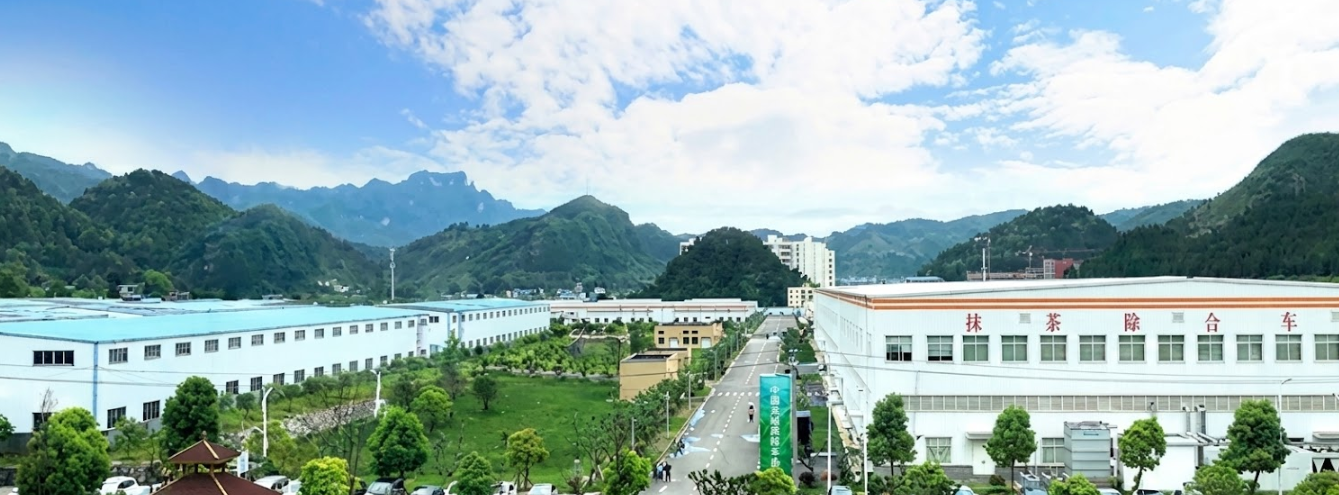
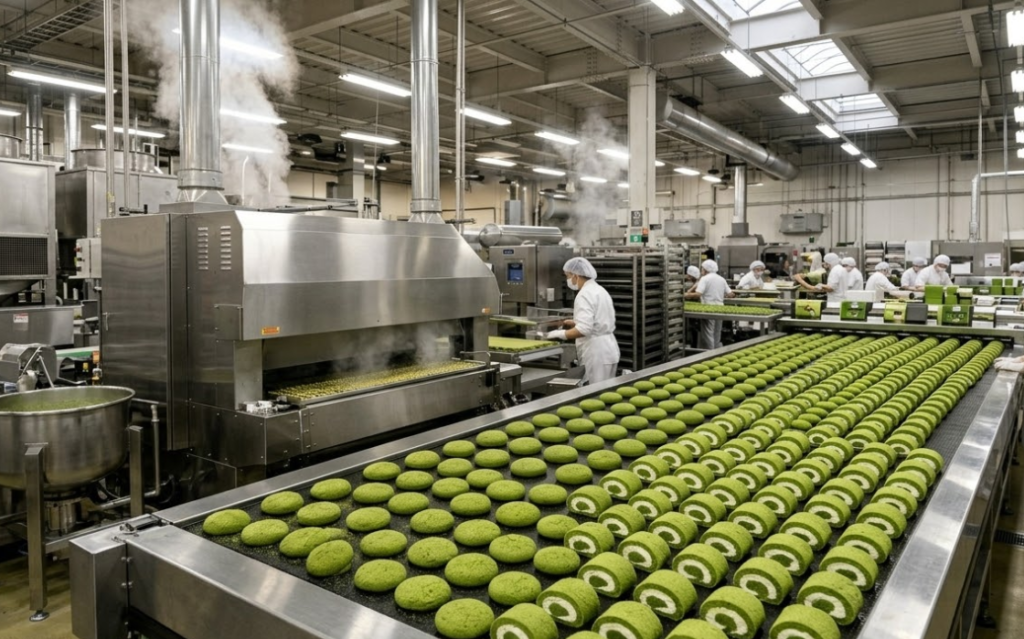
I sometimes call Gui Tea Group the "national team" of Chinese matcha. They are the player that put Chinese matcha on the international stage, ready to compete directly with major Japanese factories. Their biggest asset is a massive, state-of-the-art factory in Guizhou, which they call the "world's largest single refined tea workshop." Their production goal for 2025 is over 4,000 tons. This is an incredible number. If you are a global brand that needs hundreds of tons of matcha that meets strict EU standards every year, Gui Tea is your first call. Their strength is their ability to produce a huge, extremely standardized product. Their weakness? This industrial scale means less flexibility and very high minimum order quantities for any custom requests. They are a supercarrier, built for one thing: massive, standardized delivery.
When Should You Choose Gui Tea Group?
Gui Tea Group is the right fit if your main concern is volume, stability and standardized supply. It is especially suitable for large buyers who already know their formula, target grade, annual volume and compliance requirements.
Choose a large supplier like Gui Tea when:
- You need very large annual purchasing volume.
- You require standardized matcha for industrial use.
- You already have a mature product formula.
- Your priority is production capacity rather than customization.
- You can meet high MOQ requirements.
- Your procurement process favors large, established suppliers.
For smaller brands, early-stage private label projects or buyers still testing different matcha applications, a large supplier may be too rigid. In those cases, flexibility and communication can be more important than factory size.
What About the Traditional Matcha Powerhouses in East China?
Your new matcha product is a hit, but your supplier can't keep up with changing trends? East China's old guard has mastered this game for years in the domestic market.
The traditional leaders are Shaoxing Yuchacun4 and Zhejiang Camel Jiuyu5. Based in Zhejiang, they dominate China's domestic market for bakery, beverage, and food ingredients. Their strength is a mature supply chain and fast product development for consumer goods.
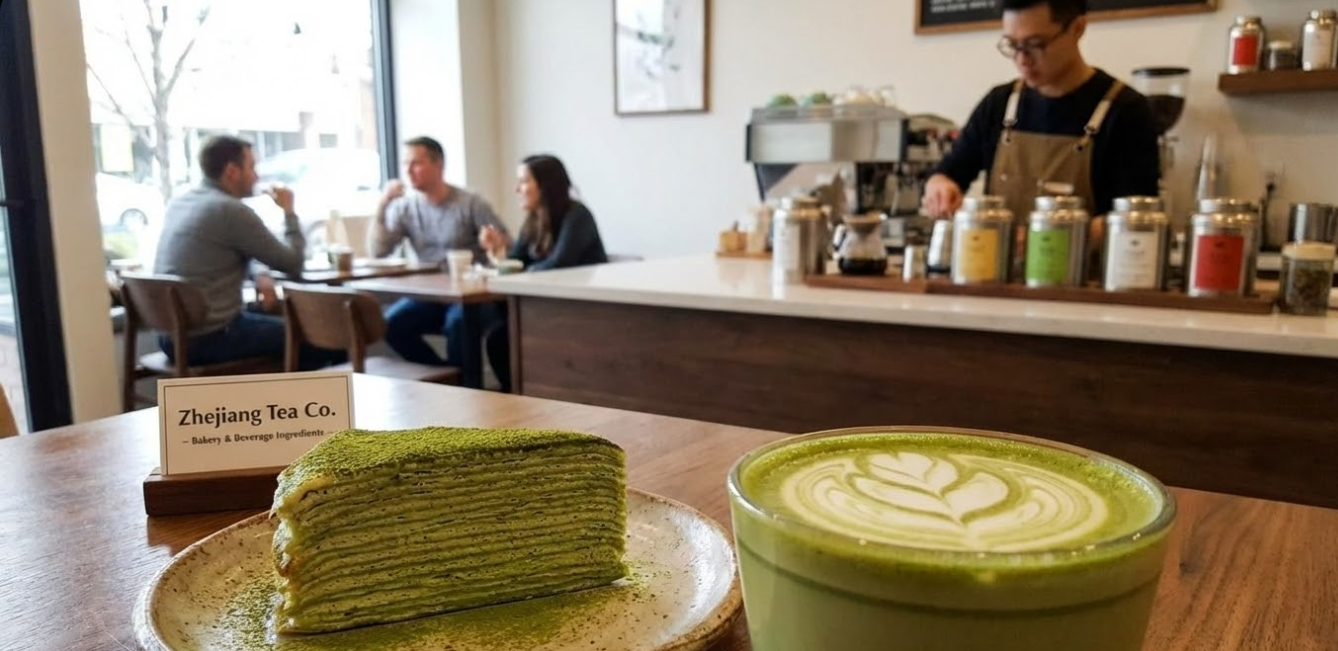
Before Guizhou emerged as a "clean tea" hub, Zhejiang was the traditional heartland of Chinese matcha6. Yuchacun and Camel Jiuyu are the "twin stars" of this region. They built their businesses on the back of Zhejiang's very mature green tea industry and technical knowledge. They have a powerful system for blending and deep processing. When you eat a matcha cake or drink a matcha latte from a major chain in China, there's a high chance the matcha came from one of these two companies. They have a very deep reach into the domestic food service and industrial ingredient sectors. However, they face challenges. The older tea regions in East China have historical soil issues. This makes it harder for them to consistently meet the strictest organic and pesticide residue limits7 for high-end export markets like the US and Europe.
Comparing Domestic and Export Leaders
| Feature | East China Leaders (Yuchacun, Jiuyu) | Guizhou Leader (Gui Tea) |
|---|---|---|
| Primary Market | Domestic China (Food Service, Bakery) | International (EU, Japan, US) |
| Strength | Fast product cycles, cost-effective blends | High-volume, standardized, certified organic |
| Main Challenge | Meeting strict export organic standards | Low flexibility for custom orders |
When Should You Choose Zhejiang Matcha Suppliers?
Zhejiang suppliers are often a strong fit for bakery, beverage, dessert and food ingredient applications. Their advantage is not only tea cultivation, but also deep processing experience and fast product adaptation.
They may be suitable when:
- You need matcha for bakery, dessert or food-service use.
- Your priority is cost-effective blending.
- You sell into domestic or Asian-style beverage markets.
- You need fast development for consumer food products.
- You are less focused on ultra-premium ceremonial positioning.
For export buyers, the main question is compliance. Always check pesticide residue limits, organic certification, heavy metal reports, microbiological results and COA documents before placing large orders.
Where Does a Japanese Brand Like Aiya Fit In?
Want authentic Japanese quality without the import headaches? A major Japanese player has a surprising secret. They produce a huge amount of their matcha right here in China.
Aiya is a top Japanese matcha brand that runs a large production base in China. They offer high-quality, Japanese-standard processing locally. This means many customers receive Aiya matcha from China, while paying a premium for the Japanese brand and its quality control.
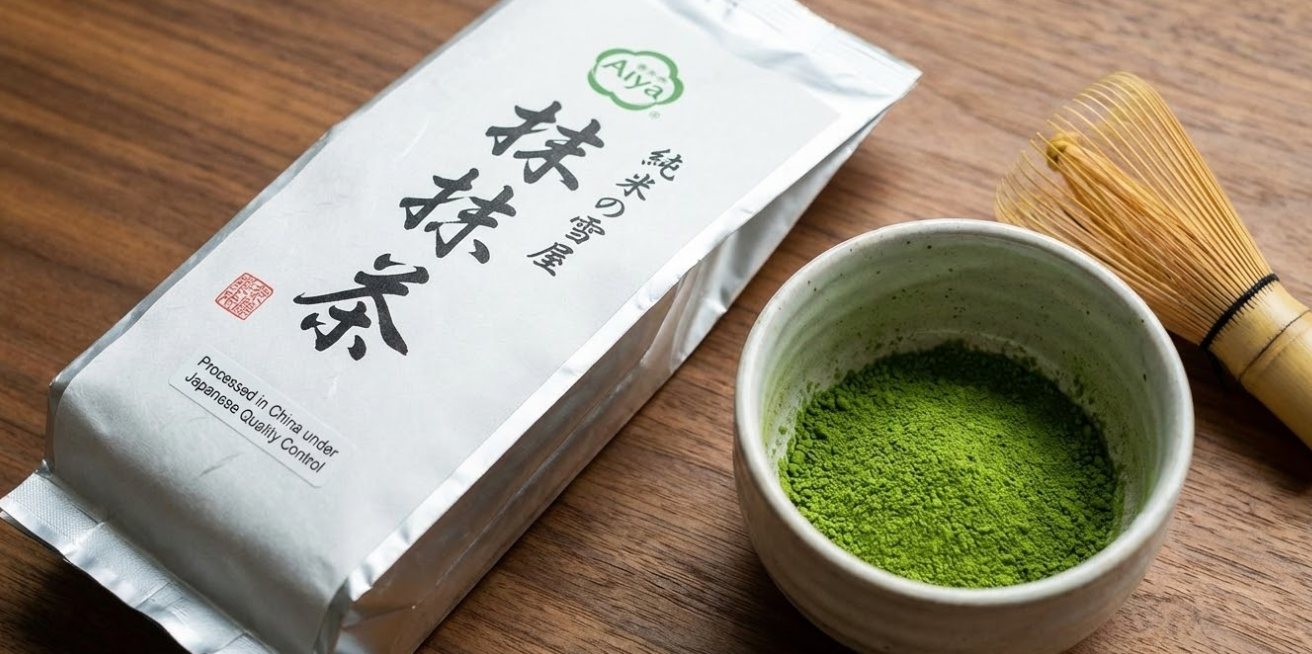
Aiya is one of Japan's largest matcha producers, but they made a very smart move a long time ago. They built huge production facilities in China, mainly in Zhejiang. This represents the localization of high-level Japanese craftsmanship in China. Many of my clients in North America and Europe think they are buying pure Japanese Aiya matcha. But when they look closely, the shipping documents show the product came from a factory in China. This is not a bad thing. The quality is absolutely stable and reliable. You are getting the benefit of Japanese process control8. The catch is that you also have to pay the very high "Japanese brand premium." This option is for customers who trust a Japanese name above all else and are willing to pay for it, even if the tea's origin is China.
When Should You Choose a Japanese-Managed China Matcha Supplier?
A Japanese-managed China production model can make sense when brand trust and process control matter more than price flexibility. It is especially suitable for buyers who want stable quality and familiar Japanese-style supplier systems, but do not necessarily require Japan-origin tea.
This route is useful when:
- Your customers strongly trust Japanese matcha branding.
- You want strict process control and stable product specifications.
- You can accept a higher brand premium.
- You care more about consistency than customization.
- You are comfortable with China-based production under a Japanese brand system.
For private label brands, however, the brand premium may limit margin. If your goal is to build your own brand identity, a more flexible direct supplier may offer better long-term control.
So, Where Does MatchaSourcing9 Fit Among These Giants?
Tired of giant suppliers who can't provide custom batches? Their high MOQs10 and slow processes kill your brand's unique edge. We offer a different, more focused approach.
We are not the biggest. Instead of competing on volume, MatchaSourcing.com acts as a 'private backyard' for premium brands. We focus on deep customization from our own high-altitude organic farms11, offering flexibility that large factories cannot.
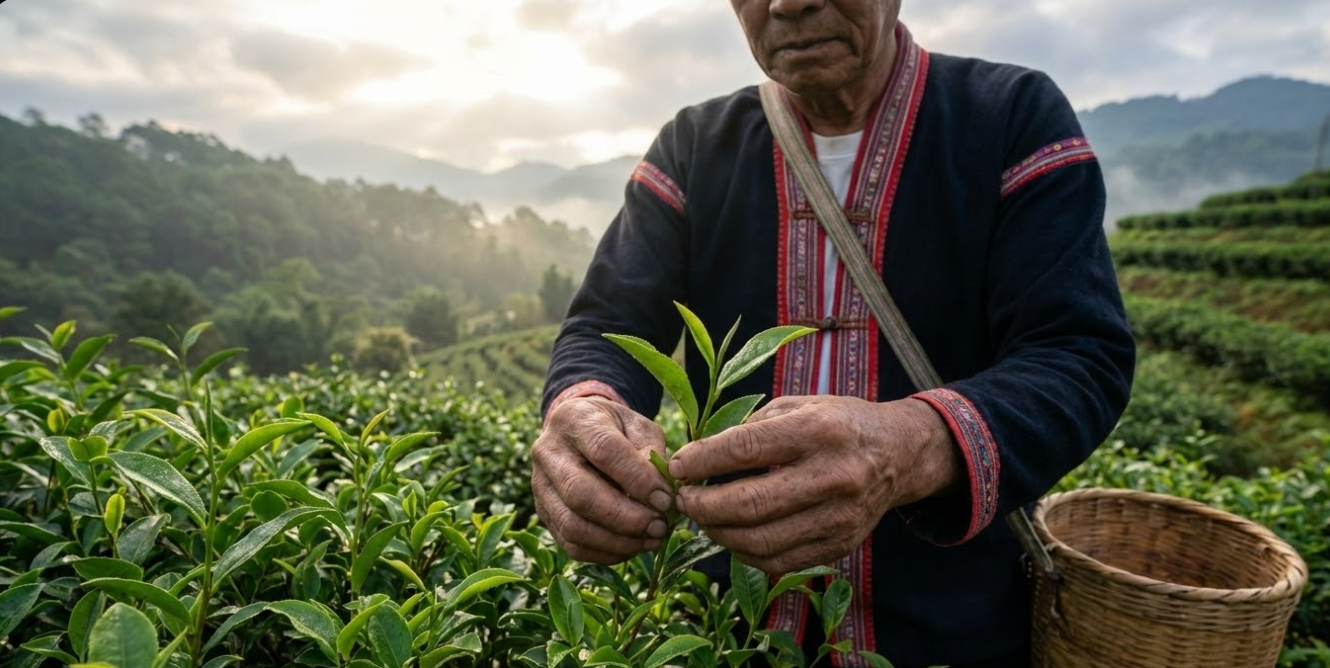
After learning about these giants, you can see the real map of the matcha trade. Compared to a 4,000-ton super factory, our 2,300+ mu base in Anshun is not the "biggest" in the country. But at the negotiating table for high-end B2B deals, customers do not always need an aircraft carrier. Big factories have big-factory problems: long bureaucratic processes, extremely high MOQs for special blends, and an inability to do deep, private customization for a single brand. This is where we thrive. We are not a giant supermarket trying to sell everything. We are a "private, heavy-asset backyard" for premium brands12 in Europe and North America. I don't compete with Gui Tea on volume. I focus on our own high-altitude, clean-slate organic land. I obsess over every batch, creating special grinds and theanine levels for specific clients, like North American coffee chains or functional health brands13.
The Right Tool for the Job
| Feature | The Giants (Gui Tea, etc.) | MatchaSourcing.com |
|---|---|---|
| Best For | Mass-market industrial ingredients | Premium, brand-differentiated products |
| Volume | Thousands of tons | Hundreds of tons |
| Customization | Very high MOQ, limited | Low MOQ, deep customization |
| Flexibility | Low (standardized processes) | High (agile, direct communication) |
| Focus | Standardized output | Specific client applications |
When Should You Choose MatchaSourcing.com?
MatchaSourcing.com is a better fit when your business needs more than a standard bulk ingredient. If you are building a differentiated matcha brand, launching a private label line, developing a café drink program or testing functional matcha products, flexibility matters.
Choose MatchaSourcing.com when:
- You need private label matcha support.
- You want custom matcha grades for specific applications.
- You need help choosing matcha for latte, bakery, RTD or supplement use.
- You care about lower MOQ compared with industrial giants.
- You need direct communication with a sourcing and production partner.
- You want COA, sample testing and export support before scaling.
For private label buyers, our private label matcha page explains packaging, label support, sample development and export-ready production. For coffee shops and beverage chains, our matcha for latte cafés page focuses on matcha that performs well with milk, ice and high-volume preparation.
How to Choose the Right Matcha Supplier in China
Choosing a Chinese matcha supplier should not begin with factory size. It should begin with your product application and market requirements.
Use this checklist before contacting suppliers:
- Define your application: tea, latte, bakery, RTD, supplement or private label.
- Estimate your monthly and annual volume.
- Confirm your target market: US, EU, Japan, Southeast Asia or domestic China.
- Check certification needs: organic, EU compliance, pesticide limits, heavy metals and microbiology.
- Request COA and sample testing before bulk purchase.
- Test matcha in the real product format, not only with water.
- Ask about MOQ, lead time, packaging and custom blending.
- Compare supplier flexibility, not only price per kilogram.
- Confirm whether the supplier can support repeat batch consistency.
- Evaluate whether the supplier understands your end customer.
A supplier that is perfect for a 500-ton industrial buyer may be wrong for a premium private label brand. A supplier that is perfect for ceremonial tins may be wrong for an iced matcha latte chain. The right supplier is the one whose production system matches your business model.
Best China Matcha Supplier by Business Type
| Business Type | Supplier Priority | Recommended Direction |
|---|---|---|
| Large food manufacturer | Capacity, price, consistency | Large industrial supplier |
| Importer or distributor | Export compliance, documentation, repeat supply | Gui Tea or export-oriented Guizhou supplier |
| Café chain | Color, solubility, milk performance, batch stability | Beverage-grade matcha supplier |
| Private label brand | Packaging, grade customization, MOQ flexibility | MatchaSourcing.com or specialized private label supplier |
| Functional health brand | Theanine, catechin profile, clean label, COA | Specialized high-quality supplier |
| Bakery manufacturer | Cost-effective flavor and color | Zhejiang ingredient-focused supplier |
| Premium tea brand | Origin, taste, color, story and quality control | Smaller premium-focused supplier |
CTA: Need Help Choosing a China Matcha Supplier?
If you are comparing Chinese matcha suppliers for bulk import, private label, café drinks or functional products, the fastest way to avoid mistakes is to test the matcha in your real application.
MatchaSourcing.com can help you compare grades for:
- Matcha latte cafés
- Bulk matcha import
- Private label matcha
- Beverage and bakery applications
- Functional health products
- Organic and export-ready matcha programs
Start with our bulk matcha supply page if you need large-volume purchasing support, or visit our private label matcha page if you are building your own branded matcha line.
Conclusion
China's "biggest" supplier depends on your needs. Whether you require massive volume or deep customization, understanding the key players is the first step to finding your perfect partner.
Gui Tea Group is the strongest answer if you are asking about the biggest matcha supplier by industrial scale. But if you are asking which supplier is best for your business, the answer depends on your application, MOQ, export market, certification needs and customization requirements.
For large standardized orders, choose a large industrial supplier. For domestic food-service matcha, Zhejiang’s traditional suppliers remain important. For Japanese-style process control, Aiya is a serious option. For premium private label, café applications and flexible B2B development, MatchaSourcing.com offers a more focused alternative.
FAQ: China Matcha Suppliers
Who is China’s biggest matcha supplier?
Gui Tea Group is widely recognized as one of China’s biggest matcha suppliers by production capacity and large-scale export-oriented output. It is especially strong in standardized, high-volume matcha supply.
Is the biggest matcha supplier always the best choice?
No. The biggest supplier is best for large standardized orders, but it may not be the best choice for private label brands, custom formulas, small batches or specialized café applications.
Which region in China is best for matcha supply?
Guizhou and Zhejiang are two major regions for Chinese matcha. Guizhou is known for clean tea origin and export-oriented development, while Zhejiang has a long history in green tea processing and domestic food-service supply.
What is the difference between Guizhou and Zhejiang matcha suppliers?
Guizhou suppliers are often positioned around clean origin, large-scale modern production and export compliance. Zhejiang suppliers usually have strong processing experience, mature supply chains and deep connections with bakery, beverage and domestic ingredient markets.
Is Chinese matcha suitable for export?
Yes, Chinese matcha can be suitable for export when the supplier provides proper documentation, COA, pesticide testing, heavy metal testing, microbiological reports and market-specific compliance support.
What should I ask a Chinese matcha supplier before ordering?
Ask about MOQ, annual capacity, grade options, sample policy, COA, certifications, pesticide residue testing, lead time, packaging, custom blending and whether the matcha has been tested for your specific application.
Which supplier is best for private label matcha?
Private label buyers usually need a supplier with flexible MOQ, packaging support, custom grade selection, sample development and export documentation. A specialized supplier may be more suitable than the largest industrial factory.
Which supplier is best for matcha latte powder?
For matcha latte powder, choose a supplier that tests matcha with milk, ice and sweetener. The powder should have strong color, good suspension, enough flavor intensity and stable batch quality.
Can Chinese matcha compete with Japanese matcha?
Chinese matcha can compete in many commercial applications, especially bulk, beverage, bakery, latte and private label markets. Japanese matcha still has strong premium branding, but Chinese suppliers can offer strong value, scale and customization.
How do I compare matcha suppliers in China?
Compare suppliers by application fit, certification support, sample quality, batch consistency, MOQ, communication speed, export experience and ability to customize. Do not compare only by price per kilogram.
Gui Tea Group specializes in producing EU-compliant matcha, crucial for international markets. Discover their compliance strategies. ↩
Gui Tea Group is a major player in the matcha industry, known for its large-scale production and export capabilities. Discover their impact on the market. ↩
Standardized, large-scale production ensures consistency and meets global demands. Explore its benefits in the matcha industry. ↩
Shaoxing Yuchacun is a traditional powerhouse in East China, offering fast product cycles and cost-effective blends. Learn more about their strengths. ↩
Zhejiang Camel Jiuyu excels in the domestic market with a mature supply chain. Discover their role in China's matcha industry. ↩
Zhejiang's mature green tea industry and technical knowledge make it a key region for matcha production. Learn about its historical significance. ↩
East China producers struggle with soil issues affecting organic standards. Understand the challenges they face in meeting export requirements. ↩
Japanese process control ensures high-quality matcha production in China, offering reliability and consistency. Discover its impact. ↩
MatchaSourcing.com focuses on deep customization and flexibility, catering to premium brands. Explore their tailored solutions. ↩
High MOQs can limit flexibility and customization in matcha production. Learn about their impact on brand differentiation. ↩
High-altitude organic farms provide unique conditions for matcha cultivation, offering quality and customization. Learn about their benefits. ↩
MatchaSourcing.com provides tailored solutions for premium brands, focusing on customization and quality. Explore their offerings. ↩
MatchaSourcing.com offers specialized grinds and theanine levels for functional health brands, enhancing product offerings. Learn more about their support. ↩