
Struggling to manage inconsistent matcha from different suppliers? Your product line feels disjointed, with varying colors and flavors. This complexity is hurting your brand's consistency and scalability.
The key is to partner with a primary supplier to create a tiered product line1. This ensures consistent quality, unified specifications, and a logical structure for entry-level, application-specific, and premium products, making your brand more coherent and scalable.
Many brands fall into a common trap when building their matcha offerings. They think more suppliers mean more choice, but it often just means more chaos. The real goal isn't just convenience; it's about building a product line that makes sense—one that is logical, layered, and ready to grow. I've seen brands get tangled in a web of inconsistent colors, flavors, and paperwork simply because they sourced each product from a different place. Let's break down how to avoid this and build a strong foundation with a primary supply partner.
For brands building a scalable product line, our bulk matcha supply page explains MOQ, packaging formats, COA support and repeat supply options for larger-volume purchasing.
If your product line includes retail tins, pouches, sachets or custom branded packaging, our private label matcha page covers OEM packaging, label support, sample development and export-ready production.
Why Should You Define Your Product Structure Before Your Packaging?
Do you focus on beautiful packaging first, only to struggle with product identity later? This can lead to a random collection of SKUs without clear roles or target customers.
Define your product structure first2. Decide which product is for high-volume sales, which drives profit, and which builds your brand image. This strategy gives every item in your line a clear purpose before you even think about design.
Thinking about your product structure is like planning a team. You need different players for different roles. Don't just start by ordering a "latte grade" and a "baking grade." Instead, I always ask my partners to consider a few key questions first. Which product will be your everyday hero for lattes and milk teas? This is your volume driver. Which one will be a higher-margin, premium offering for retail or gift sets? This is your brand builder. And which product will serve B2B clients like bakeries or food manufacturers? This is your application workhorse. By defining these roles from the beginning, you create a logical hierarchy3. This approach prevents you from launching products that compete with each other or confuse your customers4. It sets a clear foundation for everything that follows, from pricing and marketing to future expansion.
For buyers still comparing product tiers, our matcha grade selection guide can help you separate drinking, latte, baking, RTD and industrial-use matcha before finalizing your SKU structure.
How Do You Match Matcha Grades to Specific Applications?
Are you using the same high-end matcha for everything from lattes to cakes? This expensive approach often yields poor results in baking and hurts your profit margins unnecessarily.
Match the matcha grade to its specific use5. A vibrant, delicate matcha is perfect for pure tea, while a robust, heat-stable grade is better for baking. This ensures optimal color, flavor, and cost-effectiveness for every single product.
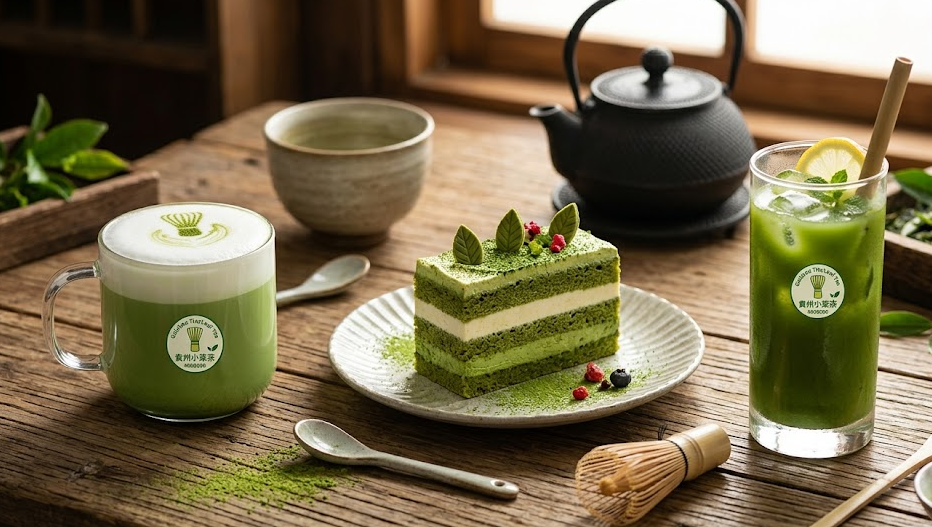
The needs of different applications are completely different. A matcha latte requires a powder with a bright green color, a smooth texture, and a flavor that stands up well to milk6. In contrast, a matcha used for baking needs to have strong color retention under heat and a flavor profile that doesn't become overly bitter when cooked7. For a ready-to-drink (RTD) beverage, you might prioritize solubility and stability over a long shelf life. Using a single "premium" logic for all of these is a mistake. It's like using a race car to haul groceries—it's inefficient and not fit for the purpose. I always advise my partners to map out their applications first. We then select or develop the right grade for each one, balancing performance with cost. This way, every product performs exactly as it should.
| Application | Key Matcha Requirements |
|---|---|
| Latte / Milk Tea | Bright color, smooth mouthfeel, strong flavor |
| Baking / Desserts | Excellent heat stability, deep green color retention |
| RTD Beverages | Good solubility, long-term stability, clean taste8 |
| Premium Retail | Exceptional aroma, vibrant color, umami flavor9 |
For café chains and milk-based drinks, compare our matcha for latte cafés page before selecting samples.
For commercial bakery, dessert and food production, review our matcha powder for baking page to understand heat stability and color retention requirements.
For bottled drinks or functional beverage development, our matcha for RTD beverages page explains suspension, color stability and formulation needs.
Why is Unifying Your Specs and Documents So Important?
Juggling different COAs, test reports, and spec sheets from multiple suppliers? This administrative nightmare makes quality control difficult and slows down your entire operation as you scale up.
Unifying specifications and documents with one main supplier10 is crucial for consistency and efficiency. It ensures every batch meets the same quality standards for color, particle size, and safety, all managed within a single, traceable system.
As your product line grows from two SKUs to ten, managing documentation becomes a huge task. If each product comes from a different source, you'll have different formats for Certificates of Analysis (COAs), different testing parameters, and inconsistent technical data. This creates chaos. When I work with a brand on their product line, we establish a single quality framework11 from the start. This means every product, whether it's for bulk supply or a private label tin, has a consistent set of specifications. We manage color values, particle size, moisture content, and microbial testing under the same system. Every batch has a clear record and a COA that you can easily understand and present to your own customers or auditors. This unified approach is the backbone of a scalable, professional matcha brand that you can trust.
For batch-level quality review, pesticide residue reports, heavy metal data, microbiology records and Lab* color values, see our matcha COA and testing page.
What's the Best Way to Phase Your Product Development?
Feeling pressured to launch a full range of matcha products all at once? This can drain your resources and leave you with unsold inventory if the market doesn't respond as expected.
Start with 2–3 core products and develop in phases12. Launch a versatile latte grade, a reliable baking powder, and perhaps one premium retail item. Test the market, gather feedback, and then expand your line strategically.
My advice is always to walk before you run. Don't try to launch ten different matcha products at the same time. It's a recipe for overwhelming your team and your budget. A much smarter approach is to start with a focused, core lineup. For most brands I work with, this means beginning with three key products:
- A Workhorse Product: A high-quality latte/beverage grade that will be your bestseller.
- An Application Product: A culinary or baking grade to serve food service or home baking customers.
- A Hero Product: A premium or ceremonial grade for retail that showcases your brand's commitment to quality. Once these core products are established and you have stable sales and customer feedback, you can begin the next phase. This could involve introducing different packaging formats like single-serve sachets, offering private label services, or developing a custom OEM product for a large client. This phased approach minimizes risk and allows you to build a sustainable business.
For phased product development, you can start with bulk matcha supply for core volume products, then expand into private label matcha when your packaging, brand positioning and repeat order rhythm are ready.
Conclusion
Building a matcha product line with one primary supplier isn't about limiting options. It's about creating a unified logic, quality system, and supply rhythm for sustainable, scalable growth.
For business buyers, the most practical path is to define your application needs first, compare suitable grades, confirm COA and testing documents, then build repeatable supply through bulk matcha or private label matcha depending on your growth stage.
"Food purchasing - single versus multi-supplier strategies", https://blog.typsy.com/purchasing-produce-single-versus-multi-supplier-strategies. This source explains how working with a single supplier can streamline product consistency and improve scalability in food and beverage industries. Evidence role: mechanism; source type: education. Supports: Partnering with a primary supplier ensures consistent quality and scalability for a tiered product line.. ↩
"Types of Product Management Roles | Stanford Online", https://online.stanford.edu/types-product-management-roles-finding-your-fit-diverse-field. This source supports the importance of defining product roles and target customers before focusing on packaging design. Evidence role: expert_consensus; source type: education. Supports: Defining product structure before packaging helps avoid disjointed SKUs and unclear product roles.. ↩
"[PDF] Organizational Characteristics for Successful Product Line ...", https://dspace.mit.edu/bitstream/handle/1721.1/82681/47918466-MIT.pdf;sequence=2. This source explains how logical product hierarchies improve customer understanding and brand coherence. Evidence role: mechanism; source type: education. Supports: Creating a logical hierarchy in product lines improves customer understanding and brand coherence.. ↩
"5 Ways to Know Your Customer Better Than Your Competitors Do", https://insight.kellogg.northwestern.edu/article/5-ways-to-know-your-customer-better-than-your-competitors-do. This source explains how poorly structured product lines can lead to internal competition and customer confusion. Evidence role: mechanism; source type: education. Supports: Launching products without a clear hierarchy can lead to internal competition and customer confusion.. ↩
"[PDF] Matcha: A Matching-Based Link Scheduling Strategy to Speed up ...", https://www.pdl.cmu.edu/PDL-FTP/BigLearning/Matcha-WANG.pdf. This source explains how different grades of matcha are optimized for specific applications like lattes, baking, and beverages. Evidence role: mechanism; source type: education. Supports: Matching matcha grades to specific applications ensures optimal performance and cost-effectiveness.. ↩
"Estimating the sensory-associated metabolites profiling of matcha ...", https://pmc.ncbi.nlm.nih.gov/articles/PMC10654251/. This source explains the sensory and functional requirements for matcha used in lattes and milk teas. Evidence role: definition; source type: education. Supports: Matcha for lattes requires bright green color, smooth texture, and strong flavor compatibility with milk.. ↩
"Best Matcha Grade for Latte, Bakery, and Ready-to-Drink Products?", https://matchasourcing.com/best-matcha-grade-for-latte-bakery-and-ready-to-drink-products/. This source discusses the importance of heat stability and flavor retention for matcha used in baking applications. Evidence role: definition; source type: education. Supports: Matcha for baking requires strong color retention under heat and a flavor profile that avoids excessive bitterness when cooked.. ↩
"The Content of Bioactive Compounds and Technological Properties ...", https://pmc.ncbi.nlm.nih.gov/articles/PMC10609021/. This source explains the technical requirements for matcha used in ready-to-drink beverages, including solubility and stability. Evidence role: definition; source type: education. Supports: Matcha for ready-to-drink beverages requires good solubility, long-term stability, and clean taste.. ↩
"Estimating the sensory-associated metabolites profiling of matcha ...", https://pmc.ncbi.nlm.nih.gov/articles/PMC10654251/. This source describes the sensory attributes that define premium retail matcha, including aroma, color, and umami. Evidence role: definition; source type: education. Supports: Premium retail matcha requires exceptional aroma, vibrant color, and umami flavor to showcase quality.. ↩
"Comprehensive Guide to Food Safety Documentation", https://www.digicomply.com/blog/comprehensive-guide-to-food-safety-documentation. This source discusses how unified documentation simplifies quality control and operational efficiency in food production. Evidence role: mechanism; source type: education. Supports: Unifying specifications and documents with one main supplier simplifies quality control and operational efficiency.. ↩
"A unified approach assessing Hospitals' Quality and Patient Safety ...", https://pmc.ncbi.nlm.nih.gov/articles/PMC12365638/. This source supports the use of a unified quality framework to ensure consistent standards across a product line. Evidence role: mechanism; source type: education. Supports: A single quality framework ensures consistent standards across a product line, simplifying scalability and quality control.. ↩
"Brand Extension Strategies That Drive Market Expansion - HBS Online", https://online.hbs.edu/blog/post/brand-extension. This source supports phased product development as a strategy to minimize risk and optimize market response. Evidence role: expert_consensus; source type: education. Supports: Phased product development minimizes risk and allows for strategic expansion based on market feedback.. ↩