
Worried your bulk matcha order won't match the perfect sample? Inconsistent quality can ruin your products and brand reputation. I'll share my method for verifying quality beyond the sample.
To check matcha quality before bulk ordering, go beyond sensory tests. You must evaluate the sample in your actual application, demand a detailed technical specification sheet, and verify that the Certificate of Analysis (COA) corresponds to the specific sample lot, not a generic template.
Relying only on your eyes and taste buds is one of the biggest mistakes in B2B matcha sourcing. A beautiful sample is easy to create, but what you really need to know is if that quality can be replicated across hundreds or thousands of kilograms. The real risk isn't a bad-tasting sample; it's a bulk delivery that fails in your production line or a second order that's completely different from the first. For any serious business, preventing these issues starts long before you place a purchase order. Let's break down the three essential steps I take to protect my business and ensure every bulk order meets our standards.
Should You Only Do Sensory Tests on Samples?
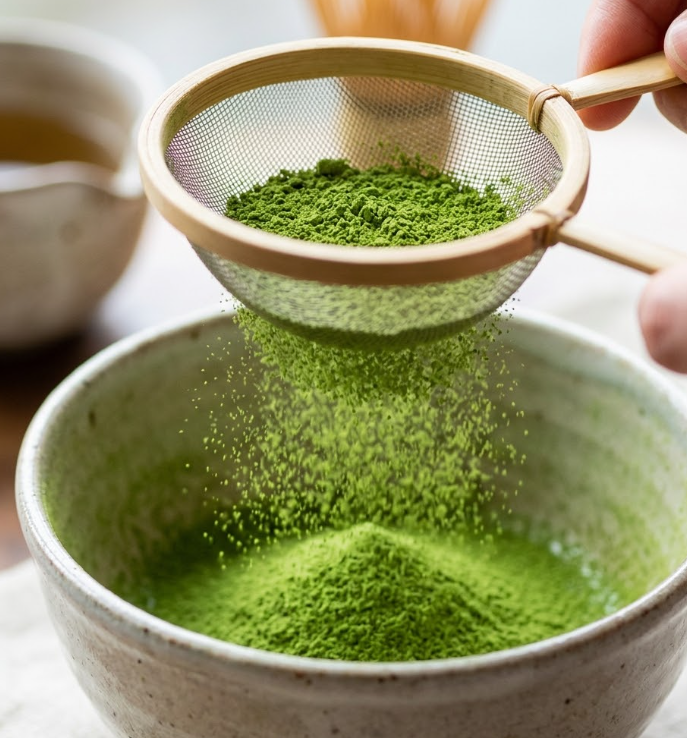
You received a beautiful, vibrant green matcha sample1. But you know that looks can be deceiving, and a bad batch could be disastrous for your brand. Here’s how to test it properly.
No. While you should check for natural green color, clean aroma2, and smooth taste, it's more important to test the sample in your final product. Matcha is a suspension, so its performance in lattes, baked goods, or your specific recipe reveals its true quality.
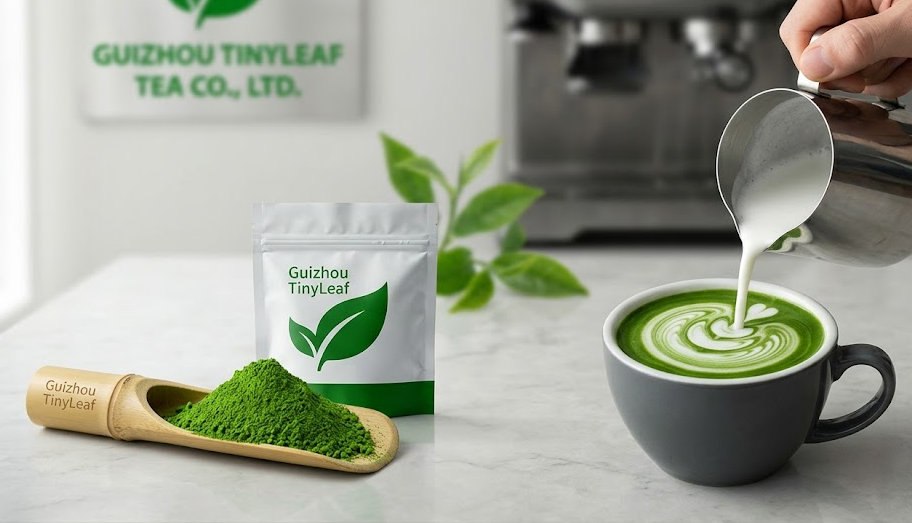
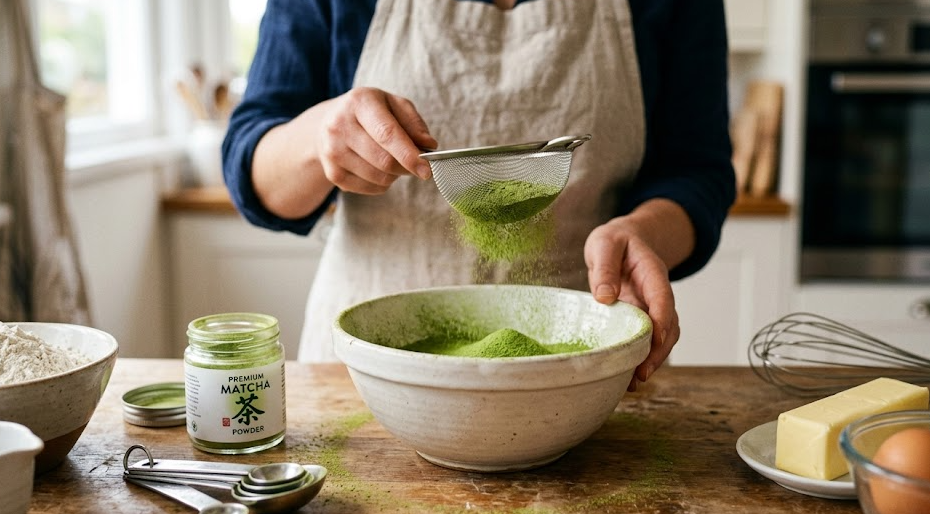
I once received a sample that looked amazing when whisked with water. The color was electric green3, and the aroma was clean. But when my team tried it in our standard latte recipe, it turned a muddy, unappealing brown4 and left a gritty sediment at the bottom of the cup. The suspension was poor. This taught me a valuable lesson: matcha's real test is in its intended use. Food science literature is clear that matcha forms a suspension, not a solution. This means the tiny particles don't dissolve; they float. How well they stay suspended and maintain their color and flavor when mixed with other ingredients is what truly matters. We are not just buying a powder; we are buying a key ingredient for a final product. That's why we always run a full application test before making any decisions.
Sensory vs. Application Testing
| Test Method | What It Tells You | Limitations |
|---|---|---|
| Sensory Only (Whisked with water) | Basic color, aroma, and taste profile. | Doesn't predict performance, color stability, or texture in a final product. Can be misleading. |
| Application Testing (In your recipe) | Real-world color, flavor, suspension, and interaction with other ingredients. | Requires more time but provides a highly accurate and relevant quality assessment. |
Are Grade Names More Important Than Technical Specs?
A supplier offers you a "Ceremonial Grade" matcha at a great price. But "grade" names are unregulated and can mean anything, leaving you with an unsuitable product. Focus on the data instead.
No, technical specifications are far more important. Grade names like "Ceremonial" or "Culinary" are just marketing terms. You need a detailed spec sheet with data on particle size, moisture, origin, and safety testing to make an informed purchasing decision for bulk orders.
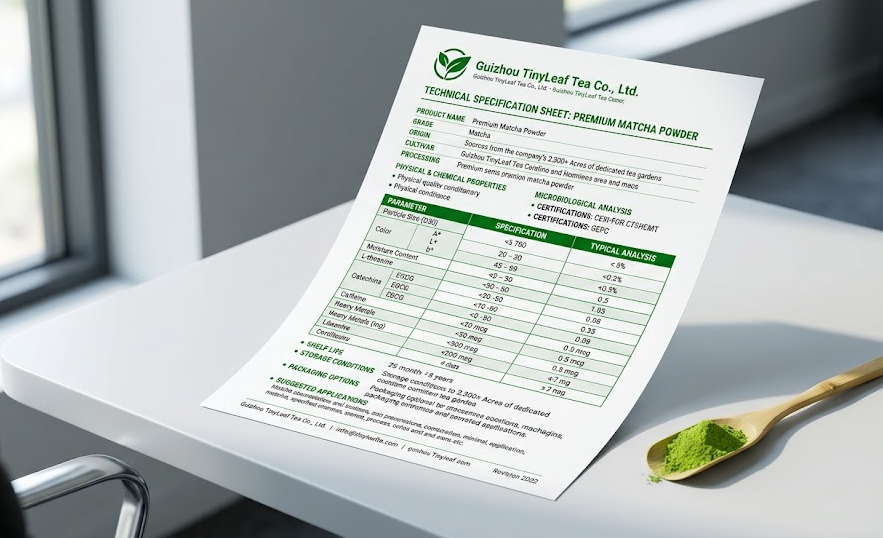
I stopped paying attention to grade names years ago. I've seen "Ceremonial Grade" that was gritty and bitter, and "Culinary Grade" that was surprisingly smooth and vibrant. The labels are simply not standardized across the industry, which makes them unreliable for professional sourcing. Instead, I demand a full technical data sheet for every single sample. This isn't about being difficult; it's about being diligent. This data moves the conversation from a subjective opinion ("it tastes good") to an objective fact ("the particle size is under 10 microns"). It allows me to compare different suppliers fairly and ensures the powder I choose will perform consistently in my production process. A supplier who cannot provide this data is a high-risk partner, regardless of how attractive their prices or grade names are.
Key Specifications to Request
| Specification | Why It Matters for Bulk Orders |
|---|---|
| Particle Size (D50/D90)5 | Determines mouthfeel (smooth vs. gritty) and suspension quality in beverages. |
| Moisture Content6 | Directly affects shelf life and the risk of microbial growth. Lower is better. |
| Origin / Harvest Year7 | Impacts flavor profile, freshness, and nutrient content like L-theanine. |
| Pesticide/Heavy Metal Screen8 | A non-negotiable requirement for ensuring product safety and compliance with international regulations. |
Is Any Certificate of Analysis (COA) Good Enough?
The supplier sent you a COA, so you feel confident about the quality. But if it’s a generic template, it means nothing for the actual matcha you’re buying. Here’s the one detail you must check.
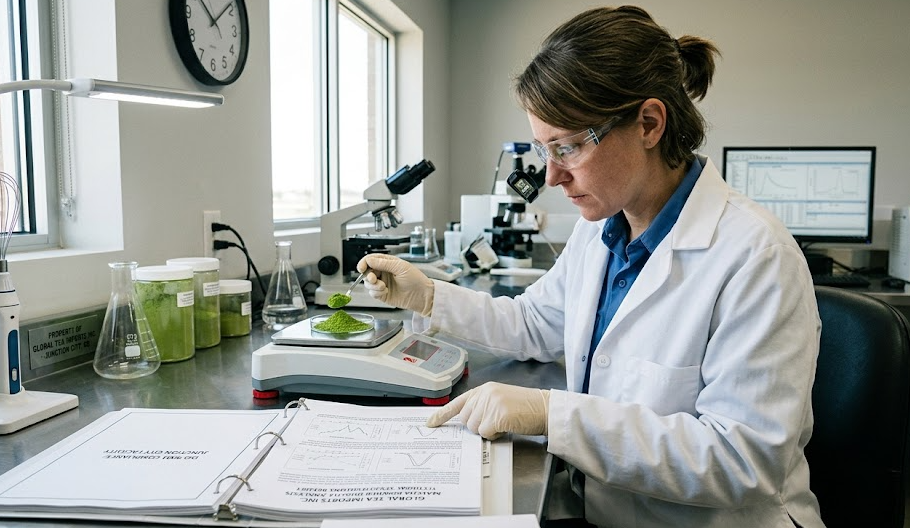
No. A generic COA is a red flag. The Certificate of Analysis must correspond to the specific sample lot9 you are testing. This ensures the safety and quality data you are reviewing is for the exact powder in your hands, not a different, potentially superior batch.
This is a detail many buyers miss, but it's absolutely critical. A supplier might send a beautiful COA showing perfect results for heavy metals and pesticides. But if you look closely, there's no lot number, or the lot number doesn't match your sample's packaging. This is a huge red flag. It’s like a car dealer showing you the safety report for a different car model. I always insist that the COA is for the sample lot. This tells me two things: first, that the supplier has a robust, batch-level quality control system in place, and second, that they are transparent and confident in their product. For B2B buyers, the real measure of quality isn't how good one sample is. It's the guarantee that the 100th batch will be just as safe and consistent as the first. This is what we call batch-to-batch consistency10, and it's non-negotiable for us and our partners.
Conclusion
True matcha quality isn't just about a good sample. It's about verifiable data, application performance, and a supplier's commitment to delivering consistent, safe, and replicable results every single time.
"Why is Matcha Color Important? Matcha Green Color is the Key to ...", https://matchadirect.kyoto/blogs/matcha-101/why-is-matcha-color-important-matcha-green-color-is-the-key-to-determining-quality?srsltid=AfmBOopTwacPZXzDGpKIO3bY4Nccuk4VphTaY8J5hWHNPyN7223XVrnQ. This source discusses the visual characteristics of high-quality matcha, including its vibrant green color. Evidence role: definition; source type: encyclopedia. Supports: High-quality matcha is visually characterized by a vibrant green color.. ↩
"Estimating the sensory-associated metabolites profiling of matcha ...", https://pmc.ncbi.nlm.nih.gov/articles/PMC10654251/. This source describes the sensory characteristics of high-quality matcha, including its clean aroma. Evidence role: definition; source type: encyclopedia. Supports: High-quality matcha is characterized by a clean aroma, among other sensory attributes.. ↩
"A Comparative Multianalytical Approach to the Characterization of ...", https://pmc.ncbi.nlm.nih.gov/articles/PMC12157965/. This source explains how the electric green color of matcha is often used as an indicator of its quality and freshness. Evidence role: definition; source type: education. Supports: The electric green color of matcha is often used as an indicator of its quality and freshness.. ↩
"Why Matcha Can Oxidize: 1. Air – Oxygen dulls color and breaks ...", https://www.instagram.com/reel/DLFCNbxNM5G/. This source explains how poor suspension quality in matcha can lead to undesirable color changes in applications like lattes. Evidence role: mechanism; source type: research. Supports: Poor suspension quality in matcha can lead to undesirable color changes, such as turning muddy brown in applications like lattes.. ↩
"What Do D10, D50, and D90 Represent? - EPIC Powder Machinery", https://www.epic-powder.com/what-do-d10-d50-and-d90-represent/. This source explains the significance of particle size measurements like D50 and D90 in determining matcha's texture and suspension quality. Evidence role: mechanism; source type: education. Supports: Particle size measurements such as D50 and D90 are critical for assessing matcha's texture and suspension quality.. ↩
"A randomized, double-blinded study evaluating effect of matcha ...", https://pmc.ncbi.nlm.nih.gov/articles/PMC10017316/. This source outlines how moisture content impacts matcha's shelf life and microbial safety. Evidence role: mechanism; source type: research. Supports: Moisture content directly affects matcha's shelf life and the risk of microbial growth.. ↩
"Exploring the Influence of Origin, Harvest Time, and Cultivation ...", https://pmc.ncbi.nlm.nih.gov/articles/PMC11048880/. This source discusses how matcha's origin and harvest year influence its flavor profile, freshness, and nutrient content. Evidence role: mechanism; source type: education. Supports: Matcha's origin and harvest year impact its flavor profile, freshness, and nutrient content like L-theanine.. ↩
"Monitoring of essential and heavy metals in green tea from different ...", https://pmc.ncbi.nlm.nih.gov/articles/PMC4762913/. This source explains the necessity of pesticide and heavy metal screening for ensuring matcha's safety and compliance with regulations. Evidence role: mechanism; source type: government. Supports: Pesticide and heavy metal screening are essential for ensuring matcha's safety and compliance with international regulations.. ↩
"COA & Testing Support for Wholesale, Bulk & Private Label Matcha", https://matchasourcing.com/coa-testing/. This source highlights the importance of matching the Certificate of Analysis to the specific sample lot for accurate quality assurance. Evidence role: mechanism; source type: institution. Supports: The Certificate of Analysis must correspond to the specific sample lot to ensure accurate quality assurance.. ↩
"Batch-to-Batch Quality Consistency Evaluation of Botanical Drug ...", https://pmc.ncbi.nlm.nih.gov/articles/PMC3665986/. This source explains the concept of batch-to-batch consistency and its importance in ensuring product reliability in bulk orders. Evidence role: definition; source type: education. Supports: Batch-to-batch consistency is crucial for ensuring product reliability in bulk orders.. ↩