
Sourcing matcha overseas feels like a gamble? Inconsistent quality or failed imports can halt your production. Asking the right questions is key to finding a reliable partner and securing your supply.
The most overlooked points when sourcing matcha overseas involve moving beyond a "best grade" mindset. Smart buyers focus on matching the matcha's performance—like heat stability and color retention—to their specific application, verifying market-specific certifications, and confirming year-round supply consistency, not just sample quality.
I've spent years helping brands navigate these challenges. The same questions come up again and again. Let's break down the critical details that separate a smooth sourcing experience from a costly mistake. Getting this right is simpler than you think.
For overseas buyers, document preparation matters as much as price. See our FDA import documents and certifications for bulk matcha buyers guide.
For bulk purchasing, MOQ and export packaging, visit our bulk matcha sourcing page.
For batch-level testing requirements, pesticide residue reports, heavy metal data and microbiology records, review our matcha COA and testing page before confirming an overseas supplier.
Are you asking for the 'best' matcha or the right matcha for your product?
You ask for a supplier's "best grade," expecting premium results. But this expensive matcha turns brown in your baked goods, wasting your budget. The solution is matching the grade to the application.
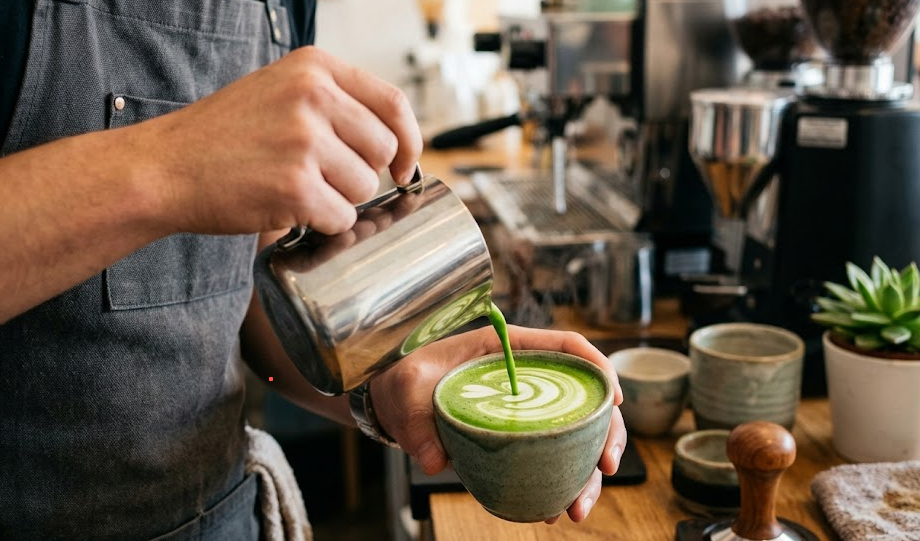
Instead of asking for the 'best' matcha, ask for the right one. For a latte, you need bright color and smooth mouthfeel1. For baking, you need strong heat stability and color retention.2 Focusing on performance for your specific use-case ensures you get the best value and results.
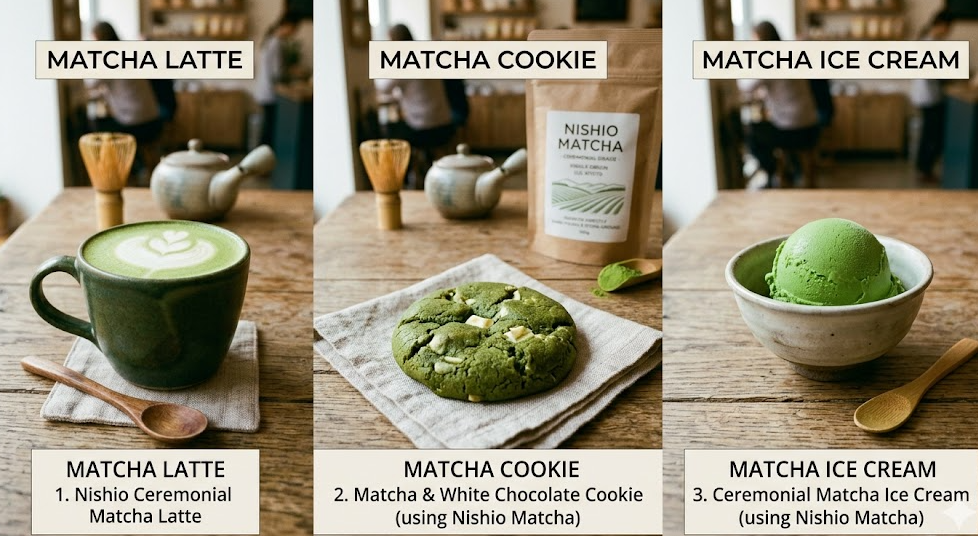
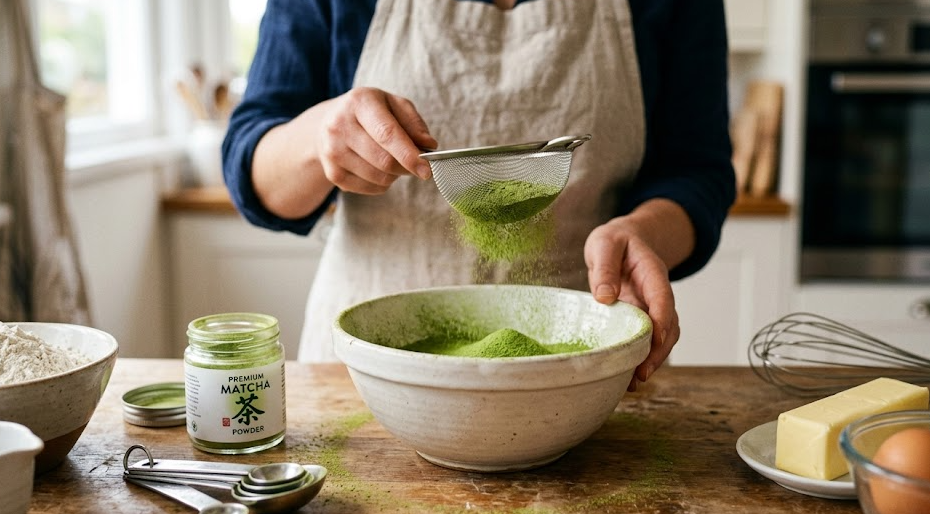
A frequent question we get from beverage chains is, "What's your best grade?" This is the wrong place to start. A high-end ceremonial grade is designed for whisking with water3. It has a delicate, sweet flavor and a fine particle size for a smooth texture. However, its vibrant green color is not very stable when heated4. When a food manufacturer uses it in a cookie recipe, that beautiful green turns into a disappointing brownish-yellow. The delicate flavor gets lost behind sugar and flour. They paid a premium for features they couldn't use.
The key is to describe your application first. Tell your supplier exactly how you plan to use the matcha. This allows them to recommend a grade that performs well under your specific production conditions.
Matching Matcha Properties to Your Application
| Application | Key Performance Indicator | Why It Matters |
|---|---|---|
| Matcha Latte | Bright Green Color, Smooth Mouthfeel | Visual appeal is critical for customers. A fine particle size prevents a gritty texture. |
| Baking/Pastries | Heat Stability, Strong Flavor | The matcha must retain its color during baking. A bolder flavor is needed to stand out. |
| Ice Cream/Dairy | Color Retention in Fat, Low Bitterness | The color needs to remain vibrant when mixed with fats. A smooth, non-bitter taste is essential. |
| RTD Beverages | Good Suspension, Stable Color5 | The powder must not settle too quickly at the bottom of the bottle. Color must not fade over shelf life. |
For café drinks and milk-based beverage menus, compare our matcha for latte cafés page before selecting samples.
For bottled drinks, functional beverages or ready-to-drink product development, review our matcha for RTD beverages page to understand suspension, color stability and formulation needs.
For bulk purchasing, MOQ and export packaging, visit our bulk matcha sourcing page.
Is your supplier's organic certification actually valid for your market?
Your supplier shows an organic certificate, giving you confidence. But your container is now stuck at customs, rejected for non-compliance. Verifying market-specific certifications is the only way to prevent this.
An 'organic' label is not universally valid. A supplier's certification must match your target market's regulations, like EU Organic, JAS for Japan, or NOP for the US6. Always request the specific certificate for your region and verify its validity to ensure your products clear customs without issue.
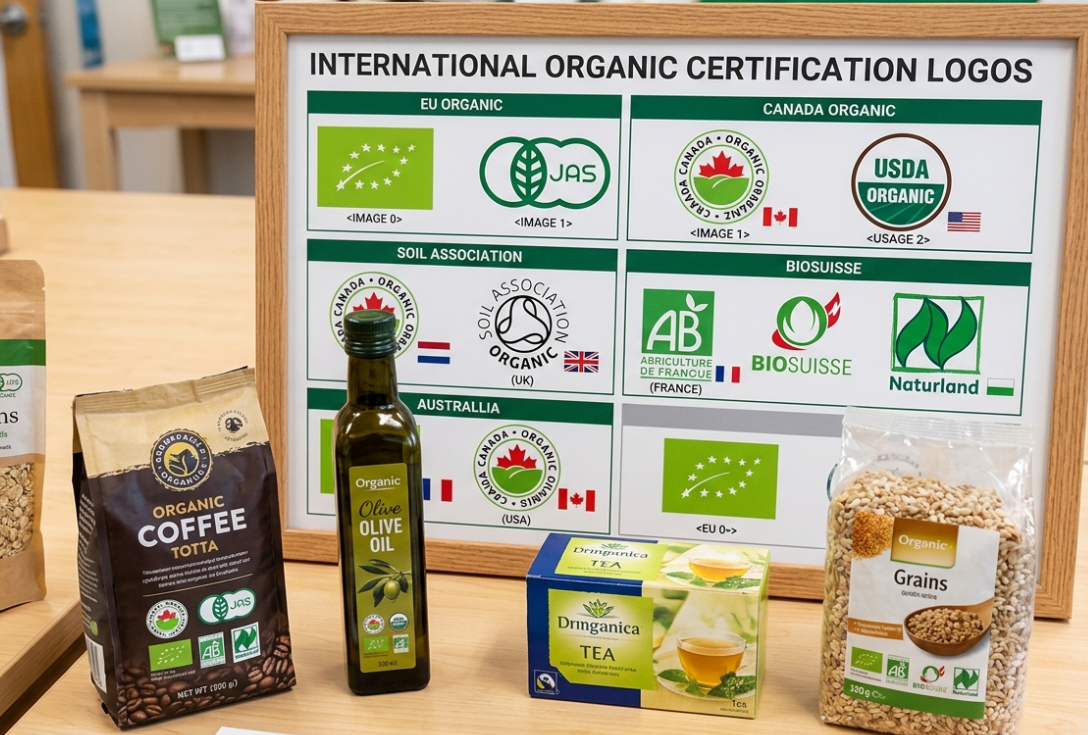
When a new client sends us their product specifications, we always check their target market first. An "organic" certification from one country doesn't automatically mean it's accepted everywhere. For example, our facility holds EU Organic and JAS Japan Agricultural Standard certifications. These are different from the USDA's NOP National Organic Program. If a U.S. client only sees "organic" on our website and doesn't verify the specific certification, they could face a major problem. Their shipment could be denied entry by U.S. Customs7. This means lost time, lost money, and a damaged reputation.
Never assume "organic" is enough. Always ask for the specific certification relevant to your sales region and check its current status.
For overseas buyers, document preparation matters as much as price. See our FDA import documents and certifications for bulk matcha buyers guide.
For lab-report verification, our matcha COA and testing guide explains how to review pesticide residues, heavy metals, microbiology, moisture, particle size and Lab* color values.
Beyond the Paperwork: The Importance of Traceability
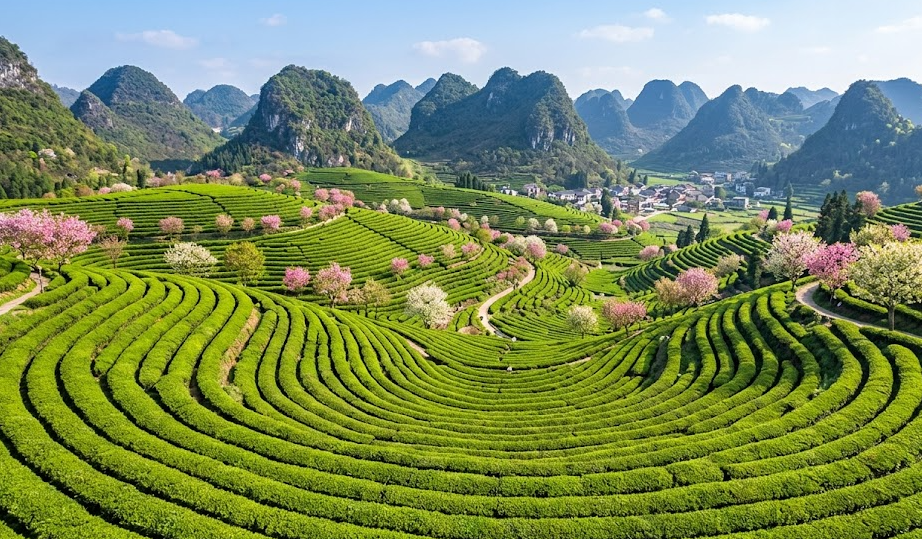
A valid certificate is just the starting point. True compliance security comes from a supplier's traceability system. You should be able to trace your specific batch of matcha all the way back to the tea garden8 it came from. At our company, every bag is linked to records covering everything from farm inputs and pest control to harvesting dates, processing logs, and shipping details. This ensures that if there is ever a question about quality or compliance, we can provide a complete history for that specific batch. This level of documentation is what separates a reliable supplier from a risky one.
Does a perfect sample guarantee consistent quality at scale?
The sample was perfect, so you ordered a large volume. But the bulk shipment is inconsistent, forcing you to halt production. Evaluating a supplier's year-round consistency is crucial for stability.
No, a perfect sample doesn't guarantee quality at scale. True reliability comes from a supplier's ability to maintain consistency across different batches and seasons. Ask about their year-round production capabilities and request data showing quality consistency over time to ensure your tenth order matches your first.
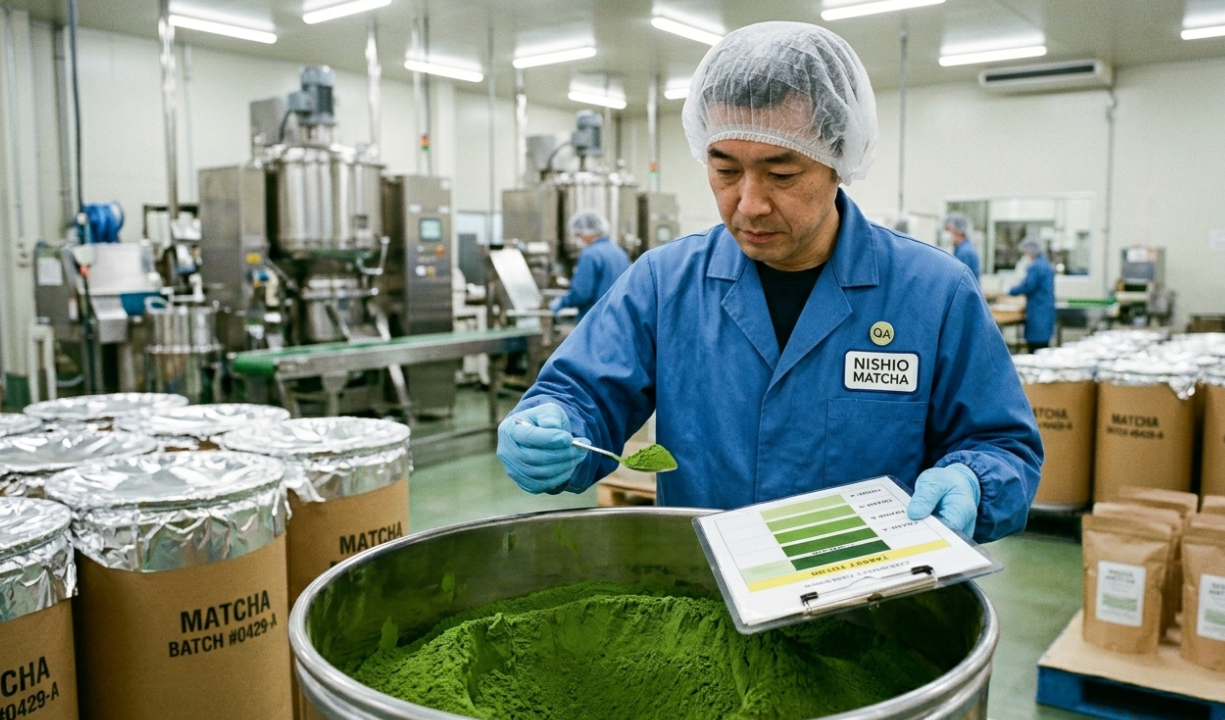
I once worked with a bakery chain that switched suppliers after receiving a stunningly green sample. Their first bulk order was great. The second was a disaster. The color was dull, the taste was more bitter, and their matcha croissants looked completely different. Their original supplier had sent them a sample from the limited spring harvest but fulfilled the large order with lower-quality summer tea. This is a common issue.
A good sample is easy to provide, but consistent quality month after month is the real challenge. You need a partner who can manage their supply chain to deliver reliable quality year-round, not just when they want to win a new contract.
If you are building a retail brand and need stable packaging, label support and repeatable product quality, our private label matcha page explains custom packaging, sample development and export-ready production.
From Spring Harvests to Year-Round Supply
The highest quality matcha comes from the first spring harvest9. This harvest is small and expensive10. It's not sustainable for large-scale food production. A truly capable supplier has a strategy for using summer and autumn harvests to create stable, high-performing culinary grades11.
We invested heavily in our processing to ensure our summer and autumn tencha can be milled into matcha that meets consistent color and flavor profiles. When you evaluate a supplier, ask them how they ensure consistency between different seasons. Ask for production data from different batches, such as colorimeter readings Lab* values12. This data proves they can deliver the same quality in March and in October.
For bulk purchasing, MOQ and export packaging, visit our bulk matcha sourcing page.
Conclusion
Successful matcha sourcing isn't about finding the best grade, but the right partner. Focus on application fit, market-specific compliance, and proven consistency to build a resilient and reliable supply chain.
For overseas buyers, document preparation matters as much as price. See our FDA import documents and certifications for bulk matcha buyers guide.
For batch-level testing requirements and quality records, review our matcha COA and testing page before confirming your supplier.
For bulk purchasing, MOQ and export packaging, visit our bulk matcha sourcing page.
If you are preparing a private label or custom packaged matcha product, visit our private label matcha page to compare packaging, sample development and export support.
"Estimating the sensory-associated metabolites profiling of matcha ...", https://pmc.ncbi.nlm.nih.gov/articles/PMC10654251/. Sensory analysis studies on food and beverages consistently show that color and mouthfeel are critical drivers of consumer preference and perceived quality. For matcha lattes, a vibrant green color is a key visual cue for quality, while a fine particle size contributes to a desirable smooth texture, free from grittiness. Evidence role: expert_consensus; source type: paper. Supports: That visual appeal (bright color) and texture (smooth mouthfeel) are key drivers of consumer acceptance and quality perception for matcha lattes.. Scope note: The source may discuss general principles of sensory analysis in beverages rather than matcha lattes specifically. ↩
"Catechins in green tea powder (matcha) are heat-stable scavengers ...", https://pubmed.ncbi.nlm.nih.gov/33773455/. Food science studies confirm that the thermal processing involved in baking can degrade the chlorophyll in matcha, making heat stability and color retention key characteristics for culinary-grade matcha intended for such applications. Evidence role: general_support; source type: paper. Supports: That heat stability and color retention are critical performance indicators for matcha used in baking applications to prevent discoloration.. ↩
"Understanding the real difference between ceremonial and culinary ...", https://naokimatcha.com/blogs/articles/ceremonial-grade-matcha. Ceremonial grade matcha is traditionally defined as the highest quality, produced from the youngest tea leaves, ground to an extremely fine powder, and intended for preparation as a thick or thin tea (koicha or usucha) by whisking with hot water, which highlights its delicate, non-bitter flavor profile. Evidence role: definition; source type: encyclopedia. Supports: That ceremonial grade matcha is characterized by its fine particle size, delicate flavor, and is traditionally prepared by whisking with hot water.. ↩
"Effect of different drying temperature settings on the color ... - PMC", https://pmc.ncbi.nlm.nih.gov/articles/PMC11584762/. Research on green tea pigments shows that chlorophylls, which give matcha its vibrant color, are susceptible to degradation into pheophytins and other compounds when exposed to heat, resulting in a color shift from bright green to olive-brown. Evidence role: mechanism; source type: paper. Supports: That the chlorophyll responsible for matcha's green color degrades when exposed to heat, leading to a brownish color.. ↩
"The Impact of Coffee, Matcha, Protein Drinks, and Water Storage on ...", https://pmc.ncbi.nlm.nih.gov/articles/PMC12733623/. Research in beverage formulation highlights that key challenges for RTD products containing matcha include preventing sedimentation of tea particles and inhibiting color degradation from light and heat exposure over the product's shelf life. Evidence role: mechanism; source type: paper. Supports: That maintaining particle suspension and color stability over the product's shelf life are primary challenges and key quality indicators for RTD matcha beverages.. ↩
"Organic - Agricultural Marketing Service - USDA", https://www.ams.usda.gov/grades-standards/organic-standards. The United States Department of Agriculture USDA manages the National Organic Program NOP, the European Union regulates its market via the EU Organic logo, and Japan's standard is the Japanese Agricultural Standard JAS. These programs have distinct requirements and may have equivalency arrangements for international trade. Evidence role: definition; source type: government. Supports: That the EU, Japan, and the US have distinct organic certification programs EU Organic, JAS, and NOP, respectively that regulate the import and sale of organic products in their markets.. ↩
"[PDF] Importing Organic Products to the U.S. - Agricultural Marketing Service", https://www.ams.usda.gov/sites/default/files/media/Importing%20Organic%20Products%20to%20U.S..pdf. According to U.S. Customs and Border Protection and USDA regulations, agricultural products imported and sold as 'organic' must meet the standards of the National Organic Program NOP or an authorized international equivalency arrangement; failure to provide valid certification can result in the shipment being refused entry. Evidence role: general_support; source type: government. Supports: That shipments of products labeled as organic can be denied entry into the U.S. if they do not comply with the USDA's National Organic Program NOP import regulations.. ↩
"Tracking and Tracing of Food - FDA", https://www.fda.gov/food/new-era-smarter-food-safety/tracking-and-tracing-food. International standards, such as those from the International Organization for Standardization ISO, emphasize that traceability systems are fundamental to food safety management, enabling rapid recalls and verifying claims about a product's origin and production methods. Evidence role: expert_consensus; source type: institution. Supports: That comprehensive traceability systems, which allow a product to be tracked from the farm to the consumer, are a critical component of modern food safety and quality assurance.. ↩
"Darjeeling tea - Wikipedia", https://en.wikipedia.org/wiki/Darjeeling_tea. The first spring harvest Ichibancha is widely regarded as the highest quality because the tea plants accumulate nutrients, such as L-theanine, over the winter dormancy period, resulting in leaves with a sweeter, more complex flavor profile and lower bitterness compared to later harvests. Evidence role: mechanism; source type: education. Supports: That the first spring harvest of tea leaves is considered the highest quality due to its chemical composition.. ↩
"Modern Tea: From Triumph to Uncertainty” in “A Bowl for a Coin", https://manifold.uhpress.hawaii.edu/read/a-bowl-for-a-coin-a-commodity-history-of-japanese-tea/section/7c1c70c0-e966-4899-8916-02aede6106a3. Agricultural and economic data from the tea industry indicates that the first spring harvest 'first flush' or 'Ichibancha' constitutes a smaller portion of the total annual yield and commands a premium price due to its superior quality attributes and high market demand. Evidence role: statistic; source type: research. Supports: That the first spring tea harvest has a smaller yield and commands a higher price compared to subsequent harvests.. ↩
"Tea Harvesting and Processing Techniques and Its Effect on ... - PMC", https://pmc.ncbi.nlm.nih.gov/articles/PMC10743253/. Tea industry practices often involve processing leaves from second Nibancha and third Sanbancha harvests for use in culinary applications, where blending and specific processing techniques are employed to achieve consistent flavor and color profiles suitable for use as a food ingredient. Evidence role: general_support; source type: other. Supports: That later tea harvests summer and autumn are often processed and blended to create culinary-grade products with consistent profiles suitable for food manufacturing.. Scope note: The source may be from a trade publication or industry expert rather than a formal academic paper. ↩
"[PDF] COLOR MEASUREMENT OF FOOD PRODUCTS USING CIE L*a*b ...", https://keypublishing.org/jhed/wp-content/uploads/2020/07/08.-Full-paper-Ivana-Markovic.pdf. The CIE L*a*b* color space CIELAB is an international standard for color measurement used widely in food science and quality control. A colorimeter provides L* lightness, a* red-green value, and b* yellow-blue value coordinates, allowing for objective, numerical assessment of a product's color consistency across different batches. Evidence role: definition; source type: research. Supports: That L*a*b* colorimeter readings are a standard, quantitative method used in the food industry to measure and ensure color consistency.. ↩