Want to create a custom matcha product but feel lost? The OEM process can seem confusing, leading to wasted time. Here’s how to make it a clear, successful journey.
The OEM matcha process1 isn't just about labeling. It's a four-step journey: clarifying your product needs, validating with samples, locking in detailed specifications, and finally, starting mass production. The key is defining your product2's purpose and standards before you even see a sample.
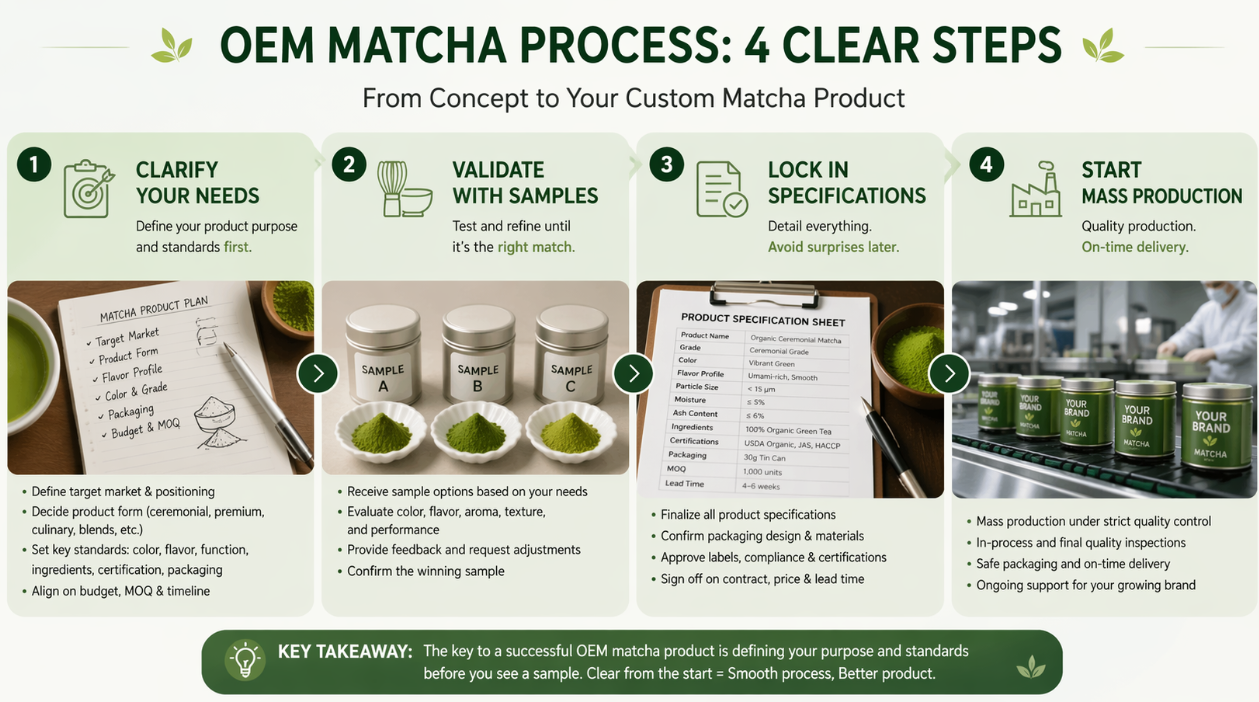
Many people think OEM starts with a sample. In my experience, that's a recipe for delay. A successful project begins long before any powder is milled. Let's break down the process I've seen work time and time again, starting with the most critical step.
Why is Defining Your Product the First and Most Important Step?
Starting an OEM project without a clear goal is like driving without a map. You might end up somewhere, but it's probably not where you wanted to go.
Defining your product first is crucial because it sets the standard for everything that follows. It ensures the samples are relevant, the final product meets market needs, and mass production is consistent. It turns guesswork into a clear, targeted plan, saving time and money.
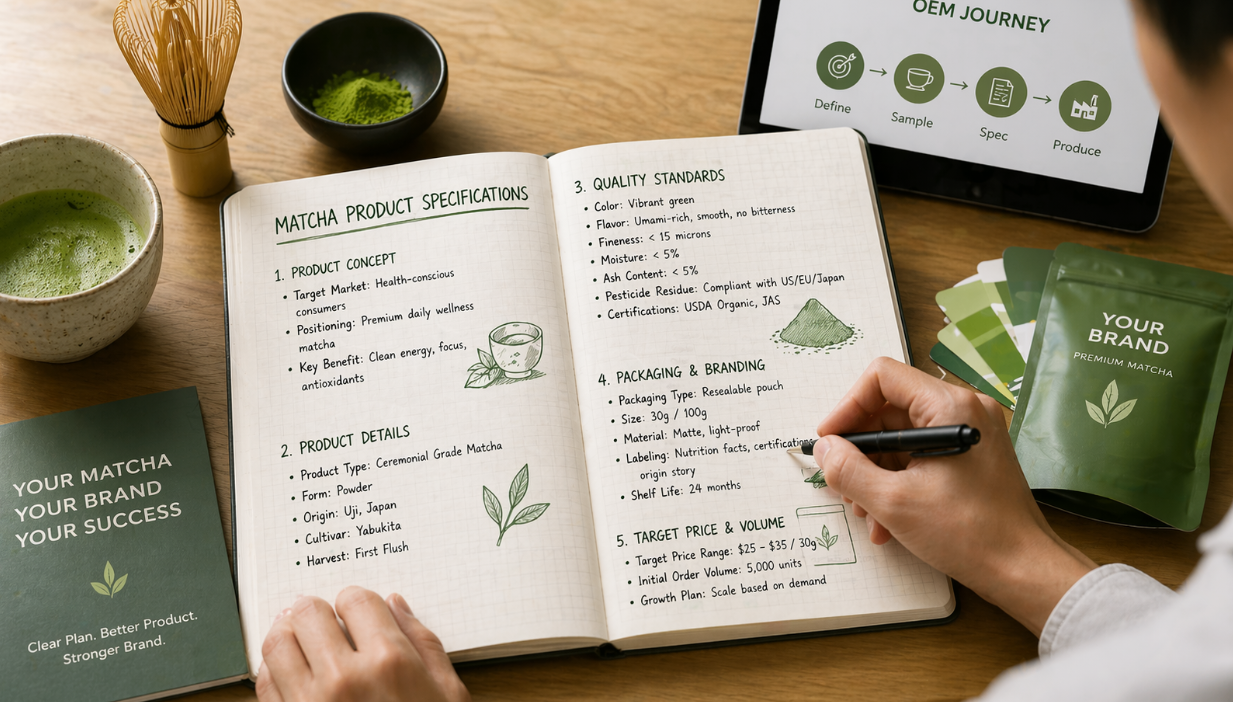
I believe the real work in OEM happens before we even touch the matcha. It's about asking the right questions to build a blueprint for your product. If you don't define your target, you can't hit it. I've seen projects stall for months simply because the initial goals were too vague. We need to be specific. Thinking through these details is not just a formality; it's the foundation of the entire project. It’s what separates a product that "looks nice" from one that performs reliably and sells well. For me, a successful project starts with a clear conversation, not a rushed sample. This initial clarity prevents so many problems later on and makes the entire process smoother for everyone involved.
Key Product Definitions
| Aspect | Question to Answer | Why It Matters |
|---|---|---|
| Application | How will it be used? (e.g., latte, baking, chocolate) | Affects required flavor, color stability, and texture. |
| Target Market | Who is the end customer? (e.g., specialty cafe, food industry) | Determines quality grade, certifications, and price point. |
| Flavor Profile | What should it taste like? (e.g., umami, low bitterness) | Guides the selection of tea leaves and processing. |
| Color | What shade of green is needed? (e.g., vibrant, deep) | Impacts visual appeal and perceived quality. |
| Cost | What is your target cost per kilogram? | Narrows down the viable grades and options. |
What's the Real Purpose of the Sampling and Validation Phase?
You've received your first matcha sample. Is the project almost done? Not quite. The sample isn't the finish line; it’s a checkpoint to test your initial plan.
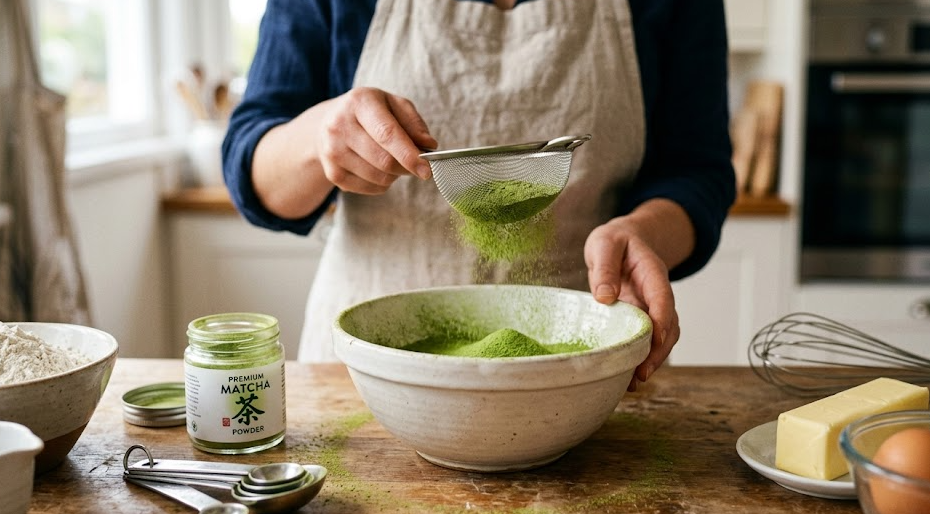
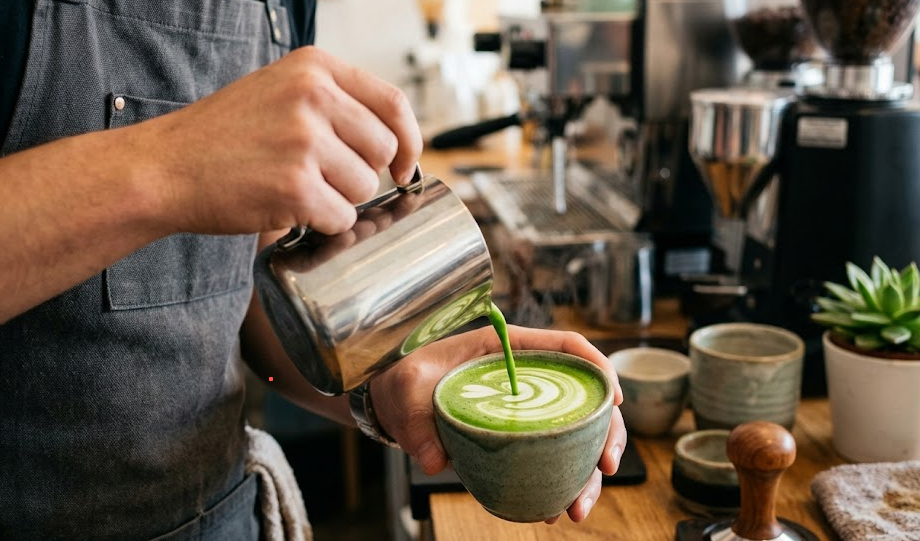
Sampling is not for choosing a favorite. Its purpose is to validate the product definitions you already created. You test the sample in its intended application—like a latte or a cookie—to confirm it performs exactly as specified. This step confirms your blueprint is correct.
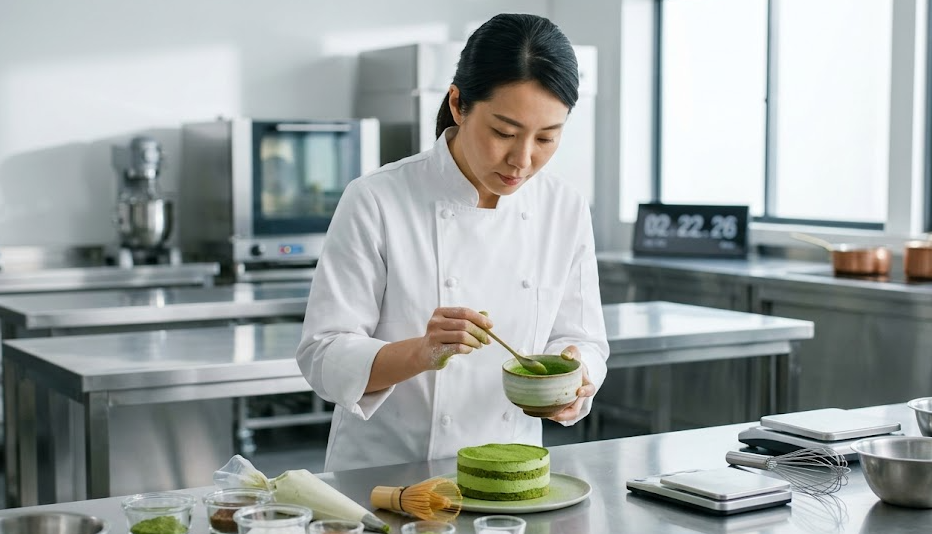
I always tell my partners that a sample is a physical test of a theory. The theory is the product definition we created in the first step. When you receive a sample, the question isn't "Do I like it?" The real question is "Does this meet the specific requirements we agreed on?" This is where you actually use the matcha. Make the drink, bake the cake, or mix it into your formula. Does the color hold up? Is the flavor profile3 right when combined with other ingredients? Does the texture work? This validation step is practical. It moves the conversation from abstract ideas to real-world performance. If the sample works, we know our plan is solid. If it doesn't, we go back to the blueprint, adjust the specs, and try again. It's a systematic process, not a random search.
Three Levels of Sample Validation
- Sensory Check: Does it match the target color, aroma, and taste on its own?
- Application Test: How does it perform in your specific product? (e.g., suspension in a latte, color after baking).
- Consistency Review: Can this exact sample be reproduced consistently in large batches?
How Do You Turn a Good Sample into a Stable, Mass-Produced Product?
You've approved a sample. Now what? The project is at its most critical point. A great sample means nothing if you can't get the same quality every single time.
You turn a sample into a stable product by "locking in the specifications." This means creating a detailed technical document that defines every aspect of the matcha—from particle size4 to color metrics5. This document becomes the unchanging standard for all future production runs.
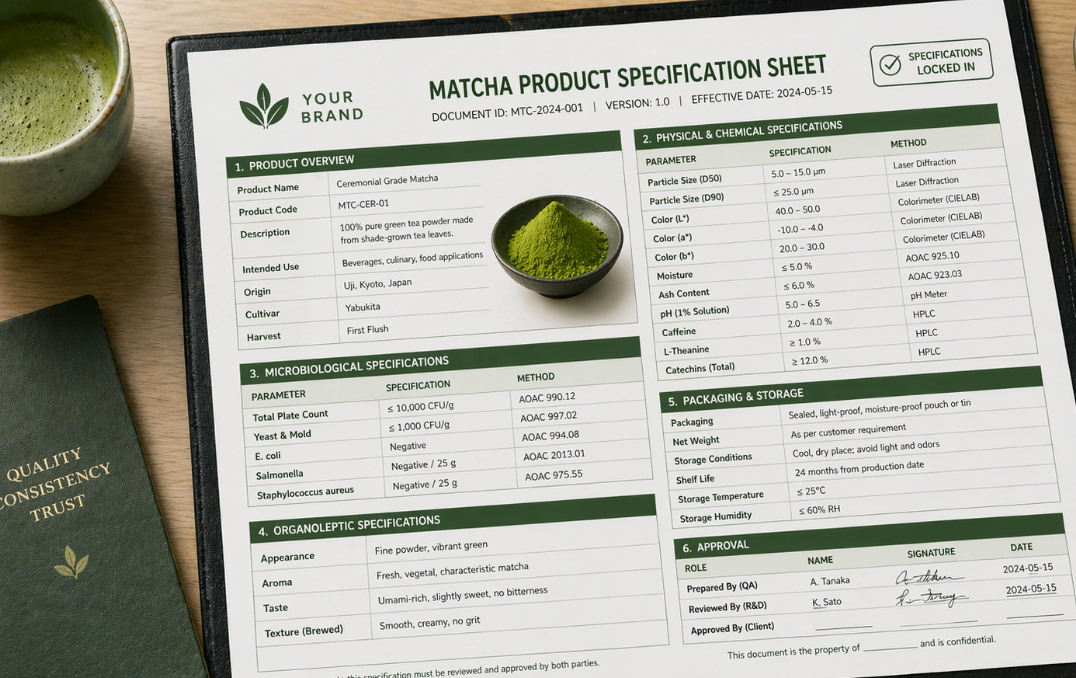
This is the step that I believe truly defines a professional OEM process. We take everything we learned from the definition and validation stages and formalize it. We create a "Product Specification Sheet." This isn't just a simple description; it's a technical contract. It lists objective, measurable data. For example, instead of saying "a nice green color," we specify the Lab* color values. Instead of "smooth," we define the particle size4 in microns. This document also includes packaging requirements, testing protocols, and required certifications. Once this sheet is signed, there's no more ambiguity. It becomes our guide for every single production run. This is how we ensure that the matcha you receive in your tenth order is identical to the first. It replaces "I think this is right" with "I know this is right because it matches the data."
Core Components of a Specification Sheet
- Product Name & Code: Unique identifier for your custom blend.
- Physical Specs: Color (Lab*), Particle Size (D50), Density.
- Sensory Profile: Standardized terms for aroma, taste, and mouthfeel.
- Chemical & Microbiological Limits: Adherence to food safety standards.
- Packaging Details: Bag type, weight, carton size, labeling.
- Shelf Life & Storage: Clear instructions for handling.
Conclusion
Successful OEM matcha development isn't about branding. It's a clear process: define your needs, validate with samples, lock in specifications, and then produce with consistency. Product logic always comes first.
Understanding the OEM matcha process is crucial for anyone looking to create a custom matcha product efficiently and successfully. ↩
Defining your product sets the foundation for the entire OEM process, ensuring clarity and saving time and resources. ↩
Understanding flavor profiles ensures your matcha product aligns with consumer expectations and application needs. ↩
Understanding particle size helps achieve the desired texture and mouthfeel for your matcha product. ↩
Color metrics ensure the visual appeal of matcha, which is a key factor in consumer perception of quality. ↩