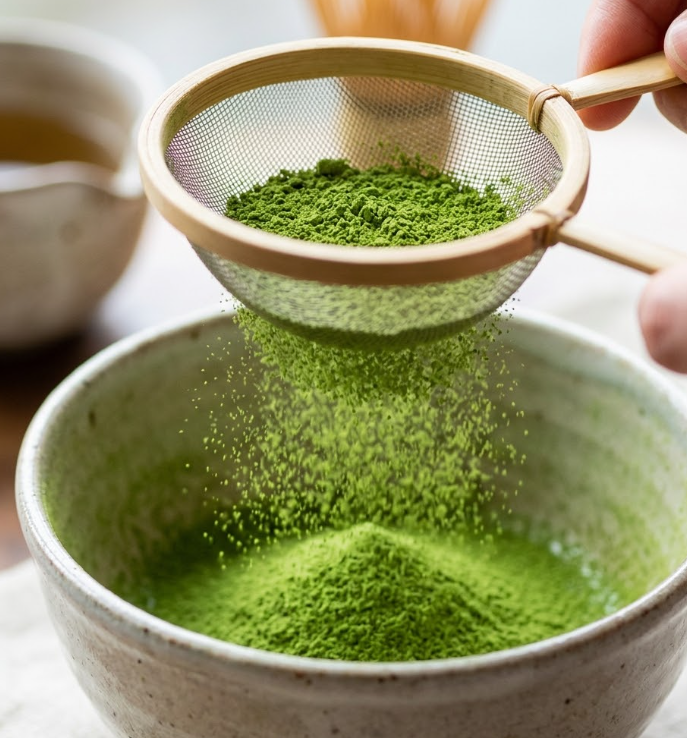

You're buying bulk matcha and see "mesh size" everywhere. But does a higher number really mean better? You need a powder that works, not just one with a big number.
In bulk matcha purchasing, mesh size1 is about finding the right fineness for your product. It's not a quality score. The best mesh size depends on your application, whether it's for a smooth latte, a stable beverage, or a perfectly textured baked good. It’s about suitability.
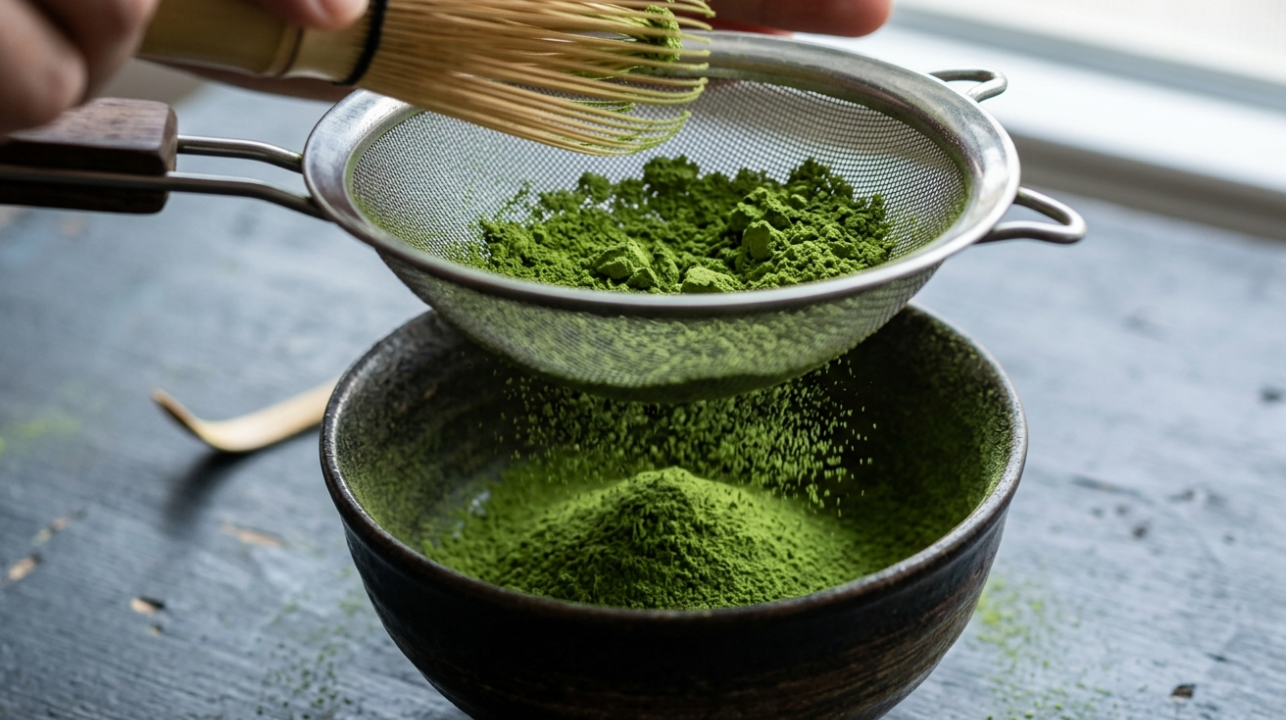
I used to think a higher mesh number was the ultimate goal. But after years of sourcing and developing products, I've learned that the real story is much more practical. It's about how the powder actually performs in your factory and for your customers. Let's break down what really matters when you see that number on a spec sheet.
Why Is "Mesh" an Incomplete Metric for Matcha Powder?
You compare two matcha powders, both labeled "1200 mesh." But they behave differently in your recipe. It's frustrating when the numbers don't tell the whole story, and you need consistency.
"Mesh" is an incomplete metric because it only refers to the sieve size used, not the actual range of particle sizes in the powder. For true consistency, we look at particle size distribution2 data, like D50, which tells us the median particle size in microns.
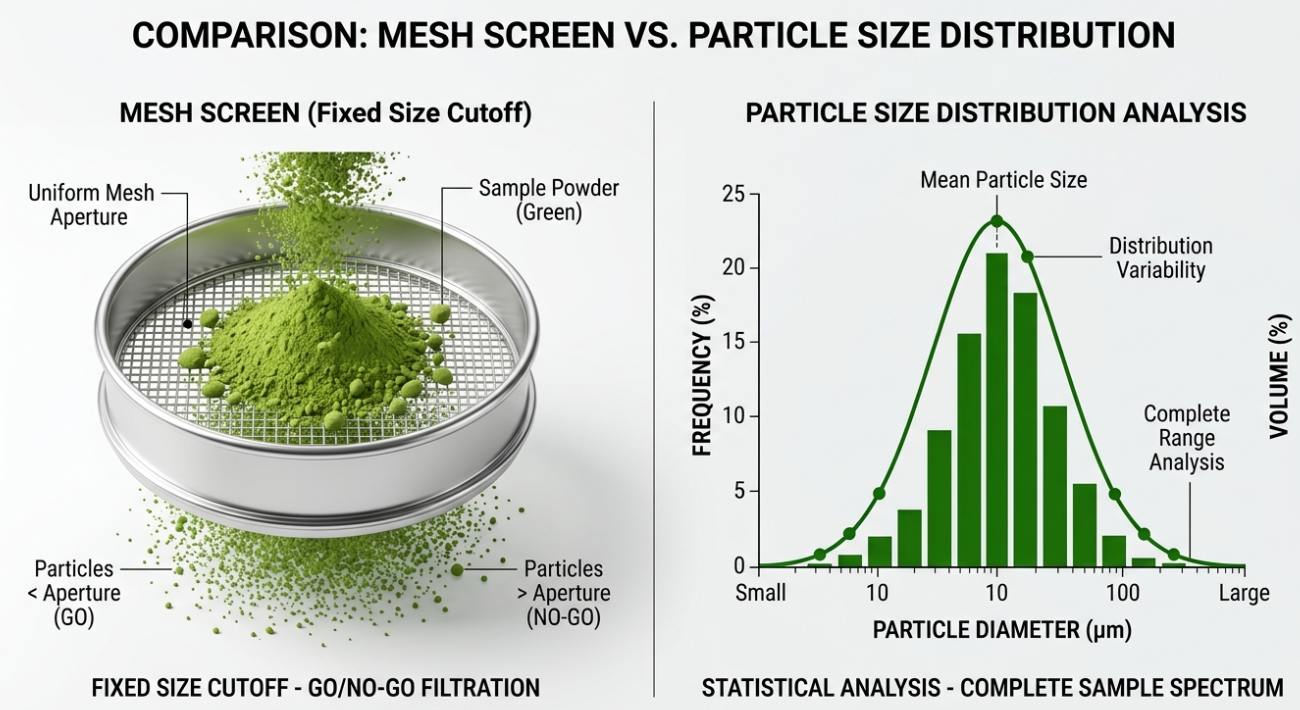
In my experience, relying only on a mesh number can be misleading. The term "mesh" comes from the physical screens used to sift powders. It refers to the number of openings in one linear inch of the screen. So, a 1200-mesh screen has 1200 very tiny holes per inch. While a higher number means a finer screen, it doesn't describe the powder that passes through it completely. You could have a mix of very fine and slightly larger particles that all made it through the same screen. This is why I stopped using mesh as my final decision-making tool. Instead, I learned to speak the language of particle size analysis.
Understanding Particle Size Data
The most useful metric is Particle Size Distribution (PSD). This gives us a full picture of all the different particle sizes within a single batch of matcha. From this data, we get a key value called D50. The D50 value3 represents the median particle size. It means that 50% of the particles in the sample are smaller than this value, and 50% are larger. A D50 of 8 microns is a much more precise and repeatable specification than just "1500 mesh."
Mesh vs. Micron: A Quick Comparison
To make it clearer, here is a simple breakdown:
| Metric | What It Measures | Why It Matters for You |
|---|---|---|
| Mesh | Sieve screen openings per inch | A general, often imprecise, indicator of fineness. |
| Micron (µm) | Actual particle size (1 µm = 0.001 mm) | A precise measurement of how fine the powder is. |
| D50 | The median particle size in microns | A critical data point for ensuring batch-to-batch consistency4. |
When I see a supplier who provides D50 data, I know they have a more controlled and professional process.
How Does Matcha Fineness Affect Your Final Product?
You want to create the perfect matcha latte or cake. But the wrong powder can make it gritty or clumpy, ruining the customer's experience and wasting your expensive ingredients.
Matcha fineness is critical for texture and performance. Finer particles create a smoother, creamier mouthfeel5 in drinks and suspend better in liquid. For baking, the right fineness ensures even color and prevents clumping, but it must also be workable in a production environment.
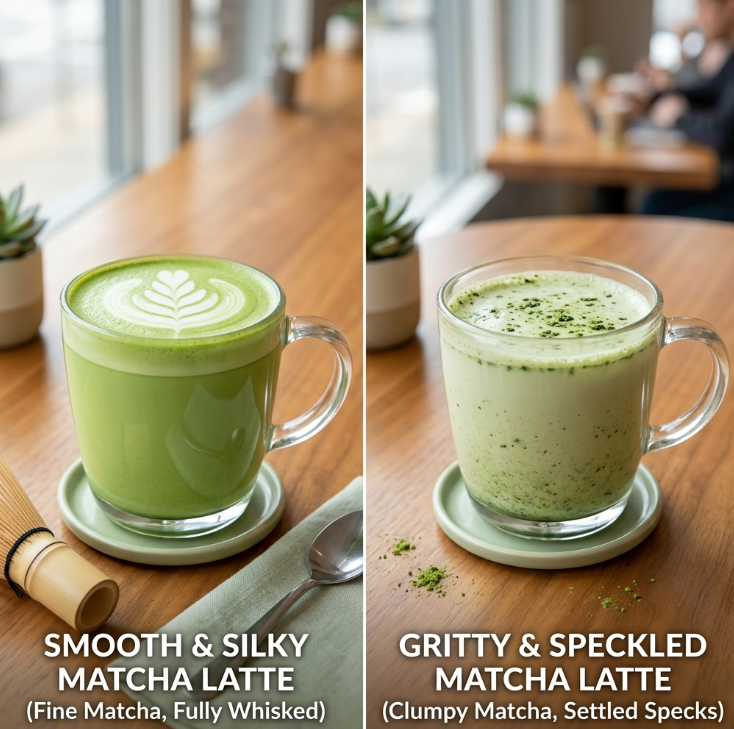
I've learned that fineness is not a one-size-fits-all solution. Its value is completely tied to the end product you are creating. A powder that is perfect for a ceremonial tea might be difficult to work with in a high-volume bakery. It all comes down to the application.
For Beverages: Smoothness is King
When I'm developing a matcha latte or a ready-to-drink beverage, my top priority is mouthfeel5. Nobody wants a gritty drink. Finer particles, often in the 5 to 10-micron range (D50), are essential here. They create a silky, smooth texture because they are less perceptible on the tongue. They also stay suspended in the liquid for longer, so you don't get a layer of sediment at the bottom of the cup as quickly. Good foaming in a latte also relies on small, uniformly shaped particles. This is where a consistent particle size distribution2 really shines and makes a noticeable difference in the final cup.
For Foods: It's All About Integration
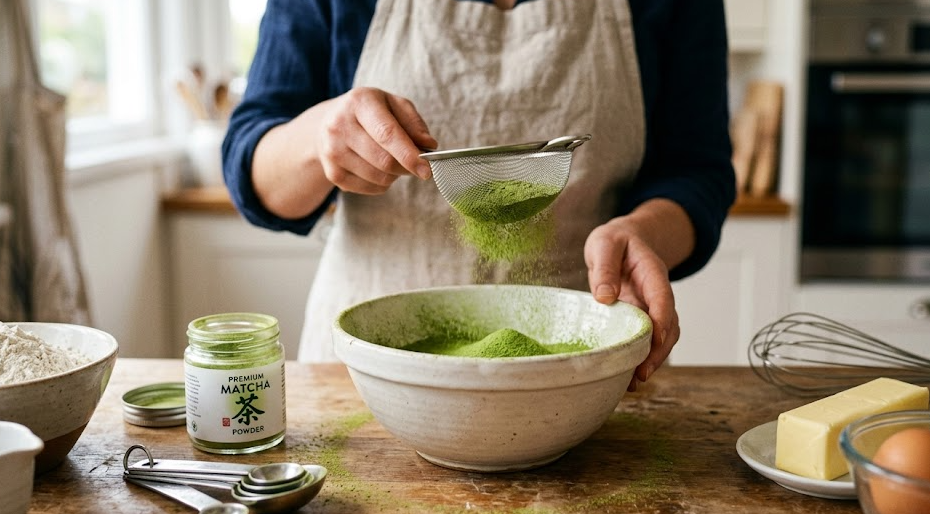
In baking or chocolate making, the goals are different. Here, I care more about how the matcha integrates into a batter, dough, or cream. The powder needs to disperse evenly without clumping to provide a consistent green color and flavor throughout the product. While fineness helps, an extremely fine powder can sometimes be too "fly-away" and create dust clouds, making it difficult to handle in a large-scale mixer. So, we often look for a balance: a powder fine enough for a smooth texture in a cheesecake filling, but manageable enough for our partners' production lines. The right particle size ensures the matcha becomes one with the other ingredients, rather than fighting against them.
Should You Request Custom Particle Size Specifications for Your Matcha?
You're trying to perfect a new product, but standard matcha grades aren't quite right. You're stuck compromising on texture or consistency, which holds your brand back from being truly great.
Yes, requesting custom particle size specifications6 is a smart move for product developers. Working with a supplier to define the exact fineness needed for your application ensures perfect performance and batch-to-batch consistency4. It turns your supplier into a true manufacturing partner.

This is where I see the real meaning of "mesh size1" in bulk purchasing today. It's not about finding the highest number on a spec sheet. It's about a supplier's ability to deliver a consistent, functional ingredient that is tailored to your needs. When a supplier can work with you on custom specifications, it’s a powerful signal of their technical capability and commitment. At our company, we see this as a core part of our service. It’s how we help our partners win.
The process is straightforward and collaborative:
- Define the Goal: We start with your product. Are you making a high-end ceremonial drink, a cold foam topping, or a matcha-flavored energy bar? Each has different needs.
- Identify Key Metrics: We then discuss what performance matters most. Is it suspension time7, mouthfeel5, color retention after baking8, or ease of mixing9 in your equipment?
- Test and Refine: We provide samples with different particle size distribution2s (PSDs) so you can test them in your own process and find the perfect match.
- Lock in the Spec: Once we find the perfect fit, we lock in that PSD specification. This ensures every future order you place will perform exactly the same way.
This approach moves the conversation from a simple number to a performance guarantee10. It's about building a reliable supply chain11, not just buying a powder.
Conclusion
In the end, mesh size1 is not a label of quality but a functional tool. The right question is not "how high is the mesh?" but "is this powder right for my product?"
Understanding mesh size helps you choose the right matcha powder for your specific application, ensuring optimal texture and performance. ↩
Exploring particle size distribution ensures consistency and precision in matcha powder, crucial for achieving desired product outcomes. ↩
Learning about D50 value helps you understand the median particle size, ensuring batch-to-batch consistency in your matcha products. ↩
Consistency ensures reliable product quality, saving time and resources in production. ↩
Mouthfeel determines the smoothness and creaminess of matcha drinks, enhancing customer satisfaction. ↩
Custom specifications ensure matcha powder meets your unique product needs, enhancing performance and consistency. ↩
Suspension time affects how well matcha stays mixed in liquids, crucial for beverages like lattes and ready-to-drink products. ↩
Color retention ensures vibrant green hues in baked goods, maintaining visual appeal and product quality. ↩
Ease of mixing ensures efficient production processes and prevents issues like dust clouds or clumping. ↩
A performance guarantee ensures the matcha powder consistently meets your product requirements, building trust in your supply chain. ↩
A reliable supply chain ensures consistent quality and delivery, supporting your business growth and product success. ↩