Paying $6 for a matcha latte? You think it's from Japan. But the beautiful packaging might be lying to you, and it's costing you more.
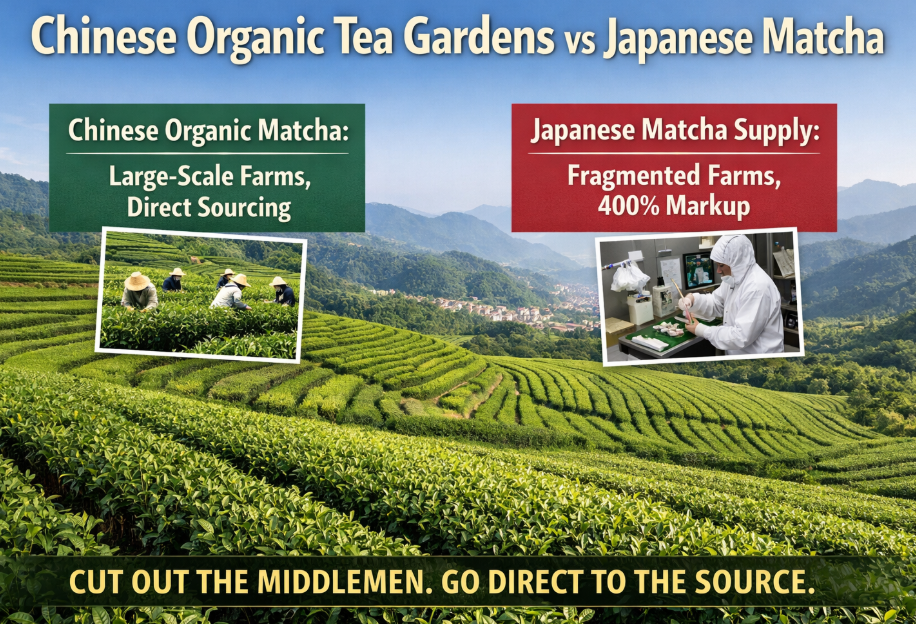
Most coffee shops get their matcha from suppliers1 who source it from China, even if it's branded as Japanese. Large-scale producers in places like Guizhou, China2, are the primary source for the consistent, cost-effective matcha used globally in cafes.
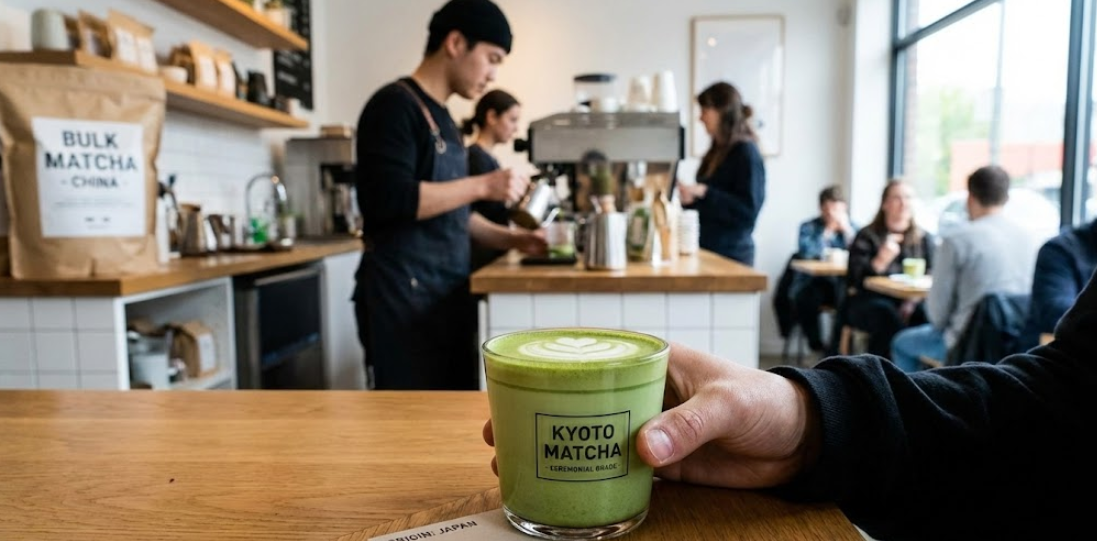
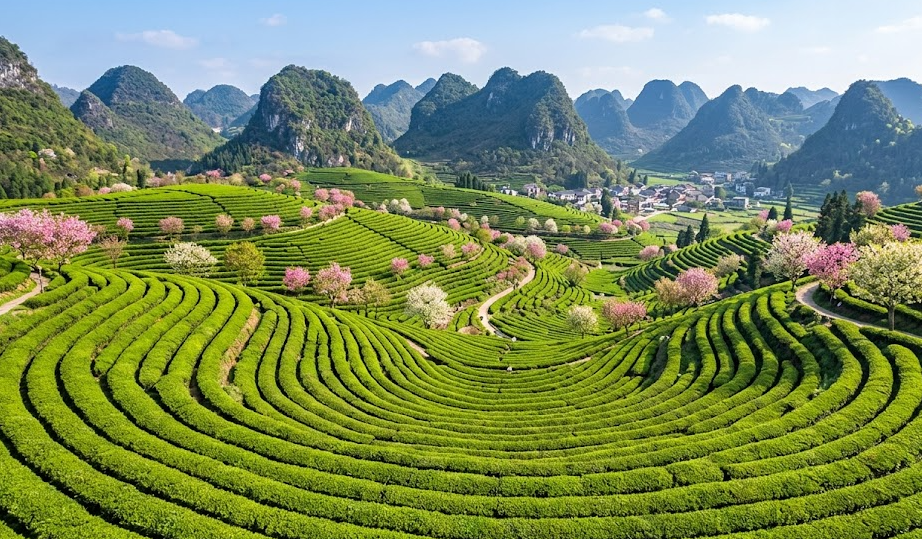
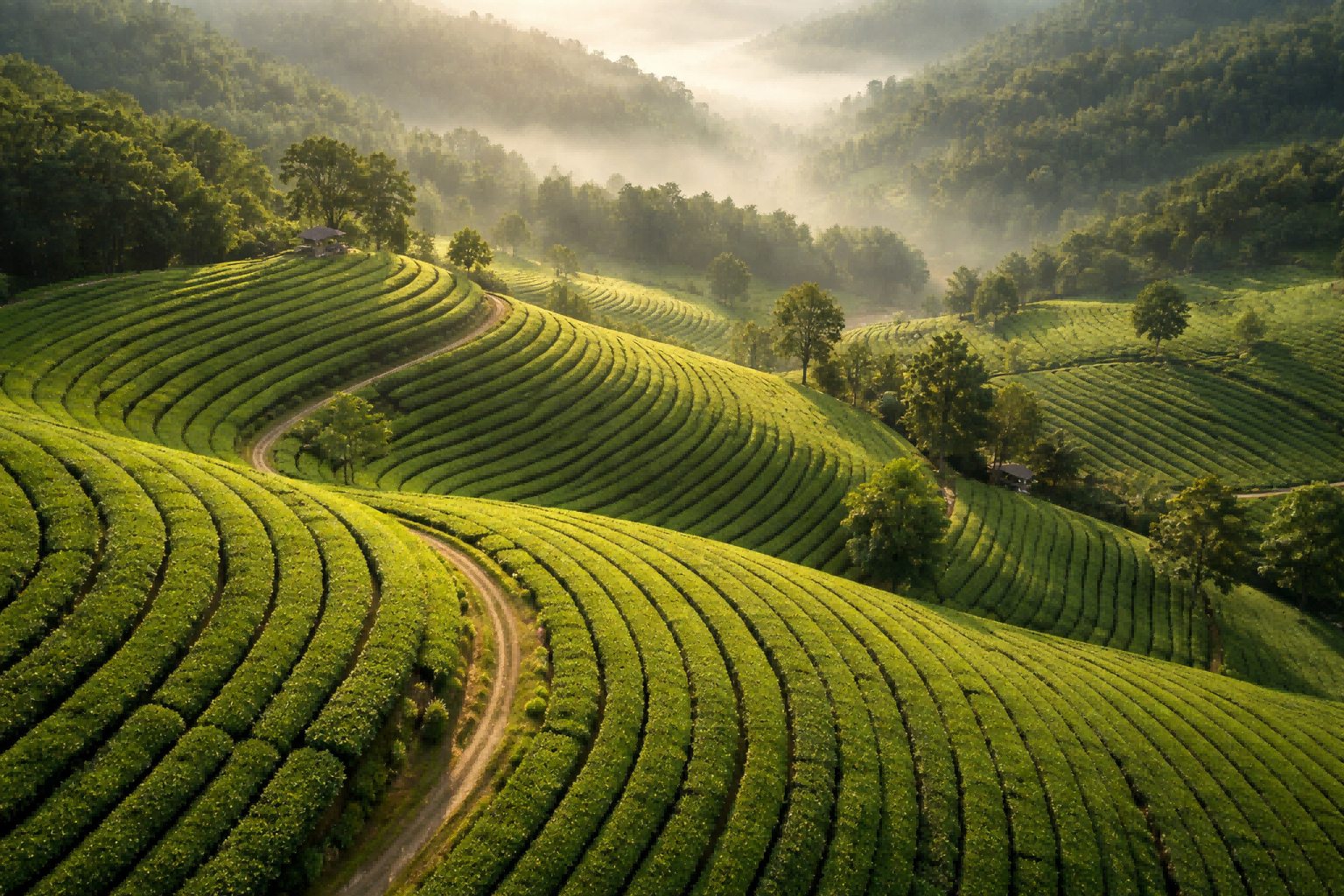
That beautiful poster with cherry blossoms and "Uji" written on it is often just clever marketing. I've seen too many supply chain invoices to be fooled. That $6 matcha latte you're holding? It probably has roots in my tea gardens here in Anshun, Guizhou. This is an open secret in the B2B world. Let's peel back the layers so you can understand where your matcha truly comes from.
For cafés choosing matcha specifically for milk drinks, our matcha for latte cafés page explains color, taste, solubility and grade selection for high-volume drink menus.
Is Your "Japanese" Matcha Actually From China?
Your favorite cafe advertises premium Japanese matcha. But the price seems too good to be true. You are likely drinking high-quality Chinese matcha repackaged in Japan.
Yes, it's an open secret. Many "Japanese" matcha brands for cafes are OEM products3. They buy high-grade organic matcha from my farms in China, then package and label it in Japan. This maintains the "Japanese" premium while using a stable, large-scale supply.
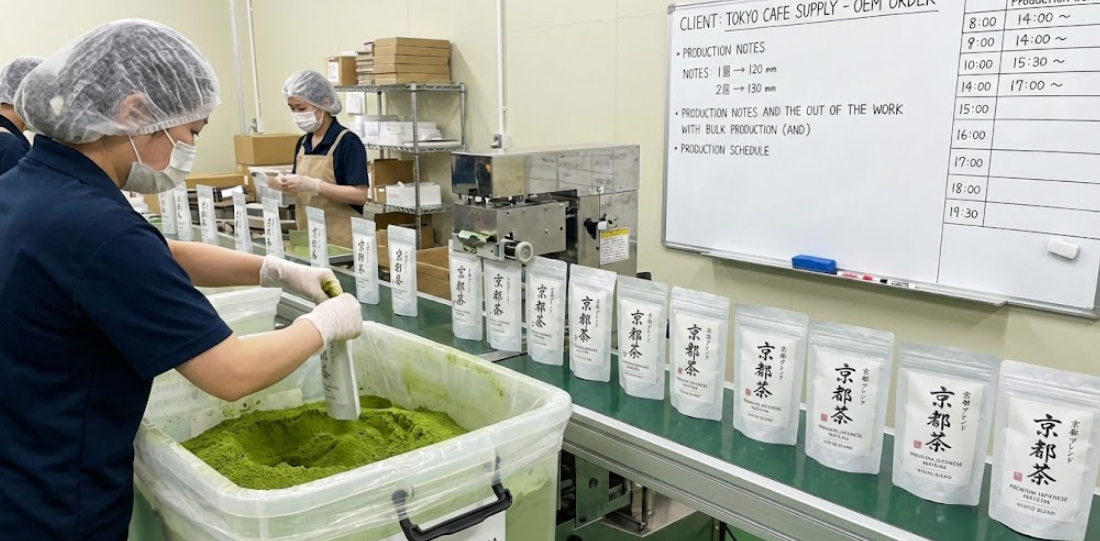
The vast majority of independent coffee shops and even medium-sized chains simply cannot source directly from Japan. The logistics, volume requirements, and costs are too high. Instead, they buy large bags of "Japanese brand" matcha from a distributor. This is where I come in. I see the supply orders. Those so-called Japanese brands need to maintain their profits and have a huge, steady supply. They can't get that from the small, fragmented tea farms in Japan. So, they buy from me. They purchase our EU-certified organic matcha4 in massive quantities. I watch as we load shipping containers with boxes printed in Japanese, destined for Japan or a nearby bonded warehouse. Inside those boxes is the matcha from my 2,300 mu of high-altitude tea gardens. It gets there, gets put into smaller, fancier bags, and then it's sold to your local cafe as "Japanese Matcha." This is the OEM model, and it's the backbone of the cafe matcha industry.
| Sourcing Aspect | Perceived by Customer | The Reality (OEM Model) |
|---|---|---|
| Country of Origin | Japan (Uji, etc.) | China (Guizhou, etc.) |
| Brand | Japanese Brand Name | Chinese Producer, Japanese Label |
| Supply Chain | Direct from Japan | China -> Japan (for packaging) -> Global Distributor -> Cafe |
| Reason | Prestige & Quality | Cost, Scale & Supply Stability |
For coffee shops, distributors and foodservice buyers comparing reliable supply channels, our wholesale matcha for cafés page explains commercial supply options for repeat purchasing.
Why Do Big Chains Buy Directly From China?
Global coffee chains serve millions of matcha lattes daily. How do they ensure every cup is the same? They can't rely on small, expensive Japanese farms for this.
Big chains prioritize cost, consistency, and scale, so they source directly from the origin. They bypass traders and sign contracts with large producers like me. Japanese matcha is too expensive and fragmented to support their global volume and strict financial models.
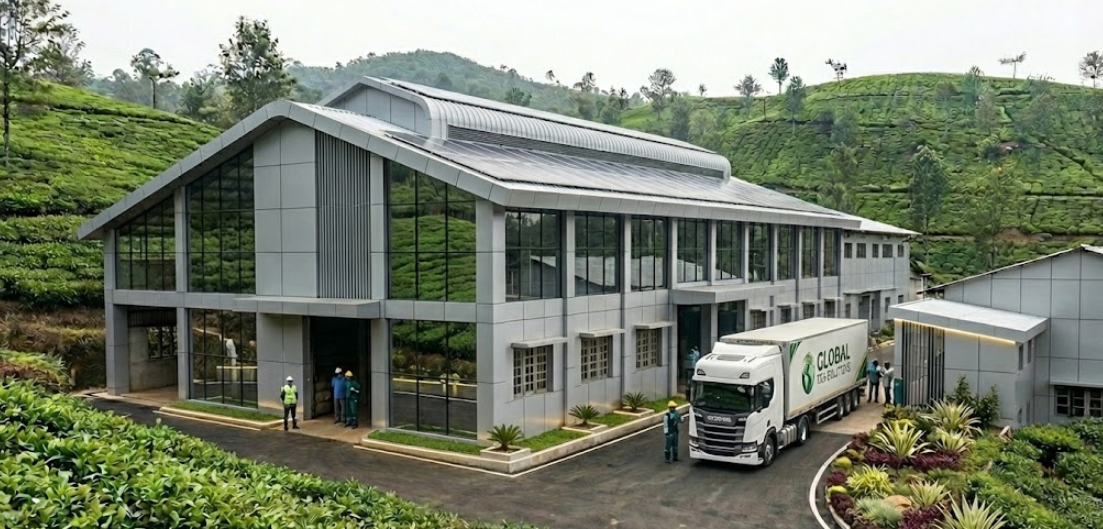
A giant chain like Starbucks doesn't listen to stories about ancient tea traditions. They look at cost spreadsheets and quality inspection reports. The high price premium and scattered production of Japanese matcha cannot support the massive volume5 a global chain needs. It's just not possible. So, they eventually bypass all the middlemen and come directly to the source. They sign contracts right here with me. Why? Because only a large-scale producer like me, with over 2,300 mu of our own organic tea gardens and modern factories, can deliver what they need. I can guarantee organic compliance across the board. I can produce thousands of tons a year. And I can get the cost down to a number that fits their financial models. They need a partner who can provide a stable supply of high-quality, certified matcha year-round, without fail. That's not a small farm in Uji. That's a major agricultural enterprise in Guizhou.
If you are calculating drink margins, compare your cup cost with the wholesale matcha price range before choosing a café-grade powder.
| Sourcing Priority for a Global Chain | Why Japanese Matcha Falls Short | How We Meet the Need |
|---|---|---|
| Massive Volume | Production is fragmented and small-scale. | We have 11 production lines and 1,000+ ton annual output. |
| Strict Cost Control | High labor costs and brand premium. | Our scale and vertical integration control costs effectively. |
| Absolute Consistency | Batch-to-batch variance is common. | We use data-driven quality control for consistent color & flavor. |
| Full Certification | Can be complex to verify across many small farms. | We hold EU Organic, JAS, Rainforest, HACCP, and ISO certs. |
For larger café chains and beverage groups, our bulk matcha page covers MOQ, export packaging, COA support and supply planning for commercial buyers.
Are Coffee Shops Buying Matcha for the Right Reasons?
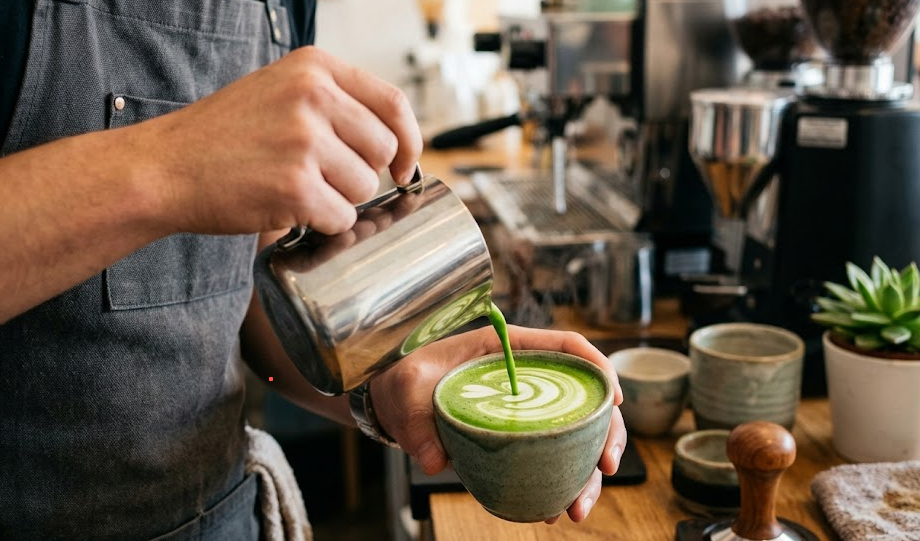
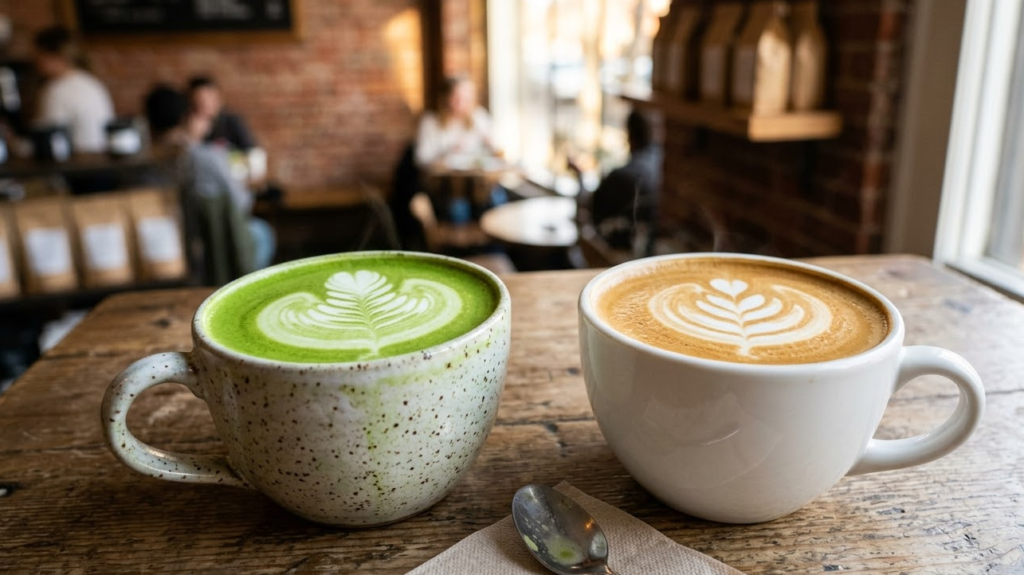
You want an authentic matcha experience at a coffee shop. But the taste is often muted by milk and sugar. The vibrant green color6 is what really stands out.
Coffee shops buy matcha for its visual appeal and strong flavor that cuts through milk, not for delicate umami. They need a "Barista Blend." This special powder is designed for a bright green color and a robust tea taste, not for a traditional tea ceremony.
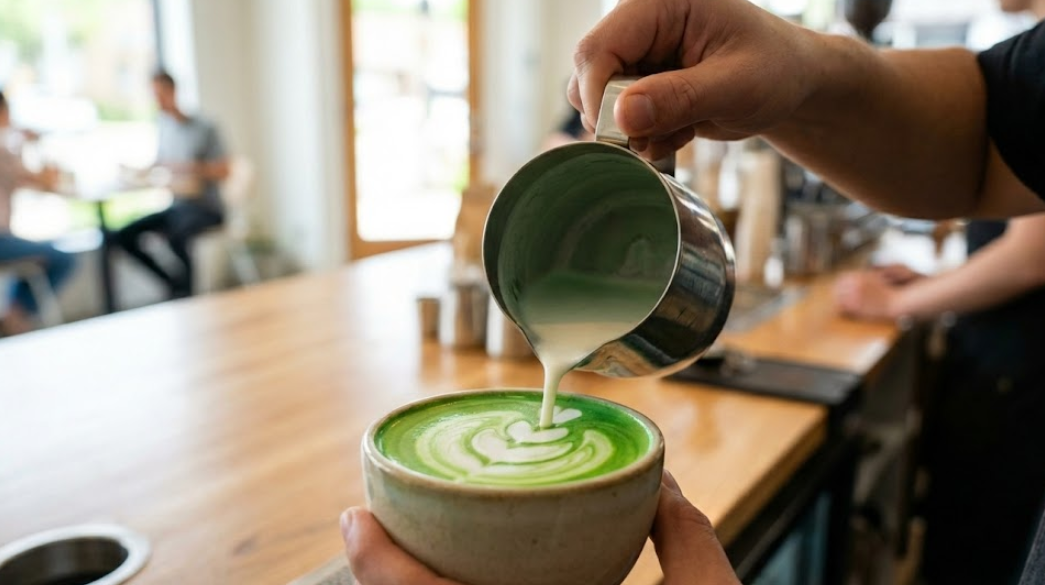
The buying logic for a coffee shop is completely different from that of a tea master. A cafe is not looking for the subtle, savory "umami" of a top-tier ceremonial grade. Why? Because that delicate flavor is completely lost once you add steamed milk, sugar syrups, and ice. The main thing they need is a powerful green color and a strong tea taste that can stand up to all those other ingredients. This is where my factory's specialized "Barista Blend" comes in. We developed this specifically for cafes. We adjust the entire process, from the steaming time of the tea leaves to the fineness of the grind. Our goal is to create a matcha powder that "explodes" with a brilliant green color, even in a thick latte. It also has a stronger, slightly more bitter tea flavor that you can still taste through the sweetness. This is what baristas need, and this vibrant green look is the real reason their customers pay the premium.
| Matcha Attribute | Traditional Ceremonial Grade | Our Barista Blend7 |
|---|---|---|
| Primary Goal | Subtle umami & delicate flavor | Intense color & strong taste |
| Color | Deep, shady green | Bright, vibrant emerald green |
| Taste Profile | Smooth, savory, slightly sweet, no bitterness | Strong tea flavor, pleasant bitterness to cut milk |
| Best Use | Drank with hot water only (Usucha/Koicha) | Matcha lattes, smoothies, frappes, baking |
| Performance in Milk | Flavor and color get lost | Color and flavor remain prominent |
Conclusion
Most coffee shop matcha is Chinese by origin, designed for color and strength. It's either OEM-packaged as Japanese or sourced directly by large chains for its unbeatable cost and scale.
Understanding the origin of matcha can help you make informed choices about what you're consuming and its authenticity. ↩
Discover why Guizhou is a key player in the global matcha market and how it impacts the matcha you drink. ↩
Learn how OEM products influence the branding and perception of matcha in the market. ↩
Explore the standards and benefits of EU-certified organic matcha to ensure quality and sustainability. ↩
Learn why large-scale production is crucial for meeting the demands of global coffee chains. ↩
Discover the significance of color in matcha and how it affects consumer perception and taste. ↩
Discover why Barista Blend matcha is preferred in cafes for its vibrant color and strong flavor. ↩