You believe your premium matcha comes from Japan. But you are paying a high price for a story, not the real origin. I will show you the truth.
The United States sources much of its matcha from Japan. However, over 60% of the raw material for this "Japanese" matcha is actually grown in China. Japanese companies import it, repackage it, and then export it to America at a much higher price.
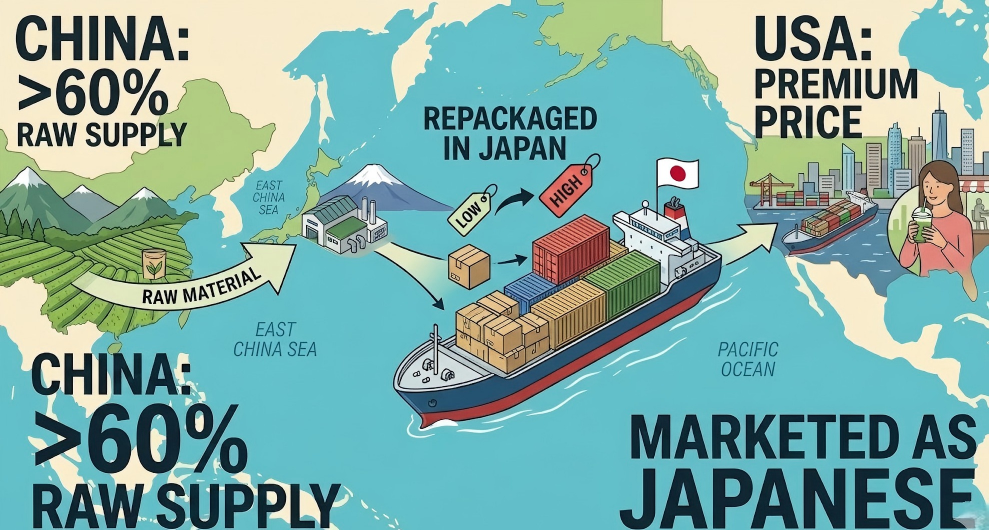
I have been in the matcha business for over a decade. I have seen countless bills of lading1 and certificates of origin. The story you have been sold is a carefully crafted myth. The reality of the global supply chain is far more interesting and complex. I want to share three industry truths that will change how you think about your next cup of matcha. Let me break down what is really happening behind the scenes.
For importers, cafés and distributors comparing supply channels, our matcha wholesale supplier page explains commercial sourcing options for repeat purchasing.
For U.S. buyers comparing freight responsibility, customs handover and delivery terms, our import shipping and Incoterms guide explains how export terms affect cost and risk.
Can Japan's farms really satisfy America's huge appetite for matcha?
You see "Made in Japan" on the label and trust it. But America's demand is massive, and Japan's tea farms are small. The numbers just do not add up.
No, Japan's domestic tea production cannot meet the industrial-scale demand from the US. Many Japanese tea companies rely heavily on raw materials from Chinese tea gardens, like ours in Guizhou, to fulfill their large export orders to American brands.
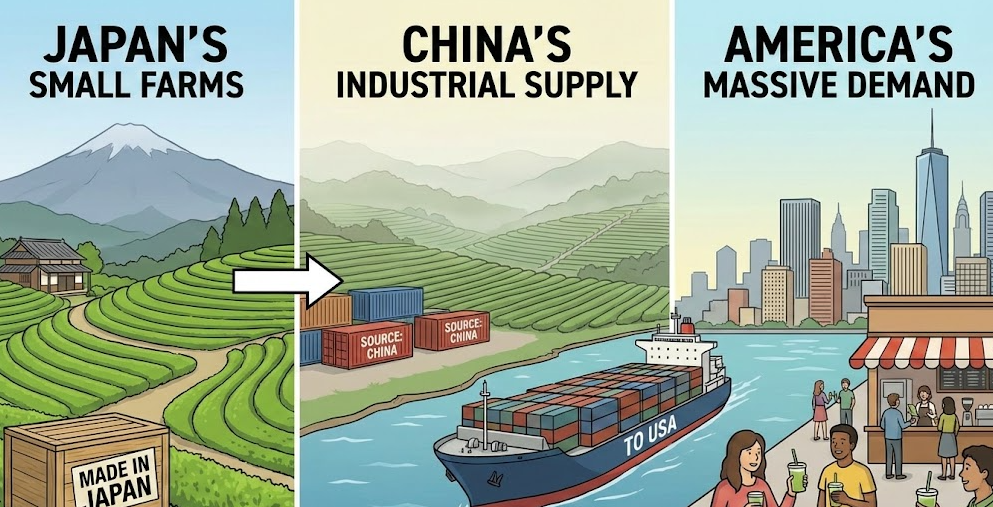
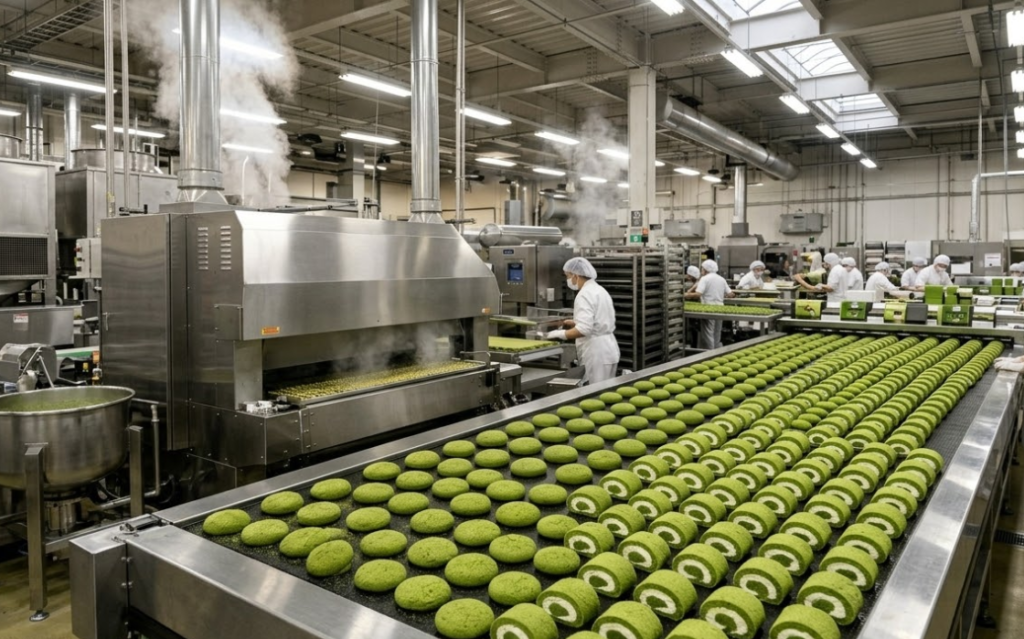
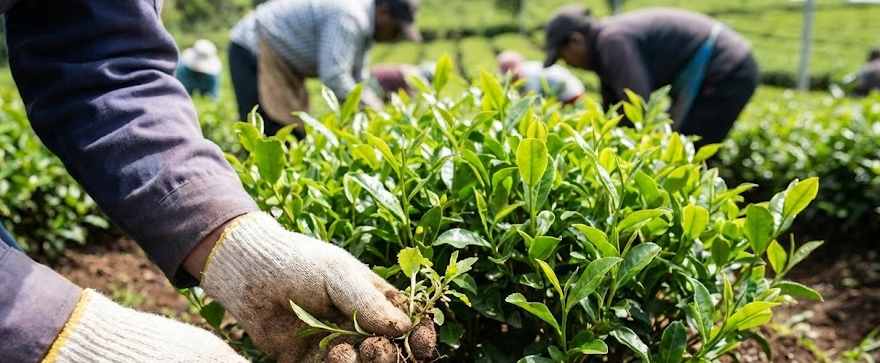
The demand for matcha in the United States is not for small, ceremonial tins. It is for industrial-grade supply2. Think about the scale. Starbucks needs tons for its matcha lattes. Costco uses it in its bakery items. Health food companies sell it as a superfood powder. This requires a massive, consistent, and year-round supply chain. I have seen the reality of Japanese tea farming myself. The farms are often small, fragmented plots of land. The farming population is aging, and they can barely keep up with their own domestic demand. So where does all the export-grade matcha come from? The answer is China. Many large Japanese tea companies have set up bases here or have long-term contracts to buy our raw tea leaves, known as tencha. They ship this tencha back to Japan, do some final processing or just repackage it, and then label it "Made in Japan." This allows them to sell it to American buyers for several times the price.
US Matcha Demand vs. Japanese Production Reality
| Market Segment | Required Scale | Japanese Farm Reality | The Solution |
|---|---|---|---|
| Major Coffee Chains | Thousands of tons annually | Small, family-owned plots | Sourcing tencha from China |
| Bulk Food Retailers | Consistent, large batches | Limited harvest seasons | Year-round supply from China |
| Nutraceuticals | Certified, traceable ingredients | High domestic demand | Establishing production in China |
For buyers planning larger purchasing programs, our bulk matcha import page covers MOQ, export packaging, COA support and supply planning for commercial orders.
Why is "true organic" so hard to find in Japan?
You need USDA-certified organic matcha for your brand. But a Japanese organic certificate might not be enough. Pesticide drift from nearby farms can ruin your product's organic status.
Japan's small, interlocking farms make preventing "pesticide drift3" from non-organic neighbors very difficult. This is a huge problem for the strict standards of USDA organic certification4. True organic matcha requires large, isolated farms that can guarantee purity.
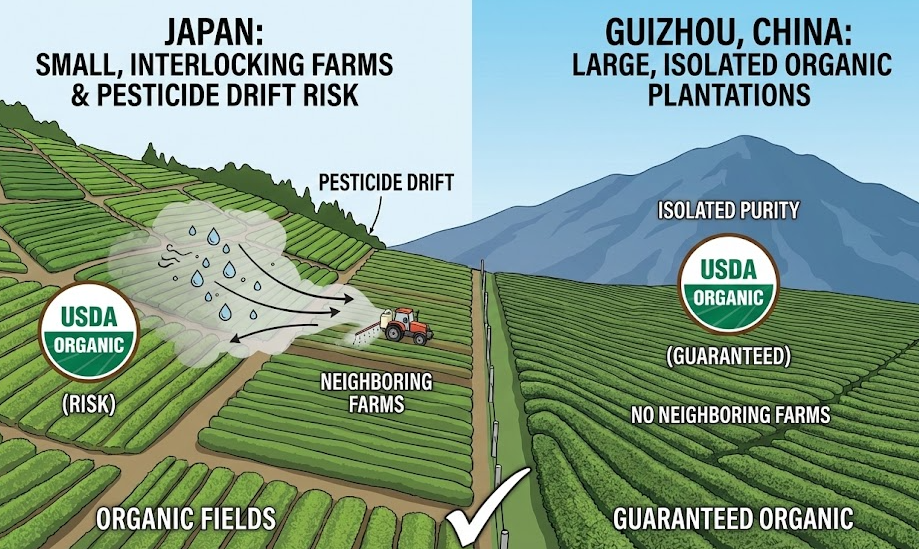
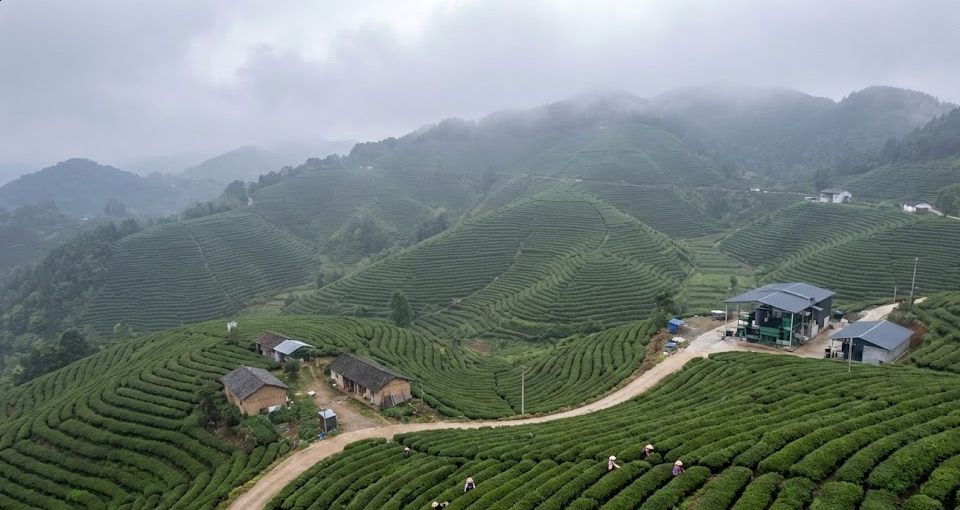
The USDA organic standard is one of the toughest in the world. It has zero tolerance for pesticide residue. This creates a huge geographical problem for Japan. When I was visiting tea regions there, I saw how the farms are laid out. One farmer’s small organic plot is right next to another farmer’s conventional plot. When the neighbor sprays pesticides, the wind can easily carry it over to the organic field. This is called "drift pollution5," and it is almost impossible to prevent in such a landscape. This is a quiet pain for the Japanese tea industry. It is also why smart, large-scale American buyers started looking elsewhere. They eventually found me. Here in Anshun, Guizhou, my tea gardens are different. I have over 2,300 mu (about 380 acres) of connected, high-altitude plantations6. This massive, single-managed area creates a natural physical barrier. We have full ecological control. This kind of "clean land," which we built with heavy investment, is the only real guarantee that you can pass strict US customs inspections.
Organic Farming Risk Comparison
| Factor | Typical Japanese Farm | Our Guizhou Farm | Advantage |
|---|---|---|---|
| Farm Size | Small, fragmented plots | Large, connected estate | Physical isolation |
| Pesticide Drift Risk | Very High | Extremely Low | Guaranteed purity |
| Traceability | Complicated | Single source, full control | Simple, verifiable |
| USDA Compliance | Challenging | Designed for it | Reliable for US market |
Are US buyers still paying for the "Japanese Zen" story?
You might think a good story about Zen masters and ancient traditions sells matcha. But your business customers care more about certificates and consistency than stories these days.
Not anymore. While the "Zen" story was once important, sophisticated US buyers now prioritize verifiable quality. They demand dual EU/USDA organic certifications7 and absolute consistency across every single container.
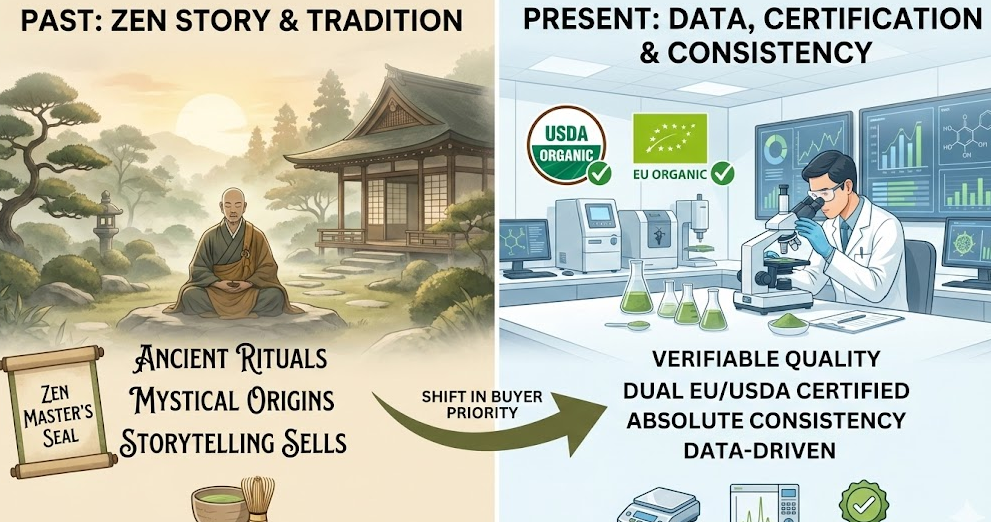
The market has changed. A few years ago, an American client came to me and wanted a beautiful story about my tea. They wanted to hear about monks and tradition. Today, the conversation is completely different. My clients now walk into my office and put a purchase contract on my desk. They point to two main requirements. First, they need dual organic certification for both the EU and the USDA. Second, they need the color and mesh size of the matcha to be exactly the same in every single container we ship. They have woken up. They realized they were paying a 30% "brand tax" for the "Made in Japan" story. That story does not guarantee quality or safety. They would rather partner directly with a source-owner8 like me. I have the modern factories, the large-scale farms, and the data-driven quality control9 to deliver what they actually need: a reliable, consistent, and certified product. The romance is gone, and it has been replaced by science and logistics.
For buyers preparing compliance checks, our US matcha import documents page summarizes certificates, COA, organic documents and export requirements for bulk matcha buyers.
The Shift in Matcha Buying Priorities
| Buying Factor | The Old Way (Story-Based) | The New Way (Data-Based) |
|---|---|---|
| Primary Concern | Brand origin and story | Certifications and consistency |
| Key Documents | Marketing materials | Lab reports, organic certificates |
| Supplier Type | Japanese trading company | Source-direct farm owner/factory |
| Cost Focus | Paying a premium for "Japan" | Best value for verified quality |
Conclusion
The matcha world is changing fast. The real source is often China, true organic requires isolated land, and serious buyers now demand hard proof, not just a good story.
Bills of lading are crucial for tracing the origin and authenticity of matcha, impacting consumer trust. ↩
Exploring industrial-grade supply helps understand the scale and quality required for large retailers like Starbucks. ↩
Pesticide drift challenges organic certification, crucial for consumers seeking pure matcha products. ↩
USDA certification ensures matcha meets strict purity standards, vital for health-conscious consumers. ↩
Drift pollution impacts organic farming, affecting the purity and certification of matcha products. ↩
High-altitude plantations offer unique growing conditions that enhance matcha quality and purity. ↩
Dual certifications ensure matcha meets international standards, appealing to global consumers. ↩
Partnering with a source-owner ensures direct access to quality matcha, bypassing middlemen. ↩
Data-driven quality control ensures consistent matcha quality, meeting modern consumer demands. ↩