You are trying to find the "best" matcha for your business, but the definition is unclear. This uncertainty creates risk and can hurt your product's consistency and your brand's reputation.
The best matcha for B2B sourcing is not about subjective taste. It is a solution that guarantees consistent quality1, full traceability2, market compliance3, and predictable costs4 for long-term, scalable supply. This ensures your product is stable and your business is secure.
When people in international bulk purchasing ask me this question, I don't give a direct answer. I first ask a more important question back: "Is your 'best' the best for a small tasting, or the best that remains stable in large-scale production?" For consumers, "best" might mean flavor, story, or brand. But in B2B sourcing, "best" has only one standard: quality and cost that remain controllable over long-term, stable, and scalable delivery. If you are sourcing matcha for a chain of stores, a ready-to-drink product, or the food industry, these five dimensions are the real standards for judgment. Let's look at them one by one.
Is your matcha's origin stable and traceable?
Your matcha quality seems to change with every order. This inconsistency can damage your products, frustrate your customers, and harm your brand's reputation. You need a supplier with complete control over their tea gardens.
Yes, a stable and traceable origin5 is the foundation of quality. It minimizes risks like supply shortages and pesticide issues. A supplier with their own or deeply integrated tea gardens is the only way to guarantee long-term consistency and safety for your brand.
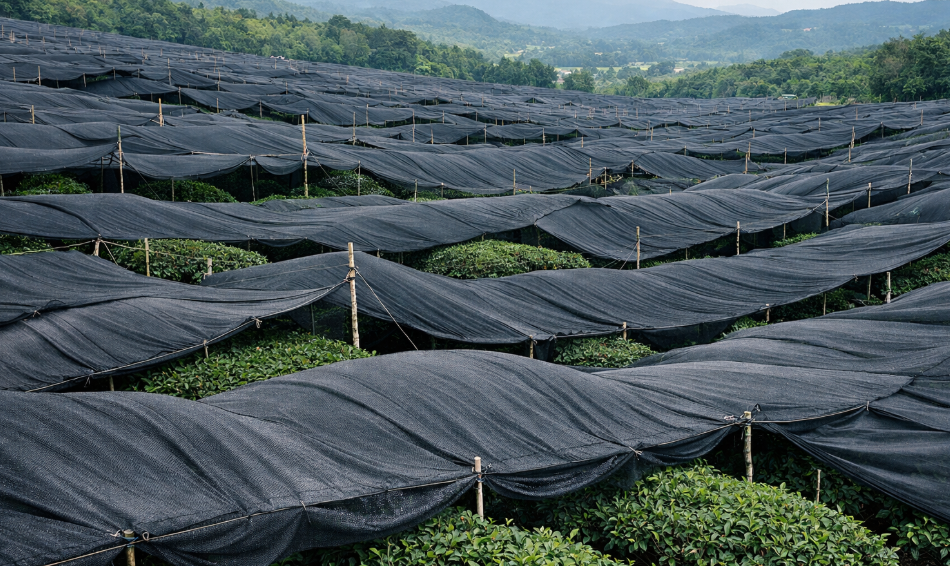
The biggest fear in bulk sourcing isn't price; it's uncontrollable risk. Many supply chain problems6 start with unstable raw materials. For example, some suppliers blend teas from many different regions. This makes the flavor and color inconsistent. It also makes it nearly impossible to trace the source if a problem occurs, like exceeding pesticide limits. I remember a client who came to us after their previous supplier couldn't explain why a batch failed a customs inspection. The supplier was buying from multiple small farms and had no real control.
This is why true source control is so important. A reliable partner should have their own stable production area or deeply tied-in tea gardens. At MatchaSourcing, we manage over 2,300 mu of our own organic tea gardens. This gives us complete control from the soil to the final product. We can provide batch-level traceability7, so you know exactly where your matcha came from and how it was grown.
Here is how a controlled source8 compares to an uncontrolled one:
| Feature | Stable Origin System | Mixed Origin System |
|---|---|---|
| Traceability | Clear, batch-level tracking from farm to you. | Opaque, difficult to trace source. |
| Consistency | Stable flavor, color, and quality. | Inconsistent quality1 batch to batch. |
| Risk Control | Proactive management of pesticides and inputs. | High risk of contamination or non-compliance. |
| Supply Stability | Reliable year-round supply. | Prone to shortages and price volatility. |
Only when the source is controllable can a supplier guarantee a stable, long-term supply for your business.
Are you using data to control matcha quality?
Judging matcha quality by eye is subjective and unreliable. One person's "bright green" is another's "dull," leading to arguments, rejected shipments, and production delays. The solution is to use objective data to define quality.
*Yes, using standardized data is the only professional way to control quality in large-scale production. Objective metrics like color value (Lab), particle size (mesh)9, and lab reports (COA) ensure every single batch meets your exact specifications.**
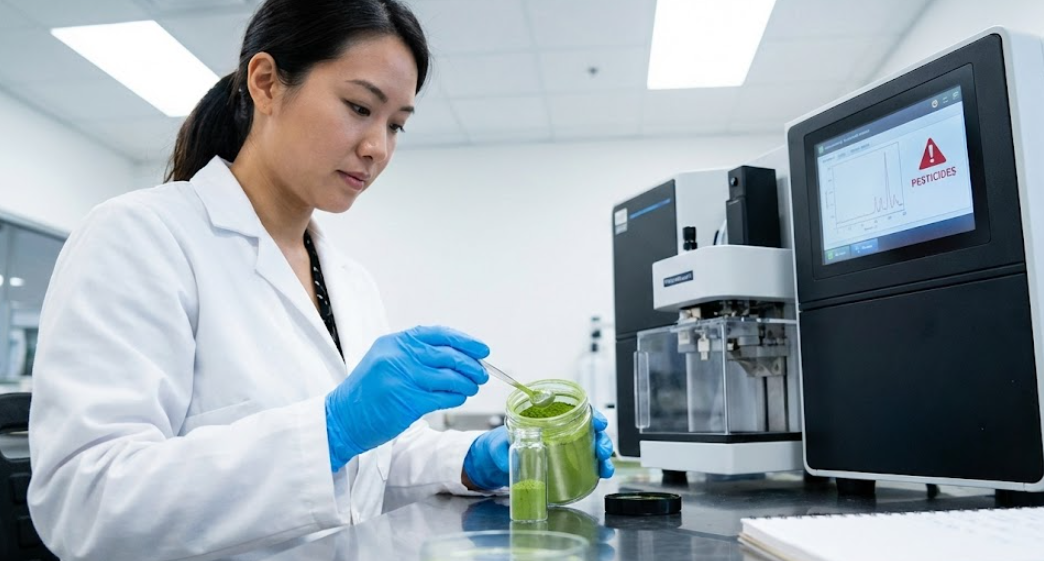
In large-scale production, relying on subjective senses is not dependable. What truly determines product stability is quantifiable data. I once worked with a beverage chain that was struggling with their matcha lattes. Their customers complained that the color was different every week. The owner was frustrated because he kept telling his supplier he wanted "vibrant green," but the result was always a surprise.
The problem was they were not speaking the same language. The real language of quality control is data. Mature suppliers use a standardized testing system to control consistency. We measure the color using a colorimeter to get a specific Lab* value10. We measure particle size to ensure the matcha dissolves perfectly in drinks or mixes smoothly into chocolate. And every batch comes with a Certificate of Analysis (COA)11 that confirms it is safe from microbes and meets pesticide regulations. If a supplier cannot provide you with stable data, they cannot guarantee stable delivery.
This is the difference between a professional and an amateur approach:
| Assessment Method | Subjective Senses | Data-Driven Control |
|---|---|---|
| Color | "It looks green." | Lab* value10 (e.g., a* = -10.5) |
| Texture | "It feels fine." | Particle Size (e.g., 1500 mesh) |
| Safety | "It seems okay." | COA with microbial & pesticide data. |
| Consistency | Unpredictable. | Measurable and repeatable. |
Using data removes guesswork and ensures your final product is exactly how you want it, every single time.
Are you choosing the right matcha for your specific product?
You used a premium, expensive ceremonial matcha in your new cookie line. But the beautiful flavor baked away, the vibrant color turned brown, and your production costs went through the roof. The solution is to choose a grade made for your exact application.
Absolutely. The "best" matcha is rarely the most expensive one; it's the most suitable one. Different applications like drinks, baking, and ceremony have completely different needs. Choosing the right application-specific grade12 optimizes both product performance and your cost structure.
"Best matcha" does not mean "most expensive matcha." This is a critical point that many new buyers miss. Different applications have very different requirements for the product. A ceremonial grade matcha13 is prized for its delicate, subtle umami flavor. It is meant to be whisked with water and enjoyed on its own. But if you put that same matcha into a cake batter and bake it at 350°F (175°C), that delicate flavor will disappear, and its bright green color will degrade. You will have paid a premium price for qualities that your application destroyed.
On the other hand, a good culinary or baking grade14 is designed for this. It might have a stronger, more assertive flavor that can stand up to other ingredients like sugar and flour. More importantly, it is processed for better heat stability to retain its green color after baking. Using the wrong grade directly hurts your product's performance and your budget. A good supplier should help you navigate these choices.
Here is a simple guide to matching grades with applications:
| Application | Key Requirement | Recommended Grade Type |
|---|---|---|
| Ceremony / Tea | Delicate umami, smooth mouthfeel. | Ceremonial Grade |
| Lattes / Drinks | Bright green color, strong flavor profile. | Latte Grade / Premium Culinary |
| Baking / Food | Good heat stability, strong color retention. | Culinary / Baking Grade |
| RTD / Industrial | High solubility, cost-effective, stable color. | Industrial Grade |
Choosing the right grade is the key to creating a successful and profitable product.
Is your matcha supplier ready for international markets?
Your exciting new matcha product is finally ready, but the first shipment is stuck at the border. The customs officers are asking for paperwork you don't have, and the certifications are not recognized. Your launch is now delayed indefinitely.
Yes, compliance is the real gatekeeper in international markets, even more than quality. A mature supplier must provide complete certifications like USDA Organic, EU Organic, and JAS. They also need a full traceability2 system and experience with audits.
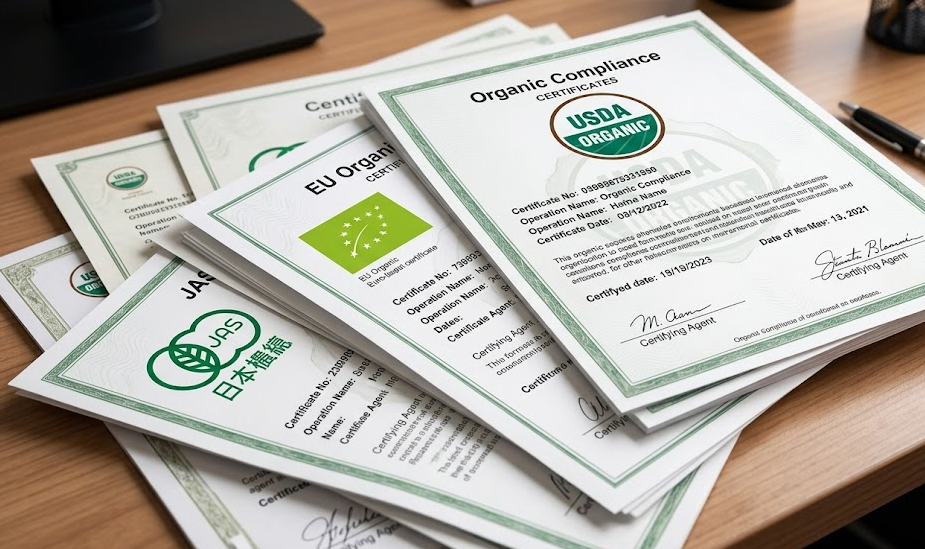
In the global market, the true barrier to entry is not quality; it is compliance. You can have the best-tasting matcha in the world, but if it cannot legally enter your target country, it is worthless to your business. A professional supplier understands this and is prepared. They should be able to provide all the necessary certifications for high-standard markets. This includes USDA Organic for the United States, EU Organic for Europe, and JAS Organic for Japan. Certifications like the Rainforest Alliance are also becoming more important to consumers.
Beyond these logos, a supplier must have the systems to back them up. This means providing a batch-level COA with every shipment, detailing pesticide tests and other safety data. It means having a complete traceability system that can be audited by you or by regulatory bodies like the FDA. I have seen companies spend months trying to get a supplier approved by their quality assurance team, only to fail because the supplier's documentation was a mess. A compliance-ready supplier makes this process smooth and fast.
Here’s what to look for:
| Feature | Compliance-Ready Supplier | Risky Supplier |
|---|---|---|
| Certifications | Has USDA, EU, JAS, Rainforest Alliance, etc. | Lacks recognized international certifications. |
| Traceability | Provides full farm-to-port documentation. | Cannot trace batches to a specific origin. |
| Testing | Proactively provides batch-level COAs. | Only provides test reports on request, if at all. |
| Audit Support | Welcomes and is prepared for factory audits. | Avoids or is unprepared for audits. |
Without strong compliance capabilities, you don't have a stable import ability. It is that simple.
Are you looking beyond the FOB price to your total cost?
You found a supplier online with a very low price per kilogram. You placed a large order, feeling great about the deal. But then came the hidden costs: expensive shipping, unexpected customs fees, and port delays that cost you weeks of sales.
Focusing only on the FOB price is a classic sourcing mistake. Your real cost is the "landed cost," which includes all expenses to get the product to your door. A great supplier helps you manage and predict this total cost.
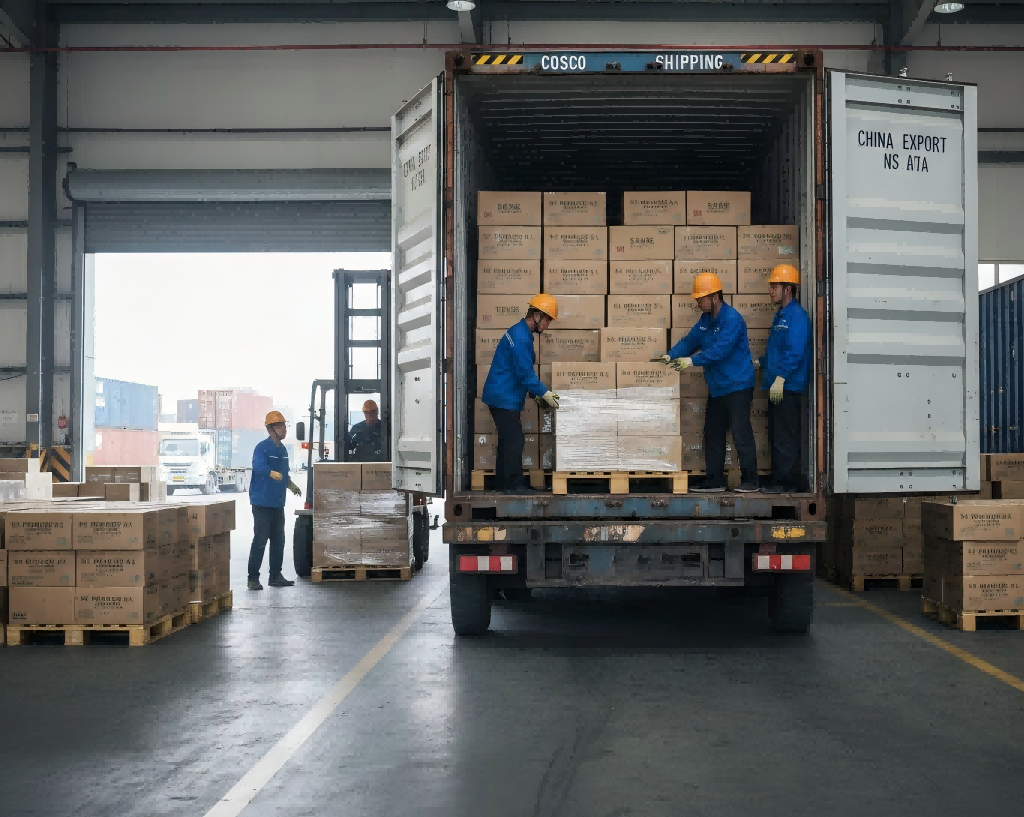
Many buyers focus only on the FOB (Free On Board) price. But a low price does not equal a low cost. The number that truly affects your profit margin is the Landed Cost. This is the total cost of the product once it has arrived at your warehouse. It includes the product price, but also all the other expenses along the way. These include international freight, insurance, customs clearance fees, import duties, taxes, and even the cost of time lost to delays.
A mature supplier doesn't just sell you a product; they provide a complete delivery solution. They can give you clear estimates for shipping, help prepare all the necessary customs documents, and manage the logistics process. Some, like us, can even offer DDP (Delivered Duty Paid) service. With DDP, we handle everything—transport, customs, and taxes. The price we quote is the final price to your door. This eliminates surprises and gives you complete cost predictability, which is essential for running a stable business.
Let's compare the two approaches:
| Sourcing Focus | FOB-Focused Sourcing | Landed Cost-Focused Sourcing |
|---|---|---|
| Price View | Focuses on price per kg at the origin port. | Focuses on total cost to your warehouse. |
| Cost Predictability | Low. Prone to hidden fees and surprises. | High. Clear, predictable final cost. |
| Risk | High. You manage all shipping and customs risk. | Low. Supplier manages logistics and reduces risk. |
| Your Time | High. You spend time managing logistics. | Low. The supplier handles the complex parts. |
Remember, a low price isn't a good deal if it comes with high risk and hidden costs. Delivery capability is key.
Conclusion
In B2B sourcing, the "best" matcha is the most stable, controllable, and safest solution for long-term, large-scale supply. It is about a reliable partnership, not just a product.
Consistent quality ensures your matcha products meet customer expectations every time, enhancing brand trust and reducing complaints. ↩
Full traceability allows you to track matcha from farm to table, ensuring safety and compliance, and building consumer trust. ↩
Understanding market compliance ensures your matcha meets international standards, preventing legal issues and ensuring smooth market entry. ↩
Predictable costs help businesses budget effectively, reducing financial risk and ensuring stable pricing for matcha products. ↩
A stable and traceable origin ensures consistent matcha quality, minimizing risks like contamination and supply shortages. ↩
Identifying supply chain issues helps prevent disruptions, ensuring consistent matcha quality and availability. ↩
Batch-level traceability ensures precise tracking of matcha, enhancing quality control and compliance. ↩
A controlled source guarantees matcha quality and safety, providing reliable supply and reducing risks associated with mixed origins. ↩
Particle size affects matcha texture and solubility, crucial for product consistency and consumer satisfaction. ↩
L*a*b* value provides precise color measurement, ensuring matcha consistency and meeting customer expectations. ↩
A COA verifies matcha safety and compliance, providing assurance of quality and meeting regulatory standards. ↩
Selecting the right matcha grade ensures optimal performance and cost-effectiveness, enhancing product quality and profitability. ↩
Ceremonial grade matcha offers delicate flavor and smooth texture, ideal for traditional tea ceremonies and premium products. ↩
Culinary grade matcha is designed for heat stability and strong flavor, perfect for baking and cooking applications. ↩