Struggling to choose a matcha supplier? A lower price seems tempting, but hidden issues can cost you more. The real challenge is finding a partner who guarantees stability for your brand.
To truly compare matcha suppliers, look beyond the FOB price1. You should evaluate their raw material control2, batch-to-batch consistency3, compliance and traceability systems4, and their ability to manage the total landed cost5. These factors determine long-term stability and protect your business from expensive supply chain failures.
I often hear from buyers in international sourcing, "This other supplier's FOB quote is $1 lower. Can you match it?" It sounds like smart negotiating. But in many cases, what gets ignored isn't the price, but the risk. For a growing beverage brand or food factory, focusing only on the factory price misses the bigger picture. When your business is small, a supply chain problem is just an annoyance. But when you need to support hundreds of stores or daily mass production, the difference between suppliers is no longer about a few dollars per kilo. It’s about whether your supplier can deliver consistently, pass audits, and get your product to your warehouse without issues. That's why professional sourcing looks deeper.
When comparing matcha suppliers, buyers should review MOQ, packaging, COA, export documents and repeat supply capability. See our bulk matcha supplier page for industrial purchasing details.
For cafés, distributors and resale channels, see our wholesale matcha powder page.
Do They Control Their Raw Materials, or Just Buy from the Market?
You receive a beautiful matcha sample with an attractive price. But when you ask about the bulk order's origin or consistency, the supplier gets vague. They are likely a trading company6.
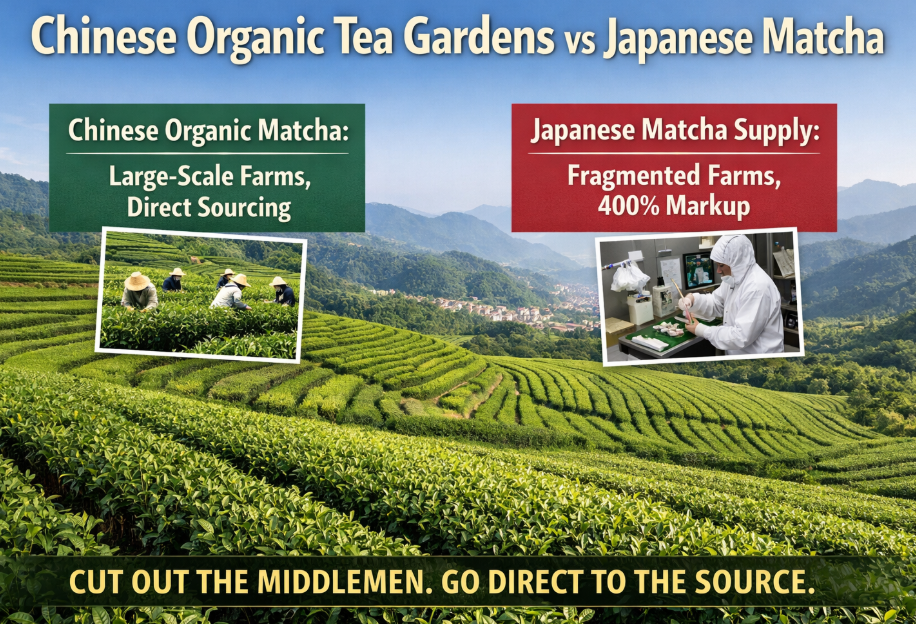
A reliable supplier has direct control over their tea gardens, ensuring consistent quality and full traceability from the source. This is far better than suppliers who simply buy from the open market, as it guarantees that what you sample is what you get in every order.
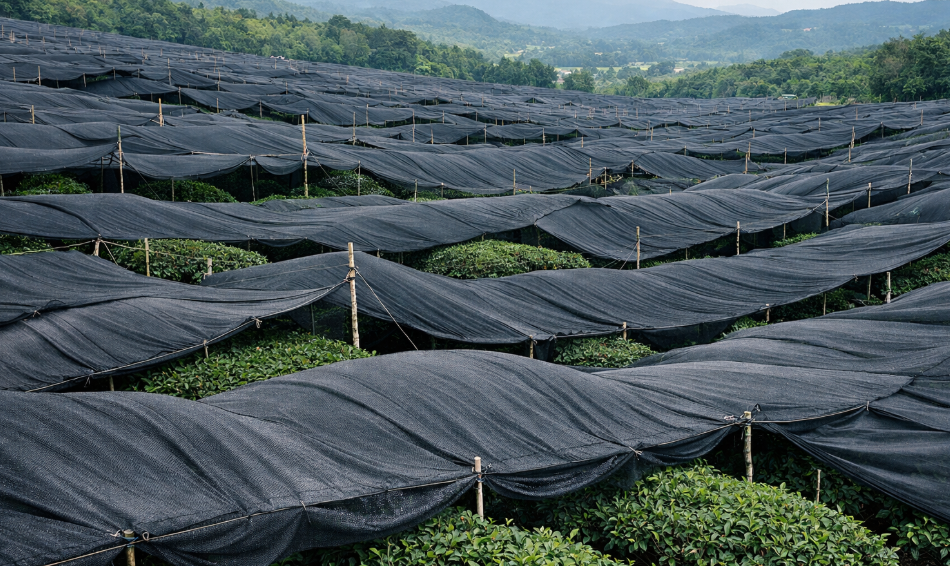
I’ve seen it happen many times. A supplier shows off a great sample, but they can't clearly explain where the tea for a large order will come from. The reason is simple: they are often traders who buy from different farms with different standards. They can deliver a single order, but they can't promise long-term consistency. For large-scale procurement, you need to know if the supplier truly controls their upstream raw materials. A more dependable model includes having their own tea gardens or deep partnerships with specific farms. This is what allows for strict management of batches, physical separation to avoid cross-contamination, and a robust traceability system.
How to Tell a Trader from an Integrated Supplier
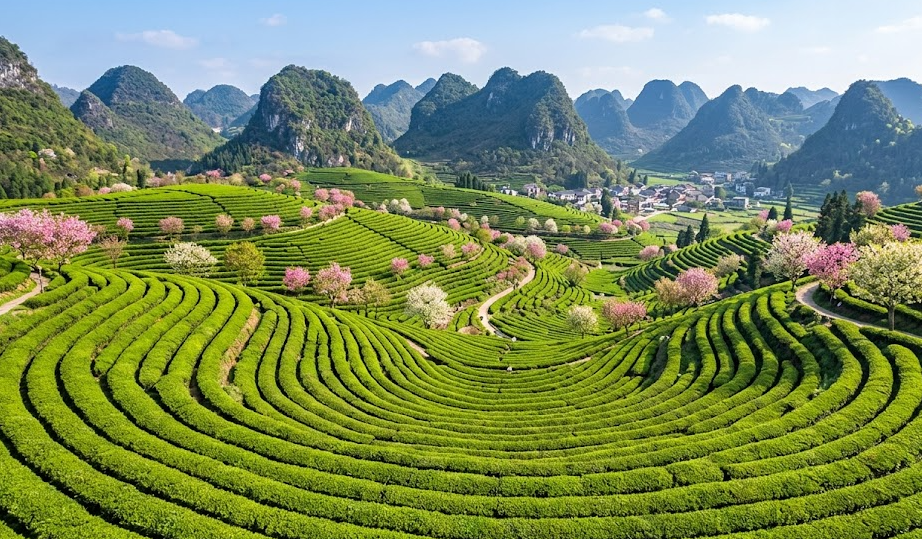
At MatchaSourcing.com, we manage over 2,300 acres of high-altitude organic tea gardens7 in Guizhou. This centralized model gives us better control over soil, water, shading, and harvesting. It's the foundation that allows us to meet the strict pesticide, traceability, and organic requirements of markets in Europe and the US.
| Feature | Market Trader | Integrated Supplier |
|---|---|---|
| Source | Buys from various farms | Own or partnered tea gardens |
| Consistency | Low; quality varies by batch | High; controlled from the start |
| Traceability | Difficult to verify | Clear, batch-level records |
| Risk | High risk of inconsistency | Low risk; managed process |
When you talk to a potential supplier, ask them directly:
- Are your raw materials from your own gardens, partner farms, or the open market?
- Can you keep a single order within the same farm region and batch?
- Can you provide clear traceability information for planting and harvesting?
- What specific measures do you take to control for organic and pesticide risks?
Is Their Quality Based on Data or Just a 'Good Guess'?
Your latest matcha batch looks and tastes different from the last one. This inconsistency throws off your recipes and disappoints customers, damaging your brand’s reputation. You need data-driven quality control8.
True batch consistency comes from data, not just experience. Look for suppliers who provide key metrics like color values (Lab*), particle size (mesh), and moisture content9 for every batch. This is the only way to ensure your product remains the same every time.
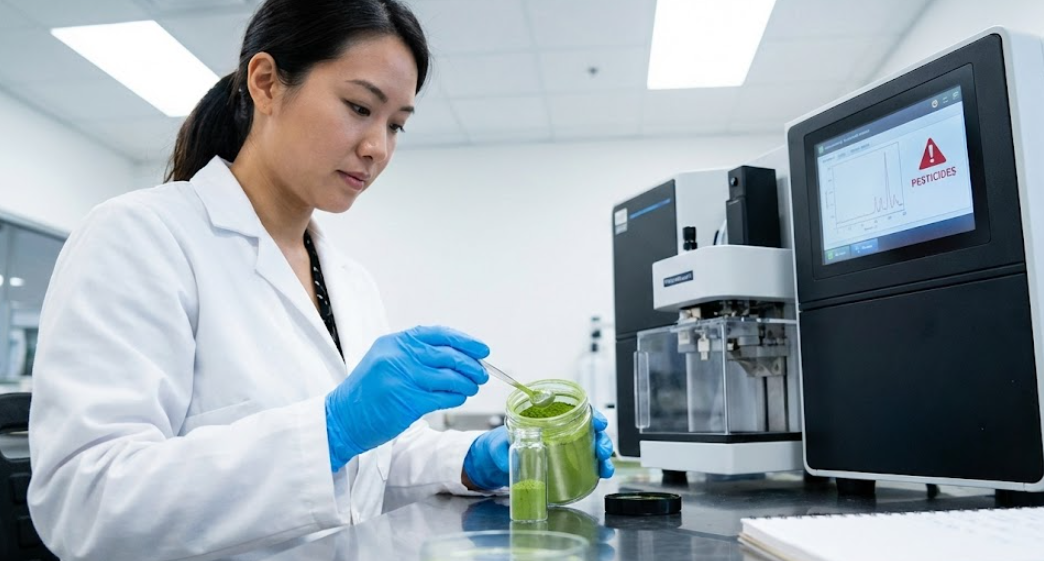
In retail and industrial applications, the biggest fear isn't one "bad" batch, but that every batch is different. One powder might be bright green, the next yellowish. One tastes smooth, the next is bitter. For cafe chains, packaged foods, or RTD beverages, this fluctuation directly impacts your product standards and customer loyalty. When evaluating a supplier, don't just look at the sample. You need to know if they can replicate that quality consistently. A mature supplier doesn't rely on "an expert's eye." They use a standardized data system to back up their deliveries.
Key Data Points for Consistency
At MatchaSourcing.com, our system is built on 11 continuous production lines, a Class 100,000 cleanroom, and superfine milling equipment. For our large-volume clients, this means we can maintain consistency in color, fineness, and performance at scale. It’s not just about producing fast; it’s about producing right, every time.
| Metric | What It Measures | Why It Matters for You |
|---|---|---|
| *[Lab Value](https://matchasourcing.com/how-do-you-source-bulk-organic-matcha-without-losing-millions/)%%%FOOTNOTE_REF_10%%%** | Color: Lightness, Greenness, Yellowness | Ensures your drink or food product always has the same vibrant green look. |
| Mesh Size | Particle Fineness | Affects mouthfeel, suspension in liquids, and texture in baked goods. |
| Moisture/Ash | Purity and Shelf Life | Basic quality indicators that affect stability and safety. |
| Microbiology | Bacteria Count | Critical for food safety and meeting regulatory standards. |
When sourcing, be sure to confirm:
- Can you provide key chemical and physical data for each batch?
- Do you have clear standards for batch-to-batch consistency3?
- How do you manage variations in powder fineness, color, and flavor?
- Can you maintain performance close to the sample when scaling up to a large order?
Do They Have a Certificate or a Complete Data Chain?
Your supplier has an organic certificate, which seems great. But then your shipment gets stuck at customs because of missing batch-specific documents, costing you valuable time and money.
A single certificate is not enough for international trade. A trustworthy supplier provides a complete data chain for every shipment, including batch-specific Certificates of Analysis (COA), traceability records11, and all necessary import documents. This ensures smooth customs clearance and audit readiness.
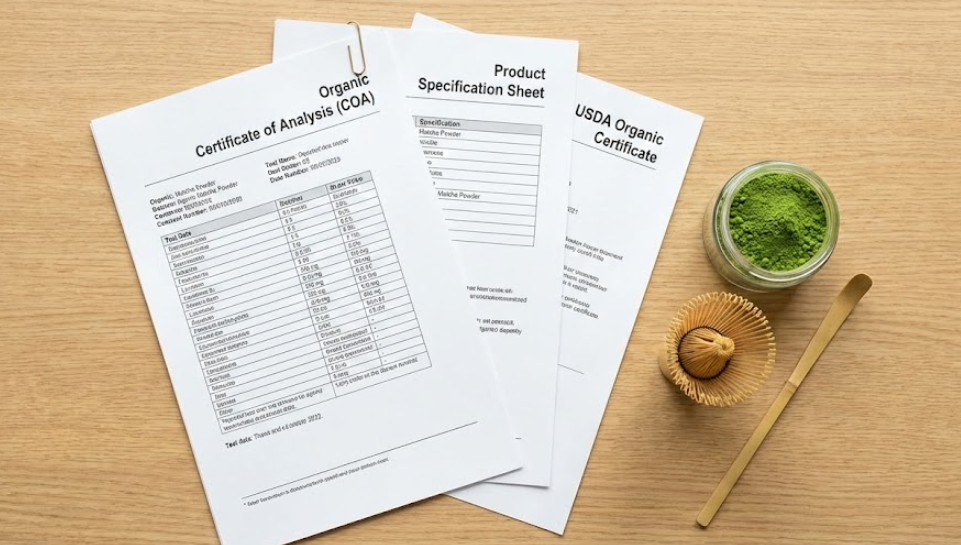
In my experience with global sourcing, many problems don't happen in the factory. They happen at the port, in the warehouse, or during a customer audit. Some suppliers can show you a certificate or two, but when it's time for batch verification or a third-party inspection, their paperwork is incomplete. When that happens, the risk falls entirely on you, the buyer. That's why you should ask not just "Do you have certificates?" but "Can you provide a complete, verifiable, and traceable set of compliance documents for every single batch?"
When comparing matcha suppliers, buyers should review MOQ, packaging, COA, export documents and repeat supply capability. See our bulk matcha supplier page for industrial purchasing details.
The Compliance Checklist for Global Sourcing
For an export-focused matcha supplier, a convincing system includes more than just a piece of paper. It's a full package of data that works together. This is what you should be looking for:
- International Certifications: USDA Organic12, EU Organic, JAS Organic, Rainforest Alliance.
- Third-Party Reports: A Certificate of Analysis (COA)13 for each specific batch.
- Safety Testing: Reports for heavy metals, microbes, and pesticide residues.
- Traceability Records: A clear trail from the farm to the final package.
When we work with overseas clients at MatchaSourcing.com, our focus is on delivering the product and the documentation at the same time. For a brand that operates at scale, a supplier delivers more than just raw material. They deliver a data chain that supports your procurement, legal, QA, and import teams.
Before you commit, ask for:
- A list of their current, valid certifications.
- A sample of a third-party COA.
- An example of their batch traceability records11.
- Reports related to heavy metals, microbes, and pesticides.
- An explanation of their export experience with the US, EU, or Japanese markets.
Are You Comparing FOB Price or Total Landed Cost?
A supplier's FOB price1 is $1 cheaper, and it looks like a great deal. But then you're left to handle expensive shipping, customs headaches, and unexpected delays, erasing any initial savings.
The FOB price1 is only part of the story. The true expense is the "landed cost"—the total amount it takes to get the matcha from their factory to your warehouse. This includes shipping, insurance, duties, and customs fees. A supplier offering DDP (Delivered Duty Paid) service provides far better cost control.
Many suppliers offer a "cheap" quote because they are only quoting EXW (Ex Works) or FOB (Free On Board). This doesn't mean your overall procurement cost is lower. It just means they are leaving the rest of the costs and risks for you to manage. The factors that truly affect your bottom line are often hidden: fluctuating international freight rates14, customs clearance efficiency15, delays from incorrect paperwork, and surprise fees at the destination port. So, what large customers should be comparing is not a list of FOB price1s, but the final, predictable cost to get the goods into their warehouse.
For cafés, distributors and resale channels, see our wholesale matcha powder page.
Calculating Your True Landed Cost
This is why more buyers are prioritizing suppliers who can offer DDP door-to-door delivery and understand international logistics. When your supplier has this capability, the hidden costs on your procurement, operations, and finance teams go down significantly.
| Cost Component | "Low" FOB Offer | All-Inclusive DDP Offer |
|---|---|---|
| Product Cost | Lower | Included |
| International Freight | Your responsibility, variable | Included, fixed |
| Insurance | Your responsibility | Included |
| Customs & Duties | Your responsibility, complex | Included |
| Port Fees | Your responsibility, unpredictable | Included |
| Risk of Delay | High, your problem | Low, supplier's problem |
At MatchaSourcing.com, we do more than just supply the product. We help our clients find the best delivery solutions, which includes preparing documents and coordinating logistics. For customers who need stable inventory and long-term planning, this is much more valuable than just a low FOB price1.
Make sure to ask your potential supplier:
- Do you support DDP or other door-to-door solutions?
- Are you familiar with the customs requirements for my target market?
- Do you have experience handling export documentation16?
- Who is responsible for managing delays, inspections, or requests for more documents?
Conclusion
In bulk matcha sourcing, stability is more valuable than a low price. A true partner manages your supply chain risks17, ensuring consistency, compliance, and predictable costs for your business.
When comparing matcha suppliers, buyers should review MOQ, packaging, COA, export documents and repeat supply capability. See our bulk matcha supplier page for industrial purchasing details.
For cafés, distributors and resale channels, see our wholesale matcha powder page.
Understanding FOB price helps you evaluate initial costs, but exploring total landed cost is crucial for accurate budgeting. ↩
Raw material control ensures consistent quality and traceability, protecting your brand from supply chain failures. ↩
Batch-to-batch consistency is vital for maintaining product quality and customer satisfaction, especially in large-scale production. ↩
These systems ensure that your matcha meets international standards, reducing risks during audits and customs clearance. ↩
Total landed cost includes all expenses from production to delivery, helping you avoid hidden costs and manage your budget effectively. ↩
Trading companies may lack control over raw materials, leading to inconsistent quality and potential supply chain disruptions. ↩
Organic tea gardens ensure high-quality matcha with strict pesticide and traceability standards, appealing to health-conscious consumers. ↩
Data-driven quality control provides measurable metrics for consistency, ensuring your matcha meets customer expectations every time. ↩
Moisture content affects matcha's shelf life and stability, ensuring product safety and quality over time. ↩
L*a*b* Value measures color consistency, crucial for maintaining the visual appeal of your matcha products. ↩
Traceability records offer a clear trail from farm to package, ensuring transparency and reducing risks in international trade. ↩
USDA Organic certification assures consumers of high-quality, pesticide-free matcha, enhancing brand trust and marketability. ↩
A COA provides batch-specific data, ensuring compliance and quality assurance during audits and customs processes. ↩
Fluctuating freight rates can affect your budget, making it essential to consider them in total landed cost calculations. ↩
Efficient customs clearance prevents delays and additional costs, ensuring timely delivery and smooth international trade. ↩
Proper export documentation ensures compliance and smooth customs processes, reducing risks and delays in international shipments. ↩
Managing supply chain risks ensures consistent delivery and quality, protecting your brand from costly disruptions and failures. ↩