
Your premium matcha is losing its color and flavor1. It degrades during shipping and storage, costing you money and reputation. Proper packaging2 is the essential, often overlooked, solution.
The best packaging depends on your sales channel. For foodservice, prioritize high-barrier, large-format bags3. For retail, balance shelf appeal with resealable, protective containers like tins or stand-up pouches to ensure long-term quality for the end consumer.
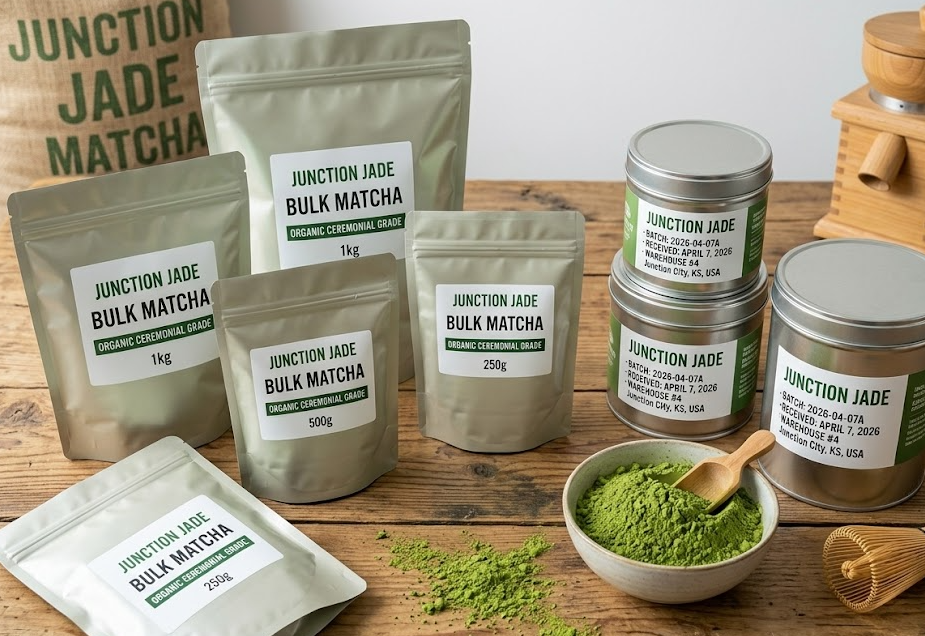
In my years in international bulk trade, I've seen procurement teams spend all their energy on selecting the perfect color, aroma, and taste. Then, they pay a high price for mistakes made on the final step: packaging selection. The reason is simple. Matcha isn't a stable ingredient; it's a fine powder that is extremely sensitive to its environment4. It naturally fears light, oxygen, high temperatures, and humidity. For businesses dealing with international shipping, long-chain warehousing, and multiple repackaging steps, packaging is never just a container. It is the first industrial line of defense5 for quality.
How Should You Package Matcha for Foodservice and Industrial Use?
Foodservice needs consistent quality, but costs are always tight. Standard packaging fails to protect matcha from degrading, which leads to waste. High-barrier, bulk formats are the answer.
Prioritize large, high-barrier foil bags (1-5kg) with nitrogen flushing6 to block light, oxygen, and moisture. For even larger volumes, consider 20-25kg bulk drums with foil liners to lower the cost per serving and streamline production.
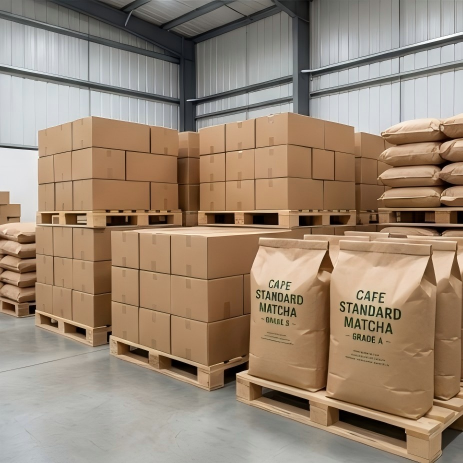
For a high-volume chain café, a bakery factory, or a ready-to-drink (RTD) production line, the packaging focus is not on display. It's about higher barrier performance, lower unit cost, and greater operational efficiency. Matcha's chlorophyll is very sensitive to light, so blocking it is a basic requirement. We must avoid transparent materials, even small windows, as they can compromise long-term stability. This is where we see two primary solutions emerge.
Key Packaging Formats for Foodservice
| Packaging Type | Best For | Key Features & Benefits |
|---|---|---|
| 1kg–5kg High-Barrier Foil Bags | Cafés, bakeries, medium-scale food manufacturers | Protection: The multi-layer foil structure effectively blocks light, water vapor, and oxygen. Freshness: Nitrogen flushing before sealing displaces oxygen, slowing oxidation and preserving color and aroma for when the bag is opened after long-distance shipping. |
| 20kg/25kg Bulk Drums | Large-scale food production, RTD beverage plants | Cost-Effectiveness: Significantly lowers the packaging cost per kilogram. Efficiency: Cardboard drums with a moisture-proof aluminum foil liner are easy to handle and ideal for adding large quantities directly into industrial mixers or production lines. |
Choosing between these comes down to your operational scale and how you manage cost per serving.
What's the Best Matcha Packaging for Retail Customers?
Retail matcha often disappoints customers by losing freshness after just a few uses. Your brand's reputation is at stake. The solution is to balance aesthetics with long-term preservation.
For retail, you need to balance user experience with preservation. Opaque tin cans offer a premium feel and good protection. High-barrier stand-up pouches with quality zip-locks offer a more lightweight, e-commerce-friendly alternative. Resealability is always key.
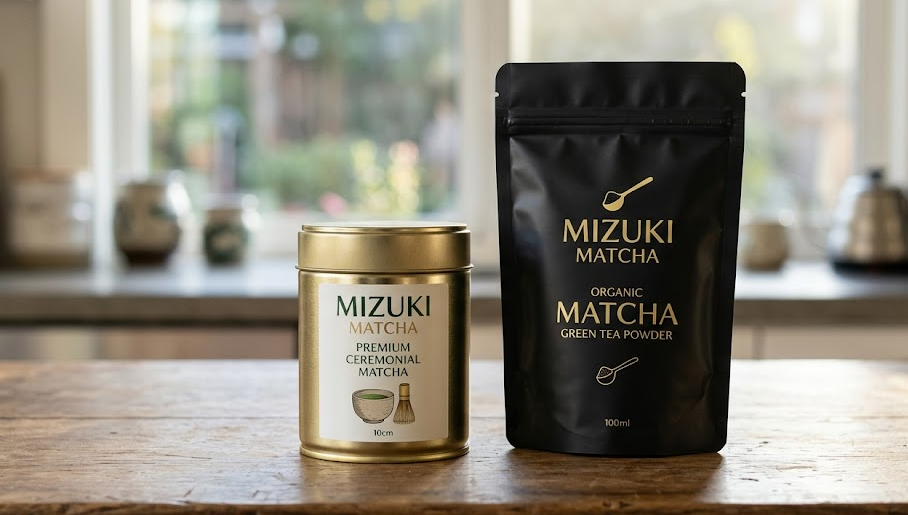
When matcha is sold directly to consumers, the packaging logic changes. Retail products are often opened and closed repeatedly over a long period. The consumer's storage environment is also much harder to control. Here, packaging must not only look good on the shelf but also perform well after the first opening.
For a new brand, the path to market is often through a partner. Building your own sterile packing facility, buying equipment, and developing compliant procedures means high upfront investment and complex operations. A more efficient way is to outsource the packing, nitrogen flushing6, labeling, and finished packaging to a supply chain partner with a mature production line. In this OEM/Private Label model, you can focus your resources on channel development, brand marketing, and customer growth. It allows you to leverage a source factory to handle:
- Compliant portioning and filling
- Nitrogen flushing for preservation
- Multiple packaging formats
- Private Label customization7
- Outer carton and retail label management8
This is a core strategy for many overseas brands to maintain a lean, asset-light operation.
Is Your Matcha Packaging Compliant for International Shipping?
Your shipment is stuck in customs. The labels are all wrong, and every day of delay costs your business money. This common nightmare can be avoided with proper label management8 from the start.
Many international shipments fail because of incorrect labeling, not poor product quality. You must ensure your packaging complies with destination market regulations (e.g., FDA, EU), including origin, batch codes, certifications, and net weight. This is non-negotiable for smooth customs clearance.
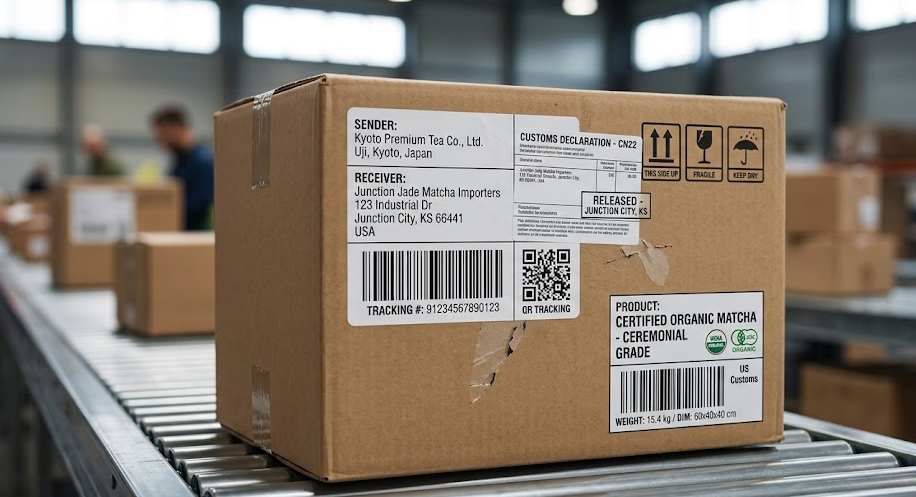
In my export business experience, many projects fail not because of the product itself, but because of packaging marks and label compliance. This is especially true in European and American markets. Regulators like the FDA and EU have clear requirements for food labels, origin information, batch traceability, organic certification marks, and ingredient declarations. If an outer carton or retail label is missing key information, the best-case scenario is a customs delay. The worst-case scenario is that the goods are detained, which directly impacts warehousing, stocking, and sales schedules.
A mature packaging solution, therefore, should not only focus on what to "pack in" but must also clearly define what to "print on," how to print it, and whether it meets the requirements of the destination country. A more complete delivery logic usually includes:
- Origin Identification: "Product of China"
- Batch and Traceability Codes9: For tracking and recalls.
- Organic Certification Information10: Logos and certifier codes (e.g., EU Organic, JAS).
- Ingredient and Net Weight Declaration: Clear and accurate information.
- Outer Carton Shipping Marks: For logistics and handling.
- Label Review for Destination Country Regulations: A final check for compliance.
When this work is handled systematically before the product leaves the factory, the predictability of cross-border delivery increases significantly.
Conclusion
In the bulk matcha business, your ingredients determine the product's upper limit, but the packaging determines if that product can safely reach the market and your customers.
Understanding why matcha loses its color and flavor can help you choose the right packaging to maintain its quality. ↩
Proper packaging is crucial for preserving matcha's quality, preventing degradation, and maintaining your brand's reputation. ↩
High-barrier, large-format bags are essential for protecting matcha from environmental factors that cause degradation. ↩
Knowing how matcha is sensitive to its environment helps in selecting the right packaging to preserve its quality. ↩
Packaging acts as the first line of defense against environmental factors that can degrade matcha during shipping and storage. ↩
Nitrogen flushing is a technique used to preserve matcha by displacing oxygen, which helps maintain its freshness and quality. ↩
Private Label customization allows brands to focus on marketing and growth while outsourcing packaging and labeling. ↩
Proper label management ensures compliance with international regulations, preventing costly shipping delays. ↩
Batch and Traceability Codes are essential for tracking and recalling products, ensuring safety and compliance. ↩
Organic Certification Information builds consumer trust and ensures compliance with organic standards in various markets. ↩