Are you buying bulk matcha by just comparing the price per kilo? This approach often hides bigger risks and costs that can hurt your business down the line.
For any B2B buyer, the best matcha is one that offers stable quality1, meets compliance standards2, fits your specific product, and can be supplied consistently. A cheap price means nothing if the powder fails in any of these areas. Let's explore what truly matters.
Finding the right matcha supplier is not about getting the lowest quote. It's about finding a partner who can help your business grow. A reliable supply chain3 is the foundation of a successful product line. Before you place your next large order, I want to share five key questions that every professional buyer should ask. Answering them will save you time, money, and a lot of headaches.
Should You Focus on 'Grade' or Your Product's Application?
You see terms like "ceremonial" or "culinary" everywhere. But these marketing labels can be misleading and inconsistent from one supplier to another, causing confusion when you need reliability.
Instead of asking for a specific "grade," you should focus on finding a matcha that performs perfectly in your final product. The right matcha for a latte is very different from the right matcha for baking a cake or making ice cream.
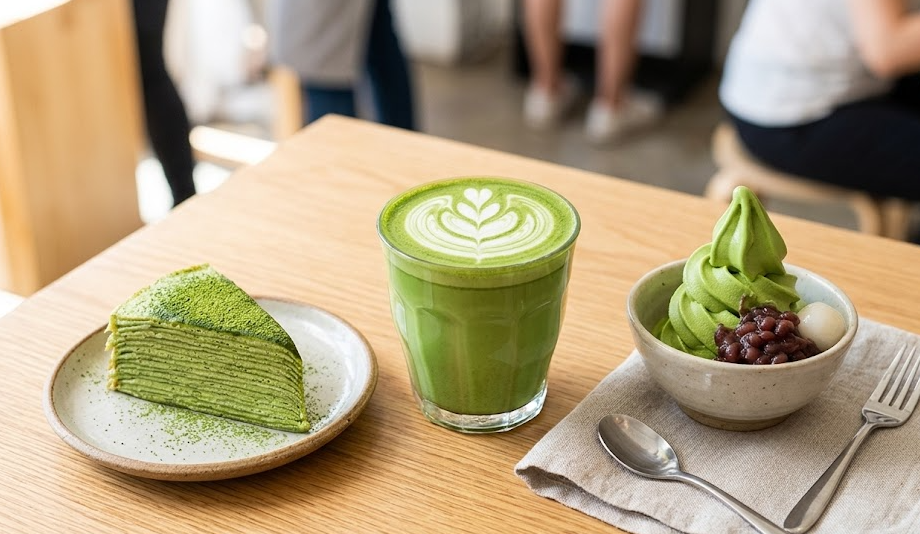
Many suppliers use vague grading terms like "Ceremonial," "Premium," "Café," or "Ingredient" grade. These terms are not standardized across the industry. What one company calls "ceremonial" might be another's "premium." For a B2B customer, this lack of clarity is a big problem. You need precise specifications, not just a nice-sounding name. The most important question is: "Is this matcha right for my specific use case?"
For example, I once worked with a beverage company that wanted "the highest ceremonial grade4" for their new RTD drink. The sample was beautiful, but it performed poorly during processing. The flavor became weak, and it didn't stay suspended. We switched them to a dedicated industrial-grade matcha5. It was less expensive but specifically designed for stability and flavor retention in liquids. Their production issues disappeared.
Key Questions for Different Applications
| Application | Key Performance Indicators to Check |
|---|---|
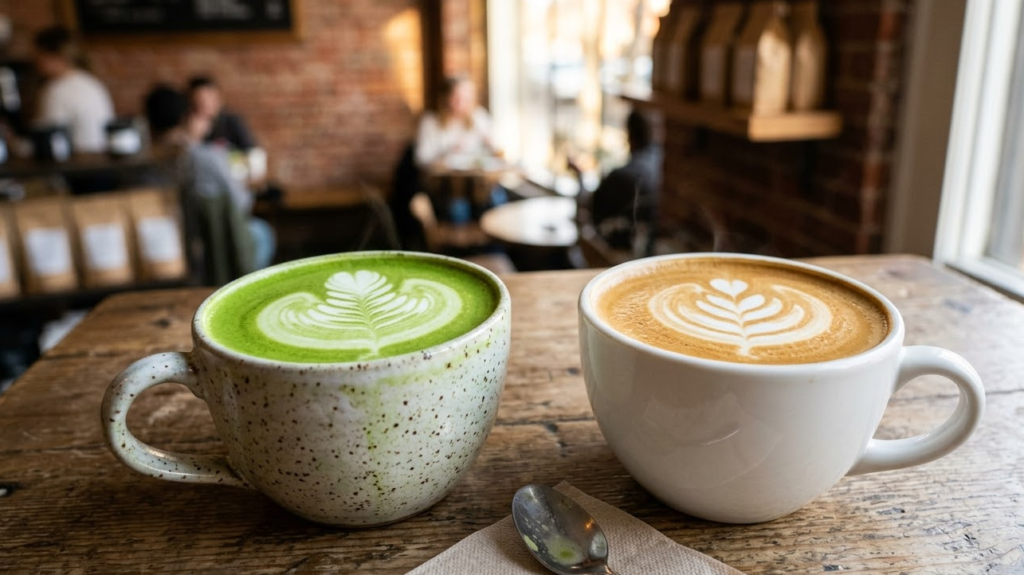
| Lattes & Café Drinks | Bright green color, strong tea flavor in milk, balanced bitterness, smooth mouthfeel. |
| RTD Beverages | Good dispersibility, stability over time, flavor retention after processing. |
| Baking & Ice Cream | Strong color retention after heating, compatibility with sugar and fats, cost-effectiveness. |
| Chocolates & Snacks | Fine particle size6, intense flavor profile to stand out, low moisture content. |
Instead of asking, "Is this ceremonial grade4?" you should ask better questions. "How does this matcha perform in oat milk?" "Does its color and aroma remain stable after processing?" "Do you have a specific SKU for industrial beverage formulas?" A good supplier will understand these needs and guide you to a product that works, not just one with a fancy name.
Is a Beautiful Sample More Important Than Batch Consistency?
You received a perfect matcha sample. The color is vibrant, the aroma is fresh, and it tastes great. But then your first bulk order arrives, and it's completely different.
A great sample means nothing if the supplier cannot reproduce it consistently across large orders. For any brand that relies on repeat customers, batch-to-batch consistency7 in color, particle size6, and flavor is far more important than a single impressive sample.
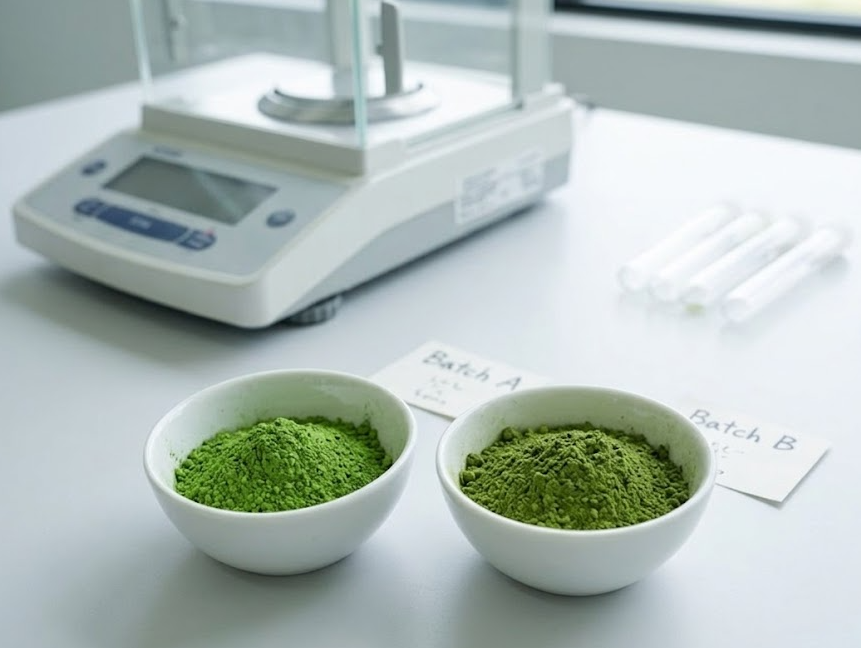
Matcha is a natural agricultural product, so some variation is normal. Organic matcha can be even more variable due to natural growing conditions. However, a professional supplier must have strong quality control systems to minimize these differences. Without standardized production, a great sample is often just a lucky batch, not a reliable standard. For B2B buyers, predictability is everything. Your customers expect your matcha latte or matcha cake to look and taste the same every time they buy it.
I've seen many clients come to us after being burned by inconsistent suppliers. They built a product around a fantastic sample, only to find their bulk orders were duller in color or more bitter. This forces them to constantly adjust their recipes, which is a nightmare for large-scale production.
How to Verify Consistency
A reliable supplier should be able to guarantee consistency through objective data and clear processes. Here is what you should ask about:
- Color Control: Do you use a colorimeter to measure Lab values? Consistent color is often the first thing a customer notices. Having a specific data range (e.g., L > 60, a* < -8) is much better than just saying "vibrant green."
- Particle Size: Do you test for particle size6, mesh, or micron fineness? This directly impacts mouthfeel in drinks and texture in foods. A powder that is too coarse can feel gritty.
- Flavor Stability: Do you have an internal tasting panel or system for comparing new batches to a standard? Flavor profiles should remain consistent.
- Retain Samples: Do you keep retain samples from every batch? This allows you to compare a new shipment to the original sample you approved.
For any business that relies on repeat purchases, consistency is not a luxury; it is a necessity. It is always better to have a reliably good product than an occasionally amazing one.
Are Your Supplier's Compliance Documents Ready for Your Market?
You found a supplier with good matcha at a great price. But can they provide the documents you need to legally import and sell it in your target market, like the US, EU, or Japan?
If you are buying matcha for export, compliance and documentation are more important than price. Without the correct certifications and test reports, your shipment could be delayed, rejected at customs, or fail a client's audit, costing you far more than you saved.
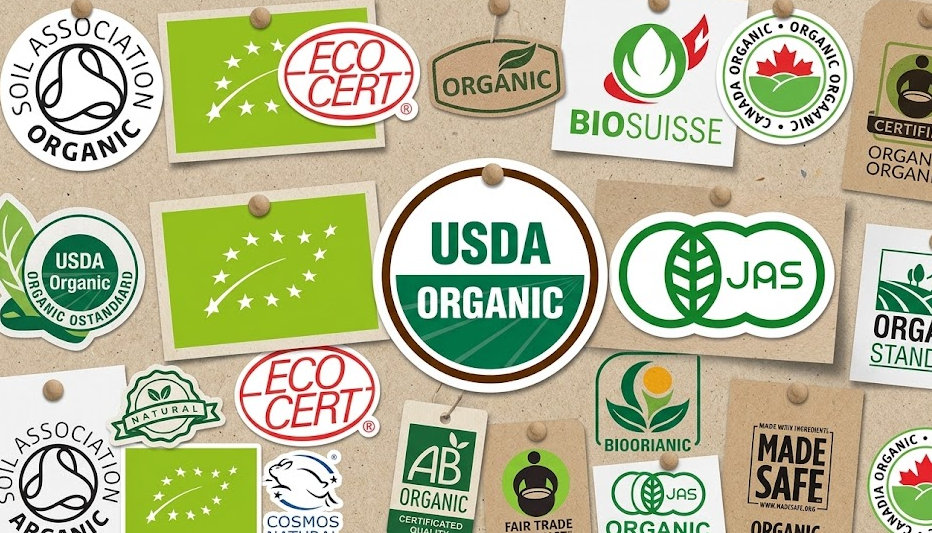
Selling a product internationally requires navigating a complex web of regulations. Each market has its own rules for food safety, organic standards, and labeling. A supplier might have an "organic certificate," but is it the one recognized in your country? For example, a product certified organic in China is not automatically considered organic in the European Union or the United States. You need a supplier who holds the specific certifications for your market, such as USDA Organic, EU Organic, or JAS (Japanese Agricultural Standard).
Many buyers learn this lesson the hard way. I remember a client who bought a large shipment from a supplier who claimed to be "organic." When the goods arrived at the port, customs officials rejected them because the supplier's certification wasn't recognized by the USDA. The entire shipment was lost.
The Essential Compliance Checklist
Before committing to a supplier, make sure they can provide a complete and accurate set of documents for every batch.
| Document Type | Why It's Important |
|---|---|
| Organic Certificates (USDA, EU, JAS) | Proves the product meets the strict standards of your target market. |
| Certificate of Analysis (COA)8 | Confirms the physical and chemical properties of the specific batch. |
| Pesticide & Heavy Metal Reports | Ensures the product is safe and meets legal limits for contaminants. |
| Microbiological Reports | Verifies the product is free from harmful bacteria like E. coli and Salmonella. |
| Full Traceability Records | Allows you to track the product from the tea garden to your warehouse, which is crucial for audits. |
A truly experienced global supplier doesn't just sell you matcha; they help you get it into your market smoothly. During your inquiry, ask direct questions: "Which export markets do you have experience with?" "Can you provide a full set of documents for each batch, or just a general template?" "Do you support customer factory audits?" This initial due diligence can prevent major problems later on.
Should You Compare FOB Prices or Total Landed Costs?
Many new buyers focus heavily on the FOB (Free On Board) or EXW (Ex Works) price. A low factory price looks attractive, but it's only a small part of the total cost.
The real number that affects your profit margin is the final landed cost. This is the total expense to get the matcha from the supplier's factory to your warehouse, including shipping, insurance, customs, duties, and other fees.
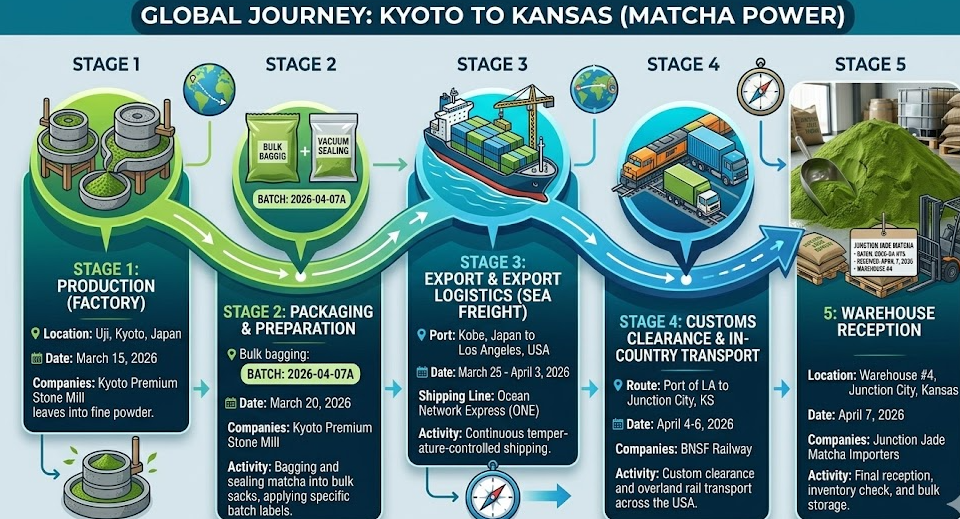
When you get a quote, it's crucial to understand which Incoterms it's based on. An EXW price means you are responsible for everything, including picking it up from their factory. A FOB price means the supplier gets it to the port of origin. But what about the ocean freight, insurance, customs clearance at your end, and local delivery? These costs can add up significantly. A supplier offering a very low FOB price might not be competitive once you calculate the full cost.
I often advise new importers to think about the entire journey. A few years ago, a small brand was excited about a very cheap FOB price from a new supplier. However, that supplier had no export experience. They couldn't help with freight booking, provided incorrect documents, and caused a two-week delay at the port. The brand ended up paying huge demurrage and storage fees, which completely wiped out their initial savings.
Breaking Down Your Total Landed Cost
A smart B2B buyer looks beyond the per-kilo price. You need to account for all the hidden expenses.
- Product Cost (FOB/EXW): The base price of the matcha.
- International Freight: The cost of sea or air shipping.
- Insurance: To protect your goods during transit.
- Customs Clearance: Fees paid to a broker to handle import paperwork.
- Duties and Taxes: Tariffs and taxes imposed by your country.
- Port Fees: Charges for handling and storage at the destination port.
- Inland Transportation: The cost to move the goods from the port to your final warehouse.
When you ask for a quote, don't just ask, "How much per kilo?" Instead, ask: "What are the Incoterms?" "What is your minimum order quantity?" "Can you provide a quote for DDP (Delivered Duty Paid) or help me estimate the shipping costs to my port?" A supplier who can help you calculate your total landed cost9 is a much more valuable partner.
Is Your Supplier a Partner for Growth or Just a One-Time Vendor?
Your first order of matcha might be small. But what happens when your product takes off and your demand suddenly doubles or triples? Can your supplier keep up?
A good supplier doesn't just sell you a product; they provide the capacity, flexibility, and support to grow with you. You should be choosing a long-term supply partner10, not just a vendor for a single transaction.

Many sourcing problems don't appear on the first order. They show up when you start to scale. I've seen businesses struggle with suppliers who could handle small trial orders but failed when it came to consistent, large-volume production. Common issues include sudden stockouts during peak season, long delays in lead times, or an inability to accommodate custom requests.
A true supply partner is invested in your success. They should have the infrastructure and processes to support you as you grow. For instance, if you want to launch a new product line, can they offer OEM/ODM services11 like custom blending or private label packaging? If you have a technical question about how the matcha will behave in a new recipe, do they have the expertise to help? This level of support is what separates a simple vendor from a strategic partner.
Questions to Ask a Potential Long-Term Partner
When evaluating a supplier, think about your future needs, not just your current ones.
- Production Capacity: What is your annual production capacity12? How do you ensure supply for regular clients during peak harvest seasons?
- Scalability: Can you handle orders that are ten times larger than my initial one? What is your lead time for large orders?
- Flexibility: Do you support OEM/ODM projects or custom packaging? Can you recommend different matcha specifications based on my application needs?
- Support: Do you have a dedicated team for international clients13? Who is my point of contact for technical support and logistics?
If your goal is to build a sustainable matcha business, you need a supplier with stable production, clear communication, and the ability to adapt to your needs. You are choosing a partner who will be a key part of your business for years to come.
Conclusion
Buying bulk matcha is about choosing a supply system14, not just a product. A reliable partner will help you with product suitability, batch stability, compliance, cost calculation, and long-term supply.
Stable quality ensures your matcha products consistently meet customer expectations, enhancing brand reputation and customer loyalty. ↩
Compliance standards ensure your matcha meets legal requirements, preventing costly delays or rejections during import and sales. ↩
A reliable supply chain guarantees consistent delivery, minimizing disruptions and ensuring your business can meet customer demand. ↩
Understanding ceremonial grade matcha helps you choose the right product for specific applications, avoiding misleading marketing labels. ↩
Industrial-grade matcha is designed for stability and flavor retention, making it ideal for large-scale beverage production. ↩
Particle size affects the texture and mouthfeel of matcha products, impacting customer experience and product quality. ↩
Batch consistency ensures your matcha products maintain the same quality, flavor, and appearance, crucial for customer satisfaction. ↩
A COA provides detailed information on matcha's physical and chemical properties, ensuring it meets quality standards. ↩
Calculating the total landed cost ensures you understand all expenses involved, affecting your profit margins and pricing strategy. ↩
A long-term supply partner offers stability, flexibility, and support, crucial for sustainable business growth and success. ↩
OEM/ODM services offer customization options, allowing you to create unique matcha products tailored to your brand. ↩
Production capacity ensures your supplier can meet increasing demand, supporting your business growth and scalability. ↩
A dedicated team provides specialized support, ensuring smooth logistics and communication for international matcha sourcing. ↩
A supply system encompasses all aspects of sourcing, ensuring reliability, quality, and compliance for successful matcha business operations. ↩