Are your matcha lattes falling flat? The milk you choose might be the problem, either hiding your matcha's flaws or exposing them for everyone to taste.
For top-tier ceremonial matcha1, use whole milk. Its fat content amplifies the matcha's rich umami and creamy texture. For lower-grade, more bitter matcha, use oat milk. Its thick body and sweet, grainy flavor will mask any harshness, creating a balanced, commercially successful drink.
For cafés, chains and beverage brands, the best milk for a matcha latte depends on more than taste. It depends on matcha grade, drink format, sweetness level, serving temperature, menu positioning and cost per cup. A milk that works beautifully with premium ceremonial matcha may expose bitterness in a standard commercial powder. A milk that makes a lower-cost latte taste full-bodied may hide the delicate umami of a higher-grade powder.
The practical answer is simple: use whole milk when you want to showcase premium matcha quality, and use oat milk when you need a creamy, stable and commercially friendly latte for high-volume sales. Soy, almond and coconut milk can also work, but each needs the right matcha grade and recipe design.
Quick Answer: What Is the Best Milk for Matcha Lattes?
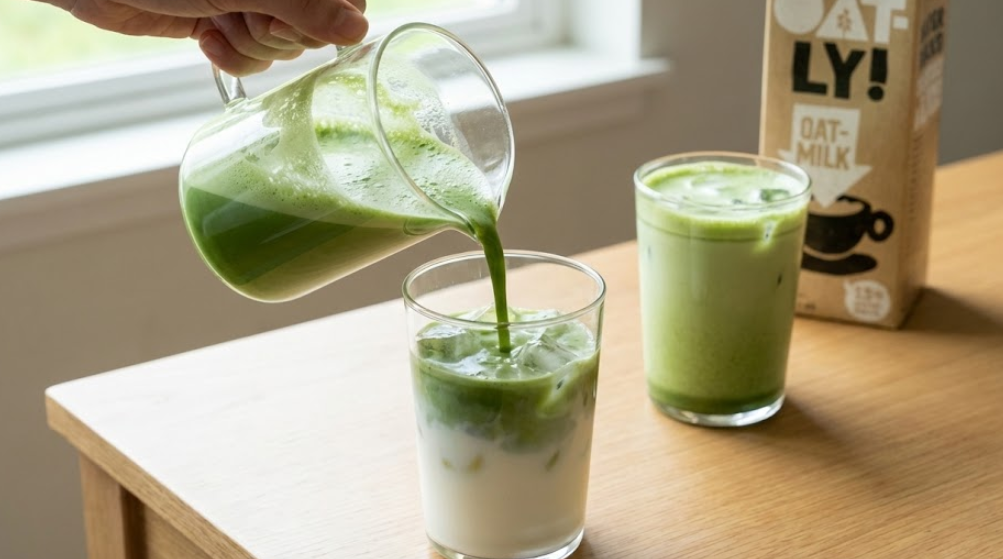
For most café menus, barista oat milk is the safest default milk for matcha lattes because it adds sweetness, body and creaminess. Whole milk is better for premium matcha lattes where the goal is to show umami, aroma and a richer dairy texture. Soy milk can work well for plant-based menus, almond milk needs a stronger and greener matcha powder, and coconut milk is best for sweet or dessert-style drinks.
| Milk Type | Best Use Case | Best Matcha Grade | Main Advantage | Main Risk |
|---|---|---|---|---|
| Barista oat milk | High-volume café matcha lattes | Standard latte grade / commercial culinary grade | Creamy body, natural sweetness, good customer acceptance | Can hide premium matcha nuance |
| Whole milk | Premium hot matcha lattes | Ceremonial or premium latte grade | Amplifies umami, creaminess and richness | Exposes off-notes in weak matcha |
| Soy milk | Vegan lattes and protein-focused drinks | Medium to premium latte grade | Good body and foam stability | Beany notes can conflict with matcha |
| Almond milk | Light iced lattes | High-chlorophyll matcha | Clean and light profile | Thin body, can make matcha taste weak |
| Coconut milk | Dessert-style iced drinks | Stronger commercial matcha | Sweet, tropical and indulgent | Can overpower delicate matcha |
Forget what baristas tell you about "flavor pairings2." In the B2B world of matcha supply3, milk plays one of two roles. It's either a "cover-up" for a weak product or a "truth mirror" for a great one. Understanding this difference is key to building a successful matcha menu. Let's look at how this works in practice.
For cafés, drink brands and chains developing a commercial matcha latte menu, our matcha for latte cafés page explains how to choose matcha that performs well with milk, ice and high-volume preparation.
Milk and Matcha Grade Pairing Chart for Cafés
Before choosing a milk, cafés should decide what kind of matcha latte they want to sell. A premium hot latte, a sweet iced oat milk latte, a bottled RTD drink and a bubble tea matcha milk drink do not need the same powder or the same milk base.
| Café Goal | Recommended Milk | Recommended Matcha Type | Why It Works |
|---|---|---|---|
| Premium hot matcha latte | Whole milk | Ceremonial or premium latte-grade matcha | Dairy fat highlights umami, aroma and creamy texture |
| Standard iced matcha latte | Barista oat milk | Commercial latte-grade matcha | Oat milk adds body and softens bitterness after ice dilution |
| Vegan café menu | Oat milk or soy milk | Medium-strength latte-grade matcha | Plant milk needs matcha with enough flavor strength to cut through |
| Low-cost chain drink | Oat milk | Cost-effective commercial matcha | Oat milk improves mouthfeel and customer perception |
| Instagram-focused drink | Whole milk or light oat milk | High-chlorophyll, superfine matcha | Bright green color stays more visible in a lighter milk base |
| Dessert or flavored drink | Coconut milk or oat milk | Stronger culinary / beverage-grade matcha | Stronger matcha is needed to compete with sugar, syrup and flavorings |
For cafés, chains and distributors comparing repeat supply options, our wholesale matcha for cafés page explains how to source stable matcha powder for commercial drink menus.
Is oat milk the best partner for your matcha?
Your matcha lattes taste bitter and weak. You keep buying better powder, but the result is still not great. The problem might not be your matcha, but your milk.
Oat milk is the best choice for masking the flaws of lower-grade matcha. Its natural sweetness, thick body, and oaty aroma cover up bitterness and grassy off-notes. This makes it a smart, cost-effective solution for cafes using budget-friendly matcha powders for high-volume sales.
For coffee shops, oat milk is often the most forgiving option. It performs especially well in iced matcha lattes because ice dilution can make matcha taste thinner. A barista-style oat milk gives the drink more body, a smoother texture and a sweeter first impression. This is why many chains use oat milk not only as a vegan alternative, but also as a recipe tool.
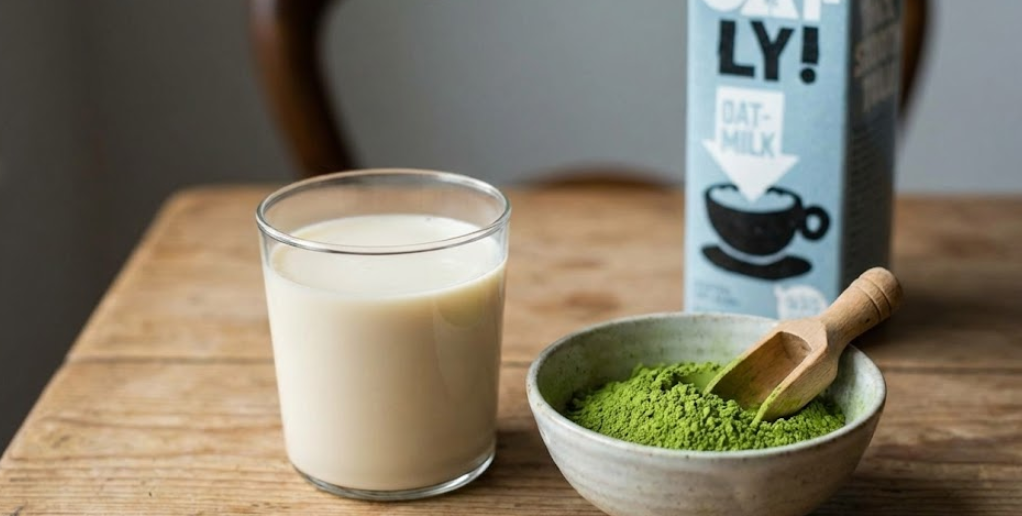
I call oat milk the ultimate "cover-up" for cheap matcha. Last month, a coffee chain with a few hundred stores came to me. They wanted to cut their matcha ingredient cost by 30%. But they were worried about customer complaints that the flavor was too weak. My advice was very direct: switch to oat milk and use our summer and autumn harvest powder. The thick, grainy flavor of oat milk is perfect for this. It completely hides the rough bitterness and grassy taste of B-grade or C-grade matcha. In fact, that harshness gets twisted into what customers think is a "rich tea flavor4." It's a clever business calculation. You use the thickness of oat milk to fill the gap left by thin, cheap matcha. The customer feels their $5 latte is worth it, and I get to ship my most profitable industrial-grade matcha.
| Matcha Quality | Oat Milk's Role | Customer Perception |
|---|---|---|
| Low-Grade (B/C) | Masks bitterness/grassy notes | "Rich" or "Strong" tea flavor |
| Thin Body | Adds creaminess and texture | "Smooth" and "Full-bodied" |
| Cost-Effective | Allows for lower-cost powder | Good value for the price |
For high-volume café chains, distributors or beverage manufacturers, our bulk matcha supply page explains MOQ, packaging formats, COA support and export-ready supply for commercial drink programs.
When should a café choose oat milk for matcha lattes?
Choose oat milk when your menu needs consistency, speed and broad customer acceptance. It is especially useful when your matcha latte is sweetened, served over ice or sold in high volume.
Oat milk is a good fit when:
- Your latte needs a creamy mouthfeel without increasing matcha dosage too much.
- Your powder has a stronger grassy or bitter profile.
- Your menu focuses on iced matcha lattes or sweetened drinks.
- Your customers expect plant-based options.
- Your chain needs stable flavor across many stores.
For a B2B buyer, oat milk can reduce recipe risk. But it should not be used as the only solution. If the matcha powder is too dull, too yellow or too coarse, oat milk can improve texture but cannot fully fix color, sediment or weak tea aroma.
Why does whole milk reveal your matcha's true quality?
You bought expensive ceremonial matcha1 for your cafe. But when you make a latte with whole milk, it tastes strange, almost like seaweed. Your milk is acting like a "truth mirror5."
Whole milk's fat content acts as an amplifier for both good and bad flavors. With high-quality matcha, it creates a creamy, umami-rich taste. With flawed matcha, it exposes any earthy, fishy, or overly bitter notes, making it a true test of quality.
For cafés selling a premium matcha latte, whole milk is the most honest test. It does not cover weak aroma as easily as oat milk. If the matcha is fresh, green, finely milled and naturally umami-rich, whole milk can make the drink taste round, rich and almost dessert-like. If the matcha is old, oxidized or poorly processed, whole milk will make those defects more obvious.
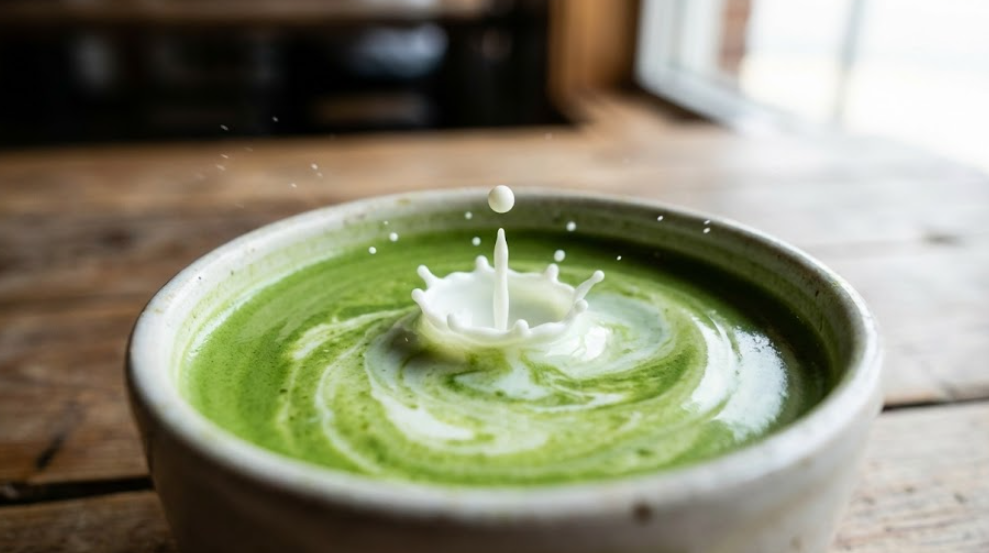
In my quality control lab at our Anshun factory, I have one simple test for our top-tier ceremonial grade powder. I mix it with hot whole milk. Milk fat is a flavor amplifier. If our tea garden management slipped up and a few old leaves got mixed in, the milk will show it. If our grinding temperature was too high, the milk will show it. Any "seaweed" or "earthy" off-notes become impossible to hide in pure milk. The drink tastes like boiled grass soup. This is why I call whole milk the "brutal truth mirror5." The clients who I recommend use whole milk are usually the ones I've pushed to buy my most expensive first-harvest powder. Only a true organic matcha, with very high theanine levels and very low bitterness, can blend with milk fat to create that premium "ice cream texture6."
| Matcha Quality | Whole Milk's Role | Resulting Flavor Profile |
|---|---|---|
| Top-Grade (Ceremonial) | Amplifies umami and sweetness | Rich, creamy, "ice cream" texture |
| Flawed (Poor processing) | Amplifies off-notes | "Seaweed" or "Earthy" taste |
| Low-Grade (High bitterness) | Amplifies harshness | Unpleasant, bitter, grassy soup |
If you are launching your own branded matcha latte powder or retail matcha line, our private label matcha page covers custom packaging, label support, sample development and export-ready production.
When should a café choose whole milk for matcha lattes?
Choose whole milk when the product positioning is premium and the matcha quality is strong enough to be exposed. Whole milk is suitable for cafés that want to sell a richer, more classic latte experience instead of a heavily sweetened drink.
Whole milk is a good fit when:
- Your matcha has strong umami and low bitterness.
- Your drink is positioned as premium or authentic.
- You want a creamy hot matcha latte with dairy richness.
- Your customers care about taste clarity, not only sweetness.
- You are testing whether a matcha powder is truly suitable for latte use.
For sourcing teams, whole milk is a useful quality-control test. If a matcha powder tastes flat, fishy, earthy or overly bitter in whole milk, it may not be suitable for a premium milk-based menu.
How does milk affect your matcha latte's color?
Your matcha lattes look dull and muddy. They don't have that vibrant green color you see on Instagram. Customers judge with their eyes first, so a brownish latte is a tough sell.
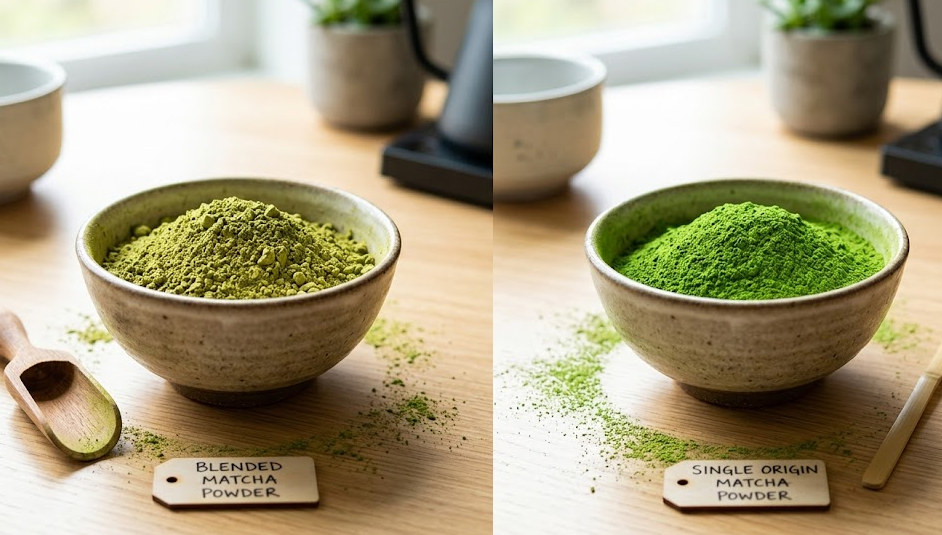
Plant-based milks like almond or soy often have a grayish-brown tint that can dull matcha's green color. To overcome this, the matcha powder must have a high chlorophyll content7. It also needs an extremely fine particle size to ensure the green pigment remains suspended and vibrant.
Color is not just an aesthetic issue. For café chains, color consistency affects customer trust, product photos, delivery app images and social media sharing. A latte that looks bright green communicates freshness and quality before the customer tastes it.
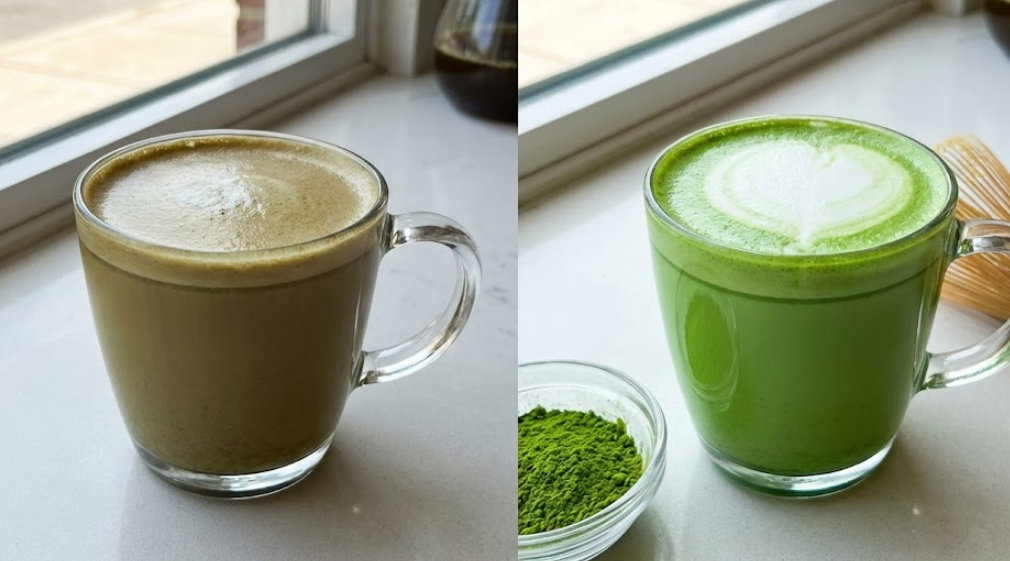
The visual appeal, or the "Instagram-worthiness," of a latte is a serious business concern. One detail many recipe developers miss is color stability. Plant milks, especially almond and soy milk, have a natural grayish-brown base color. If your matcha powder doesn't have enough chlorophyll, the final drink will look like unappetizing "muddy water." To guarantee a high rate of social media shares for my clients' lattes, I have to be obsessed with our superfine grinding process at the factory. We push the mesh size to the absolute limit. Why? Because only an extremely fine physical structure allows that bright green to stay suspended. It needs to "pop" and look vibrant even against the murky background of plant-based milk. It is a battle for appearance, and it's won or lost in the factory, long before the milk is ever poured.
| Milk Type | Base Color | Required Matcha Trait | Final Latte Appearance |
|---|---|---|---|
| Whole Milk | White | Good chlorophyll | Bright, vibrant green |
| Oat Milk | Light Beige | High chlorophyll | Good, consistent green |
| Almond/Soy Milk | Grayish-Brown | High chlorophyll + superfine grind | Vibrant green (if done right) |
Best Milk for Hot vs Iced Matcha Lattes
The best milk can change depending on whether the drink is served hot or iced. Hot milk releases aroma and exposes off-notes more clearly. Iced drinks are more diluted and need stronger flavor, better suspension and more body.
| Drink Format | Best Milk Choice | What to Watch |
|---|---|---|
| Hot premium matcha latte | Whole milk | Reveals both good umami and bad off-notes |
| Hot vegan matcha latte | Barista oat milk or soy milk | Needs stable foam and no beany aftertaste |
| Iced café matcha latte | Barista oat milk | Adds body after ice dilution |
| Iced almond matcha latte | Almond milk | Needs greener, stronger matcha to avoid a weak color |
| Sweetened dessert matcha latte | Oat milk or coconut milk | Needs strong matcha so syrup does not dominate |
| RTD bottled matcha latte | Formulated dairy or plant milk base | Needs suspension, color stability and batch testing |
How Cafés Should Test Milk and Matcha Together
A café should never choose matcha powder by tasting it with water only. If the final product is a milk-based latte, the powder must be tested inside the real drink format.
Use this simple testing process before buying in bulk:
- Make the same recipe with whole milk, oat milk, soy milk and almond milk.
- Test both hot and iced versions.
- Compare color immediately after mixing and again after 10 minutes.
- Check whether the matcha settles at the bottom.
- Taste without syrup first, then with the actual menu sweetness level.
- Calculate matcha cost per 12 oz and 16 oz cup.
- Ask whether the drink still tastes like matcha after milk, ice and sweetener are added.
For menu planning, our matcha cost per cup guide helps cafés compare powder cost, dosage, cup size and selling price before buying in volume.
A good matcha for café lattes should stay green, disperse smoothly, cut through milk and remain consistent across repeat batches. The goal is not simply to buy the highest grade. The goal is to choose the grade that performs best in your drink system.
Matcha Powder Requirements for Milk-Based Drinks
When cafés choose matcha for milk-based drinks, they should look beyond ceremonial labels. A powder that tastes elegant in water may disappear in milk. A powder that is too coarse may create sediment. A powder with weak chlorophyll may turn beige or muddy in plant milk.
For milk-based drinks, evaluate these matcha traits:
| Matcha Trait | Why It Matters in Milk |
|---|---|
| Strong green color | Keeps the latte visually attractive |
| Fine particle size | Improves suspension and reduces sediment |
| Low bitterness | Reduces the need for excess sugar |
| Enough umami | Gives the latte a premium tea flavor |
| Good aroma retention | Helps matcha remain noticeable after milk is added |
| Batch consistency | Protects multi-store menu quality |
| COA support | Helps commercial buyers manage quality and compliance |
This is why B2B buyers should choose matcha by application. A matcha for plain tea, a matcha for bakery, a matcha for RTD drinks and a matcha for café lattes should not be evaluated in exactly the same way.
Conclusion
Choosing the right milk is a strategic business decision. Use oat milk to fix flawed matcha and whole milk to celebrate perfect matcha. Your choice defines the final product experience.
For café chains, beverage brands and private label buyers, choosing the right matcha grade for milk-based drinks is easier when you start with the application. Review our matcha for latte cafés page before selecting samples for your next latte menu.
FAQ: Best Milk for Matcha Lattes
What is the best milk for a matcha latte?
For most café matcha lattes, barista oat milk is the safest choice because it adds body, creaminess and natural sweetness. Whole milk is better for premium matcha lattes where the goal is to highlight umami and quality.
Is oat milk better than dairy milk for matcha?
Oat milk is better for sweet, creamy and high-volume matcha lattes. Dairy milk is better when the matcha powder is high quality and you want to show a richer, more premium flavor profile.
What milk do cafés use for matcha lattes?
Many cafés use oat milk, whole milk or soy milk for matcha lattes. Oat milk is popular because it works well in iced drinks and gives the latte a full-bodied texture.
What matcha grade is best for oat milk lattes?
A commercial latte-grade or beverage-grade matcha usually works best for oat milk lattes. It should have strong color, good dispersion and enough flavor to cut through milk and sweetener.
Does milk make matcha less bitter?
Milk can reduce the perception of bitterness by adding fat, sweetness and body. Oat milk is especially effective at softening grassy or bitter notes in lower-grade matcha.
Why does my matcha latte taste weak with milk?
Your matcha may be too delicate, too low in dosage or not designed for milk-based drinks. Milk, ice and syrup can dilute matcha flavor, so cafés often need a stronger latte-grade powder.
Is almond milk good for matcha lattes?
Almond milk can work for lighter matcha lattes, especially iced drinks, but it has a thinner body. It usually needs a greener and stronger matcha powder to avoid a weak flavor and dull color.
Is soy milk good for matcha lattes?
Soy milk can be good for matcha lattes because it has body and protein, but some soy milks add a beany note. Cafés should test different soy milk brands with the same matcha before choosing one.
Is coconut milk good for matcha lattes?
Coconut milk works best for dessert-style or tropical matcha drinks. It can overpower delicate matcha, so it should be paired with a stronger matcha powder and a clear flavor concept.
How should cafés choose matcha powder for milk-based drinks?
Cafés should test matcha directly in the final drink format with milk, ice and sweetener. The best powder should stay green, taste strong enough, disperse smoothly and remain consistent across repeat orders.
Understanding ceremonial matcha helps you appreciate its premium quality and why whole milk enhances its flavor. ↩
Learn why traditional flavor pairings might not work for matcha and how milk choice plays a crucial role. ↩
Explore the business side of matcha supply and how milk choices impact commercial success. ↩
Learn how oat milk transforms the taste of matcha, making it seem richer and more appealing. ↩
Understand how whole milk reveals the true quality of matcha, highlighting both good and bad flavors. ↩
Discover how whole milk and high-quality matcha combine to create a creamy, ice cream-like texture. ↩
Explore how chlorophyll affects the color and appeal of matcha lattes, especially with plant-based milks. ↩