Struggling with your matcha supply? You face either inflexible giants with high prices or cheap traders with huge risks. There is a much better way to source your matcha.
The European matcha market1 has major industrial players like Aiya2 behind the scenes and retail brands like Moya Matcha3 at the forefront. The real opportunity, however, is for a new kind of supplier that closes the gap between expensive, rigid quality and cheap, unreliable sources.
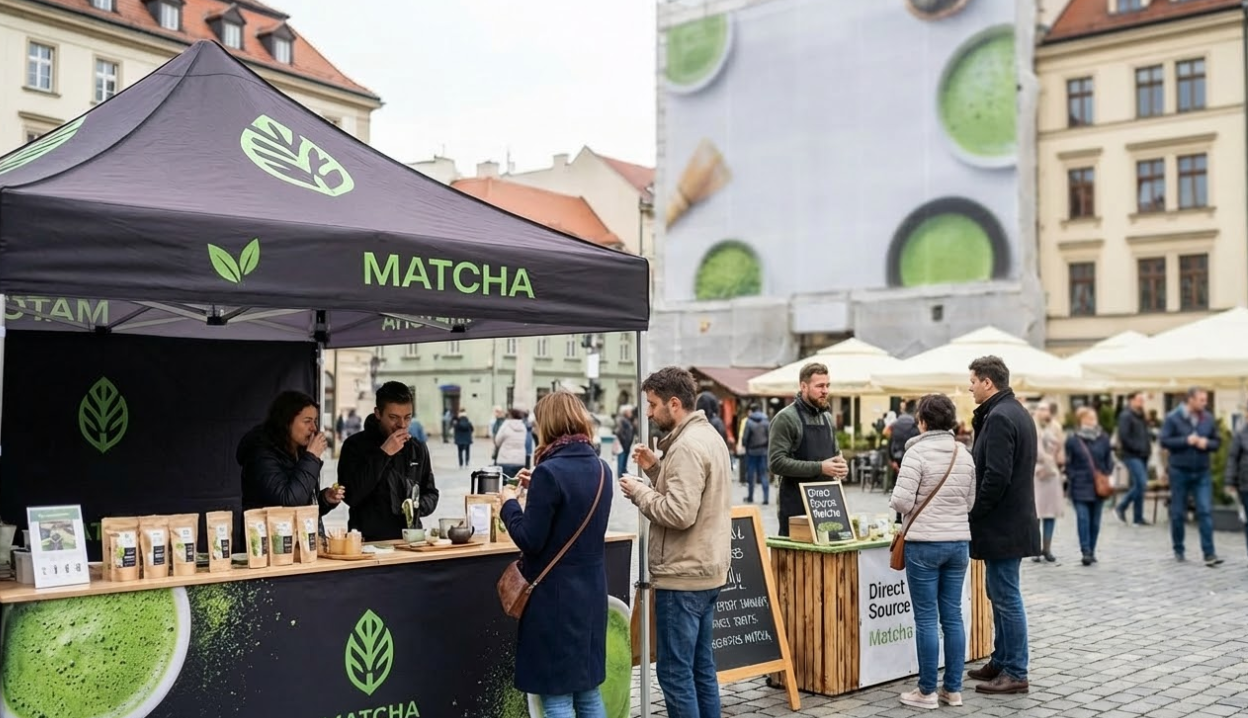
When I sit down with potential European partners, I often find myself explaining the tough spot they are in. It’s a conversation I have had many times. On one hand, you have the established Japanese giants. They offer stability, but it comes with a high price tag and very rigid terms. They are not very flexible. On the other hand, you have countless traders on platforms like Alibaba. They offer low prices, but it's a gamble. Many don't even understand what an EU Organic certification4 truly means. You end up worrying every day about your shipment getting stopped at customs for pesticide residue tests5. This is the biggest problem for large buyers in Europe. You are forced to choose between "expensive arrogance" and "out-of-control cheapness." There is no middle ground. And this is exactly why we, MatchaSourcing.com, have entered the European market. We use our top-tier, asset-heavy operation to fill this huge vacuum for a premium supply chain alternative.
Why is "single-estate" matcha a safer bet for Europe?
Are you worried about your matcha shipment failing strict EU customs checks? Blended teas from multiple sources increase this risk. A single-estate supply guarantees control and complete traceability6 from the start.
A single-estate matcha7, sourced from one physically isolated farm, eliminates the risk of cross-contamination from unknown sources. This is your best guarantee for passing Europe's increasingly strict pesticide regulations, ensuring your supply chain is secure and your brand reputation is protected.
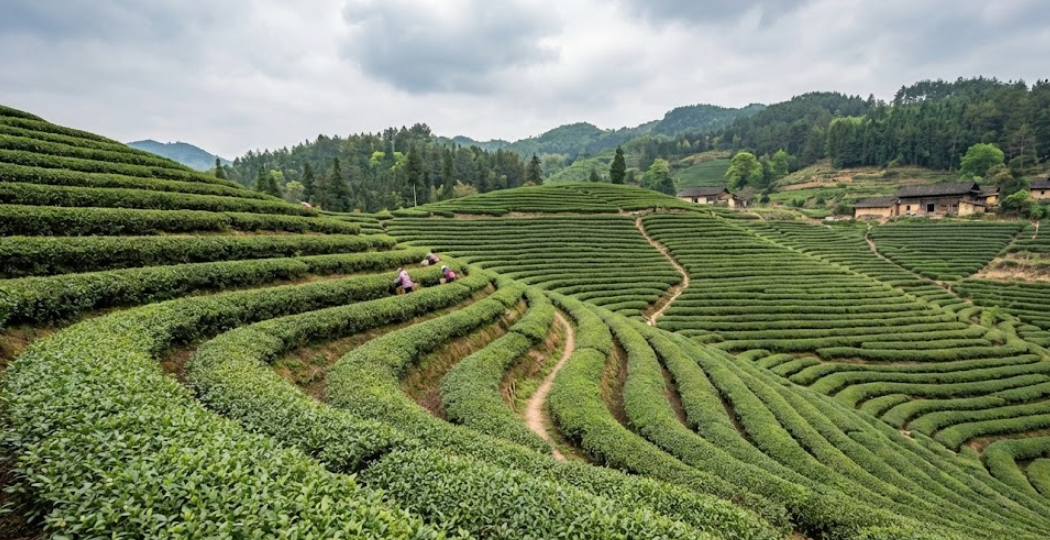
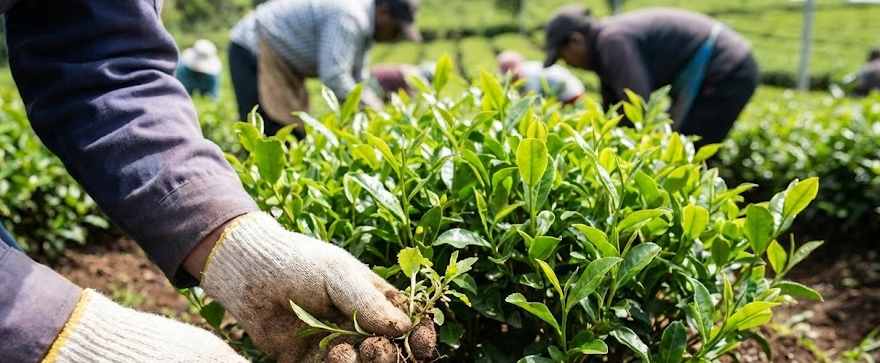
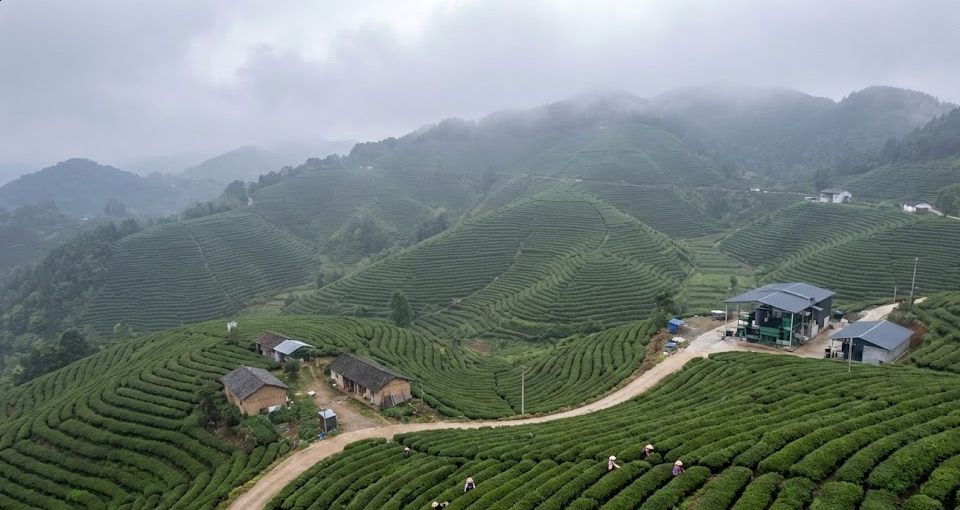
A company like Aiya is very large. Their massive export volume to Europe means they have to collect tea leaves from many different farms across Japan, and sometimes even China. I call this the "blended plate" model. This model is becoming extremely risky because of Europe’s new, stricter rules on pesticide residues. They have very low limits for substances like carbendazim and glyphosate8. When you mix teas from dozens of sources, just one bad batch can contaminate the entire shipment. This is a huge risk for any European brand. We take a completely different approach. We do not buy tea from small farmers. Our 2,300 mu of high-altitude land in Anshun is a "single estate." It is physically isolated from other farms. This approach stops any chance of contamination from drifting pesticides right at the source. It means the EU Organic certification4 we hold is impeccable. For a European brand, Aiya sells a famous name. I sell a "get-out-of-jail-free card" for your shipments at Rotterdam customs.
| Feature | Blended Tea Model (Traditional Giants) | Single-Estate Model (MatchaSourcing.com) |
|---|---|---|
| Source | Multiple, scattered farms | One large, isolated farm |
| Traceability | Complex and difficult to verify | Simple and 100% verifiable |
| Contamination Risk | High, one bad source spoils the lot | Extremely low, full control over inputs |
| EU Compliance | Risky with new pesticide limits | Secure and built for compliance |
How can new brands compete with established European matcha retailers?
Your packaging looks great, but your matcha tastes the same as everyone else's. To truly stand out, you need a unique flavor profile9 that established brands cannot easily copy.
New brands can win by creating a unique flavor identity. This requires a supply partner that acts as an R&D lab10, allowing you to fine-tune your matcha's characteristics. This builds a competitive moat that goes far deeper than just branding or packaging design.
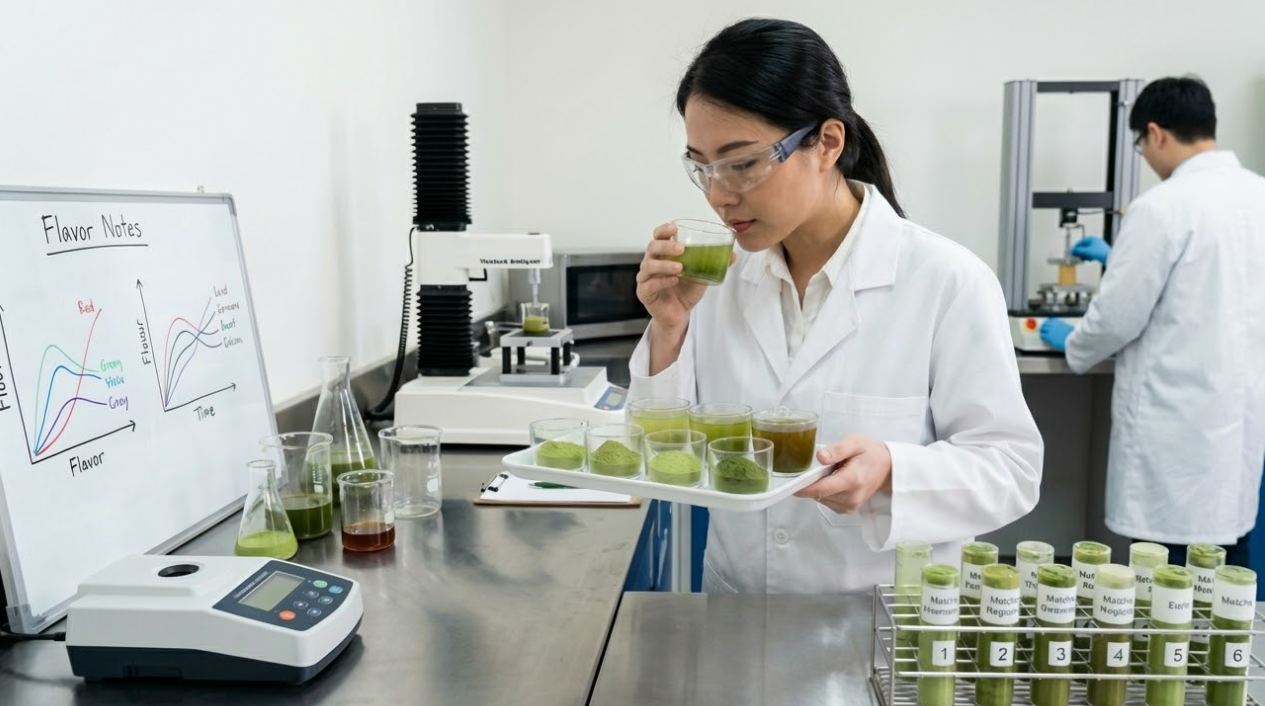
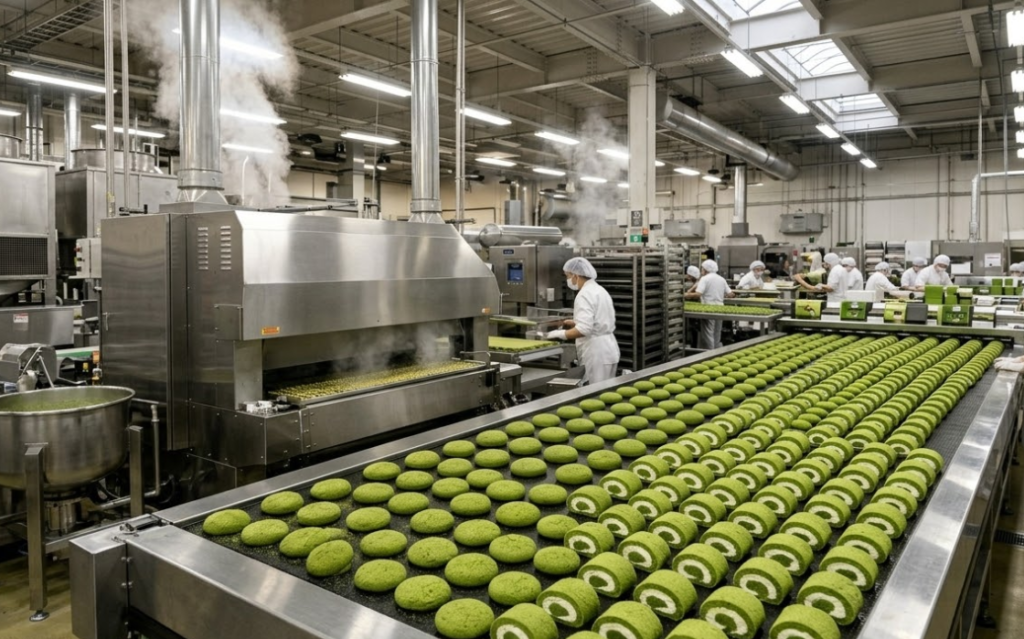
European retail brands like Moya or Kissa are essentially marketing companies. If a new brand wants to beat them on the shelf, beautiful packaging is not enough. You must build a defense based on flavor. But what happens when you ask a Japanese giant to change the parameters of their matcha for you? Their minimum order quantity (MOQ) will be so high it could kill your business before it starts. We operate differently. We turn our 100,000-class cleanroom workshop in Anshun into your personal back kitchen. Do you want a special Barista edition11 that does not turn yellow when you add oat milk? No problem. I can directly fine-tune the steaming time for you. I can obsessively control the temperature rise inside the ultra-fine grinder. I can develop an exclusive Lab* color value and a specific high concentration of L-theanine12 for that perfect umami. I help you build a "flavor monopoly" at the formula level, something your competitors cannot just copy.
| Aspect | Standard Supplier | Your R&D Partner (MatchaSourcing.com) |
|---|---|---|
| Product | Off-the-shelf grades only | Fully customizable product |
| Flexibility | High MOQs, rigid parameters | Low MOQs for tests, full customization |
| Goal | Sell you a standard product | Help you create a unique product |
| Result | Product homogeneity | Differentiated "flavor monopoly" |
Are you overpaying for the "Made in Japan" label?
European businesses are extremely focused on profit margins. A large part of the price you pay for Japanese matcha is not for quality, but for an inflated "origin premium13."
Yes, you are likely paying a premium of up to 40% just for the "Made in Japan" story. By working with a source that has identical top-tier technology but a more efficient cost structure, you can get the same quality without paying that premium.
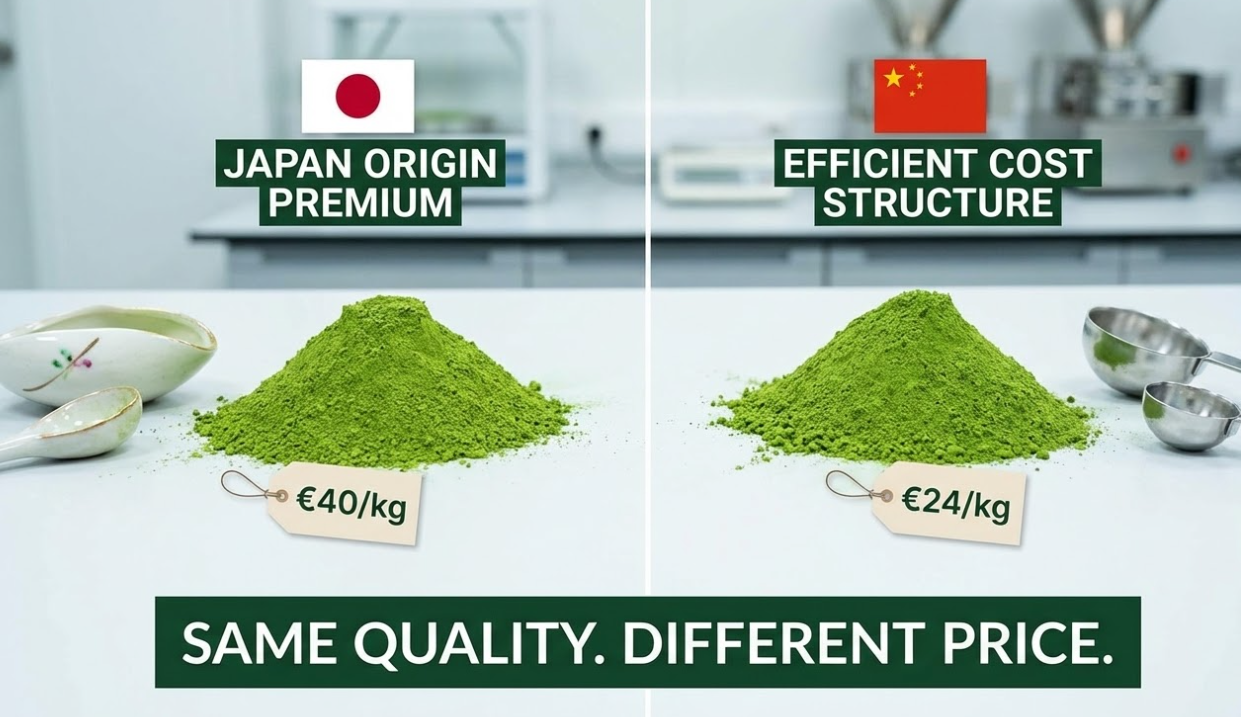
I have seen it time and again. European clients pay a high price to distributors or Japanese brands, and about 40% of that money is purely for the "origin premium13." It doesn't add to the quality of the matcha. It's a tax on history. We have torn down this tax. We brought in the exact same production lines used by the top factories in Japan. We follow the same strict, weeks-long shading process that is essential for producing high-quality matcha. But because our roots are in Guizhou, we do not have the historical cost baggage. We give you the top-tier "nori-like umami" flavor directly, at a pure source price. The millions of euros you save on procurement costs are not just savings. That money is the entire net profit you can use to open new stores across Europe next year. It's real, tangible capital for your growth.
| Cost Component | Typical Japanese Supply Chain | MatchaSourcing.com Direct Model |
|---|---|---|
| Raw Material & Labor | High | Competitive |
| "Origin Premium" | ~40% of final cost | 0% |
| Distributor Markups | Multiple layers | None |
| Final Price to You | High | Significantly Lower |
Can a large supplier really support a small, growing brand?
Emerging brands need flexibility and support to test new ideas. The bureaucratic nature of giant corporations often means your small, urgent needs are ignored, slowing down your growth.
Most large suppliers are not built to support startups. We are different. We combine the power of a major producer with the mindset of a partner. We provide the flexible support14 you need to test, launch, and scale your brand successfully.
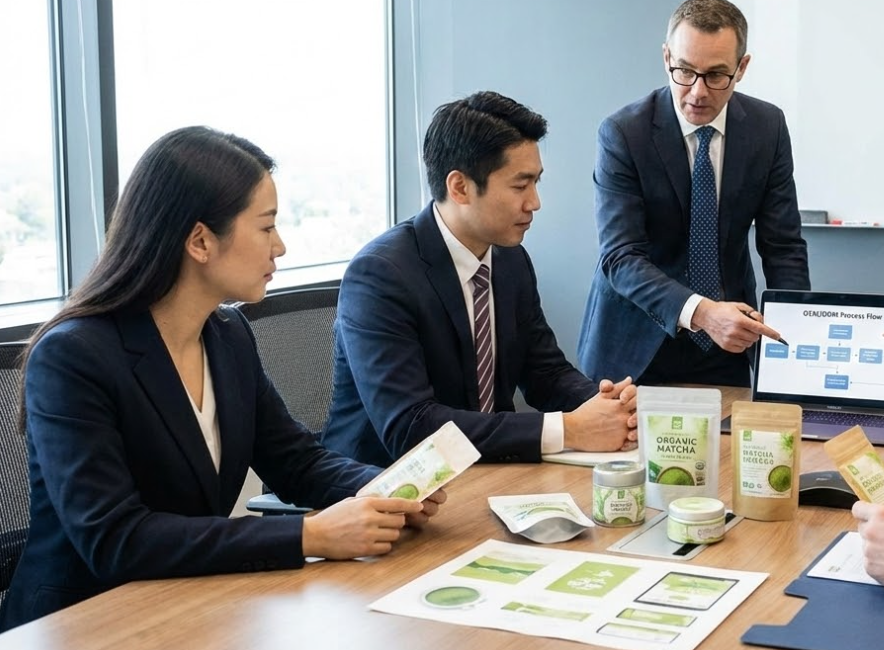
Europe is full of exciting new functional beverage15 and specialty coffee brands16 right now. They are in a high-growth phase. But the bureaucratic style of the big Japanese factories will not pay attention to their early-stage testing needs. They see small orders as a distraction. I know you are at war. You are fighting to win market share. If you need 100 kilograms for a new product test in Berlin today, I will run my top-tier production line to support you. When you are ready to roll out across Europe next year and need 50 tons, my 2,300 mu of pure organic tea gardens are ready to seamlessly handle that scale. I am not just a supplier. I am using my heavy assets, the kind that rival international giants, to be your partner. I am invested in your success from the first test batch to full market deployment.
| Supplier Type | Large Traditional Giant | Flexible Partner (MatchaSourcing.com) |
|---|---|---|
| Attitude to Small Orders | A bureaucratic hassle | A critical step in our partnership |
| Support for Testing | Minimal to none | Full production line access |
| Scalability | Only for huge, stable orders | Seamless from 100kg to 50+ tons |
| Relationship | Transactional supplier | Strategic growth partner |
Conclusion
The big players in Europe's matcha market are benefiting from history. We are here to change that with absolute safety, deep customization, source-direct pricing, and true, flexible partnership.
Understanding the European matcha market landscape helps identify potential suppliers and competitors. ↩
Exploring Aiya's influence can provide insights into the industry's standards and practices. ↩
Learning about Moya Matcha's strategies can inspire new brands to innovate and compete effectively. ↩
Ensuring compliance with EU Organic standards is crucial for successful import and distribution. ↩
Understanding these tests can help mitigate risks and ensure smooth customs clearance. ↩
Traceability ensures product integrity and compliance with strict regulations, safeguarding brand reputation. ↩
Single-estate matcha offers traceability and reduces contamination risks, ensuring quality and compliance. ↩
Knowing these limits is essential for compliance and avoiding shipment rejections. ↩
Creating a distinct flavor profile helps brands stand out and attract loyal customers. ↩
An R&D lab allows for customization and innovation, giving brands a competitive edge. ↩
Understanding the Barista edition can help brands cater to specific market segments and preferences. ↩
L-theanine contributes to matcha's unique taste and offers health benefits, appealing to health-conscious consumers. ↩
Understanding the origin premium helps brands assess cost-effectiveness and explore alternative sourcing options. ↩
Flexible support enables brands to test and scale efficiently, fostering growth and innovation. ↩
Exploring these trends can inspire matcha brands to innovate and align with consumer preferences. ↩
Analyzing this influence can help matcha brands adapt and thrive in a competitive landscape. ↩